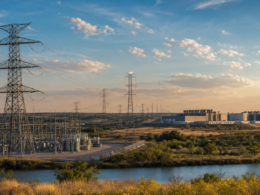
Beetaloo Energy Australia Limited (ASX: BTL) has raised A$66.3 million through a strongly supported placement and launched a Share Purchase Plan for up to A$5 million, while also increasing its Macquarie-backed midstream infrastructure facility to A$45 million. The package gives the Northern Territory-focused gas developer a clearer funding path to first pilot gas sales expected in the fourth quarter of 2026. For a company that has spent years selling the scale of the Beetaloo Basin story, this is less about another cash call and more about proving that capital markets still believe execution is within reach. The discount was sharp, but so was the message: Beetaloo Energy Australia wants the market to view this as the financing bridge between promise and commercial evidence.
The immediate significance is not just the headline amount. Beetaloo Energy Australia is trying to reduce one of the biggest reasons early-stage energy developers get marked down, namely funding uncertainty between appraisal and first cash flow. By combining new equity, undrawn infrastructure debt, and existing cash, the company said it is fully funded through to first gas from the Carpentaria Pilot Project. That matters because equity markets are usually far more patient with basin-scale narratives than they are with half-funded construction schedules. In oil and gas, geology gets attention, but funding gaps kill momentum.
Why does Beetaloo Energy Australia’s funding package matter more than a standard placement?
This raising matters because it is tied to a specific operational sequence rather than vague corporate flexibility. The company said proceeds will go toward completing Carpentaria Gas Plant works, continuing flow testing at Carpentaria-5H, advancing future work-program long lead items, acquiring and interpreting western Beetaloo seismic, supporting Territory Sands investment, funding corporate and Northern Territory operations to first gas, repaying part of the Research and Development credit facility, and adding working capital. In other words, this is not a generic balance-sheet top-up. It is a capital stack built around a timetable.
That distinction is strategically important for a basin developer trying to shift perception from explorer to emerging domestic gas supplier. Investors can tolerate dilution when the use of funds is linked to visible milestones. They become less forgiving when management teams raise cash merely to buy time. Beetaloo Energy Australia is effectively telling the market that the next major valuation test is not another resource argument, but actual pilot production and gas sales. The difference sounds small on paper, but it is the gulf between narrative-led valuation and evidence-led valuation.
There is also a broader sector signal here. Australian gas development remains politically contested, capital intensive, and operationally scrutinised. In that environment, a company that can still attract institutional and sophisticated investor demand at scale is making a statement about how capital is ranking domestic gas exposure in 2026. The Beetaloo Basin has long been framed as one of Australia’s most significant prospective onshore hydrocarbon plays. What is changing now is that the financing conversation is becoming more concrete and infrastructure-linked rather than purely geological.

How does the enlarged Macquarie facility change the economics of the Carpentaria project?
The upsized midstream infrastructure facility may be just as important as the equity itself. Beetaloo Energy Australia increased availability under that facility from A$30 million to A$45 million, with proceeds earmarked for refurbishment and construction of the Carpentaria Gas Plant and associated infrastructure. The facility is available for drawdown through the end of 2026 and matures in September 2035, while repayment is structured through a tolling-fee mechanism tied to project throughput.
That structure matters because it helps separate infrastructure financing from broader corporate equity dilution. It also suggests that lenders are comfortable enough with the project pathway to provide longer-dated support. Midstream-linked financing can be a useful tool for upstream developers because it aligns debt more directly with asset use rather than asking equity holders to absorb every stage of plant and infrastructure development.
Still, the tolling-fee and option package attached to the Macquarie facility is not trivial. The company disclosed that repayment for drawdowns between A$30 million and A$45 million would be via a tolling fee of A$0.70 to A$1.05 per gigajoule times 25,000 gigajoules per day, and that Macquarie would receive an additional 25 million options at an exercise price of A$0.35 per share, adding to previously disclosed option tranches. That is a workable arrangement if production ramps as expected. If volumes disappoint or timelines slip, the economics look less comfortable. Financing flexibility is great right up until the meter starts running.
What does the discounted placement say about market confidence in ASX:BTL shares?
The placement was priced at A$0.28 per share, representing an 18.8% discount to the last traded share price on 7 April 2026, a 17.5% discount to the five-day volume-weighted average price, and a 6.7% discount to the 15-day volume-weighted average price. That is a meaningful discount, but not an unusual one for a small-cap resource-style capital raise that needs certainty of execution. Strong participation from existing and new institutional investors is arguably more important than the discount itself.
From a market perspective, Beetaloo Energy Australia shares had been trading around A$0.345 before the raise, with a 52-week range around A$0.155 to A$0.370 and market capitalisation near A$368 million, depending on venue and timing. On 10 April, some delayed market feeds showed the stock trading below the pre-halt level, which is consistent with the market resetting toward the placement price rather than rejecting the strategic logic of the raise. That is usually the first test after a discounted placement: whether the market treats it as value-destructive dilution or as necessary financing to unlock a milestone. So far, the trading context looks more like repricing than panic.
The more interesting sentiment question is whether the company can retain support once first gas becomes a countdown rather than a concept. Markets often reward the announcement of funding certainty, then become less patient during the messy months of delivery. That is where Beetaloo Energy Australia now sits. The company has bought itself credibility, but not immunity.
How important is first pilot gas in Q4 2026 for Beetaloo Basin credibility and valuation?
First pilot gas in Q4 2026 is the key milestone because it would do more than generate revenue. It would provide proof that the Carpentaria development path can move from appraisal to commercial operation within a defined infrastructure framework. For Beetaloo Energy Australia, this is about building confidence in execution, operating model, and basin scalability all at once. The company’s own framing is that the pilot project is meant to demonstrate that the basin can be developed responsibly, efficiently, and at scale. That is exactly the kind of claim investors want tested with operations rather than presentations.
There is also a strategic timing angle. Australia’s east coast gas market remains sensitive to supply concerns, policy interventions, and long-term investment hesitation. Any project that can credibly position itself as part of future domestic supply gets more policy relevance than a simple junior exploration story. Beetaloo Energy Australia is clearly leaning into that narrative. If first pilot gas is achieved on schedule, the company can argue that it is no longer just defining resource potential but entering the domestic supply conversation in a tangible way.
And yet, this is where caution is required. Pilot gas is not the same thing as full commercial de-risking. A successful first sales milestone would improve sentiment, but investors will still want clarity on sustained flow performance, infrastructure reliability, development economics, regulatory posture, and the path to larger-scale monetisation. In other words, first gas can change the conversation, but it does not end it.
What risks could still derail Beetaloo Energy Australia’s path from funding to first gas?
Execution risk remains the most obvious one. Gas plant works, flow testing, infrastructure build-out, and field operations rarely move in a perfectly straight line. A company can be fully funded on paper and still lose momentum through delays, cost creep, or underwhelming operating data. The Carpentaria-5H flow-testing program will therefore matter not just technically but narratively. If the data supports the company’s development thesis, the funding package looks smart. If it disappoints, dilution will be remembered much more sharply than support levels.
Regulatory and social licence risks also remain relevant. Onshore gas in Australia is never purely a drilling and financing story. Approvals, environmental expectations, Traditional Owner engagement, and broader political attitudes all influence the pace and public defensibility of development. Beetaloo Energy Australia has made progress, but basin-scale projects do not get a permanent regulatory green light just because capital has been raised.
There is also a capital-markets risk hidden inside success. If the company reaches first gas but needs substantially more capital to accelerate broader basin development, investors will ask whether the current raise was a bridge to value creation or merely a bridge to the next raise. That is not a criticism so much as the standard question facing every early commercialisation story in energy.
What does this capital raise signal about the next phase of Northern Territory gas investment?
One of the most notable lines in the announcement was management’s suggestion that roughly A$1 billion could be invested in the basin over the next 18 months by Beetaloo Energy Australia and other participants including Tamboran Resources, Formentera Partners, Inpex Corporation, and Santos Limited. Even allowing for the usual promotional optimism embedded in basin narratives, the point is important. The Beetaloo story is increasingly being framed as an ecosystem build, not a single-company speculation.
That matters because infrastructure-led basin development tends to attract more durable market attention than isolated well results. When multiple players commit capital across upstream, processing, and related infrastructure, the regional investment case begins to look less fragile. Beetaloo Energy Australia’s raise therefore lands in a broader context: it is part of an attempt to convince markets that the Northern Territory gas build-out is entering a more coordinated and better-financed phase.
For investors, the conclusion is fairly simple. This was a dilutive raise, yes. But it was also a highly functional one. Beetaloo Energy Australia has traded some near-term pricing pain for a stronger chance of reaching the operational milestone that matters most in 2026. In small-cap energy, that is often the bargain management teams have to make. The only thing worse than a discounted raise is a company pretending it does not need one.
What are the most important strategic and financial takeaways from Beetaloo Energy Australia’s A$66.3m raising?
- Beetaloo Energy Australia has moved to reduce funding risk ahead of a critical first-gas milestone rather than simply adding balance-sheet cushion.
- The A$66.3 million placement, combined with the enlarged A$45 million Macquarie facility and existing cash, gives the company a clearer path to Q4 2026 pilot gas sales.
- The raise was meaningfully dilutive, but the market appears to be treating it as execution financing rather than a distress signal.
- Use of proceeds is tightly linked to project delivery, including gas plant completion, flow testing, seismic work, and working capital support.
- The enlarged Macquarie facility strengthens infrastructure readiness but adds repayment and option-related economic obligations that will matter if execution slips.
- First pilot gas is the company’s most important valuation catalyst because it would shift the story from basin promise to operational proof.
- The Share Purchase Plan helps management present the raise as inclusive rather than purely institutional, though it remains subject to shareholder approval.
- Beetaloo Energy Australia is increasingly positioning itself as part of a wider Northern Territory gas investment wave rather than a standalone explorer.
- Regulatory, operational, and timing risks remain substantial, so funding certainty should not be confused with project certainty.
- If the company meets its Q4 2026 target, the raise could later be viewed as the turning point that financed commercial credibility.
Share this:
Discover more from Business-News-Today.com
Subscribe to get the latest posts sent to your email.