


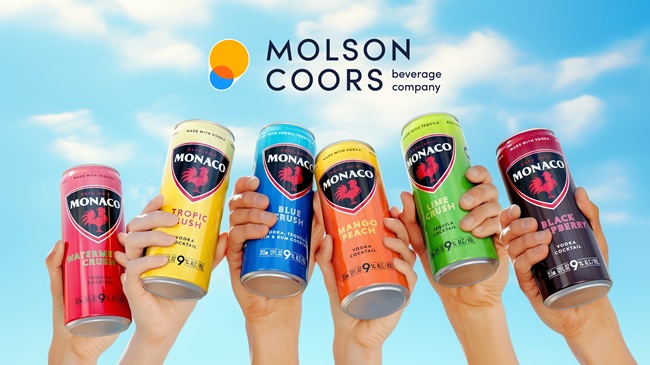
Molson Coors Beverage Company (NYSE: TAP, TAP.A) has completed its acquisition of Atomic Brands Inc., the maker of Monaco Cocktails, formally adding the brand to its U.S. Beyond Beer portfolio and positioning itself among the top five suppliers in the ready-to-drink cocktail segment. The deal, announced on 23 March 2026 and closed on 2 April 2026, marks Molson Coors’ most significant move yet to reduce its structural dependence on beer as its primary revenue driver. Monaco brings a 14-year-old brand with documented convenience store penetration, a 5% share of U.S. RTD singles, and more than 80 sales professionals who will join the Molson Coors organisation. For a company trading near its 52-week low at approximately $44 per share, roughly 44% below its 52-week high of $63.50, the acquisition represents an attempt to validate an accelerating strategic pivot with a live commercial asset rather than a theoretical portfolio ambition.
How does the Monaco Cocktails acquisition position Molson Coors in the U.S. ready-to-drink cocktail segment?
The RTD cocktail segment is no longer a growth curiosity at the margins of the alcohol industry. The global RTD cocktail market is estimated at approximately $5.4 billion in 2026 and is projected to reach $11.1 billion by 2033, growing at a compound annual growth rate of 10.8%. Within that context, the U.S. market is expected to expand at a CAGR of 14.0% over the same period, making it among the fastest-growing individual country markets in the category.
Monaco’s specific position within that landscape is defined by its channel strength and single-serve format. The brand is sold across more than 70,000 U.S. retail locations, with particular concentration in convenience stores, a channel that has emerged as a disproportionately important battleground for single-serve canned cocktails. The brand holds a 5% market share of RTD singles in the U.S. and ranks as a top-five RTD cocktail brand overall, holding the number one position among independently owned RTD single-serve cocktail brands across all tracked retail channels. For Molson Coors, whose existing Beyond Beer brands including Vizzy Hard Seltzer, Simply Spiked, and Topo Chico Hard Seltzer are predominantly positioned in multi-pack grocery and chain retail, Monaco represents an additive convenience store footprint rather than a cannibalisation risk against its existing portfolio.
The spirits-based formulation matters here in ways that go beyond marketing. Research consistently shows that spirits-based RTDs are outperforming malt-based alternatives by volume growth, and a meaningful proportion of RTD drinkers say they would pay more for a spirit-based product than a malt-based one. Monaco’s lineup, built around vodka, tequila, rum, and gin bases at 9% ABV, sits squarely in the premium-positioning tier of the segment, a tier that carries structurally better margins than the malt-based hard seltzer formats that dominated the previous wave of Beyond Beer growth.
What does the Monaco distributor overlap mean for Molson Coors integration and operational execution risk?
One of the more practically significant details in the transaction is the degree of existing distributor overlap between Monaco and Molson Coors’ U.S. network. The majority of Monaco’s distribution already runs through Molson Coors’ distributor relationships, which compresses the integration risk profile considerably. Acquisitions in the beverage alcohol space frequently stumble at the distributor transition stage, where brand advocates within a network may resist absorbing new priorities or where contractual complications delay rollout. In Monaco’s case, the infrastructure is largely pre-aligned, meaning Molson Coors’ primary integration challenge is commercial and organisational rather than logistical.
The decision to retain more than 80 members of Monaco’s sales team reflects an awareness that brand-specific shelf relationships in convenience are not automatically transferable through a corporate transaction. Brian Feiro, Molson Coors’ president of U.S. sales, explicitly framed the retention of Monaco’s sales personnel as a deliberate capability investment, noting that the Monaco team is expected to eventually represent the broader Molson Coors flavour portfolio beyond the immediate integration period. That is an efficient deployment of acquired human capital: the company is not simply integrating a brand but absorbing a trained field organisation with established account relationships in a high-velocity channel.
The execution risk that remains is one of prioritisation. Molson Coors is simultaneously managing a declining core beer volume environment, the integration of Fever-Tree’s U.S. distribution, and now a high-attention RTD brand addition. Resource allocation across a portfolio of this breadth, where some brands require defensive support and others require offensive investment, is a management discipline test that does not resolve cleanly from a press release.
How does the Monaco acquisition fit Molson Coors’ Horizon 2030 strategy and what does it reveal about the company’s capital allocation priorities?
In February 2026, Molson Coors unveiled its Horizon 2030 strategy, which frames inorganic growth as a core instrument for competing in a consumer landscape defined by accelerating category fragmentation. The Monaco acquisition is the first material transaction under that framework, and its commercial logic maps closely onto what Horizon 2030 describes: a scaled brand in a growing adjacent category, with existing distribution infrastructure, a proven consumer base, and a credible path to national expansion.
The financial terms were not disclosed, which limits any precise assessment of deal economics. What the structure does reveal, however, is that Molson Coors is directing capital toward scale acceleration in Beyond Beer at a moment when its core business faces measurable headwinds. The company reported weak full-year 2025 results, with net sales down 4.2% and significant volume declines across its core beer portfolio. Against that backdrop, any acquisition must do more than add revenue; it must also demonstrate a credible path to margin contribution that offsets ongoing pressure from beer category softness and rising input costs from aluminium tariff exposure that management flagged in early 2026 guidance.
Monaco’s convenience store concentration is commercially attractive but carries its own sensitivity. Convenience channel velocity metrics are more exposed to macroeconomic softness than off-premise grocery, because the single-serve impulse purchase that drives convenience RTD sales is among the first discretionary habits to compress when consumers tighten budgets. If the consumer spending environment in the United States softens through 2026 and into 2027, the same channel concentration that makes Monaco appealing as a growth asset could act as a modest headwind to near-term volume performance.
Why is the entire beverage alcohol industry converging on RTD consolidation at this moment in 2026?
The Monaco deal does not stand alone. Sazerac acquired Dirty Shirley in the same week, and Anheuser-Busch InBev moved to take a majority stake in BeatBox around the same period, with the pattern pointing to something structural: established brewers and spirits companies have recognised that organic growth in RTDs is slower and harder than buying a brand that already has shelf space, consumer loyalty, and distribution relationships.
The underlying arithmetic is straightforward. Beer volumes in the United States have been declining for several consecutive years. Spirits-based RTDs have absorbed a meaningful portion of that displaced consumption, particularly in convenience formats and single-serve occasions. For large alcohol companies whose legacy distribution infrastructure and investor expectations were built around beer growth, the efficient path to participation in RTD upside is acquisition rather than cold-start brand development. A new RTD entrant in 2026 faces a crowded retail environment where shelf access is among the toughest hurdles in the category, with supermarkets, liquor chains, and convenience stores prioritising fast-moving premium SKUs and leaving emerging brands with fewer facings and limited visibility during crucial launch phases.
Buying Monaco circumvents all of that. Molson Coors is not building a brand from scratch into a saturated shelf environment. It is acquiring 14 years of consumer familiarity, 70,000 distribution points, and a sales team that already owns the relevant account relationships. The premium on that shortcut is what the undisclosed deal price reflects.
The competitive pressure this creates for mid-tier RTD brands without large parent company backing is real. As Molson Coors, Anheuser-Busch InBev, and Sazerac deploy their distribution networks and marketing budgets behind acquired RTD brands, independently owned competitors with strong regional positions but limited national reach will face increasing pressure to either raise capital, find a strategic partner, or cede shelf space to better-resourced rivals.
What does Molson Coors’ current stock valuation signal about investor confidence in the Beyond Beer pivot?
TAP is currently trading at approximately $44, having declined around 29% over the past year, with the 52-week range spanning from $41.39 to $63.50. The consensus analyst rating sits at Hold, with a 12-month price target of $50, representing approximately 19% upside from current levels. The market’s assessment, at least at current prices, is that Molson Coors remains a value-oriented hold rather than a growth re-rating story.
The Monaco acquisition alone is unlikely to shift that narrative materially. A brand with 5% share of the RTD singles market, however strategically positioned, is not large enough to move the needle on a company with an approximately $8 billion market capitalisation. What it can do is demonstrate execution capacity against the Horizon 2030 framework, and if Monaco’s convenience channel volumes hold or accelerate under Molson Coors’ scale and marketing investment, it builds the credibility case for subsequent acquisitions in the same category. The real test of the Beyond Beer pivot is not a single deal but a sequence of commercially validated bets executed without overextending the balance sheet.
Molson Coors’ 2030 plan targets $450 million in cost savings, which suggests the company is running a parallel track of operational efficiency alongside its inorganic growth ambitions. That combination, if executed cleanly, creates financial capacity for further acquisitions while protecting margins in the core beer business. Whether management can sustain discipline across both tracks simultaneously, particularly while navigating tariff-driven cost inflation, remains the central strategic question for any investor evaluating TAP at current levels.
Key takeaways on what the Monaco Cocktails acquisition means for Molson Coors, its competitors, and the ready-to-drink cocktail industry
- Molson Coors has formally entered the top five in the U.S. RTD cocktail segment, a position previously unavailable through organic development alone.
- The 80-person Monaco sales team retention is an intentional investment in convenience channel relationships that Molson Coors’ existing organisation did not fully possess.
- Existing distributor overlap between Monaco and Molson Coors’ U.S. network compresses integration risk significantly compared with a typical beverage acquisition.
- Monaco’s spirits-based, 9% ABV format sits in the premium-margin tier of RTD, above malt-based alternatives, which matters for long-term margin contribution to the Beyond Beer portfolio.
- The deal is the first material transaction under the Horizon 2030 framework and functions as a proof-of-concept for Molson Coors’ stated inorganic growth capability.
- RTD consolidation is accelerating across the industry, with Sazerac, Anheuser-Busch InBev, and now Molson Coors all completing deals in the same narrow window, signalling that large distributors are in a competitive race to secure scaled RTD assets before shelf economics lock out independent challengers.
- TAP trades near its 52-week low at approximately $44, reflecting ongoing investor concern about beer volume declines and aluminium cost headwinds; Monaco alone will not prompt a re-rating but can support the narrative case for a sequential Beyond Beer build.
- Convenience store concentration, Monaco’s primary channel strength, is also a macro-sensitivity risk if U.S. consumer spending compresses through 2026 and into 2027.
- Independent RTD brands with regional scale but without large-company backing now face a structurally more difficult path to national shelf space as major distributors prioritise acquired brands over independent alternatives.
- The undisclosed deal price limits precise return-on-capital assessment, making Monaco’s ultimate financial contribution to Molson Coors dependent on volume trajectory and marketing efficiency that will only become visible in quarterly reporting through 2026 and 2027.
Discover more from Business-News-Today.com
Subscribe to get the latest posts sent to your email.