



In a landmark move for the long-duration energy storage (LDES) sector, Energy Dome has entered a global commercial agreement with Alphabet Inc.’s (NASDAQ: GOOGL) Google to deploy its proprietary CO₂ Battery technology across multiple continents. Announced on July 25, 2025, this deal marks Google’s first commercial deployment of long-duration storage to support its ambitious 24/7 carbon-free energy (CFE) commitment by 2030. As part of the agreement, Google has also made a strategic investment in Energy Dome, underscoring its dual role as both customer and stakeholder in scaling next-generation clean energy infrastructure.
Why did Google choose Energy Dome’s CO₂ Battery?
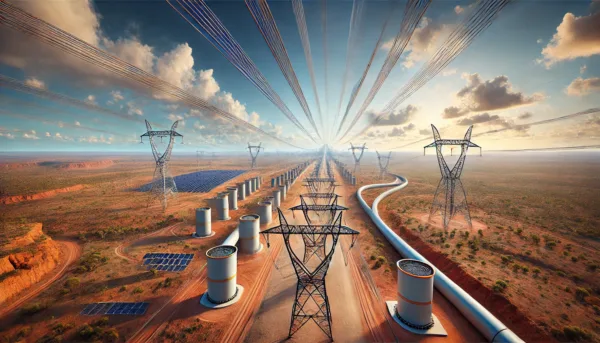
Energy Dome’s CO₂ Battery stands out in the LDES field for its ability to store and dispatch energy continuously for 8 to 24 hours—a major technological edge over traditional lithium-ion batteries, which are typically limited to 4-hour durations. The system relies on thermodynamic cycles involving carbon dioxide, using off-the-shelf components to compress, store, and expand the gas in a closed loop that avoids combustion and emissions.
This modular, mechanical architecture has no dependence on rare earth metals or constrained supply chains, which gives it scalability advantages amid growing geopolitical pressure on critical mineral sourcing. For Google, this aligns with its goal of building carbon-free grids that are both resilient and affordable.
The decision also reflects broader shifts in grid modernization strategy. As solar and wind adoption accelerates globally, energy systems face mounting pressure to compensate for their intermittency and lack of rotational inertia—a role traditionally filled by fossil fuel plants. Unlike solar PV and wind turbines, Energy Dome’s CO₂ Battery features rotating mechanical equipment that naturally provides grid inertia, helping stabilize frequency fluctuations and prevent blackouts. This technical capability proved decisive in Google’s evaluation process.
Inside the Google–Energy Dome strategic agreement
According to Energy Dome CEO Claudio Spadacini, the partnership is “programmatic” in nature, aimed at scaling the CO₂ Battery through a pipeline of multi-megawatt projects in Europe, North America, and Asia-Pacific. Project development and contracting are already underway for select sites in each region.
While financial terms were not disclosed, Google’s equity investment is considered a milestone for the Milan-based scaleup. It follows previous project deals with Alliant Energy (U.S.), Engie (Italy), and NTPC (India), signaling Energy Dome’s transition from pilot demonstration to global deployment.
Google’s EMEA Energy Director Maud Texier emphasized that the technology selection was not solely about corporate sustainability: “By helping to scale this first-of-a-kind LDES technology, we hope to help communities everywhere gain greater access to reliable, affordable electricity and support grid resilience.”
The companies aim to jointly accelerate project execution through 2030, with a particular focus on site diversity, permitting speed, and systems integration with regional transmission operators. Sources close to the development process suggest a strong preference for siting near high-renewables penetration zones or AI-heavy data center hubs where power quality and uptime are mission-critical.
How the CO₂ Battery works and why it matters now
At its core, the CO₂ Battery stores energy by compressing CO₂ into a liquid at ambient temperature and storing it in high-pressure vessels. When energy is needed, the CO₂ is evaporated and expanded through a turbine to regenerate electricity. The process is entirely mechanical and relies on proven industrial components such as compressors, heat exchangers, and turbines. This allows Energy Dome to avoid the custom manufacturing lead times and commodity risks that have hampered other LDES approaches like vanadium redox flow or sodium-sulfur systems.
The operational cycle is thermodynamically efficient and maintains the CO₂ in a closed loop, resulting in zero emissions during charge and discharge. Critically, the technology decouples energy from power, meaning energy capacity (measured in MWh) and power output (measured in MW) can be scaled independently—ideal for tailoring systems to specific grid requirements.
The market urgency for solutions like this is growing. According to BloombergNEF, over 400 GW of long-duration storage may be needed globally by 2040 to decarbonize electricity grids. As governments phase out fossil-fueled peaker plants and accelerate renewables integration, interest in LDES from utilities, regulators, and corporate buyers has surged.
Analyst reactions and institutional momentum
While the full project list under the Google-Energy Dome partnership has not been disclosed, the market readthrough has been broadly positive. Clean energy analysts tracking long-duration storage note that Google’s endorsement significantly boosts the technology’s credibility, especially in the wake of cautionary tales from earlier battery startups that failed to scale.
“There’s a confidence signal when a customer like Google not only buys but also invests,” said one industry consultant familiar with the energy procurement ecosystem. “It tells utilities and financiers that this technology has passed a very high bar on risk, reliability, and scalability.”
In the venture capital space, the strategic investment from Google is expected to de-risk Energy Dome’s Series C fundraising trajectory. Private infrastructure funds are also reportedly circling the company’s upcoming project finance rounds, given its lack of exposure to volatile commodity inputs.
Sector backdrop: momentum for grid-scale storage
Energy Dome’s momentum arrives at a critical inflection point for the energy transition. While utility-scale solar and wind are reaching price parity or even cost leadership in many markets, their dispatchability constraints have driven regulators and transmission operators to seek firm capacity solutions that go beyond four-hour lithium-ion batteries.
The Inflation Reduction Act (IRA) in the U.S. and the European Green Deal in the EU have both prioritized long-duration storage in their incentive frameworks, offering investment tax credits, grant support, and streamlined permitting pathways. These policy shifts have catalyzed interest from global players seeking bankable, commercially deployable storage solutions—and Energy Dome’s offering, with over 95% round-trip efficiency and <50 €/MWh levelized cost, now leads a crowded field.
Moreover, the CO₂ Battery’s grid-forming characteristics make it suitable for replacing synchronous fossil plants in islanded or weak-grid scenarios, enhancing its value in developing markets and remote industrial zones.
Next steps in the Energy Dome–Google rollout
The companies have indicated that project announcements will begin rolling out in late 2025, with commercial operation dates targeted between 2026 and 2028. These deployments are expected to serve both new data centers and existing Google campuses undergoing carbon-free retrofits.
In parallel, Energy Dome is scaling up manufacturing capabilities and has hinted at potential licensing partnerships in Asia to meet regional demand. Discussions are also underway with U.S.-based utilities for projects exceeding 100 MWh in storage capacity, which would mark some of the largest non-lithium installations to date.
Google, for its part, has reiterated its 2030 carbon-free goal as non-negotiable. The tech giant plans to match every hour of electricity consumed with carbon-free sources in real-time—a step beyond the typical annual REC-based approach used by most corporations. Achieving this standard requires load-shaping, grid participation, and next-gen energy procurement strategies, all of which the CO₂ Battery is structurally equipped to support.
What this partnership signals for the industry
This partnership is more than a procurement deal—it sets a blueprint for how corporate energy buyers can catalyze deep decarbonization through strategic alliances, rather than just market transactions. As power demand from AI infrastructure and edge computing expands globally, energy resilience will become as important as sustainability.
Energy Dome and Google’s collaboration suggests that grid-scale storage is no longer an experimental concept but a central pillar of modern clean energy systems. If deployment and financing succeed at scale, the CO₂ Battery may soon become the backbone of carbon-free grids—not just for tech giants, but for utilities and cities worldwide.
Discover more from Business-News-Today.com
Subscribe to get the latest posts sent to your email.