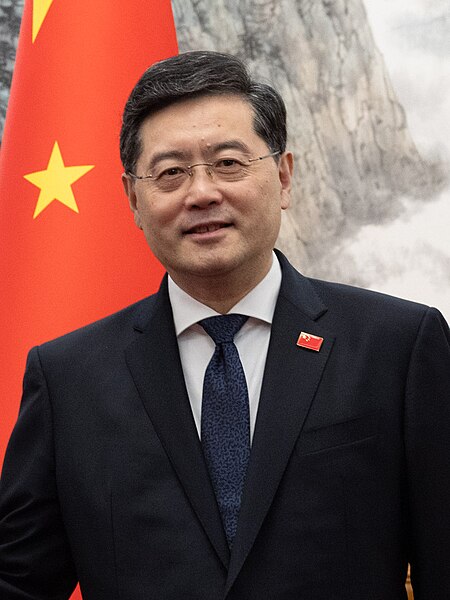



Chinese President Xi Jinping arrives in Washington on September 23, 2026, for a three-day state visit that will test whether the United States and China can stabilize one of the world’s most consequential relationships despite intensifying competition over technology, trade and global influence. The visit brings Xi face-to-face with President Donald Trump at a moment when China possesses substantially greater technological capabilities, diversified export markets and control over strategically important supply chains than it did when the two leaders first met during Trump’s first presidency.
The transformation is particularly visible in artificial intelligence, electric vehicles, renewable-energy technology, semiconductors and critical minerals. China recorded a record trade surplus of nearly $1.2 trillion in 2025 even as exports to the United States fell sharply, demonstrating how Beijing has expanded commercial relationships elsewhere while reducing some of its direct exposure to American trade pressure.
Yet China enters the summit with significant domestic vulnerabilities of its own. Economic growth has become harder to sustain, the property sector remains troubled, consumer demand is relatively weak and unemployment among urban residents aged 16 to 24 excluding students rose to 18.9% in August. The Washington meetings therefore involve two deeply interconnected powers that increasingly compete with each other but also have strong incentives to prevent that competition from becoming economically or militarily destabilizing.
Xi Jinping returns to Washington with a China transformed by technology and industrial expansion
The contrast with Xi’s earlier meetings in the United States is striking. During Trump’s first presidency, Washington possessed considerably greater leverage over critical technologies, and the restrictions subsequently imposed on companies such as Huawei Technologies exposed China’s dependence on American semiconductor technology and advanced components.
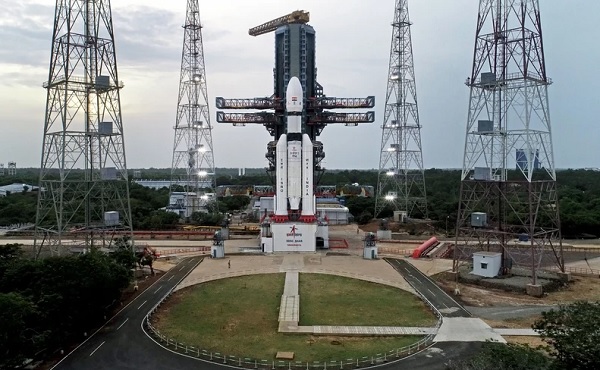
Beijing responded by directing enormous amounts of government financing, industrial policy and private investment toward greater technological self-sufficiency. Chinese companies have since expanded rapidly in artificial intelligence, robotics, electric vehicles, batteries, solar technology, biotechnology, commercial spaceflight and semiconductor development.
Artificial intelligence is emerging as one of the most important areas of competition. Chinese AI developers have narrowed parts of the performance gap with American models despite restrictions on access to the most advanced United States-designed chips, while companies including Huawei Technologies continue developing domestic alternatives to foreign AI hardware.
Huawei recently said its next generation of Ascend artificial intelligence chips would arrive earlier than previously planned, highlighting Beijing’s determination to reduce its dependence on foreign semiconductor suppliers. The wider contest now involves not only which country develops the strongest models but also the chips, data centers, electricity infrastructure and industrial applications needed to deploy AI at enormous scale.
Washington continues to restrict Chinese access to some advanced semiconductor technology because of national-security concerns, while Beijing argues that those measures are designed to contain China’s development. Reuters reported ahead of the summit that disagreements remain over chip exports, alleged technology copying and AI regulation even as officials on both sides explore possible safeguards against dangerous military uses of artificial intelligence.
The result is a relationship in which technological competition has become inseparable from economic and national-security policy. Neither side appears prepared to abandon that competition, making the more immediate diplomatic objective one of managing it without allowing individual disputes to destabilize the broader relationship.
China’s record trade surplus shows why tariffs no longer provide the same leverage
Trade remains another central issue, but China’s commercial position has changed substantially since Washington launched its first major tariff campaign during Trump’s initial presidency. China finished 2025 with a record trade surplus of nearly $1.2 trillion despite renewed tariffs, supported by stronger exports to Southeast Asia, Africa, Latin America and Europe.
Chinese exports to the United States fell approximately 20% during 2025, according to Chinese customs data cited by Reuters, yet overall exports continued rising. That does not mean the American market has become unimportant, but it demonstrates that Chinese manufacturers have developed additional markets capable of absorbing substantial quantities of goods.
Electric vehicles, batteries, solar panels, machinery and increasingly sophisticated electronics have played important roles in that export expansion. At the same time, the scale of Chinese industrial production has produced growing friction with governments that argue heavily supported Chinese manufacturers create unfair competition for domestic companies.
The United States-China economic relationship consequently looks less like a conventional trade dispute and more like a competition over industrial ecosystems. Washington wants to preserve leadership in advanced technology and rebuild strategic manufacturing capacity, while Beijing wants to move higher into global value chains and reduce its vulnerability to Western restrictions.
Agriculture remains one area where the two countries retain considerable mutual dependence. China is a major buyer of American soybeans and other agricultural goods, while discussions surrounding the summit have included Chinese purchasing commitments and the possibility of adjustments to tariffs affecting additional trade.
Energy, sanctions and Iran are also expected to enter the conversation. China remains an important buyer of Iranian energy and a major trading partner for Tehran, giving Beijing potential influence at a time when Washington is seeking greater economic pressure on Iran.
Rare earth supplies give Beijing an important source of leverage in negotiations with Washington
One of the clearest examples of China’s strategic importance is its position in critical-mineral supply chains. Rare earth elements and related materials are essential for products ranging from smartphones and electric vehicles to fighter aircraft, missiles, radar systems and semiconductor manufacturing equipment.
China retains dominant positions in the processing or supply of several strategically important materials, creating vulnerabilities for manufacturers in the United States and allied countries. Aerospace companies have recently begun testing alternative materials and recycling programs because disruptions involving Chinese supplies have exposed how difficult those dependencies are to replace quickly.
The United States is investing heavily in alternative mining, refining and processing capacity, but constructing complete supply chains can take years. That leaves rare earth access as an important element of current negotiations even as Washington tries to reduce its longer-term reliance on Chinese suppliers.
Recent commodity discussions between the countries have included rare earths alongside agriculture, energy and sanctions. American businesses have continued reporting difficulties obtaining some materials despite earlier agreements intended to improve supply flows, making the issue one of the most commercially significant parts of the summit agenda.
China’s influence in these markets also demonstrates why economic interdependence can simultaneously discourage conflict and create leverage. Both countries depend on supply chains that cross national boundaries, but each is increasingly trying to ensure that the other cannot use those dependencies during a future confrontation.
Taiwan, Iran and artificial intelligence could determine how stable US-China relations remain
Economic competition is only part of the Washington discussions. Taiwan remains one of the most sensitive issues separating the two governments, with Beijing insisting that the island is part of China and refusing to rule out the use of force to achieve unification.
China’s ambassador to the United States, Xie Feng, described Taiwan, human rights, China’s political system and its right to development as issues on which Beijing would resist outside pressure. Reuters separately reported that Taiwanese officials are watching the summit closely amid concern that arms transfers or other areas of American support could become entangled in wider negotiations.
The Iran conflict adds another complication. China maintains extensive commercial relations with Tehran and has resisted American efforts to force countries to sever economic ties with Iran, while Washington wants Beijing to use its influence to push Tehran toward an agreement.
The two governments are therefore approaching the summit with overlapping areas of cooperation and rivalry. Both have incentives to avoid uncontrolled escalation, yet their disagreements now encompass trade, military power, advanced technology, Taiwan, Iran and the rules governing emerging technologies.
Expectations for a major breakthrough during the three-day visit remain limited. Reuters reported that both governments appear focused partly on projecting stability between the world’s largest consumer economy and manufacturing power rather than resolving their many disagreements in a single summit.
That objective alone could carry significance. With American and Chinese companies deeply embedded in global supply chains, abrupt deterioration in relations can quickly affect financial markets, commodity prices, technology companies and manufacturers around the world.
China’s growing global influence adds another dimension to the Washington summit
China’s changing position is not confined to economics. Beijing has expanded diplomatic engagement across emerging economies while presenting itself as an alternative partner for countries seeking infrastructure, investment and technology without relying exclusively on the United States or Europe.
Public opinion data provide one indication of that shift, although perceptions vary sharply by country. A Pew Research Center survey of 42,151 adults across 36 countries conducted between February and May found China was viewed more positively than the United States in most of the countries surveyed. However, the United States continued to receive stronger ratings than China in countries including India, Japan, the Philippines and South Korea, and respondents generally rated the United States more favorably on respect for personal freedoms.
China’s expanding influence therefore should not be interpreted as universal international alignment with Beijing. Concerns remain over territorial disputes, human rights, economic dependence and China’s political system, particularly among several wealthier democracies and countries located near China.
What has changed is the number of areas in which Beijing can offer countries economically or technologically significant alternatives. Chinese electric vehicles, renewable-energy equipment, telecommunications infrastructure and artificial intelligence products increasingly reach markets throughout the developing and developed world.
That broader international reach matters when Xi sits down with Trump because the bilateral relationship no longer revolves simply around China seeking access to the American market and technology. Beijing has developed additional trading partners, domestic technological capabilities and strategic industries that give both governments more tools with which to pressure each other.
At the same time, China’s domestic economic challenges mean stability with Washington still has considerable value for Xi. Weak consumption, high youth unemployment, local-government debt and the prolonged property downturn create powerful incentives to avoid another severe disruption to trade and investment.
The September 23 state visit consequently reflects a complicated new phase of United States-China relations. Washington retains major advantages in advanced technology, finance, military capabilities and alliances, while China has expanded its industrial scale, technological capacity, supply-chain influence and global commercial reach.
Neither country can easily dictate the direction of the relationship on its own. What emerges from Xi’s visit may therefore matter less as a sweeping agreement than as an indication of whether the two governments can manage an increasingly competitive relationship without allowing disputes over technology, trade or security to escalate into a deeper confrontation.
Key takeaways from Xi Jinping’s September 23 visit to Washington
- Xi Jinping begins a three-day United States state visit on September 23, with trade, AI, Taiwan and Iran expected to dominate discussions.
- China recorded a nearly $1.2 trillion trade surplus in 2025 despite sharply lower exports to the United States.
- Beijing has expanded rapidly in AI, electric vehicles, batteries, renewable energy, robotics and semiconductor development.
- China’s position in rare earth supply chains gives Beijing significant leverage in technology and defense-related trade.
- Domestic challenges remain substantial, including weak consumption, property-sector stress and 18.9% youth unemployment in August.
- The summit is expected to focus heavily on managing competition and preserving stability rather than producing a sweeping US-China agreement.
Discover more from Business-News-Today.com
Subscribe to get the latest posts sent to your email.