


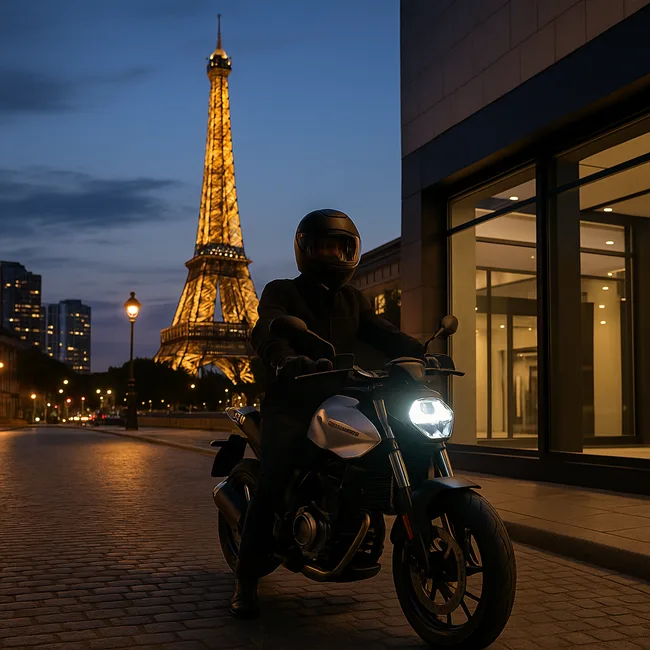
As BRP Inc. (TSX: DOO) (NASDAQ: DOOO) opens its first European flagship store in Paris to showcase electric Can-Am motorcycles, attention is turning to the role urban centers might play in shaping the next phase of powersports growth. From licensing accessibility to clean mobility incentives and charging infrastructure, cities such as Paris, Berlin, and Milan are evolving into testing grounds for electric two- and three-wheelers. The question now facing investors and manufacturers alike is whether these dense, regulation-forward environments can truly catalyze mass-market adoption of electric motorcycles across the continent.
The debut of BRP’s electric Can-Am Pulse and Origin models at the Montparnasse showroom marks a strategic experiment in bringing high-performance electrified vehicles to commuter and lifestyle riders in a zero-emission format. While the Canadian mobility manufacturer has long dominated the North American powersports scene, its European EV strategy may hinge on whether cities—not traditional motorcycle markets—become the primary growth engines for the segment.
What factors are making major European cities key battlegrounds for electric motorcycle adoption?
Several urban factors are converging to create a high-potential environment for electric motorcycle sales. Chief among them are the implementation of Low Emission Zones (LEZs) and Ultra Low Emission Zones (ULEZs) in cities like London, Paris, and Amsterdam. These regulations restrict or penalize the use of internal combustion engine (ICE) vehicles, especially two-stroke engines that dominate older scooter fleets.
Paris has committed to phasing out ICE two-wheelers entirely by 2030, with tighter restrictions already in effect during peak pollution days. Similar urban commitments are being seen across Germany, the Netherlands, and Scandinavia. These restrictions directly impact commuting behavior and are nudging daily riders toward electric alternatives. That shift has elevated electric motorcycles from a niche enthusiast category to a plausible primary commuting solution for a growing number of city dwellers.
Moreover, Europe’s Green Deal policies and the EU’s Fit for 55 targets have further incentivized EV infrastructure development and emissions-free transport. While most funding historically went to electric cars, municipalities are now supporting broader micromobility and two-wheeler adoption, with expanded charging infrastructure and consumer incentives.
How are licensing policies and commuter accessibility influencing electric motorcycle sales potential?
Europe’s motorcycle licensing regime is stratified by engine power and rider age. In many EU countries, including France, individuals can operate 11 kW electric motorcycles using just a car license and a mandatory seven-hour training course—without having to secure a full motorcycle license. This opens the market to a large cohort of urban professionals and casual riders who previously avoided motorcycles due to licensing complexity.
BRP’s Can-Am Pulse and Origin models are offered in both 11 kW and 35 kW variants, precisely to cater to this spectrum. The 11 kW version is tailored for first-time riders and urban commuters, while the 35 kW variant targets more seasoned users who seek performance parity with mid-range ICE motorcycles. By aligning product specifications with licensing thresholds, manufacturers can tap into a broader base of potential customers than in traditional motorcycle segments.
From a policy perspective, this also lowers barriers for women riders and older urban users—demographics traditionally underrepresented in powersports. As mobility expectations change, particularly among Gen Z and millennial users in cities, the low-barrier entry point is becoming a decisive adoption driver.
What infrastructure challenges must be addressed for electric motorcycles to scale in cities?
While regulations and licensing align in favor of EV motorcycle growth, infrastructure remains uneven. Most public charging infrastructure is designed for electric cars, with two-wheelers often lacking dedicated fast-charging stations or secure parking with charging access. This bottleneck can limit adoption, particularly among apartment dwellers who rely on street parking.
However, Level 2 charging compatibility—as featured in BRP’s electric lineup—offers a workaround. Riders can charge vehicles at home garages or standard public EV points, with a 20% to 80% charge achievable in under an hour. City planners are also starting to rethink curb infrastructure, with pilot projects across France and Germany rolling out curbside micro-mobility charging bays.
The European Commission’s Alternative Fuels Infrastructure Regulation (AFIR), passed in 2023, mandates publicly accessible electric vehicle charging stations every 60 km along major roads and encourages municipalities to develop tailored EV mobility zones. Though focused on cars, this regulatory momentum is expected to trickle down to electric two- and three-wheelers over the next five years.
Which urban markets in Europe are showing early momentum in electric motorcycle uptake?
France, Germany, Italy, and the Netherlands are emerging as leading adopters of electric motorcycles in urban environments. In France, where BRP launched its Paris flagship, national and city-level incentives have been instrumental. Subsidies for light electric vehicles (LEVs) can reach €900–€2,000 depending on income, vehicle power, and regional grants. In 2024, more than 15,000 electric motorcycles were registered in France—up 28% year-over-year, according to AVEM.
Germany has seen similar progress, with Berlin leading pilot programs for electric delivery bike fleets and moped-sharing platforms. Italian cities such as Milan and Bologna have made strides with EV incentives tied to urban congestion reduction. The Netherlands, meanwhile, boasts one of the highest per-capita electric bike ownership rates and is seeing spillover demand into light electric motorcycles and scooters.
BRP’s strategy of launching its electric motorcycle presence through a high-visibility Paris flagship aligns with these early-adopting metro zones. If successful, the brand may replicate this model in Milan, Berlin, or Amsterdam—markets where electric two-wheelers already enjoy infrastructural and regulatory tailwinds.
How does BRP’s Rotax E-Power platform enhance its competitiveness in city-based electric mobility?
At the heart of BRP’s electric motorcycles is its proprietary Rotax E-Power system, designed in-house to deliver both instant torque and long-term battery durability. The liquid-cooled architecture—which covers the battery, inverter, and charger—helps mitigate range degradation while allowing rapid Level 2 charging.
This engineering focus gives BRP an edge in performance-sensitive commuter use cases. Riders can expect fast charge cycles, consistent torque delivery, and minimal power drop-off during urban stop-start traffic. Additionally, advanced features such as Apple CarPlay integration and the BRP GO! app elevate the digital experience, catering to younger riders accustomed to smartphone-connected mobility.
The combination of hardware innovation and digital platform integration positions BRP to appeal not just to recreational riders, but also to daily urban commuters, gig economy workers, and even municipal fleets exploring electrified personal transport solutions.
What is the investor and institutional sentiment around BRP’s city-focused EV motorcycle push?
BRP’s Paris store launch comes on the heels of stronger-than-expected Q1 FY2026 earnings, with revenue reaching USD 1.8 billion and diluted EPS of USD 0.47. Analysts and institutional investors responded positively to the unveiling of its EV models and strategy execution, even as EMEA sales declined 22% year-on-year due to macro softness.
Despite the near-term international dip, sentiment around BRP’s electric expansion remains optimistic. Investors are watching closely for early signals of consumer traction from flagship initiatives like the Paris store. With over CAD 300 million earmarked for electrification, BRP’s credibility in the electric powersports transition is tied to how quickly it can translate brand equity and innovation into urban adoption across key European geographies.
What additional developments could accelerate electric motorcycle adoption in Europe’s cities?
Industry observers expect a convergence of shared mobility models, leasing partnerships, and government-backed incentives to boost adoption. For instance, integrating electric motorcycles into e-moped ride-sharing platforms or last-mile delivery fleets could drive volume while introducing users to ownership models.
Further developments could include collaborations with city governments to build two-wheeler-specific charging infrastructure, parking zones, and smart transport lanes. Additionally, electric motorcycles with removable batteries—while not part of BRP’s current portfolio—could cater to markets where charging access remains limited.
Finally, expansion into lightweight three-wheeled electric vehicles such as the Can-Am Canyon may open new demographic frontiers, especially among older riders or users who value stability and storage in urban traffic.
As Europe’s urban centers redefine mobility through policy and design, electric motorcycles stand at the intersection of commuter necessity and aspirational lifestyle. BRP’s decision to anchor its electric ambitions in Paris is more than a marketing experiment—it is a test of whether cities can lead the charge in transforming powersports from carbon-heavy to carbon-free.
If urban riders respond with enthusiasm, Europe’s cities won’t just be markets—they’ll be movement drivers. And in that scenario, BRP’s Paris storefront may go down as the ignition point of a much larger transformation.
Discover more from Business-News-Today.com
Subscribe to get the latest posts sent to your email.