


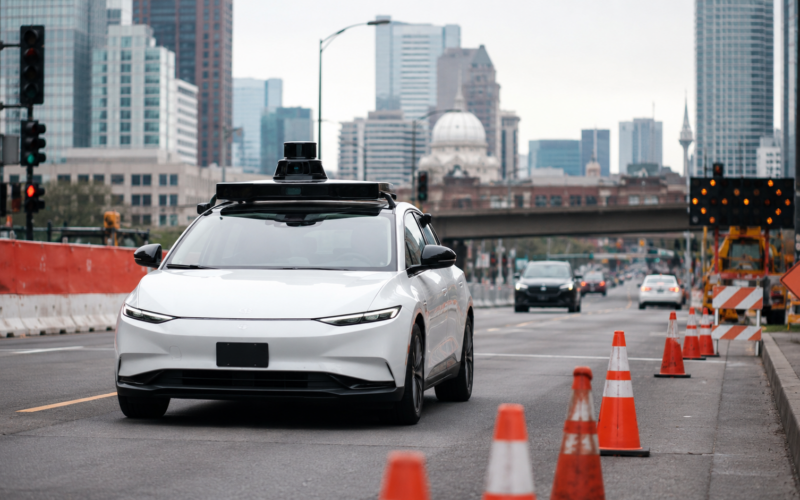
Waymo’s voluntary recall of 3,871 robotaxis equipped with its fifth-generation automated driving system has raised fresh questions about whether autonomous vehicles can safely manage construction zones, one of the most unpredictable environments on American roads. The recall, filed under National Highway Traffic Safety Administration Campaign Number 26E035000, followed multiple incidents in which Waymo vehicles entered closed freeway construction zones in Phoenix and the San Francisco Bay Area.
The recall matters because Waymo, owned by Alphabet Inc., is widely viewed as one of the most advanced robotaxi operators in the United States. Its technology has become a benchmark for the autonomous driving industry, and its expansion into paid driverless rides has helped support investor confidence in Alphabet’s long-term artificial intelligence and mobility ambitions. When a leading operator pulls back freeway operations because its software may fail to recognize or correctly respond to construction zones, the issue becomes bigger than one company’s fleet.
The problem identified in the recall is specific but important. Under certain circumstances, a Waymo autonomous vehicle may enter and continue driving at speed in a freeway construction zone because the software may fail to recognize the zone or may prioritize avoiding other freeway hazards. That creates an obvious safety risk because construction zones include workers, cones, lane closures, altered traffic patterns and temporary signage that can change quickly.
Why Waymo’s recall is a major test for robotaxi safety
Waymo’s recall is important because construction zones are exactly the kind of real-world challenge that separates controlled autonomy from everyday road readiness. A self-driving system can perform well on familiar routes in ordinary conditions, yet still struggle with temporary, messy, irregular environments. Road construction is full of edge cases: shifted lanes, confusing cones, partial closures, workers near traffic, temporary signs and drivers behaving unpredictably.
Human drivers also make mistakes in construction zones, but the public holds robotaxis to a different standard. The promise of autonomy is not that vehicles will merely match human inconsistency. The promise is that software, sensors and constant system learning will eventually reduce crash risk. Every recall tied to a basic road-handling scenario therefore puts pressure on that promise.

The Waymo incidents began in Phoenix, where the company reviewed one April 11 event and five April 19 events involving vehicles that did not recognize ramp closure signs and drove into pre-planned freeway construction zones. The problem later appeared in the San Francisco Bay Area, where seven Waymo vehicles entered active freeway construction lanes on May 18 by driving between cones marking closures in adjacent lanes.
Those details matter because the issue appeared in more than one market. A one-time mapping error would be easier to dismiss. A pattern across cities suggests the software needed improvement in how it identifies, prioritizes and responds to construction environments.
How the recall changes the autonomous vehicle narrative
Waymo has been one of the companies most associated with the argument that autonomous vehicles can be safer than human drivers. Its supporters often point to millions of driverless miles, controlled expansion and data-driven improvements. The recall does not erase those achievements, but it does complicate the public narrative.
The issue is not that autonomous vehicles must be perfect before they are deployed. No transportation technology is risk-free. The issue is whether companies and regulators are moving fast enough to identify failure modes before they produce serious injuries or public backlash. A construction-zone recall shows that even sophisticated systems can misread environments that ordinary drivers encounter daily.
For the autonomous vehicle industry, recalls are not necessarily a sign of failure. In software-defined vehicles, over-the-air fixes and rapid safety updates may become normal. But repeated recalls can affect trust if they make the public believe companies are discovering basic limitations only after robotaxis are already operating on public roads.
This is where the industry’s communication challenge becomes serious. If companies emphasize progress without clearly explaining limits, each recall feels like a contradiction. If they communicate openly about system boundaries, recalls may be seen as part of responsible safety management. Waymo’s decision to restrict freeway operations while working on the fix is therefore important because it shows containment rather than denial.
Why NHTSA’s role is becoming more important
The National Highway Traffic Safety Administration is becoming central to the robotaxi era because autonomous driving risk does not fit neatly into older vehicle-safety models. Traditional recalls often involve mechanical defects, faulty parts or manufacturing errors. Robotaxi recalls increasingly involve software judgment, perception, decision-making and how automated systems behave in rare but important scenarios.
That creates a harder regulatory problem. A brake defect can often be measured physically. A software perception issue may depend on context, training data, mapping, sensor fusion and decision priorities. Regulators need enough technical expertise to understand what went wrong and enough authority to require fixes before similar incidents become dangerous.
The Waymo recall shows how this new framework is developing. The company owns and operates the affected vehicles, which means it can deploy a software remedy directly. That is different from a consumer recall where millions of vehicle owners must be notified and persuaded to bring cars in for repairs. Robotaxi fleets can be managed centrally, which may allow faster corrections.
At the same time, centralized fleet control also places more responsibility on the operator. If a company controls the vehicles, the software and the service area, regulators and the public will expect quick action when patterns appear. Waymo’s freeway restrictions reflect that expectation.
What the recall means for Alphabet Inc. and investor sentiment
Waymo’s recall has implications for Alphabet Inc. because autonomous driving remains one of the company’s most visible long-term bets outside its core search, advertising, cloud and artificial intelligence businesses. Alphabet shares were recently trading at $347.38, down 0.66% on the day, suggesting the recall alone has not triggered a major market shock. Still, the strategic issue is bigger than one trading session.
Investors value Waymo not only for its current robotaxi revenue but for its future optionality. If autonomous ride-hailing scales safely, it could create a large mobility platform with recurring revenue, software advantages and data benefits. If safety concerns slow expansion, regulatory approvals or consumer adoption, the path to commercialization becomes longer and more expensive.
The recall also arrives at a time when autonomous driving is becoming more competitive. Tesla Inc., Amazon.com Inc.-backed Zoox, General Motors-related autonomous efforts and other mobility players are all competing for public trust, regulatory tolerance and investor attention. A recall at Waymo can therefore affect sentiment across the category, not only inside Alphabet.
The market’s likely interpretation is balanced. On one hand, a voluntary recall and freeway restriction show responsible risk management. On the other, repeated safety events remind investors that autonomous driving remains operationally difficult. The bull case for Waymo depends on safety, scale and regulatory confidence moving together. If any one of those weakens, valuation expectations can change.
Why construction zones are such a hard problem for robotaxis
Construction zones are difficult because they are temporary disruptions to the normal logic of the road. Autonomous vehicles rely on maps, sensor perception, prediction models and decision rules. Construction can undermine all of those at once. A lane that normally exists may be closed. A sign may be temporary. Cones may be moved. Workers may stand near traffic. Drivers may ignore markings. Navigation may conflict with visible conditions.
The Waymo recall says the system may have failed to recognize the construction zone or may have prioritized avoiding other freeway hazards. That language is revealing because autonomous driving is not just about seeing objects. It is about ranking risks. If the system treats one hazard as more urgent while missing the broader construction context, it may make a decision that is logical internally but unsafe externally.
This is one of the central challenges of artificial intelligence in the physical world. A model can be highly capable and still vulnerable to unusual scenarios. Roads are full of unusual scenarios. The safest systems must not only handle the common case but also recognize when the environment is ambiguous enough to slow down, stop or hand control to remote support.
For robotaxis, the question becomes how conservative the system should be. Too cautious, and the vehicle may stop unnecessarily, frustrate riders and disrupt traffic. Too confident, and it may enter dangerous areas. The construction-zone recall shows how difficult that balance remains.
Could the recall slow robotaxi expansion?
The recall could slow freeway expansion, but it does not necessarily threaten Waymo’s surface-street operations. Waymo has restricted freeway operations while continuing to serve riders on surface streets in its operating cities. That distinction matters because robotaxi growth often happens in layers. Companies expand first in controlled neighborhoods, then broader urban areas, then highways and more complex environments.
Freeway service is strategically important because it can make robotaxis more useful for longer trips, airport rides and regional mobility. If freeway access is limited, robotaxis may remain valuable but less competitive with human-driven ride-hailing for certain journeys. That can affect both rider experience and revenue potential.
Regulators may also become more cautious about future freeway approvals. A recall involving construction zones gives agencies a concrete reason to ask tougher questions before allowing broader deployment. That could slow the pace of expansion but may also make the industry stronger if fixes improve system reliability.
The key is whether Waymo can demonstrate that the software update meaningfully improves construction-zone recognition and avoidance. If the fix is effective and regulators are satisfied, the recall may become a manageable setback. If new incidents occur after the remedy, scrutiny will intensify quickly.
What should readers watch after Waymo’s robotaxi recall?
The most important development will be the effectiveness of Waymo’s software remedy. The company says it will update the automated driving system to detect and avoid construction zones. The public and regulators will need evidence that the fix works not only in known cases but also in varied, unpredictable road-work environments.
NHTSA’s next steps will also matter. If the agency closes the recall after reviewing the remedy, the story may settle into a normal software-safety correction. If NHTSA expands scrutiny or links this recall to other Waymo incidents, the regulatory risk could grow.
Waymo’s freeway strategy deserves close attention. Surface-street operations may continue, but freeway availability is important to the company’s long-term mobility ambitions. The timing of freeway restoration will show how confident Waymo and regulators are in the update.
Alphabet investor sentiment is another signal. A mild stock reaction suggests investors still see Waymo as a long-term asset, but repeated safety issues could weigh on the autonomy narrative. The more the market treats recalls as normal software iteration, the less damage Waymo faces. The more recalls look like evidence of unresolved system limits, the greater the pressure on Alphabet’s self-driving story.
The Waymo recall is not a verdict on the future of autonomous driving. It is a reminder that the future is arriving through difficult, specific problems rather than smooth slogans. Construction zones, floodwater, school buses and emergency scenes are where robotaxis must prove themselves. Waymo remains a leader in the field, but leadership now requires showing that driverless technology can learn from edge cases faster than public trust erodes.
Key takeaways from Waymo’s robotaxi recall
- Waymo is recalling 3,871 vehicles equipped with its fifth-generation automated driving system.
- The recall is listed as NHTSA Campaign Number 26E035000.
- The issue involves a risk that Waymo vehicles may enter closed freeway construction zones and continue driving at speed.
- Incidents were reported in Phoenix and the San Francisco Bay Area in April and May 2026.
- Waymo restricted freeway operations while developing and deploying a software fix.
- The company continues to operate on surface streets in the cities it serves.
- The recall highlights the difficulty autonomous vehicles face in temporary and unpredictable construction-zone environments.
- The issue is important for Alphabet Inc. because Waymo is one of its most visible long-term bets in artificial intelligence and mobility.
- Alphabet Inc. shares were recently trading at $347.38, down 0.66% on the day.
- The key test is whether Waymo’s software update satisfies regulators and restores confidence in freeway robotaxi operations.
Discover more from Business-News-Today.com
Subscribe to get the latest posts sent to your email.