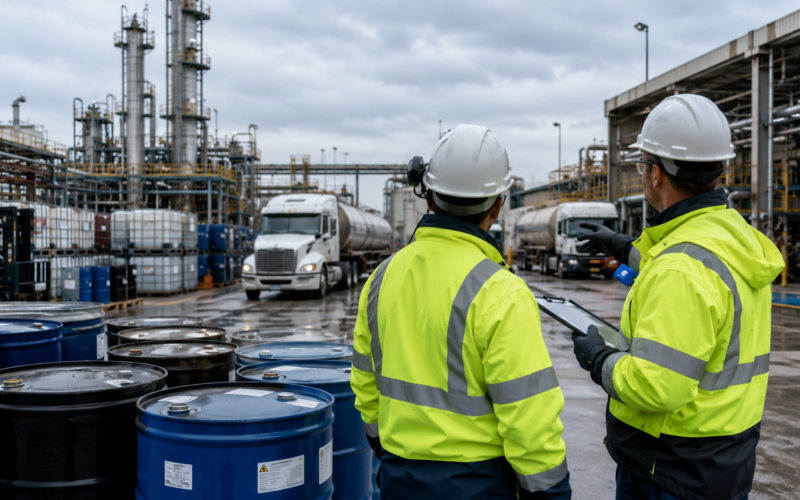
Veolia Environnement SA (Euronext Paris: VIE) has completed the financial close of its $3.04 billion acquisition of Clean Earth, the US hazardous waste business sold by Enviri Corporation (NYSE: NVRI), in a deal that doubles Veolia Environnement’s hazardous waste footprint in the United States and makes it the second-largest player in the sector nationally. The transaction lifts Veolia Environnement’s total US revenue to roughly $6.3 billion on a pro forma basis and adds 2,600 employees, treatment and disposal infrastructure, and coverage in regions where the company previously had little presence. Management has guided to $120 million of synergies by year four and expects the deal to be accretive to earnings per share from 2027, before purchase price allocation adjustments. This is Veolia Environnement’s largest acquisition since its 2022 merger with Suez, and it arrives as US industrial policy, reshoring, and tightening environmental standards push demand for specialized waste treatment capacity higher. For investors, the close converts a long-telegraphed strategic intention into a balance-sheet reality that now has to be executed.
Why does Veolia’s $3 billion Clean Earth acquisition reshape the US hazardous waste market in 2026?
The strategic logic centers on scarcity. Hazardous waste treatment capacity in the United States is constrained, permit-intensive, and slow to expand, which makes the assets Clean Earth brings difficult to replicate organically. Veolia Environnement now operates hazardous waste services at more than 150 US locations, with six high-temperature RCRA-permitted incineration units, 33 EPA-permitted treatment facilities, and over a thousand operating permits. Permits, not capital, are the binding constraint in this industry, and acquiring an established permitted network is a faster and more defensible route to scale than greenfield development that can take years to clear regulatory review.
The second observation is sector targeting. The combined platform is being pointed deliberately at the fastest-growing demand pools, namely healthcare, pharmaceuticals, retail, advanced manufacturing, semiconductors, and clean-energy production. These are sectors where reliable treatment access has become a production-continuity issue rather than a compliance afterthought, which gives Veolia Environnement pricing leverage that commoditized waste handling does not offer. Clean Earth’s strength in retail and healthcare logistics complements Veolia Environnement’s industrial base, widening the addressable market rather than simply adding tonnage.
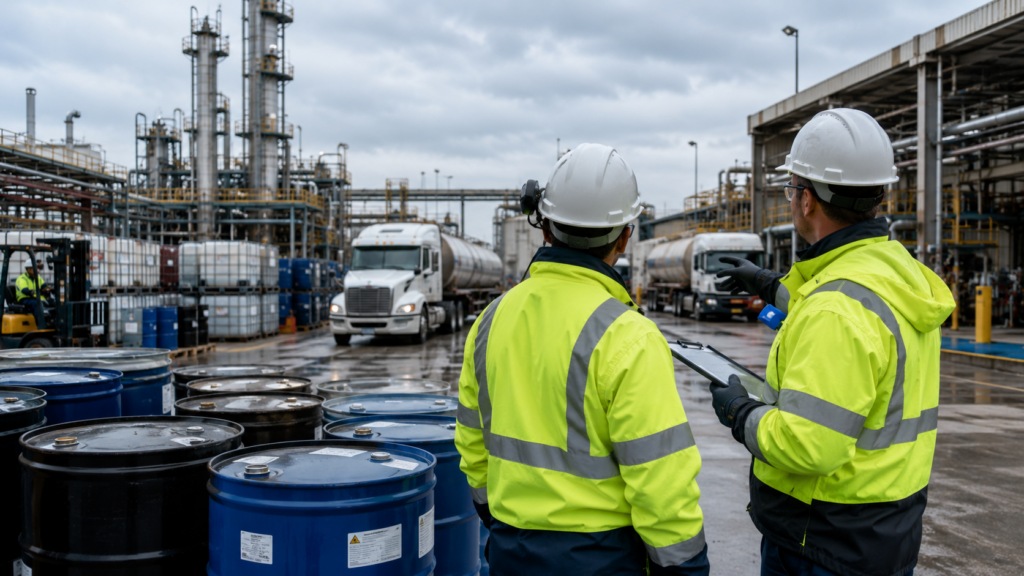
The third consideration is geographic gap-filling. The acquisition extends Veolia Environnement into regions new to the company, including the Pacific Northwest, and creates a genuinely nationwide service map. For multi-site retail and healthcare clients that need consistent compliance handling across every state they operate in, a single national vendor is materially more valuable than a patchwork of regional providers. That national reach is the asset most likely to support cross-selling and contract consolidation over the medium term.
What does doubling US hazardous waste capacity mean for Veolia’s revenue and margin trajectory?
The financial framing is built around margin accretion, not just revenue addition. Veolia Environnement has guided that its global hazardous waste revenue will rise to roughly €5.2 billion, with the segment EBITDA margin expanding toward 17 percent. Management is targeting hazardous waste EBITDA growth at a compound annual rate of at least 10 percent across 2024 to 2027, which positions hazardous waste as one of the higher-quality growth engines inside a group whose overall 2025 revenue of €44.4 billion was broadly flat year on year.
The valuation discipline deserves scrutiny. The enterprise value of around $3 billion, or approximately €2.6 billion, equates to 9.8 times estimated 2026 EBITDA after run-rate synergies are factored in. That is a full but not extravagant multiple for permitted, capacity-constrained infrastructure assets, and the synergy assumption of $120 million by year four is doing meaningful work in justifying the entry price. If those synergies arrive on schedule, the multiple looks reasonable. If integration drags, the headline price starts to look like a premium paid for scarcity.
The third point is the timing of returns. Accretion is guided from 2027 excluding purchase price allocation effects, which means 2026 is effectively an investment and integration year with limited earnings contribution. Investors should expect the near-term reported numbers to absorb integration costs and amortization before the synergy run rate becomes visible in the segment results. The market is being asked to underwrite a 2027 outcome on the strength of a 2022-era integration track record.
How does the Clean Earth deal position Veolia against Clean Harbors and other US competitors?
Becoming the number two US player by definition reframes the competitive landscape rather than dominating it. The acquisition narrows the distance to the largest incumbent and gives Veolia Environnement enough national density to compete for contracts that previously favored providers with broader footprints. Scale in this industry is self-reinforcing, because larger permitted networks attract the multi-site enterprise accounts that in turn justify further capacity investment.
The differentiation play is technology, specifically emerging contaminants. Veolia Environnement has flagged PFAS treatment and other emerging-contaminant capabilities as a focus area, and regulatory tightening around these substances is precisely the kind of standards-driven demand shock that rewards operators with advanced treatment technology and the permits to deploy it. Competitors without comparable PFAS handling capacity face a widening capability gap as enforcement intensifies.
The third competitive dynamic concerns the seller’s exit and the assets left behind. Enviri Corporation ran a competitive strategic-alternatives process before settling on Veolia Environnement, which suggests the asset was fully marketed and priced against rival bidders. That competitive tension validates the strategic value of the network but also means Veolia Environnement paid a market-clearing price rather than acquiring a distressed or overlooked asset. The upside therefore has to come from operational integration, not from buying cheaply.
What execution and integration risks does Veolia face in absorbing Clean Earth’s national network?
Integration risk is the central caveat. Veolia Environnement is folding in 2,600 employees, a separate operating culture, and a national network of permitted facilities, and the $120 million synergy target depends on harmonizing logistics, treatment routing, and customer servicing without disrupting compliance-sensitive operations. Hazardous waste handling carries little tolerance for operational error, so the integration must be careful rather than fast, which can slow the synergy capture timeline.
Regulatory and permit continuity is a second risk vector. Operating permits are facility-specific and jurisdiction-specific, and any change-of-control review, environmental liability question, or legacy site obligation inherited with the network could create unexpected cost or delay. The value of the acquisition rests on those permits remaining intact and transferable, and on the absence of material undisclosed environmental liabilities at acquired sites.
The third risk is capital allocation and balance-sheet discipline. This is the group’s largest deal since Suez, and management has paired it with an accelerated asset-rotation program to fund growth while managing leverage. Executing a major acquisition and a disposal program simultaneously is demanding, and the credibility of the synergy and accretion guidance will be tested against how cleanly Veolia Environnement manages its capital structure through 2026 and into 2027.
How is Veolia’s share price reacting and what does the Suez-era playbook signal for investors?
Veolia Environnement shares were trading around €34.73 to €35.26 on Euronext Paris around the deal close, giving the company a market capitalization of roughly €25.4 billion. The stock has risen approximately 15 percent over the trailing twelve months, outpacing several broad benchmarks, and carries a trailing dividend yield in the range of 4.3 to 5 percent, which anchors part of the investment case in income rather than pure growth. The deal close did not trigger a dramatic price move, suggesting the market had largely priced the acquisition since its November 2025 announcement and the May 2026 shareholder approval.
The measured price reaction aligns with the strategic significance rather than diverging from it. A telegraphed, shareholder-approved transaction that closes on schedule rarely produces a sharp re-rating on completion day, and the absence of volatility is consistent with an outcome the market viewed as both expected and broadly sensible. The more meaningful share-price catalyst will be 2027, when accretion and synergy delivery either confirm or undercut the guidance.
The Suez comparison is the lens investors are most likely to apply. Veolia Environnement has explicitly leaned on its integration track record from the 2022 Suez merger to justify confidence in the Clean Earth synergy targets, and that history is a reasonable basis for credibility given the group delivered on much of its Suez integration agenda. The risk for shareholders is extrapolation, because a successful prior integration does not guarantee the next one, and the hazardous waste assets carry different regulatory and operational characteristics. The investment thesis ultimately rests on whether Veolia Environnement can repeat disciplined integration in a more permit-sensitive corner of the market.
Key takeaways on what the Clean Earth acquisition means for Veolia, its competitors, and the hazardous waste industry
- The completed $3.04 billion acquisition makes Veolia Environnement the second-largest US hazardous waste operator and lifts pro forma US revenue to roughly $6.3 billion, converting strategic intent into operational reality.
- Permits, not capital, are the binding constraint in US hazardous waste, so acquiring Clean Earth’s permitted network of 33 EPA-permitted facilities and over a thousand operating permits is a faster moat than organic buildout.
- The deal is deliberately aimed at structurally growing demand pools including semiconductors, pharmaceuticals, healthcare, and clean energy, where treatment access is now a production-continuity issue that supports pricing power.
- Margin expansion is the core financial promise, with hazardous waste segment EBITDA margin guided toward 17 percent and at least 10 percent EBITDA CAGR through 2027.
- The 9.8 times post-synergy EBITDA multiple is full but defensible, and the $120 million synergy target by year four is the variable that determines whether the entry price proves disciplined or expensive.
- Accretion is guided only from 2027, making 2026 an integration and investment year with limited earnings contribution and elevated near-term costs.
- PFAS and emerging-contaminant treatment capability is the intended differentiator, positioning Veolia Environnement to capture standards-driven demand that capability-light competitors cannot serve.
- Integration risk is the central caveat given 2,600 transferred employees, facility-specific permit continuity, and zero tolerance for operational error in hazardous waste handling.
- For seller Enviri Corporation, the sale crystallized value from a competitive process, returned $1.3 billion to $1.5 billion in cash to shareholders, cut leverage, and accompanied the spin-off of Harsco Environmental and Rail into a standalone company.
- The muted Euronext Paris share reaction reflects a fully anticipated close, with the real re-rating catalyst deferred to 2027 synergy and accretion delivery measured against the post-Suez integration track record.
Discover more from Business-News-Today.com
Subscribe to get the latest posts sent to your email.