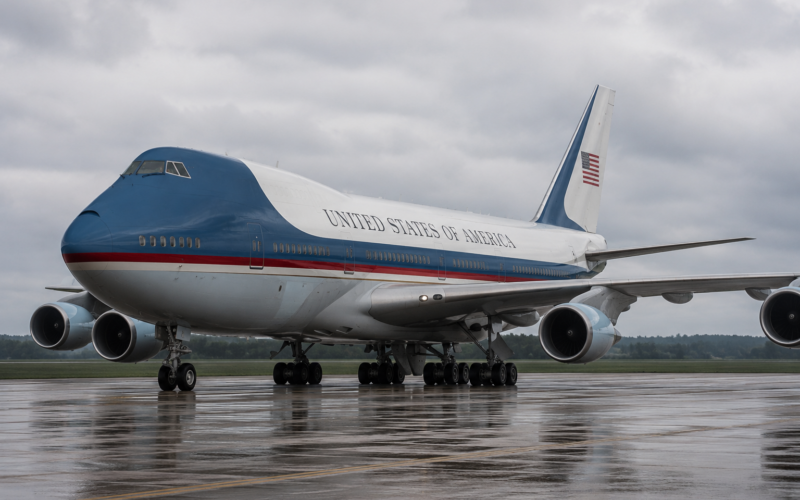
President Donald Trump took his first official flight on July 1, 2026, aboard a refurbished Boeing 747 donated by Qatar and converted for use as Air Force One, turning a presidential aircraft debut into a political, diplomatic and security controversy. The aircraft is intended to serve as a temporary bridge while the United States waits for delayed Boeing-built presidential planes expected later in Trump’s term.
The flight matters because Air Force One is not just a plane. It is a symbol of American sovereignty, military capability, presidential authority and national security. Accepting a luxury aircraft from a foreign government, even through official channels, raises questions about ethics, foreign influence, procurement shortcuts and whether the United States should rely on a foreign-donated jet for the country’s most sensitive passenger.
Trump has praised the aircraft’s scale, luxury and craftsmanship, arguing that the upgraded jet gives the presidency a more modern and impressive platform. Critics see a different message. They argue that the arrangement creates the appearance of foreign influence, invites constitutional and ethical questions, and risks turning one of America’s most recognizable institutions into a political branding exercise.
Why the Qatari-gifted Air Force One matters beyond presidential travel
The Qatari-gifted Air Force One matters because presidential aircraft are normally treated as national-security infrastructure, not ceremonial luxury goods. The plane must function as a secure communications hub, an emergency command platform and a protected transport system capable of carrying the president, senior aides, military officers, Secret Service personnel and journalists during routine travel and crisis situations.
That role makes the aircraft different from any other government asset. Air Force One must support classified communications, military coordination, secure decision-making and continuity of government. Every system, from wiring and communications to defensive protections and maintenance, carries security implications.
Using a plane originally built for a foreign royal fleet adds another layer of concern. The aircraft has been retrofitted for presidential use, and officials say it meets required standards. But critics will continue asking whether the rush to deliver the jet created trade-offs that would not exist in a normal procurement timeline.

The symbolism is also hard to ignore. A U.S. president flying on an aircraft donated by Qatar creates a striking image at a time when foreign influence, Middle East diplomacy, defense contracts and presidential ethics are already politically sensitive. Even if the legal process is defended, the optics will remain contentious.
How the aircraft became a bridge solution for delayed Boeing replacements
The new aircraft is being used because the official replacement program for the aging presidential fleet has faced years of delays and cost pressures. The existing Air Force One planes have been in service for decades, while Boeing’s next-generation aircraft have repeatedly slipped behind schedule. That created a gap the Trump administration chose to fill with the Qatari-donated jet.
Supporters of the arrangement will argue that the United States needed a faster solution. The Qatari aircraft is a Boeing 747-8, a newer and larger platform than the current presidential planes, and officials have described it as suitable for conversion. In that view, using an available aircraft allowed the government to modernize presidential travel more quickly while waiting for the long-delayed permanent replacements.
The political problem is that speed can look like shortcutting. Presidential aircraft are normally built, modified and certified through controlled processes because the security requirements are unusually demanding. When an aircraft is accepted from a foreign government and then fast-tracked into service, questions naturally follow about cost, inspection, security validation and long-term ownership.
The bridge argument may satisfy some voters who see the plane as a practical upgrade. It may not satisfy critics who believe the presidency should avoid any arrangement that can be portrayed as accepting luxury assistance from a foreign state.
Why Qatar’s role creates a foreign influence problem for Trump
Qatar’s role creates the central ethical challenge. Qatar is a major U.S. partner in the Middle East, hosts important American military assets and plays a diplomatic role in regional conflicts. It also has strategic interests in Washington, including defense, energy, investment and foreign policy priorities. That makes any major gift from Qatar to the United States politically sensitive.
The Trump administration can argue that the aircraft was accepted by the government, not personally by Trump, and that the Defense Department controls the operational conversion. That distinction matters legally and procedurally. But politics often turns on appearance as much as formal ownership.
Critics will ask whether Qatar receives symbolic access, goodwill or diplomatic advantage from providing a presidential aircraft. Even without evidence of a specific policy favor, the scale of the gift invites concern because presidential travel is one of the most visible symbols in American government. The donor country becomes part of the story every time the plane is discussed.
The issue could become sharper if future U.S. decisions involving Qatar arise while Trump is using the jet. Arms sales, base agreements, regional mediation, energy matters or investment deals could all be viewed through the lens of whether the aircraft created an appearance of obligation. That perception risk is difficult to eliminate once the plane enters presidential service.
How security concerns could shape the debate over the aircraft
Security concerns are likely to remain central because Air Force One must operate under threats that ordinary aircraft never face. The plane needs secure communications, hardened systems, protection against surveillance and defenses against hostile action. Any aircraft entering that role must be examined at a level far beyond normal commercial standards.
Officials say the aircraft was modified to meet presidential requirements, and the Air Force has defended the safety and security of the platform. That official assurance is important because the military would not place the president on an aircraft it believed was unsafe or operationally unfit.
Still, outside experts and lawmakers may push for more information about what was changed, what was skipped, what was accelerated and how thoroughly foreign-origin systems were inspected or replaced. The most sensitive details cannot be disclosed publicly, but classified briefings may become necessary to reassure Congress.
The broader concern is not only whether the aircraft is safe today. It is whether political pressure to deliver a dramatic presidential upgrade influenced procurement decisions. If critics can argue that symbolism outran caution, the aircraft will remain a security controversy even if no technical flaw is publicly identified.
Why the redesigned aircraft could become part of Trump’s political brand
The aircraft’s design and debut are also politically meaningful. Trump has favored a more dramatic red, white, dark blue and gold look, replacing the traditional presidential aircraft design associated with earlier administrations. Supporters may see the redesign as bold, patriotic and consistent with Trump’s preference for visual spectacle.
That matters because presidential imagery is part of political messaging. Air Force One appears in campaign-style backdrops, foreign visits, summit arrivals and national ceremonies. A redesigned aircraft can become a moving symbol of Trump’s second-term identity, especially during the United States’ 250th anniversary celebrations.
Critics will argue that this risks personalizing a national asset. Air Force One belongs to the presidency and the country, not to one president’s brand. When design choices, luxury details and foreign-donated origins are all tied to Trump’s personal taste, the line between state symbolism and political self-presentation becomes harder to defend.
The White House will likely lean into the visual impact. The aircraft gives Trump a powerful backdrop for patriotic events, military ceremonies and international travel. The more visible the plane becomes, the more it will serve as both an asset and a target in the broader political debate.
How the controversy could affect defense procurement scrutiny
The Air Force One controversy could also raise scrutiny of defense procurement. The official Boeing replacement program has been delayed, expensive and politically frustrating. Trump has repeatedly criticized the pace and cost of the project, using the Qatari aircraft as evidence that the government needed a faster alternative.
That message could resonate with voters who are tired of defense contractors missing deadlines and exceeding budgets. If a donated aircraft can be modified and deployed more quickly, some may ask why the official program has taken so long. That could put new pressure on Boeing, the Air Force and defense procurement officials.
But the comparison may be misleading. A temporary bridge aircraft does not necessarily meet the same long-term requirements as purpose-built presidential aircraft designed for decades of service. The permanent program involves complex systems, certification, survivability standards and integration work that cannot be measured only by speed.
The policy lesson may therefore cut both ways. The Qatari jet highlights frustration with slow procurement, but it also shows the danger of using political urgency to solve defense-acquisition problems. Faster is valuable only if security, transparency and lifecycle planning remain intact.
Why Democrats and Republicans may both find political risk in the issue
Democrats are likely to frame the aircraft as an ethics and foreign influence issue. They can argue that Trump accepted an extraordinary benefit from a foreign monarchy while turning a symbol of the presidency into a display of personal luxury. That message fits into broader Democratic attacks on corruption, conflicts of interest and Trump’s relationship with wealthy foreign governments.
Republicans may defend the plane as a practical upgrade and a strong projection of American power. They may argue that the United States received a valuable asset, saved time and improved presidential travel while Boeing’s replacement program remained delayed. They may also portray Democratic criticism as partisan outrage over a successful modernization effort.
But there is risk for Republicans too. Some conservatives are traditionally skeptical of foreign influence, government luxury and elite deals. A foreign-donated presidential jet can be uncomfortable for voters who want America to project independence rather than reliance on another country’s gift.
The political durability of the controversy will depend on whether new details emerge. If the aircraft operates smoothly and no further ethical complications appear, criticism may fade into partisan background noise. If questions arise over cost, security, Qatar policy or future ownership, the plane could remain a recurring symbol of Trump-era controversy.
What should readers watch after Trump’s first flight on the Qatari jet?
The next area to watch is congressional oversight. Lawmakers may request classified briefings on the aircraft’s security modifications, public explanations of procurement decisions and clearer documentation of how the gift complied with federal law. The administration’s willingness to share information will shape whether the controversy narrows or expands.
Future U.S.-Qatar decisions will also be closely examined. Any major policy move involving Qatar, including defense cooperation, regional diplomacy, investment arrangements or military basing, could be interpreted through the aircraft controversy. That does not mean every decision will be connected to the jet, but perception will matter.
The aircraft’s long-term ownership will be another sensitive issue. If the plane is ultimately transferred to a presidential library foundation or used in a way that appears to benefit Trump personally after government service, the ethical scrutiny will intensify. Clear boundaries between government use and private legacy-building will be essential.
The broader question is whether the plane becomes normalized as a temporary presidential aircraft or remains a symbol of foreign influence and politicized luxury. Trump is presenting it as a powerful upgrade to American presidential travel. Critics are presenting it as an ethical warning sign. The longer the aircraft stays in the spotlight, the more it will test how Americans define presidential symbolism, national security and foreign influence in the modern era.
Key takeaways from Trump’s Qatari-gifted Air Force One debut
- President Donald Trump took his first official flight on July 1, 2026, aboard a refurbished Boeing 747 donated by Qatar and converted for use as Air Force One.
- The aircraft is intended to serve as a temporary bridge while the United States waits for delayed Boeing-built presidential aircraft expected later in Trump’s term.
- The plane’s foreign origin has raised ethics and influence concerns because Qatar is a major U.S. partner with strategic interests in Washington and the Middle East.
- Trump has praised the aircraft’s luxury, scale and craftsmanship, using the debut to frame the plane as a powerful upgrade to presidential travel.
- The Air Force says the aircraft meets presidential standards, but lawmakers and outside experts may still press for more details about security modifications and the rapid retrofit process.
- The controversy reflects a broader tension between practical modernization and the risk of accepting an unusually valuable asset from a foreign government.
- The aircraft’s redesign in red, white, dark blue and gold gives Trump a highly visible presidential symbol that also carries strong personal branding associations.
- Democrats are likely to frame the plane as a foreign influence and ethics problem, while Republicans may defend it as a practical response to delayed Boeing replacements.
- The issue could increase scrutiny of defense procurement, especially the long-delayed official Air Force One replacement program and the government’s reliance on contractors.
- The controversy will depend on congressional oversight, future U.S.-Qatar policy decisions, security transparency and whether the aircraft’s eventual ownership creates new ethical questions.
Discover more from Business-News-Today.com
Subscribe to get the latest posts sent to your email.