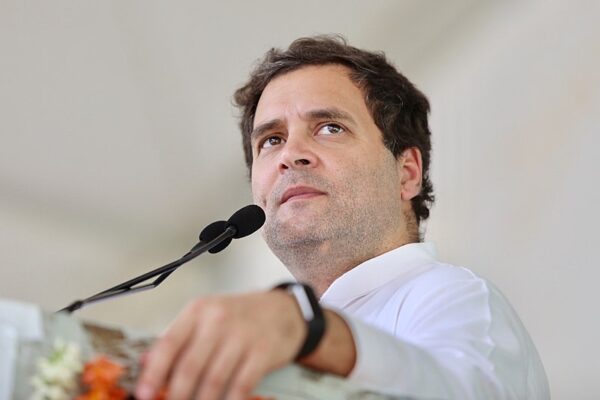



The Netherlands will vote to remove suspended International Criminal Court Prosecutor Karim Khan when the court’s 125 member states meet on July 24, 2026, placing the host country behind an unprecedented attempt to dismiss the institution’s chief prosecuting official.
The Dutch government disclosed its position in a joint letter from the ministers responsible for justice and foreign affairs. The Netherlands said it would support the recommendation of the Bureau of the Assembly of States Parties, which concluded that Karim Khan had committed serious misconduct and should be removed from office.
The British barrister denies wrongdoing and has challenged the disciplinary process as unlawful, procedurally unfair and unsupported by sufficient evidence. He has been suspended from his duties at the International Criminal Court since June 8 and has also lost an attempt to overturn a separate interim suspension imposed by the Bar Standards Board in England and Wales.
The July 24 vote comes at an exceptionally difficult moment for the court. The administration of United States President Donald Trump has launched a coordinated campaign to weaken the institution through sanctions, travel restrictions and diplomatic pressure, while European governments insist that the court’s independence must be preserved.
The issue facing member states is therefore larger than the future of one prosecutor. The Assembly of States Parties must decide whether removing Karim Khan is necessary to protect institutional credibility without allowing an internal misconduct case to strengthen external efforts aimed at disabling the court itself.
Why has the Netherlands decided to support Karim Khan’s removal from the International Criminal Court?
The Netherlands hosts the International Criminal Court in The Hague and has long presented itself as a centre of international law, judicial cooperation and accountability for serious crimes.
Its government said the decision followed the recommendation of the Bureau of the Assembly of States Parties, the body responsible for managing the court’s disciplinary and administrative oversight between full sessions of member states.
The bureau concluded that Karim Khan had engaged in serious misconduct involving an inappropriate relationship with a junior staff member. The disciplinary finding followed an investigation lasting approximately 18 months and led to his suspension on June 8.
Dutch ministers told Parliament that support among member states was still evolving, but indicated that most governments appeared to be moving towards the bureau’s recommendation.
That assessment gives the Dutch declaration wider importance. The Netherlands holds only one vote, but its position may influence governments that have not publicly stated how they will vote.
The host country also has a particular interest in the court’s integrity. The International Criminal Court depends on the Netherlands for its headquarters, diplomatic arrangements, security environment and practical cooperation with detained suspects, witnesses and visiting delegations.
A decision to oppose removal after the bureau’s findings could have exposed the Dutch government to criticism that it was protecting the institution’s leadership at the expense of workplace accountability.
Supporting dismissal carries a different risk. Governments hostile to the court may present the vote as proof that the institution is politically compromised or administratively incapable of policing its senior officials.
The Dutch position attempts to separate those questions. The misconduct process concerns the prosecutor’s fitness for office, while support for the International Criminal Court concerns the continued legitimacy of the institution and the Rome Statute.
How will the July 24 vote on removing the International Criminal Court prosecutor work?
The prosecutor cannot be removed by the court’s judges, its administrative leadership or the Bureau of the Assembly of States Parties acting alone.
Article 46 of the Rome Statute gives that authority to the full Assembly of States Parties. The assembly is composed of the governments that have ratified or acceded to the treaty establishing the court.
A decision to remove the prosecutor must be taken through a secret ballot and requires an absolute majority of the states parties. With 125 members, removal would require at least 63 votes.
The legal threshold is lower than the two-thirds majority required for removing a judge. That distinction reflects the structure established by the Rome Statute for different elected officials.
The assembly must consider whether the official committed serious misconduct, seriously breached official duties or became unable to perform the functions required by the office.
The July 24 session is unusual because no International Criminal Court prosecutor has previously faced a full member-state vote on removal.
Member governments must assess the bureau’s disciplinary record, Karim Khan’s response, the fairness of the procedure and the consequences for the court’s continued work.
A secret ballot gives states greater freedom to vote without publicly aligning themselves with either side. It also makes the result harder to predict from diplomatic statements alone.
Some governments may support dismissal because they consider the bureau’s findings sufficient. Others may believe the process was flawed, the evidence remains disputed or removal would destabilise the court during an external political attack.
The vote will settle whether Karim Khan remains in office, but it will not necessarily end related proceedings. Professional regulators and other competent authorities may continue examining matters within their own jurisdiction.
What has the disciplinary process established and what allegations remain disputed?
The disciplinary process began after concerns were raised in 2024 about Karim Khan’s conduct towards a junior colleague in the Office of the Prosecutor.
The Bureau of the Assembly of States Parties later concluded that he had maintained an inappropriate sexual relationship with the staff member and had committed serious misconduct and a serious breach of duty.
Those findings are disciplinary conclusions. They are not equivalent to a criminal conviction, and the July 24 vote is not a criminal trial.
The prosecutor denies any sexual misconduct and rejects the bureau’s account. Through his legal representatives, he has argued that the process failed to follow proper procedures and did not provide a fair assessment of the evidence.
He voluntarily stepped away from his duties in May 2025 while the investigation continued. The bureau formally suspended him in June 2026 and referred the question of removal to the full membership.
The Bar Standards Board, which regulates barristers in England and Wales, separately imposed an interim suspension. An appeal seeking to lift that restriction was unsuccessful, leaving the professional measure in force while the regulatory process continues.
The existence of separate institutional processes can create public confusion. The International Criminal Court is deciding whether he remains fit to serve as prosecutor, while the British regulator is considering whether he should continue practising within its professional jurisdiction.
Neither process allows member states to avoid the central governance issue. The court’s senior official was responsible for enforcing accountability in cases involving grave international crimes, making confidence in his own conduct and leadership essential.
At the same time, procedural fairness remains indispensable. An institution created to uphold legal standards would damage its credibility if it removed an elected official through a process that could not withstand scrutiny.
The July 24 vote must therefore reconcile two obligations: protecting staff and institutional integrity while ensuring that the subject of disciplinary action receives a fair and legally defensible process.
Why does the Netherlands’ position carry more weight than an ordinary member-state vote?
The International Criminal Court is headquartered in The Hague, making the Netherlands the physical and diplomatic host of the institution.
The host government provides an environment in which judges, prosecutors, defence lawyers, witnesses and state representatives can perform functions connected to cases involving conflict zones around the world.
The Netherlands also supports a broader network of international legal institutions based in The Hague. Its foreign policy identity is closely connected to the rule of law, treaty-based cooperation and international dispute resolution.
That reputation gives the Dutch government a strong interest in ensuring that the court responds credibly to allegations concerning senior leadership.
A neutral or defensive position could have weakened the message that international institutions must apply accountability standards internally as well as externally.
The decision also creates political cover for other European governments. States that strongly support the court may now argue that voting for removal is compatible with defending the institution.
The Dutch approach does not endorse the United States campaign against the International Criminal Court. The government is treating the misconduct process as a reason to strengthen governance rather than abandon the court.
That distinction is likely to become central before the vote. Member states may conclude that removing a prosecutor following a formal disciplinary process demonstrates institutional resilience, not institutional failure.
Governments opposed to dismissal may argue that the host country is moving too quickly while the findings remain contested. They may also fear that leadership removal during a geopolitical confrontation will deepen operational uncertainty.
The Netherlands has nevertheless placed its diplomatic credibility behind the view that the court can survive a change in prosecutor more easily than it can survive unresolved doubts over misconduct at the top of the Office of the Prosecutor.
How does the United States campaign against the International Criminal Court deepen the leadership crisis?
The Donald Trump administration announced a wider campaign against the International Criminal Court on July 13, only days before the Dutch government disclosed its position.
United States Secretary of State Marco Rubio said Washington would use sanctions, travel restrictions, visa measures and diplomatic pressure to prevent the court from acting against American officials and military personnel.
The United States is not a party to the Rome Statute and rejects the court’s authority over American citizens without Washington’s consent.
The administration has also opposed cases affecting Israel, a close United States ally. American officials argue that the court has exceeded its mandate and threatens national sovereignty.
The International Criminal Court and its supporters maintain that jurisdiction can arise when alleged crimes occur on the territory of a state that has accepted the Rome Statute, even when the accused person comes from a non-member country.
The dispute has existed for years, but the July campaign represents a broader effort to isolate the court rather than challenge individual cases.
European institutions have rejected threats against judges, staff members and organisations cooperating with the court. The European position is that disagreements over jurisdiction should be addressed through legal procedures rather than coercive action against the institution.
The Karim Khan controversy gives Washington an additional argument. United States officials can point to the misconduct process as evidence that the court lacks credibility or adequate internal control.
Member states will therefore try to prevent the July 24 vote from becoming part of the geopolitical campaign against the court.
A credible disciplinary response could deny critics the argument that senior officials are protected from accountability. A divisive or poorly explained decision could deepen doubts among governments whose support is essential for arrests, evidence collection and funding.
The immediate leadership dispute and the external pressure campaign are legally separate, but their political consequences are now inseparable.
Can the Office of the Prosecutor continue operating if Karim Khan is removed?
The Office of the Prosecutor has continued functioning during his absence under Deputy Prosecutors Mame Mandiaye Niang and Nazhat Shameem Khan.
Both officials were elected by the Assembly of States Parties and sworn into office in 2022 for nine-year terms. Their existing authority provides institutional continuity during the suspension.
Investigations, courtroom proceedings, evidence reviews and cooperation with national authorities do not automatically stop because the chief prosecutor is unavailable.
The deputies can supervise active work and represent the prosecution in matters within their authority. The court’s judges, registry and defence functions also remain institutionally separate from the prosecutor.
Removal would nevertheless create strategic and administrative challenges. The chief prosecutor determines priorities, allocates investigative resources and represents the office in sensitive relations with governments and international organisations.
A vacancy could continue until member states complete a formal process for choosing a successor. That process would need to balance geographical representation, legal experience, managerial competence and independence from political influence.
The court cannot afford a prolonged leadership vacuum. Its cases often depend on rapidly changing battlefield evidence, witness protection and cooperation from governments that may already be reluctant to assist.
The deputies would also inherit a workplace requiring institutional repair. Staff confidence may have been affected by the length of the investigation, the allegations themselves and disputes over how internal complaints were handled.
Operational continuity is therefore possible, but it does not remove the need for leadership reform.
Member states must decide whether an interim structure can protect ongoing cases while a transparent search identifies a permanent prosecutor capable of rebuilding confidence.
What could the July 24 decision mean for active war-crimes investigations and arrest warrants?
The International Criminal Court investigates genocide, crimes against humanity, war crimes and the crime of aggression where the Rome Statute gives it jurisdiction and national systems are unwilling or unable to act genuinely.
Its work includes situations involving Ukraine, Afghanistan, Libya, Sudan, the Palestinian territories and several African states.
The prosecutor’s removal would not automatically cancel an arrest warrant, end an investigation or overturn a judicial decision. Judges issue warrants and make rulings independently after considering applications and evidence submitted by the prosecution.
Existing cases would therefore remain legally active unless judges issued a separate decision affecting them.
The greater risk involves pace, coordination and political support. Complex investigations require cooperation from states, access to witnesses, protection programmes and substantial financial resources.
Governments hostile to particular cases may use the leadership crisis to delay cooperation or challenge the credibility of prosecutorial decisions.
Defence teams may also examine whether any case was affected by management failures, conflicts of interest or procedural problems associated with the suspended prosecutor.
Those challenges would need to be considered individually. An allegation concerning personal conduct does not by itself invalidate unrelated evidence or judicial rulings.
The office must nevertheless demonstrate that case decisions were made through documented legal procedures and professional review rather than depending entirely on one individual.
For victims and affected communities, institutional delay carries a real cost. Evidence can disappear, witnesses can become unavailable and suspects may continue travelling beyond the court’s reach.
The Assembly of States Parties must therefore manage the transition without allowing an internal accountability process to paralyse investigations into crimes committed during active conflicts.
Could removing Karim Khan ultimately strengthen rather than weaken the International Criminal Court?
Removal would be a severe institutional event, but it could demonstrate that no official stands above the standards the court expects governments and military leaders to respect.
The International Criminal Court was created because national and international systems had repeatedly failed to hold powerful individuals accountable for the gravest crimes.
That mission becomes harder to defend when staff members believe internal misconduct is ignored or handled through opaque procedures.
A transparent removal process could show that the Assembly of States Parties is willing to act against senior leadership while preserving prosecutorial and judicial independence.
The outcome would strengthen the institution only if member states also address the weaknesses exposed by the case.
Those reforms could include stronger protections for employees who report misconduct, independent complaint mechanisms, clearer disciplinary timelines and greater separation between managerial authority and internal investigations.
Member governments must also protect the process from political interference. External actors should not be allowed to use a workplace misconduct case to undermine unrelated investigations or threaten court personnel.
A successor chosen through an open and credible process could restore confidence among staff, civil society organisations and governments.
The alternative is a prolonged dispute in which the suspended prosecutor remains a symbol of institutional paralysis while the United States expands pressure and member states become increasingly divided.
The July 24 vote is therefore both a disciplinary decision and a test of whether the Rome Statute system can correct internal failure without abandoning its central purpose.
What are the key takeaways from the Netherlands backing Karim Khan’s removal?
- The Netherlands announced on July 16, 2026, that it will vote to remove suspended International Criminal Court Prosecutor Karim Khan when the Assembly of States Parties meets in a special session on July 24.
- The Bureau of the Assembly of States Parties concluded that the prosecutor had committed serious misconduct involving an inappropriate relationship with a junior staff member and recommended that the full membership dismiss him.
- Karim Khan denies wrongdoing and argues that the disciplinary process was unlawful and procedurally unfair, while a separate interim suspension imposed by the Bar Standards Board in England and Wales remains in force.
- Article 46 of the Rome Statute requires a secret ballot and an absolute majority of the 125 member states to remove the prosecutor, meaning at least 63 governments would need to support dismissal.
- The Netherlands’ decision carries additional significance because The Hague hosts the International Criminal Court and the Dutch government has a direct interest in protecting the credibility of international legal institutions based on its territory.
- The July 24 vote comes during a United States campaign involving sanctions, travel restrictions and diplomatic pressure aimed at weakening the court’s ability to investigate American personnel and officials of allied governments.
- Deputy Prosecutors Mame Mandiaye Niang and Nazhat Shameem Khan have maintained operational continuity, but removal would still require member states to manage a sensitive leadership transition and eventually select a permanent successor.
- Existing investigations and arrest warrants would not automatically disappear if the prosecutor is removed, although prolonged instability could affect cooperation, evidence gathering, staff confidence and the pace of complex international cases.
Discover more from Business-News-Today.com
Subscribe to get the latest posts sent to your email.