


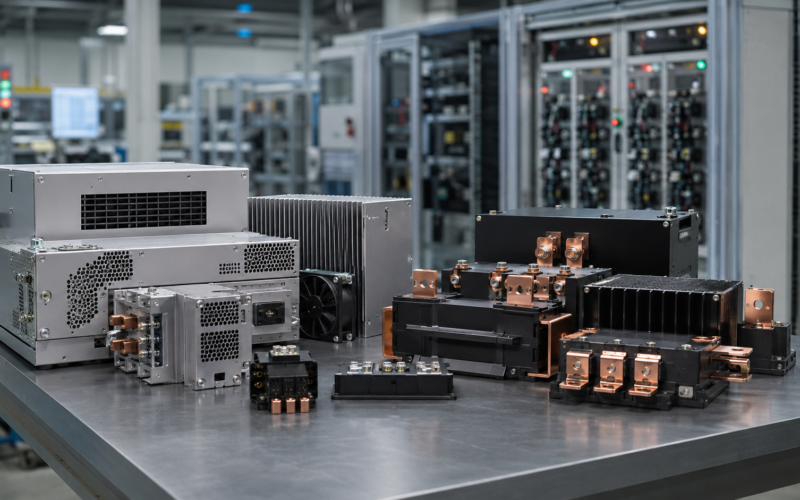
TE Connectivity plc (NYSE: TEL) has agreed to acquire Astrodyne TDI from Tinicum L.P. for approximately $1.4 billion, adding a specialised power management and filtering business to its Industrial Solutions segment. Astrodyne TDI is expected to contribute more than $250 million in annual sales after the transaction closes, which is targeted by the end of calendar 2026, subject to regulatory approvals and customary closing conditions. The acquisition expands TE Connectivity beyond connectors and sensors into power conversion, power distribution and electromagnetic interference filtering for demanding industrial applications. It was announced alongside record fiscal third-quarter results, giving TE Connectivity considerable operating momentum as it prepares for another integration. However, the absence of disclosed profitability, financing, synergy and return-on-invested-capital targets leaves the valuation as the deal’s central unresolved question.
What exactly is TE Connectivity acquiring through the $1.4 billion Astrodyne TDI transaction?
Astrodyne TDI develops power supplies, power converters, transformers, power distribution products and electromagnetic interference filters for applications where reliability, thermal management and regulatory compliance are critical. Its markets include semiconductor manufacturing equipment, medical devices, industrial automation, military systems and aerospace platforms.
These are not simple commodity components. Power systems used in semiconductor fabrication tools, robotic surgical equipment, industrial machinery or defence electronics frequently require customised electrical designs, qualification work and engineering collaboration between suppliers and original equipment manufacturers. Once a component is designed and approved for a particular platform, replacing it can become time-consuming and technically risky.
That characteristic may give Astrodyne TDI longer product cycles and relatively durable customer relationships. It could also complement TE Connectivity’s established position in connectors, sensors and electrical architecture by allowing the company to address a larger portion of the power path inside complex equipment.
The transaction remains proposed rather than completed. Astrodyne TDI will continue operating under its existing ownership until the necessary approvals and closing conditions are satisfied. TE Connectivity expects to include the acquired business within Industrial Solutions after completion.
The company has disclosed expected annual sales of more than $250 million but has not provided Astrodyne TDI’s earnings before interest, taxes, depreciation and amortisation, operating margin, customer concentration or organic growth rate. It has also not outlined expected cost savings, cross-selling benefits or integration expenses.
At the stated revenue floor, the approximately $1.4 billion purchase price represents less than 5.6 times annual sales. The actual multiple would be lower if Astrodyne TDI’s revenue is materially above $250 million, but the missing profitability information prevents a meaningful assessment of the earnings multiple being paid.
Why does Astrodyne TDI strengthen TE Connectivity’s industrial power strategy at this stage?
TE Connectivity’s existing portfolio helps distribute power, signal and data across vehicles, factories, energy networks, medical devices, aircraft and data-centre equipment. Astrodyne TDI adds capabilities that convert, condition, filter and manage electrical power before it reaches those connected systems.
That adjacency matters because industrial customers increasingly need suppliers to solve entire engineering problems rather than provide isolated components. Higher power density, tighter equipment designs and more sensitive electronics are raising the importance of thermal performance, electrical isolation and electromagnetic compatibility.
Artificial intelligence infrastructure is part of this trend, but the Astrodyne TDI deal should not be interpreted as a pure artificial intelligence acquisition. Its most direct exposure appears to span semiconductor capital equipment, medical technology, industrial automation, aerospace and defence. Data-centre investment may create indirect opportunities through semiconductor demand and increasingly power-intensive infrastructure, but the acquired portfolio is considerably broader.
The transaction could nevertheless help TE Connectivity capture more value from the electrification cycle surrounding artificial intelligence, factory automation and advanced computing. A company supplying both connectivity and specialised power products can potentially become more deeply embedded in customer platforms, increase its share of equipment content and coordinate product development across a wider electrical architecture.

TE Connectivity may also be able to introduce Astrodyne TDI products to its global industrial customer base while offering existing Astrodyne TDI customers access to a broader range of connectors, sensors and related components. Such revenue opportunities are strategically credible, although qualification cycles mean they may take several quarters or years to become visible.
The attraction is therefore not simply the addition of $250 million or more in annual revenue. The stronger rationale is the possibility of combining power management, filtering and connectivity into a more complete industrial offering. The success of that approach will depend on whether TE Connectivity preserves Astrodyne TDI’s engineering depth and customer responsiveness during integration.
Does the $1.4 billion Astrodyne valuation require unusually strong margins or synergies?
The headline valuation demands scrutiny because TE Connectivity has provided less financial detail than it disclosed for some previous acquisitions.
When TE Connectivity announced its approximately $2.3 billion acquisition of Richards Manufacturing, it expected the business to contribute roughly $400 million in annual sales and disclosed earnings before interest, taxes, depreciation and amortisation margins in the mid-30% range. It also outlined an expected mid-teens return on invested capital after tax, revenue and cost synergies.
No comparable margin or return framework has yet been provided for Astrodyne TDI. The two businesses operate in different markets, so the transactions should not be treated as directly comparable. Nevertheless, the Richards Manufacturing disclosure demonstrates the type of information investors will need before deciding whether the Astrodyne TDI purchase price reflects high-quality earnings or optimistic future assumptions.
The deal also arrives after TE Connectivity has already expanded its Industrial Solutions portfolio through acquisitions. Richards Manufacturing strengthened its position in utility-grid equipment, while Astrodyne TDI would add specialised power conversion and filtering. Together, the transactions point to a broader capital-allocation strategy focused on businesses positioned around electrification, rising power demand and critical infrastructure.
TE Connectivity reported $1.24 billion in cash and cash equivalents and $5.53 billion in long-term debt at June 26, 2026. The Astrodyne TDI purchase price therefore exceeds the company’s quarter-end cash balance, although TE Connectivity has not yet disclosed the transaction’s financing mix.
The balance sheet does not indicate an immediate funding constraint. TE Connectivity generated $2.17 billion in free cash flow during the first nine months of fiscal 2026. However, it also returned approximately $2 billion to shareholders over the same period through dividends and share repurchases.
Management must consequently balance acquisitions, shareholder distributions and financial flexibility. If the purchase is substantially debt-funded, investors will assess whether subsequent cash generation reduces that obligation without restricting investment in organic growth. If existing cash and future free cash flow provide a greater share of the funding, attention will shift toward the opportunity cost of committing capital to the acquisition.
How do TE Connectivity’s record quarterly results improve its ability to absorb Astrodyne TDI?
The acquisition was announced from a position of operating strength. TE Connectivity reported record fiscal third-quarter net sales of $5.16 billion, representing growth of 14% on a reported basis and 12% organically from the corresponding period.
Adjusted earnings per share increased 22% to a record $2.94, while generally accepted accounting principles diluted earnings per share from continuing operations rose 19% to $2.55. Adjusted operating margin expanded by 90 basis points to approximately 22%.
Industrial Solutions produced $2.58 billion in quarterly sales, up from $2.12 billion a year earlier. Its reported sales growth was approximately 22%, while organic growth reached 21%. The segment’s adjusted operating margin increased to 22.8% from 22.1%, indicating that rapid expansion did not require TE Connectivity to sacrifice underlying profitability.
Demand signals were also strong. Company-wide orders reached a record $5.7 billion, an increase of 27% year over year, with double-digit order growth across the portfolio. Operating cash flow was approximately $1.2 billion for the quarter, while free cash flow reached $883 million.
TE Connectivity expects fourth-quarter sales of approximately $5.25 billion, representing 11% reported and organic growth. Adjusted earnings per share are projected to rise 18% to approximately $3.05, while generally accepted accounting principles earnings per share from continuing operations are forecast at approximately $2.84.
These figures provide financial capacity and organisational confidence for the acquisition. They also raise the performance standard Astrodyne TDI will be expected to meet. Adding revenue alone will not be enough if the acquired business dilutes Industrial Solutions margins or requires prolonged restructuring.
A successful integration should eventually demonstrate revenue retention, organic growth, stable engineering investment and margins compatible with TE Connectivity’s broader industrial portfolio. Without those outcomes, the strategic logic could remain sound while the financial return disappoints.
Why did TE Connectivity stock weaken before the market despite an earnings and guidance beat?
TE Connectivity shares closed at $209.01 on July 21, up 2.89% for the session and approximately 3.8% across the preceding five trading days. The stock nevertheless remained about 17% below its 52-week high of $252.56, reached in April.
Shares traded more than 5% lower in premarket activity following the combined earnings, outlook and acquisition announcement. Premarket trading can be volatile, and the movement cannot be attributed solely to the Astrodyne TDI transaction because investors were processing several developments simultaneously.
The results exceeded Wall Street expectations, and fourth-quarter guidance was also ahead of consensus forecasts. The negative initial reaction therefore suggests that investors may have been testing the quality and durability of growth rather than simply comparing reported numbers with estimates.
TE Connectivity entered the announcement with demanding expectations around artificial intelligence infrastructure, industrial orders and margin expansion. The company had also experienced a sharp decline after its previous quarterly report despite reporting stronger earnings, highlighting how sensitive the stock has become to changes in expectations for digital data networks and artificial intelligence-related demand.
The Astrodyne TDI valuation may have added another layer of uncertainty. Investors have been told the purchase price and minimum annual revenue contribution, but not the acquired company’s profit, expected accretion, integration cost or targeted return. That information gap naturally makes it more difficult to determine whether the transaction creates value immediately or depends on several years of execution.
The most balanced interpretation is that market sentiment remains constructive toward TE Connectivity’s underlying industrial growth but more selective regarding valuation and capital allocation. A stronger share-price response may require management to demonstrate that rising orders are converting into sustainable revenue while acquisitions preserve margins and generate acceptable returns.
What milestones will show whether the Astrodyne TDI acquisition creates lasting value?
The first milestone is regulatory clearance and completion by the end of calendar 2026. Any delay would postpone the revenue contribution and could create uncertainty for employees, suppliers and customers.
After closing, investors will need disclosure on Astrodyne TDI’s organic growth, profitability, integration expenses and expected earnings contribution. TE Connectivity’s initial post-acquisition guidance will be particularly important because it should clarify whether the deal is accretive to adjusted earnings and Industrial Solutions margins.
Customer retention will be another critical indicator. Astrodyne TDI’s value depends partly on specialised engineering relationships and products qualified for demanding applications. TE Connectivity must preserve those relationships while introducing its operating systems, procurement processes and financial controls.
The next test will be commercial rather than administrative. Evidence of cross-selling, new design wins or larger content per customer would support the argument that Astrodyne TDI is more valuable inside TE Connectivity than as a standalone company.
The strategic position has improved because TE Connectivity would gain a broader industrial power portfolio at a time when power density, automation, semiconductor investment and electrification are increasing demand for specialised components. What remains unresolved is whether the acquired earnings and synergies can justify the price.
The strongest evidence would be sustained organic sales growth, stable or improving Industrial Solutions margins and a clearly articulated return-on-invested-capital pathway. The thesis would weaken if integration costs rise, customer programmes are disrupted or the acquired business delivers revenue without sufficient cash generation. The decisive proof point will be TE Connectivity’s first detailed financial outlook for Astrodyne TDI after the transaction closes.
What are the key takeaways from TE Connectivity’s proposed Astrodyne TDI acquisition?
- TE Connectivity has agreed to acquire Astrodyne TDI from Tinicum L.P. for approximately $1.4 billion.
- Astrodyne TDI is expected to contribute more than $250 million in annual sales to Industrial Solutions.
- The transaction is subject to regulatory approvals and is expected to close by the end of calendar 2026.
- Astrodyne TDI adds power conversion, power distribution and electromagnetic interference filtering capabilities.
- The portfolio serves semiconductor equipment, medical, industrial, aerospace and defence applications.
- At the disclosed revenue floor, the purchase price represents less than 5.6 times annual sales.
- TE Connectivity has not disclosed Astrodyne TDI’s margins, expected synergies, financing structure or return target.
- Record third-quarter sales, orders and cash generation give TE Connectivity financial capacity to execute the transaction.
- The initial stock reaction indicates that strong earnings did not eliminate investor concerns about expectations and capital allocation.
- Post-closing margins, organic growth, customer retention and return on invested capital will determine whether the acquisition creates durable shareholder value.
Discover more from Business-News-Today.com
Subscribe to get the latest posts sent to your email.