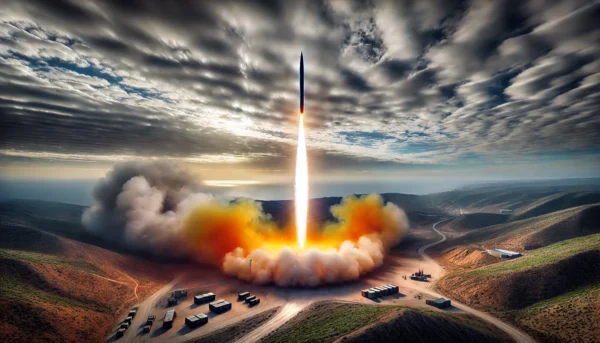
Ukraine has accused Russia of deliberately endangering nuclear safety across Europe after a coordinated barrage of drone and missile attacks struck substations supplying power to two operational nuclear power plants. The overnight assault, one of the most intense in recent months, killed at least seven people and caused widespread disruption to electricity and heating systems across several regions, including the capital Kyiv.
According to the Ukrainian military and government officials, over 450 drones and 45 missiles were launched by Russia in the early hours of the morning, with a significant concentration of strikes targeting the power infrastructure surrounding the Khmelnytskyi and Rivne nuclear power plants. These facilities, although not directly damaged, rely heavily on external substations for safe operations. Ukrainian authorities have characterized the assault as a calculated attempt to cripple the country’s nuclear energy backbone, raising fears about the stability of Europe’s broader nuclear safety ecosystem.
Why are substations powering nuclear plants being targeted, and how does it raise the risk of nuclear incidents?
Unlike prior attacks that primarily targeted general electricity grids or military sites, this latest round zeroed in on substations that are essential for the transmission of stable external power to nuclear facilities. While neither the Khmelnytskyi nor the Rivne plant was reportedly shut down, experts and nuclear watchdogs have warned that repeated disruptions to these substations can create dangerous vulnerabilities.
Ukraine’s deputy foreign minister Andrii Sybiha stated that the precision of the strikes pointed to a “deliberate act of nuclear blackmail.” He further claimed that these attacks were “not accidental” but “well-planned to create maximum risk to nuclear safety in Ukraine and beyond.” His comments were echoed by Ukraine’s energy ministry, which accused Russia of engaging in “nuclear terrorism” — a term used to describe the deliberate targeting of nuclear-critical civilian infrastructure for coercive or destabilizing purposes.
The International Atomic Energy Agency confirmed that military activity had occurred near both nuclear plants and issued a fresh warning about the dangers posed when nuclear sites lose reliable access to external electricity. Although most nuclear plants are designed with backup diesel generators to maintain cooling operations, these are not long-term solutions and carry their own operational risks. The IAEA reiterated that any loss of power to a nuclear site, even for short durations, can have catastrophic implications if repeated or prolonged.
What are the reported casualties and infrastructure damages from the Russian attack?
According to the Ukrainian Ministry of Internal Affairs, seven civilians were killed in multiple regions. In Dnipro, three people lost their lives when a drone struck a residential building, with twelve more injured. Another three were reported dead in the Zaporizhzhia region following missile strikes, and one person was killed in the Kharkiv region, where explosions damaged both residential and commercial infrastructure.
The attacks triggered emergency responses across several cities. Kyiv, Poltava, and parts of Kharkiv experienced rolling blackouts and disruptions to water supply as repair crews scrambled to stabilize grid performance. Ukrainian energy operator Ukrenergo reported significant damage to transmission systems linked to nuclear and thermal power plants, though full assessments were still underway at the time of writing.
This was not the first time Russia targeted Ukraine’s energy infrastructure, but Ukrainian officials said the scale and focus of the latest strikes marked a dangerous turning point. Emergency protocols were reportedly activated at multiple critical infrastructure nodes, including mobile diesel generator deployments and grid re-routing to prevent cascading blackouts.
How has Russia justified the attack, and what is the broader military context?
The Russian Ministry of Defence claimed that the operation was part of a “massive precision strike using long-range air, ground, and sea-based weapons” aimed at neutralizing Ukrainian weapon-production sites and key energy infrastructure. It further stated that these attacks were retaliatory, in response to recent Ukrainian strikes on facilities inside Russian territory.
Independent analysts noted that the nature of the targets, which were concentrated around substations linked to nuclear operations rather than arms factories, seemed to contradict the Russian narrative. Satellite imagery reviewed by Western intelligence agencies reportedly showed consistent patterns of targeting near energy infrastructure nodes far removed from active battlefield zones.
Military observers suggest that Russia’s strategic pivot towards energy infrastructure is part of a broader winter warfare strategy designed to demoralize the Ukrainian population by cutting off heat, electricity, and essential utilities during the cold season. The timing — just as temperatures begin to drop — supports the theory that Moscow is leveraging civilian energy hardship as an indirect weapon to force political concessions or weaken morale.
What does this escalation mean for nuclear safety and European energy stability?
The risk calculus surrounding Ukraine’s nuclear energy sector has grown significantly more complex. With over 50 percent of Ukraine’s electricity generation coming from nuclear power, the sabotage or disruption of key transmission links can create a cascading effect across the country’s energy system. More importantly, any power disruption to nuclear reactors can compromise their core safety systems, especially if sustained or repeated.
European nuclear regulators and the International Atomic Energy Agency have raised growing concerns that deliberate interference with nuclear infrastructure introduces a new class of risks in modern warfare. The European Union has been monitoring developments closely and has reportedly begun consultations on reinforcing support for Ukraine’s energy infrastructure, including technical assistance and emergency grid stabilization support.
Nuclear security experts have warned that the repeated loss of external power to reactors, even if mitigated by generators, increases stress on plant operators and elevates the likelihood of human error or mechanical failure. While Ukraine’s operators have thus far demonstrated high levels of resilience and professionalism, the possibility of an unanticipated event rises with each new incident.
How is this part of a broader Russian energy warfare strategy against Ukraine?
The overnight barrage fits into an ongoing Russian playbook that increasingly targets Ukraine’s civilian energy assets. Over the past year, Ukrainian gas processing plants, grid distribution centers, and thermal power facilities have all come under attack. With frontlines largely static and a potential war of attrition playing out, the Kremlin appears to be shifting focus toward creating economic and psychological pressure through non-battlefield tactics.
By degrading energy infrastructure, Russia forces Ukraine to divert resources toward constant repair, undermines the country’s ability to maintain industrial output, and disrupts daily life for millions. With winter approaching, power outages can become deadly — not only from cold but from secondary effects like hospital disruptions, food spoilage, and breakdown of public safety systems.
This infrastructure-centric strategy may also be designed to exhaust Ukraine’s international allies. Continued strikes on civilian infrastructure generate headlines and sympathy, but they also raise the financial and logistical costs of Western support. The European Union and United States have already contributed billions in emergency energy aid, and Moscow may be betting that fatigue or shifting political winds could reduce this flow in 2026.
How might this nuclear strike reshape energy defense priorities across Europe this winter?
The key variables in the weeks ahead will likely revolve around the international response. If the International Atomic Energy Agency escalates the issue to the United Nations or calls for new international safety guarantees, it could pressure Russia diplomatically. Meanwhile, financial markets, especially in Europe, will be closely monitoring energy risk premiums and the geopolitical pricing of nuclear energy exposure.
There is also growing speculation about whether Ukraine will respond by targeting Russian energy assets in retaliation. Kyiv has previously focused on military and logistics hubs inside occupied territories, but a move against Russian oil or gas infrastructure could significantly escalate tensions.
For Ukraine’s allies, including the United States and European Union, the strikes underscore the urgency of supporting decentralized and resilient energy systems, including renewable energy projects, battery storage, and rapid-deployment backup grids. Reducing dependency on single-point substation vulnerabilities is likely to become a core pillar of Ukraine’s mid-term energy strategy.
Key takeaways: How Ukraine’s nuclear grid became a new frontline in Russia’s winter war
- Ukraine reported seven civilian deaths after Russian drone and missile attacks hit substations feeding the Khmelnytskyi and Rivne nuclear power plants.
- Ukrainian officials accused Russia of deliberately targeting critical energy nodes to risk nuclear safety and destabilize the grid before winter.
- The attacks disrupted power and water services in Kyiv, Dnipro, Zaporizhzhia, Kharkiv, and Poltava, triggering nationwide emergency responses.
- Russia said the strikes were part of a broader response to Ukrainian cross-border attacks, focusing on defense-industrial and energy sites.
- The International Atomic Energy Agency warned of elevated risks as nuclear plants lost external power, even though reactor operations remained stable.
- Analysts see the attack as part of a shift toward energy warfare, using grid destabilization to weaken civilian morale and infrastructure resilience.
- Western governments are likely to increase grid support and pressure Russia through diplomatic channels amid growing nuclear security fears.
Discover more from Business-News-Today.com
Subscribe to get the latest posts sent to your email.