
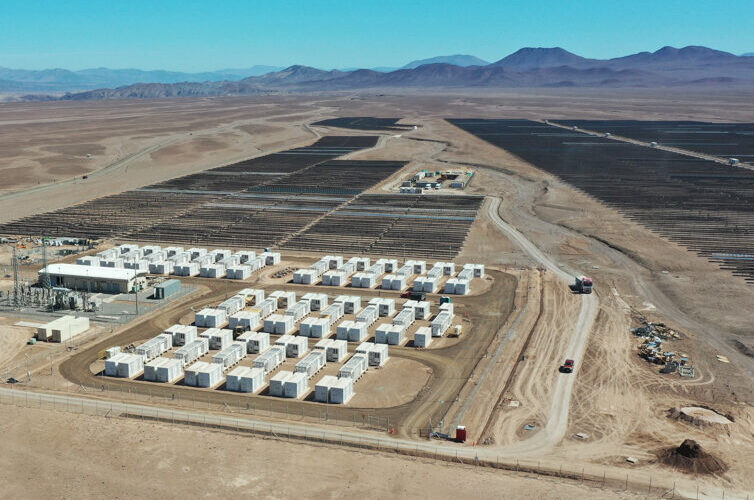
Opdenergy has closed a $227 million financing package for an operational renewable energy portfolio in Chile that the company describes as having 371MW of capacity across solar power, wind generation and battery storage. The transaction was financed by Sumitomo Mitsui Banking Corporation, BNP Paribas and Instituto de Crédito Oficial and is supported by long-term distribution-company and private power purchase agreements with investment-grade customers. The financed portfolio includes the Sol de Los Andes solar and battery complex in the Atacama region, the La Estrella wind farm in the O’Higgins region and a group of solar plants in Valparaíso. Opdenergy is controlled by funds managed by Antin Infrastructure Partners S.A. (Euronext Paris: ANTIN), whose shares closed at €8.80 on July 9, close to the lower end of their €8.62 to €13.06 52-week range. The financing matters because Chile’s renewable investment challenge has shifted from simply adding solar and wind capacity to combining contracted generation, storage and geographic diversification in ways that can survive congestion, curtailment and volatile power prices.
Why does Opdenergy’s $227 million Chile financing matter for renewable infrastructure investors?
The financing matters because it is tied to assets already operating rather than an early-stage development pipeline waiting for permits, construction contracts or grid access. Operational portfolio financing generally gives lenders greater visibility over technical performance, electricity production, customer contracts and historical cash flows. That can support larger debt packages and more competitive financing terms than projects carrying substantial construction or commissioning risk.
Opdenergy has also assembled a multi-technology portfolio rather than financing one isolated solar or wind farm. The structure combines solar generation in northern and central Chile, wind output in the O’Higgins region and a large battery system in the Atacama region. This creates a more diversified production profile because the assets respond differently to weather, time of day and regional power-market conditions.
The strategic value lies in reducing dependence on a single revenue window. Solar projects in northern Chile can produce heavily during daylight hours, when strong generation across the region may depress prices or exceed available transmission capacity. Wind generation and battery discharge can support supply at different times, allowing the portfolio to align more closely with customer demand.
For infrastructure lenders, that diversification can make the portfolio more resilient. It does not eliminate merchant exposure, operational risk or grid congestion, but it gives the financed assets more ways to generate contracted value. The deal therefore reflects a wider shift in renewable finance from funding individual technologies toward funding coordinated energy portfolios.
How does the Sol de Los Andes battery address Chile’s renewable curtailment problem?
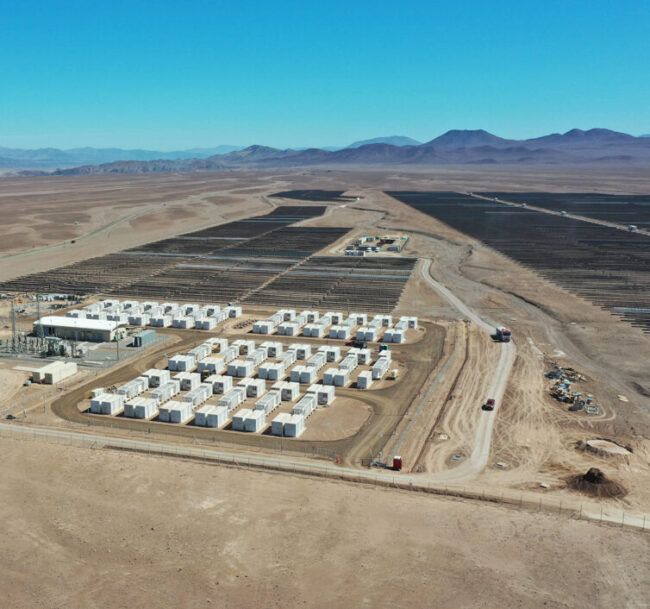
The Sol de Los Andes battery is one of the most strategically important assets inside the financing package. The 90MW/513MWh battery energy storage system is co-located with the 104MWp Sol de Los Andes solar plant in the Atacama region. Its energy capacity implies more than five hours of storage at full rated output, giving the project a longer operating duration than batteries designed mainly for short frequency-response services.
That duration matters in Chile because solar output is often strongest during periods when electricity demand and transmission availability do not fully absorb production. Large volumes of renewable generation can therefore be curtailed, meaning the electricity is technically available but cannot be delivered economically or safely into the system. Storage allows part of that output to be retained and discharged later when demand or prices are stronger.
The battery can also improve the commercial usefulness of the solar plant. Instead of selling electricity only when the sun is producing, the combined system can reshape delivery into evening or higher-value periods. This can support power purchase agreements requiring a more predictable supply profile and reduce exposure to weak daytime prices.
However, the battery cannot remove every constraint affecting the Atacama region. Storage capacity is finite, charging and discharging create efficiency losses, and repeated cycling affects degradation. When renewable surpluses persist for long periods, even a large battery can reach full charge before the underlying grid congestion has disappeared. Transmission development remains essential, but storage provides a faster and more flexible partial solution.
Why does combining solar, wind and battery storage improve Opdenergy’s revenue resilience?
The portfolio’s technology mix improves resilience because each asset contributes a different generation and revenue profile. Solar production follows daylight patterns, while wind output may occur during evening, overnight or seasonal periods when photovoltaic generation is unavailable. Battery storage can shift energy across time and respond to market or contractual requirements.
This diversification is particularly useful when electricity is sold under several contract types. Opdenergy’s financing is backed by long-term agreements involving distribution companies and private customers with investment-grade credit quality. Different customers may require different delivery shapes, contract durations and price structures. A multi-technology portfolio gives the company more flexibility to match generation with those obligations.
The combination can also reduce concentration risk. A solar-only portfolio in northern Chile could be heavily exposed to the same regional congestion, irradiance patterns and midday price conditions. Adding wind assets in central Chile and solar facilities in Valparaíso spreads the portfolio across technologies and geographies.
That does not create perfect round-the-clock renewable supply. Wind and solar remain variable, while a battery can only discharge electricity that was previously stored. Opdenergy’s portfolio can support a more balanced supply profile, but maintaining continuous contracted delivery may still require market purchases, forecasting, optimisation and careful battery management.
The financing case therefore depends not only on asset ownership but also on operational coordination. Opdenergy must forecast generation, schedule battery dispatch and manage contract obligations across several facilities. The portfolio’s diversity creates value only when the assets are operated as one commercial system rather than as separate projects sharing a loan agreement.
What do SMBC, BNP Paribas and ICO gain from financing an operational Chile portfolio?
Sumitomo Mitsui Banking Corporation, BNP Paribas and Instituto de Crédito Oficial gain exposure to operational renewable infrastructure with contracted revenue and established performance history. The presence of three international lenders indicates that Chile remains capable of attracting large-scale clean-energy capital despite transmission congestion and pricing volatility.
Operational projects reduce some of the risks that banks face during greenfield construction. Equipment is installed, grid connections are active and production data is available. Lenders can assess actual generation, battery performance and customer payment behaviour rather than relying entirely on forecasts.
The long-term power purchase agreements are equally important. Investment-grade customers can make portfolio cash flows more predictable and reduce dependence on short-term wholesale electricity prices. That improves debt-service visibility, although lenders must still examine contract terms, curtailment treatment, price indexation and termination protections.
The transaction also gives the lenders access to a portfolio with battery storage, an asset class becoming increasingly important in project finance. Banks are developing experience in evaluating degradation assumptions, augmentation costs, warranty structures and stacked revenue models. Financing Sol de Los Andes therefore builds institutional capability that can be applied to other storage projects in Chile and internationally.
The risk for lenders is that operational status does not guarantee stable returns. Renewable projects can face equipment outages, lower-than-expected resource availability, transmission constraints and changes in market regulation. Banks financing mixed portfolios must understand not only individual asset performance but also how the technologies interact commercially.
How does the financing support Opdenergy’s planned 748MW Chile construction pipeline?
Opdenergy plans to begin construction on a further 748MW of solar, wind and battery projects in Chile over the following 12 months. The proposed construction portfolio includes the 95MW Dañicalqui wind farm, the 132MW Vientos del Lago wind farm and the 235MW Don Carlos solar project. It also includes the 196MW/1.2GWh Don Carlos battery and the 90MW/500MWh Alcones battery.
The $227 million operating-portfolio financing can support that pipeline indirectly by strengthening Opdenergy’s capital structure and demonstrating lender confidence in its Chile platform. Refinancing or financing operational assets can release equity, extend debt maturities or create additional borrowing capacity for new development. The precise use of proceeds was not fully detailed, so the transaction should not be described as direct construction financing for all 748MW.
The pipeline also shows that Opdenergy is increasing its emphasis on storage. The planned Don Carlos battery would have more than six hours of duration at full rated output, while Alcones would offer more than five hours. These are not merely short-response batteries. They are designed to shift substantial quantities of renewable electricity across several hours.
That longer-duration approach fits Chile’s market conditions. The country has strong solar resources in the north and wind potential across several regions, but the timing and location of generation do not always align with demand. Storage can convert periods of low-value renewable output into more commercially useful evening supply.
Execution risk remains substantial. The projects still need construction delivery, final equipment procurement, grid coordination and commercial structures capable of supporting investment returns. A ready-to-build label is more advanced than an early development concept, but it is not the same as financial close or commercial operation.
Why is Chile becoming one of the world’s most important battery storage markets?
Chile is becoming a major storage market because it combines exceptional renewable resources with severe system-integration constraints. The Atacama Desert offers some of the strongest solar conditions globally, while southern and coastal regions provide significant wind potential. The challenge is moving that electricity across a long national grid and matching production with demand.
The imbalance creates frequent periods when renewable electricity has limited market value. Solar generation can flood the system during the day, while power demand strengthens later when photovoltaic output falls. Batteries can buy or absorb electricity during low-price periods and discharge during higher-price evening hours.
Chile’s geography increases the value of flexibility. The country stretches across thousands of kilometres, with generation resources and consumption centres separated by long transmission corridors. Building high-voltage lines remains essential, but transmission projects can take years to permit and construct. Batteries can be deployed more quickly and placed near generation, demand or congested network points.
Storage is also becoming relevant to Chile’s coal-reduction strategy. As conventional plants retire, the system needs resources that can respond rapidly and support reliability. Batteries cannot replace all the inertia, duration and fuel security provided by thermal generation, but they can handle several balancing and peak-shifting functions.
The market opportunity has attracted developers including Opdenergy, Grenergy Renovables, AES Andes, Colbún and other international investors. Competition could reduce development margins and compress battery revenue over time. The long-term winners will be projects with strong grid locations, durable contracts and operating strategies that remain valuable after the easiest arbitrage opportunities decline.
How should investors interpret Antin Infrastructure Partners’ market sentiment after the financing?
Antin Infrastructure Partners shares closed at €8.80 on July 9, down 0.45% for the session. The stock was approximately 2% lower over five trading sessions and about 7% below its June 9 level. It was also trading only modestly above its 52-week low of €8.62 and well below the 52-week high of €13.06.
The weak share-price context suggests investors were not assigning a major immediate valuation benefit to the Opdenergy financing. That is understandable because the debt was raised within an operating portfolio company rather than as corporate financing for Antin Infrastructure Partners itself. The listed asset manager’s valuation depends more broadly on fundraising, assets under management, management fees, investment performance and future carried interest.
The transaction is still strategically relevant. Opdenergy is an infrastructure platform controlled by funds managed by Antin Infrastructure Partners, and successful financing can improve its ability to grow while reducing the equity burden placed on the fund. This may support long-term asset value and eventual exit options.
The financing also demonstrates one element of Antin Infrastructure Partners’ investment model. Infrastructure sponsors seek to acquire operating platforms, expand them and use project-level financing to fund growth. When that approach works, value can be created through operational scale and capital efficiency rather than relying entirely on higher market valuations.
Investors should avoid treating one portfolio refinancing as evidence that Antin Infrastructure Partners’ wider stock-market challenges have been solved. The shares remained near their annual low, reflecting concerns extending beyond Opdenergy. The Chile transaction is a positive operating signal, but its financial impact on the listed manager is indirect and will emerge over a longer investment horizon.
What risks could prevent Opdenergy’s Chile portfolio from delivering its expected returns?
Curtailment remains the most important market risk. Battery storage can reduce wasted renewable generation, but it cannot absorb unlimited electricity or repair missing transmission lines. If congestion persists for longer periods than the batteries can manage, solar and wind assets may continue to lose production or face weak prices.
Contract risk must also be monitored. Long-term power purchase agreements improve revenue stability, but their value depends on customer credit, pricing provisions, delivery obligations and curtailment allocation. A contract can protect revenues only when the producer can meet its obligations and the customer continues to perform.
Battery degradation creates another financial variable. Storage systems lose usable capacity as they age and cycle. Opdenergy must manage charging behaviour, temperature, warranty conditions and future augmentation expenditure. Aggressive cycling can improve near-term revenue while increasing long-term replacement needs.
Regional diversification helps, but it adds operating complexity. The portfolio spans Atacama, O’Higgins and Valparaíso, requiring coordination across grid zones, weather conditions and market signals. Managing the facilities as a combined commercial portfolio requires forecasting and optimisation systems capable of making thousands of dispatch decisions.
Policy and market design could also change. Chile is adapting regulation to accommodate rapid renewable and storage growth. New transmission rules, capacity mechanisms, ancillary-service structures or charging arrangements may alter project economics. Flexibility assets benefit from system change, but they are also exposed to the rules written to manage that change.
Could Opdenergy’s financing become a template for other renewable portfolios in Latin America?
The financing could become a useful template because many Latin American markets have strong renewable resources but weak grids, volatile electricity prices and uneven access to long-term capital. Combining operational solar, wind and storage assets under one financing structure can reduce technology concentration and create more stable cash flows.
The model is most likely to work where projects have creditworthy customers and transparent market rules. Banks need confidence in contracts, grid access and enforceability. Countries with uncertain regulation or weaker counterparties may struggle to replicate the same scale or financing terms.
Portfolio financing can also support regional growth. Developers that refinance operating assets can recycle equity into new projects, allowing them to expand without raising fresh corporate capital for every development. This is particularly important for private companies backed by infrastructure funds, which must balance growth with eventual investment returns.
The Opdenergy transaction therefore represents more than a Chile refinancing. It shows how renewable developers are responding to the limits of single-technology investment. The next phase of Latin American clean energy will require portfolios that combine generation, storage, contracts and grid strategy.
The expert assessment is that Opdenergy has financed the right type of portfolio for Chile’s current power-market problem. The bigger test is whether the company can convert that structure into reliable cash flow while building another 748MW without allowing development ambition to outrun transmission reality.
What are the key takeaways from Opdenergy’s $227 million Chile renewable financing?
- Opdenergy has secured confirmed financing for an operational Chile portfolio, reducing construction risk for the lending consortium.
- The portfolio combines solar, wind and battery storage assets across Atacama, O’Higgins and Valparaíso rather than relying on one technology or region.
- The 90MW/513MWh Sol de Los Andes battery provides more than five hours of storage and directly addresses Chile’s solar timing and curtailment challenges.
- Financing from Sumitomo Mitsui Banking Corporation, BNP Paribas and Instituto de Crédito Oficial demonstrates continued international lender appetite for Chilean clean-energy infrastructure.
- Long-term distribution-company and private power purchase agreements with investment-grade customers strengthen debt-service visibility.
- Opdenergy plans another 748MW of construction, including two long-duration battery projects with a combined 1.7GWh of storage capacity.
- The financing supports Opdenergy’s expansion indirectly, but it should not be described as confirmed construction funding for every pipeline project.
- Antin Infrastructure Partners gains a positive operating-company financing milestone, although the direct effect on the listed asset manager’s earnings is limited.
- Antin Infrastructure Partners shares remained near their 52-week low, showing that the market is focused on broader fundraising and asset-management performance.
- Chile’s storage opportunity is large, but transmission congestion, curtailment, battery degradation and future market-rule changes remain material risks.
Discover more from Business-News-Today.com
Subscribe to get the latest posts sent to your email.