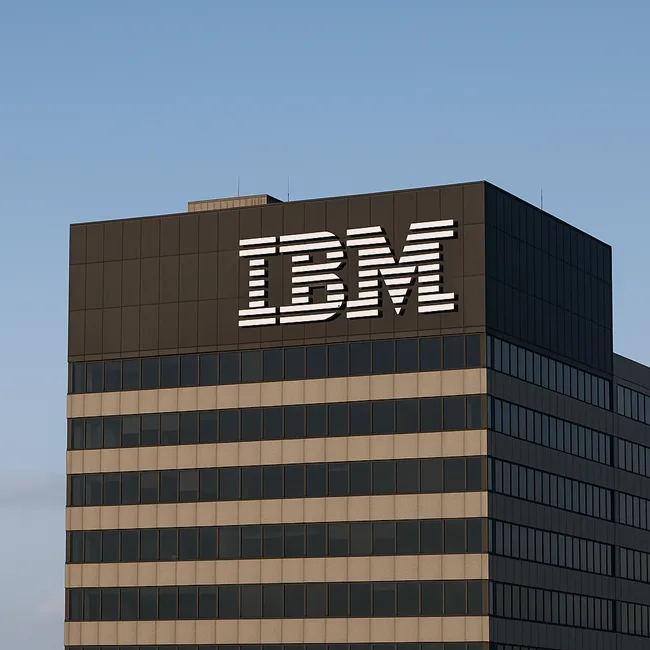
IBM (NYSE: IBM) has announced a definitive agreement to acquire Confluent, Inc. (NASDAQ: CFLT), a leader in enterprise data streaming, in a transaction valued at $11 billion. Under the terms, IBM will pay $31 per share in cash for all outstanding shares of Confluent, marking one of its largest technology acquisitions to date. The proposed deal aims to deliver a comprehensive, end-to-end data platform for enterprises seeking to connect, process, and govern data across a sprawling IT landscape. This move is designed to turbocharge IBM’s generative and agentic AI ambitions, providing the infrastructure needed for real-time data integration between applications, analytics, and AI agents operating in hybrid cloud environments.
Industry analysts have long highlighted the bottleneck posed by fragmented data in the rollout of next-generation AI systems. The acquisition is expected to position IBM as a pivotal provider of what it calls the “smart data platform”—a foundational layer for trusted, real-time data flows that are essential for advanced AI and modern applications. Executives from both organizations signaled that the partnership would accelerate deployment timelines for generative AI and enable clients to tap into a more resilient, interconnected digital core.
What strategic advantages does Confluent bring to IBM’s hybrid cloud and AI strategy?
Confluent, headquartered in Mountain View, California, has established itself as a pioneer in real-time data streaming, serving over 6,500 clients—including more than 40% of Fortune 500 companies. The firm’s roots in open-source, specifically with Apache Kafka, underpin a platform that enables organizations to seamlessly connect and move data across public clouds, private data centers, and hybrid infrastructures. The growing need for such connective tissue is underscored by IDC estimates that project the emergence of over a billion new logical applications by 2028, alongside the doubling of global data volumes.
By integrating Confluent’s real-time data and event streaming with IBM’s existing AI infrastructure and automation portfolio, the combined platform is set to address the escalating demands on IT departments—especially as AI adoption intensifies. Confluent’s product portfolio, including Confluent Cloud, Confluent Platform, WarpStream, and Confluent Private Cloud, offers flexible deployment options tailored to enterprises navigating complex regulatory and sovereignty requirements. This strategic fit builds on IBM’s longstanding commitment to open-source, reinforcing its efforts to enable clients to manage and operationalize data across multiple technology providers.
How does this acquisition impact IBM’s financial profile and industry positioning?
Financially, IBM expects the acquisition to accelerate revenue growth, drive operational efficiencies, and be accretive to adjusted EBITDA within the first full year after closing. Free cash flow accretion is anticipated in the second year post-close, underscoring the deal’s potential to enhance IBM’s profitability. The acquisition, funded with available cash, received unanimous approval from both boards and is backed by Confluent’s largest shareholders—who collectively hold approximately 62% of the voting power and have entered into a voting agreement to support the transaction.
From an industry perspective, the acquisition continues IBM’s playbook of targeting open-source leaders, following its headline-making purchases of Red Hat and HashiCorp. The combination is expected to create substantial product synergies across IBM’s AI, automation, data, and consulting businesses, while leveraging IBM’s global go-to-market reach to accelerate the adoption of Confluent’s technology. Observers point out that the move also signals IBM’s intent to compete more aggressively against hyperscalers and other enterprise AI and data platform vendors, particularly in regulated industries where data governance and security are paramount.
What are the key terms and expected timeline for closing the IBM-Confluent transaction?
According to the agreement announced on December 8, 2025, IBM will acquire all issued and outstanding shares of Confluent for $31 per share in cash, resulting in an enterprise value of $11 billion. The transaction is subject to approval by Confluent shareholders, regulatory review, and customary closing conditions. Backing from major investors—representing over 62% of Confluent’s voting stock—reduces execution risk, with both companies expecting to close the deal by mid-2026.
Confluent’s extensive partnerships, including integrations with Anthropic, Amazon Web Services, Google Cloud Platform, Microsoft, and Snowflake, align with IBM’s strategy to maintain a broad, open ecosystem and support clients’ multi-cloud ambitions. As part of the transition, Confluent’s leadership and operational teams are expected to join IBM, furthering its ability to serve a diverse and global client base.
How will Confluent’s technology support the next generation of AI-driven enterprise applications?
Confluent’s core value proposition lies in its ability to make data available in motion—meaning data can be continuously streamed, integrated, and governed in real time, as opposed to the traditional batch-based approach. This is especially critical for organizations adopting generative and agentic AI models, where timely, reliable, and clean data is essential for decision-making and automation. The platform’s streaming capabilities are designed to eliminate silos and enable more intelligent, responsive applications across industries, from finance and healthcare to manufacturing and retail.
IBM’s acquisition of Confluent is widely viewed as a response to client demands for smarter, AI-ready data infrastructure that bridges the gap between legacy IT and cloud-native operations. By bringing together data streaming, governance, and integration, the combined platform is expected to drive productivity improvements, faster deployment of digital services, and greater agility in responding to changing business needs.
What is the expert and institutional sentiment surrounding the deal, and how have shares reacted?
The market’s reaction to the deal has been closely watched, especially given the high-profile nature of both firms. As of the announcement, shares of Confluent had seen increased activity, trading near the acquisition price as investors responded to the premium offered by IBM. Institutional sentiment has tilted positively, with many analysts viewing the transaction as a natural extension of IBM’s strategy to build a leading AI and data platform. The deal’s structure, with its immediate cash consideration and board-level support, reduces uncertainty and is viewed as a strong signal of management confidence.
Analysts tracking IBM’s stock believe the move could bolster its competitive positioning in the fast-evolving AI and cloud infrastructure space, provided that integration risks are managed and the anticipated revenue synergies materialize. The sentiment among buy-side and sell-side institutions has generally been constructive, with most maintaining a “hold” or “buy” outlook on IBM, contingent on execution.
What are the potential risks and future outlook as IBM and Confluent integrate their platforms?
While the deal carries significant upside, integration risks remain—particularly in aligning go-to-market strategies, unifying product roadmaps, and retaining key talent. Success will also depend on how quickly IBM can scale Confluent’s technology across its client base and capitalize on cross-selling opportunities in data, automation, and consulting services.
Looking ahead, industry observers expect IBM’s acquisition of Confluent to act as a catalyst for broader platform consolidation in the enterprise data and AI landscape. With data complexity and AI workloads growing exponentially, the race is on among technology giants to deliver platforms that are not just scalable, but truly intelligent and adaptive. IBM’s latest move is likely to spur further innovation and competitive jockeying in the sector.
What are the key takeaways from IBM’s $11 billion acquisition of Confluent?
- IBM will acquire Confluent for $31 per share, with a total deal value of $11 billion.
- The acquisition supports IBM’s strategy to build a comprehensive smart data platform for generative and agentic AI.
- Confluent brings real-time data streaming, governance, and integration capabilities, enabling enterprise AI adoption across hybrid and multi-cloud environments.
- Financially, the deal is expected to be accretive to adjusted EBITDA within the first year and free cash flow in year two.
- Both boards have approved the deal, with major shareholders backing the transaction and closing targeted by mid-2026.
- Institutional sentiment is positive, with analysts highlighting the strategic fit and revenue synergy potential.
- Integration execution, talent retention, and client adoption are key focus areas for success.
- The acquisition builds on IBM’s legacy of open-source innovation and large-scale technology integration.
Discover more from Business-News-Today.com
Subscribe to get the latest posts sent to your email.