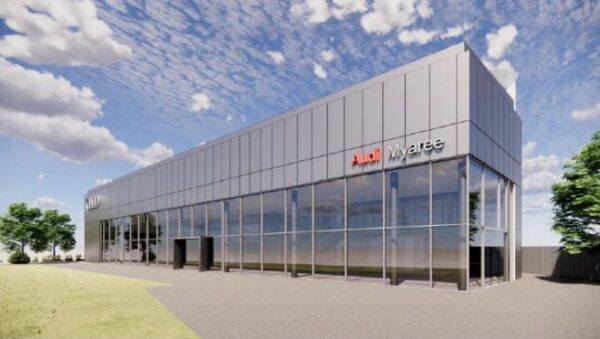
Hical Technologies Private Limited has broken ground on a 160,000 sq ft aerospace and defence manufacturing facility in Hosur, Tamil Nadu, designed to add precision machining, fabrication and special-process capacity for global original equipment manufacturer programmes. The project, which Hical Technologies previously indicated could become production-ready during the first quarter of 2027, expands the company’s manufacturing footprint beyond its Electronics City base in Bengaluru. It will connect advanced mechanical production more closely with Hical Technologies’ existing electromechanical manufacturing and systems-integration operations. The development comes as international aerospace and defence companies seek deeper sourcing relationships with qualified Indian suppliers. The central strategic test is whether Hical Technologies can obtain the necessary process accreditations and customer approvals quickly enough to convert the additional capacity into stable, higher-value programme revenue.
What will Hical Technologies manufacture at its 160,000 sq ft Hosur aerospace facility?
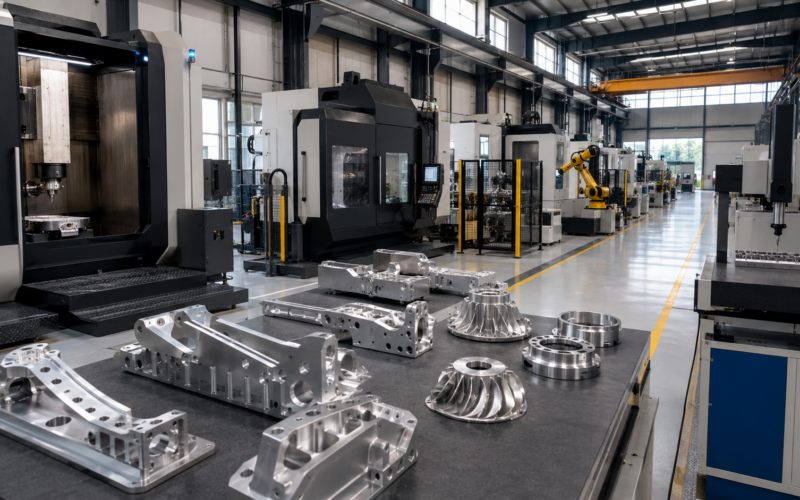
The approximately 15,000 sq m facility is being developed as an aerospace-qualified manufacturing centre covering precision machining, fabrication and special processes. Hical Technologies plans to support global aerospace and defence customer programmes from the new site while increasing automation, digitalisation and manufacturing flexibility.
Precision machining is one of the most demanding areas of aerospace production because components must be manufactured within tight dimensional tolerances and supported by extensive documentation. The process may involve multi-axis machining, specialised tooling, controlled materials, inspection systems and repeated verification before a part can be accepted for an aircraft or defence platform.
Fabrication adds another manufacturing layer, potentially allowing Hical Technologies to produce assemblies and structural or sheet-metal components rather than limiting its role to individual machined parts. Special processes can include activities such as welding, heat treatment, chemical processing, surface treatment and non-destructive testing, depending on the approved scope ultimately established at the facility.
The company has not disclosed the complete equipment list, final installed capacity, total project expenditure or expected workforce. It has also not identified the individual customer programmes that will be transferred to or supported from Hosur.
Those omissions mean the facility’s commercial scale cannot yet be measured solely from its floor area. The 160,000 sq ft footprint establishes physical capacity, but aerospace production value is determined by the complexity of approved processes, the number of qualified parts, contracted utilisation and the duration of customer programmes.

Why does combining machining, fabrication and special processes matter for aerospace customers?
Hical Technologies already designs and manufactures motors, solenoids, actuators and transformers. It also provides cable harnesses, precision machining, sheet-metal fabrication, mechanical integration and systems-integration services for aerospace, space and military applications.
The Hosur expansion can create a more vertically integrated production model by placing machining, fabrication and downstream special processes within a coordinated manufacturing structure. That could reduce reliance on multiple external vendors and shorten the movement of components between different production stages.
For aerospace customers, fewer production handovers can improve traceability and accountability. When a component passes through several independent suppliers, each transfer introduces scheduling, documentation and quality-control requirements. Bringing more stages under one qualified manufacturer can simplify oversight, although Hical Technologies must demonstrate that its internal systems can manage the added complexity.
Vertical integration could also increase the amount of value Hical Technologies captures from each programme. A company supplying only a machined component earns revenue from a limited production step. A supplier capable of machining, processing, fabrication, integration and testing may compete for a larger work package.
That opportunity carries additional responsibility. Aerospace customers do not award broader work packages simply because a supplier has installed new machines. They require evidence of process stability, qualified personnel, repeatable output, delivery discipline, cybersecurity controls, documentation accuracy and the ability to investigate and correct non-conformances.
The facility therefore represents a move towards deeper manufacturing capability rather than automatic commercial scale. Its strategic value will depend on how much additional customer work is approved for production in Hosur.
How could the Hosur factory support Hical Technologies’ move into larger global OEM programmes?
Hical Technologies was established in 1986 and has developed from an electromechanical component manufacturer into a supplier covering design, development, manufacturing, integration and logistics. The company says it supports major aerospace and defence corporations and has participated in offset arrangements connected with Indian contracts involving the United States, France and the United Kingdom.
Its existing product range gives the company exposure to both component-level and integrated manufacturing. Motors, actuators, transformers, solenoids and cable harnesses can be used across aircraft, military systems and space applications, while precision machining and sheet-metal capabilities expand the number of production packages the company can pursue.
The Hosur factory can support a progression from relatively narrow component orders towards more complex assemblies and integrated manufacturing assignments. Global original equipment manufacturers increasingly evaluate suppliers on whether they can support several production stages, absorb higher volumes and maintain consistency across long programme lifecycles.
Management said in early 2025 that it aimed to double revenue from the aerospace business to approximately ₹500 crore within three years. Hical Technologies has not published an updated financial target alongside the groundbreaking announcement, so the earlier ambition should not be treated as current formal guidance.
However, the new facility provides tangible industrial capacity that could support such growth if demand materialises. It creates additional room for machinery, specialist processes, automation and customer-dedicated production cells.
The more significant issue is programme conversion. Aerospace manufacturing typically involves quotation, technical assessment, process development, prototype production, first-article inspection and customer validation before sustained output begins. Revenue may therefore ramp gradually even after the building and equipment are ready.
Hical Technologies will need to populate the Hosur facility with approved work packages rather than depending on general sector demand. Announced contracts, qualified part numbers, customer approvals and production utilisation will provide better evidence of progress than factory size alone.
Why are Nadcap accreditation and customer qualification the real gates to commercial ramp-up?
Hical Technologies expects the Hosur site to meet Nadcap requirements and other aerospace qualifications required for global customer programmes. The wording is important because it describes a planned qualification objective, not accreditation already granted to the new facility.
Nadcap is an industry-managed accreditation programme for critical aerospace, defence and space manufacturing processes. It was developed to create a common assessment framework involving original equipment manufacturers, suppliers and technical specialists.
For a supplier, Nadcap accreditation can reduce the need to undergo separate process audits for every customer. It can also provide evidence that specified special processes are being controlled according to recognised aerospace requirements.
Accreditation does not apply automatically to every activity performed by a company. It depends on the approved site, process and technical scope. The Hosur facility will therefore need to establish documented systems, trained personnel, equipment controls, calibration processes, production records and corrective-action procedures for the accreditations it seeks.
Customer approval is a separate commercial gate. Even after a facility achieves relevant certifications, original equipment manufacturers may require their own site audits, process reviews and first-article inspections. Parts cannot necessarily be transferred from an existing approved factory to a new site without additional validation.
These requirements explain why the first-quarter 2027 production-readiness target should not be interpreted as a guarantee of full commercial utilisation. Construction and machinery installation are only the early milestones. Process accreditation, customer qualification and stable serial production are the more meaningful tests.
A fast but disciplined qualification process could allow Hical Technologies to begin converting capacity during 2027. Delays in accreditation or customer approvals could leave installed equipment underutilised and postpone the financial contribution.
How does Hical Technologies’ expansion fit into India’s rising aerospace and defence supply chain?
India’s aerospace manufacturing opportunity is being supported by two connected trends. The first is increasing domestic defence production and procurement. The second is the attempt by global aerospace manufacturers to diversify supply chains and add qualified capacity outside traditional production centres.
India reported defence production of approximately ₹1.54 lakh crore and defence exports of ₹38,424 crore for FY2026. Government data also indicated that Indian defence products were reaching more than 80 countries and that the exporter base had expanded to 145 companies.
This policy and demand environment creates opportunities for private manufacturers, but aggregate national growth does not guarantee orders for an individual supplier. Aerospace contracts remain dependent on technical capability, commercial competitiveness, quality performance and long-term delivery reliability.
Hosur offers Hical Technologies a useful location near Bengaluru’s established aerospace, engineering and technology ecosystem. The broader region provides access to machining suppliers, specialist engineering talent, logistics infrastructure and established aerospace institutions.
The location can also support coordination with Hical Technologies’ Electronics City operations. Management previously indicated that the Hosur facility was intended to act as a vertically integrated extension of the company’s electromechanical assembly factories while also supporting direct aerospace exports.
That dual role is strategically important. Domestic defence programmes may provide localisation opportunities, while direct exports can connect the company to longer global aircraft and systems programmes. A balanced mix could reduce dependence on any single demand source, although Hical Technologies has not disclosed the expected customer or geographic mix for the new site.
The project also reflects India’s movement from build-to-print manufacturing towards higher-value engineering, processing and systems capability. Capturing more of that value will require Indian suppliers to control sophisticated processes, protect intellectual property and meet international quality expectations without losing their cost advantage.
What execution risks could delay the Hosur facility’s planned first-quarter 2027 production start?
The timetable from groundbreaking to production readiness is relatively compressed for an aerospace-qualified facility. Hical Technologies must complete construction, utilities, clean production areas, equipment installation, digital systems, recruitment, training and process validation before customer output can begin.
Machine availability is one potential constraint. High-precision machining equipment, inspection systems and specialised processing lines may have long delivery and commissioning schedules. Imported machinery can also create exposure to currency movements, shipping delays and technical-support availability.
Workforce development is another requirement. Aerospace manufacturing depends on machinists, quality engineers, process specialists, inspectors and production managers who understand both technical tolerances and documentation discipline. Recruiting employees is not enough if qualification and customer-specific training take longer than expected.
The company must also control the transition between existing factories and the new location. Moving or duplicating production processes can temporarily disrupt output if equipment, tooling, documents or trained teams are transferred too quickly.
Aerospace demand generally offers long programme visibility once a supplier is qualified, but the initial ramp can require significant working capital. Materials and production costs may be incurred before completed components pass inspection and customers release payments.
Hical Technologies has not disclosed how the Hosur development is being financed, what utilisation level is required for acceptable returns or whether anchor contracts cover the initial capacity. These are commercially sensitive matters, but they remain important when assessing the project’s economic potential.
What would prove that Hical Technologies’ Hosur investment is creating durable industrial value?
The groundbreaking establishes that Hical Technologies has moved from planning into physical execution. The next proof point will be whether construction, equipment installation and staffing remain aligned with the first-quarter 2027 production-readiness objective.
Relevant process accreditations would provide the second milestone. Nadcap approval and other aerospace qualifications would show that the facility has progressed beyond general industrial construction and entered the approved supplier framework required for critical manufacturing.
Customer qualification would be the third and more commercially significant milestone. Confirmation that global aerospace or defence original equipment manufacturers have approved parts, processes or dedicated production lines at Hosur would materially strengthen the strategic case.
The fourth test will be utilisation. A large facility can create operating leverage when volumes rise, but it can burden returns when machinery and labour remain underused. Hical Technologies will need to balance early customer demand with the cost of adding capacity.
The Hosur development improves Hical Technologies’ ability to offer more integrated aerospace manufacturing from India. What remains unresolved is the project’s capital cost, initial contracted workload and expected contribution to revenue.
Successful commissioning, accreditation and programme conversion would position the factory as an important platform for Hical Technologies’ next growth phase. Slower customer approvals or weak initial utilisation would delay that payoff, even if the building itself is completed on schedule.
What are the key takeaways from Hical Technologies’ new Hosur aerospace manufacturing facility?
- Hical Technologies has broken ground on a 160,000 sq ft aerospace and defence manufacturing facility in Hosur, Tamil Nadu.
- The factory will expand precision machining, fabrication and special-process capabilities for global original equipment manufacturer programmes.
- Hical Technologies previously targeted production readiness during the first quarter of 2027.
- The project will complement existing electromechanical manufacturing covering motors, solenoids, actuators, transformers, cable harnesses and systems integration.
- Planned investments include automation, digitalisation, advanced manufacturing skills, operational flexibility and sustainability.
- Hical Technologies expects the facility to meet Nadcap and other aerospace qualification requirements, but those approvals have not yet been confirmed for the new site.
- The company has not disclosed the facility’s total investment, employment potential, output capacity or initial contracted workload.
- India’s rising defence production and aerospace exports provide a supportive demand environment, although individual orders still depend on qualification and delivery performance.
- Construction progress, process accreditation, customer approvals and production utilisation will determine whether the Hosur expansion creates durable commercial value.
Discover more from Business-News-Today.com
Subscribe to get the latest posts sent to your email.