
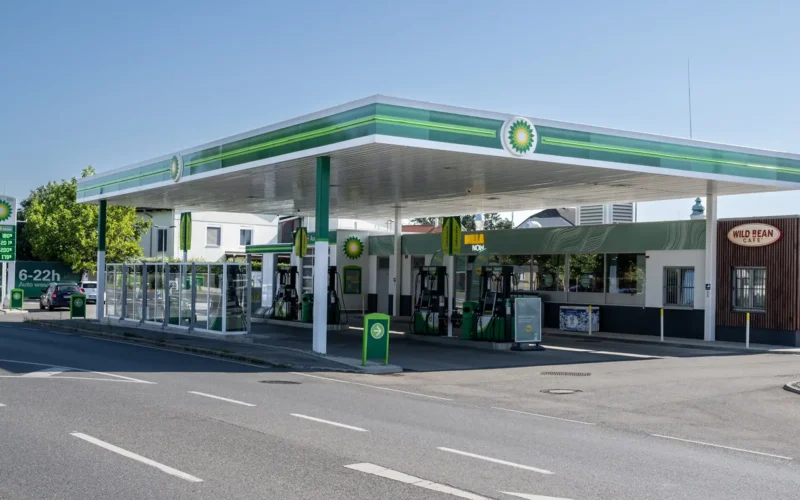
BP p.l.c. (LSE: BP.; NYSE: BP) has agreed to sell 100 percent of its mobility, convenience and electric vehicle charging businesses in Austria to volenergy AG, part of Switzerland’s family-owned Volare Group AG. The transaction covers 250 bp-branded forecourts, the associated fleet business and BP p.l.c.’s stakes in three non-operated Austrian joint ventures, and is structured as a share sale of bp Retail Austria GmbH with completion expected at the end of 2026, subject to regulatory approvals. The financial terms remain confidential, and Air bp along with the Austrian Castrol operations sit outside the perimeter of the deal. The transaction is the latest in a run of downstream disposals under BP p.l.c.’s $20 billion divestment programme, and the central question for investors is not whether it is meaningful in isolation, but whether the cumulative pace of these smaller carve-outs, alongside the far larger Castrol transaction, is sufficient to keep the balance-sheet reset on schedule under Chief Executive Officer Meg O’Neill.
What does the volenergy AG deal reveal about BP p.l.c.’s downstream portfolio choices in Continental Europe?
The Austrian retail network is a well-established business that BP p.l.c. has operated for decades, but it sits some distance from the integrated downstream footprint that Chief Executive Officer Meg O’Neill and the board have described as the future shape of the group. The company has repeatedly said it wants a leaner customers and products division built around markets where it can be genuinely competitive, and the sequential exits from Switzerland in 2022, Türkiye in 2024, the Netherlands in 2025 and now Austria in 2026 make the direction of travel unambiguous. Continental European mobility and convenience is not being abandoned wholesale, since BP p.l.c. retains meaningful positions in Germany through Aral and in Spain, among others, but sub-scale country networks are being sold to specialist operators who can extract more value from local density than an integrated major can from a distant capital pool.
Richard Harding, interim executive vice president of downstream at BP p.l.c., framed the decision as one of concentrating capital on assets and markets where the company can be most competitive. The commercial logic is straightforward. A 250-site network, even one with a strong brand and a functioning EV charging layer, is unlikely to move the needle for a company with a market capitalisation close to £80 billion, whereas the same network can materially strengthen a Swiss buyer already operating more than 730 fuel stations across the Alpine region. That asymmetry is exactly what disciplined capital allocation is designed to unlock.

How does the Austrian retail sale slot into BP p.l.c.’s $20 billion divestment programme through 2027?
BP p.l.c. has publicly committed to $20 billion of divestment and other proceeds by the end of 2027, with $9 to $10 billion of that expected to land in 2026 alone. The bulk of the 2026 total is anchored by the announced sale of a 65 percent stake in Castrol to Stonepeak at an enterprise value of around $10 billion, which by itself is projected to contribute roughly $6 billion in cash proceeds. The remainder of the 2026 target depends on a chain of smaller transactions of exactly the type announced today, including the sale of the Gelsenkirchen refinery to Klesch Group agreed in March, the recent agreement to sell the majority of BP Ventures’ minority interests to Verdane, the US onshore wind divestment and the wider portfolio of retail country carve-outs.
Because the Austrian financial terms are undisclosed, the transaction cannot be sized against the divestment total in this article. What it does provide is another confirmed pipeline item weighted, as management guidance suggests, towards the second half of the year. For a company that had net debt of $25.3 billion at the end of the first quarter of 2026 and has guided to $22 to $23 billion for the end of the second quarter, closing regularity, not headline size, is what matters most. Every additional signed and completed transaction reduces the reliance on any single deal to hit the $14 to $18 billion net debt target set for the end of 2027.
Why does the second BP p.l.c. to volenergy AG transaction matter for Volare Group AG’s regional buildout?
Volare Group AG, headquartered in Suhr, Switzerland, is not a new counterparty. Volenergy AG acquired BP p.l.c.’s Swiss retail network in 2022 and today operates the largest fuel-station network in Switzerland, including Ruedi Rüssel and Miniprix discount brands alongside around 300 premium sites under a bp brand licence. The Austrian deal extends that same commercial pattern across the border, adding another 250 sites, an existing EV charging footprint and a fleet-card customer base. Volenergy AG has also said it intends to expand into alternative fuels to reduce carbon dioxide emissions, and the Austrian assets provide additional scale to fund that transition.
For BP p.l.c., the choice of a familiar buyer carries several practical advantages. Volenergy AG has already integrated a comparable network, understands the operating model behind the bp brand and has demonstrated it can sustain premium-branded retail alongside discount formats. The brand-licence continuation announced with the deal implies that bp-branded sites will remain visible to Austrian consumers after completion, preserving the residual value of the brand while allowing BP p.l.c. to redeploy operating capital and management attention elsewhere. That structure is broadly consistent with what has been done in Switzerland since 2022.
What is included in the bp Retail Austria GmbH sale, and what has BP p.l.c. kept in the Austrian market?
The transaction includes 250 bp-branded retail sites, of which around 115 are company owned and franchise operated, while the balance operates under dealer-owned, dealer-operated and unstaffed company-owned models. The deal also includes the Austrian fleet business and BP p.l.c.’s shares in three non-operated joint ventures, namely Erdöl-Lagergesellschaft m.b.H., Autobahn-Betriebe Gesellschaft m.b.H. and TLM Tanklager Management GmbH in Linz. These joint ventures relate to strategic fuel storage and motorway service infrastructure, and their transfer indicates that volenergy AG is inheriting not only forecourts but also the supporting logistics network needed to run a national mobility business.
Two areas explicitly remain with BP p.l.c. after completion. Air bp, the group’s aviation fuel business, continues to operate in Austria and is not part of the perimeter. Castrol Austria, the local face of the lubricants business currently being sold at group level to Stonepeak, is also excluded. The dividing line between what BP p.l.c. keeps and what it exits confirms the strategic frame that management has repeatedly articulated. Land-based retail forecourts in sub-scale European markets are treated as non-core. Aviation refuelling, lubricants and higher-return upstream and integrated positions are treated as core. Investors reading the deal announcement can take it as another consistent data point rather than a change of direction.
How does the deal fit alongside Castrol, Gelsenkirchen and the BP Ventures divestment stream?
Placed alongside recent transactions, the Austrian sale looks less like a stand-alone event and more like one in a sequence. The Castrol transaction with Stonepeak represents by far the largest single lever in the current divestment programme and is scheduled to close by the end of 2026, subject to regulatory clearances. The Gelsenkirchen refinery sale to Klesch Group added a further $1 billion of expected annual operating cost savings and pushed the 2027 structural cost reduction target to $6.5 to $7.5 billion. The pending sale of the BP Ventures minority portfolio to Verdane, expected to complete by the second quarter of 2027, addresses the venture-capital exposure that has been a recurring point of investor questioning.
Each of these transactions is different in size, complexity and rationale, but together they support a consistent narrative. BP p.l.c. is compressing the number of businesses it runs directly, monetising positions where a specialist owner can pay more than the intrinsic value the assets generate inside the group, and using the resulting proceeds to bring net debt back within the target range while continuing to fund shareholder returns and capital expenditure of $13.0 to $13.5 billion in 2026. The Austrian transaction is a small piece of that puzzle, but incremental deals of this kind are precisely what management has said the second-half 2026 divestment pipeline would look like.
What does the brand-licence arrangement imply for BP p.l.c.’s continued presence at Austrian forecourts?
The continuing brand licence after completion is a structural choice worth pausing on. It allows volenergy AG to maintain consumer recognition and pricing power at the bp-branded sites in Austria, while BP p.l.c. earns licence income without carrying the capital and operating cost of running the network directly. The same construct is already in place in Switzerland, and the equivalent arrangement in Austria means the bp brand can remain visible at Austrian motorway service areas and urban forecourts well after the assets change ownership.
For shareholders, the brand licence has two subtle implications. First, it means the perimeter of what the company has actually sold is narrower than the physical map suggests. BP p.l.c. is exiting the capital-heavy retail and infrastructure business while preserving a lighter-touch brand economics stream. Second, it protects the option value of the brand if Volare Group AG or a future owner ever chose to re-scale the network, since the licence relationship keeps BP p.l.c. as an active brand steward rather than a passive licensor. The company has not disclosed the economic terms of the licence, so its financial materiality is not quantifiable from the public disclosure.
How could regulatory approval, timing and completion mechanics shape recognised proceeds in 2026?
Management expects completion of the Austrian transaction at the end of 2026, subject to regulatory approvals. That timing is important because it places the transaction close to, but potentially at, the boundary of the 2026 divestment proceeds guidance of $9 to $10 billion. Regulatory review in Austria will likely centre on competition considerations, given the local density of retail fuel supply and the fact that volenergy AG operates the largest independent network in Switzerland, though Austria and Switzerland are separate jurisdictions with distinct competition regimes.
Two scenarios are worth flagging for readers modelling divestment timing. Under an on-schedule completion, proceeds are recognised in the fourth quarter of 2026 and support the year-end net debt trajectory. Under a delayed completion into early 2027, proceeds slip into next year, though the underlying disposal is nonetheless secured and continues to count towards the $20 billion cumulative target set for the end of 2027. In neither case does the transaction itself carry standalone valuation risk, but the sequencing feeds into the working-capital and hybrid-bond redemption profile that has been a focus of recent quarterly communications.
What is the read-through for BP p.l.c.’s balance sheet, net debt trajectory and 2027 gearing target?
BP p.l.c. has guided to net debt of $22 to $23 billion at the end of the second quarter of 2026, down from $25.3 billion at the end of the first quarter, following redemption of €2.5 billion of perpetual hybrid bonds and $1.1 billion of Gulf of America settlement payments. Management has also committed to reducing perpetual hybrid capital from around $13.3 billion to about $9 billion, and has reiterated its target range of $14 to $18 billion of net debt by the end of 2027. Delivering on that range requires a combination of continued strong operating cash generation, disciplined capital expenditure and cumulative divestment proceeds of the scale the current programme is designed to unlock.
The Austrian transaction on its own will not shift the debt profile in a visible way. Its significance is that it reinforces the credibility of the divestment schedule. Investors and rating agencies watching the balance-sheet reset need to see a steady cadence of announced and completed transactions, not a single mega-deal that could be exposed to closing risk. A pipeline that includes Castrol, Gelsenkirchen, BP Ventures, US onshore wind and a series of retail exits reduces the probability that any one delay materially changes the trajectory towards the 2027 target.
How are BP p.l.c. shares positioned into the 4 August 2026 Q2 2026 results release?
BP p.l.c. shares closed at 517.10 pence on the London Stock Exchange on 17 July 2026, up 6.90 pence or 1.35 percent on the day, on volume of about 26.5 million shares. That places the stock in the upper half of a 52-week range of 393.35 pence to 609.40 pence and gives BP p.l.c. a market capitalisation of around £79.9 billion. The trailing dividend yield stands at approximately 4.87 percent, and the consensus 12-month price target sits around 594 pence, implying material upside from current levels if analyst forecasts are correct.
The stock has been supported over the past 12 months by higher oil and gas prices, robust trading contributions and visible balance-sheet improvement. The Q2 2026 trading statement issued on 14 July 2026 pointed to seasonally lower upstream production of 2,170 to 2,220 thousand barrels of oil equivalent per day, higher realisations across gas, low-carbon energy and oil production, stronger refining margins and around $1 billion of post-tax impairments, primarily in transition businesses. Full second-quarter results are due on 4 August 2026, and investors will look for confirmation of the divestment cadence, an update on the shareholder distribution framework and further clarity on the pace of the balance-sheet reset. The Austrian transaction will feature as one of several data points in that broader picture rather than as a share-price catalyst in its own right.
Key takeaways from the BP p.l.c. and volenergy AG Austrian mobility and EV charging divestment
- BP p.l.c. has agreed to sell 100 percent of bp Retail Austria GmbH, including 250 forecourts, EV charging infrastructure, the fleet business and stakes in three non-operated joint ventures, to volenergy AG of Switzerland.
- The financial terms are confidential, and completion is expected at the end of 2026, subject to regulatory approvals.
- Air bp and Castrol Austria are not part of the deal, so BP p.l.c. retains a presence in Austrian aviation fuel and lubricants.
- The transaction is the latest in a run of retail exits from the Netherlands in 2025, Türkiye in 2024 and Switzerland in 2022, the last of which also went to volenergy AG.
- Volenergy AG operates more than 730 stations in Switzerland and will now add a significant Austrian footprint under a continuing bp brand licence.
- The disposal supports BP p.l.c.’s $20 billion divestment programme by the end of 2027, with $9 to $10 billion of proceeds targeted in 2026, most heavily weighted to the second half.
- The Castrol sale to Stonepeak remains the largest single contributor to the 2026 divestment profile, and the Austrian transaction sits alongside Gelsenkirchen, BP Ventures and US onshore wind as supporting building blocks.
- Second-quarter 2026 net debt is guided at $22 to $23 billion, with a 2027 target range of $14 to $18 billion, and cumulative disposals remain the primary lever for hitting that range.
- Regulatory approval and precise closing timing will determine whether Austrian proceeds are recognised in the fourth quarter of 2026 or slip into early 2027.
- The most important near-term catalyst for BP p.l.c. shareholders is the second-quarter 2026 results release on 4 August 2026, which will provide a fuller update on divestment execution, cost delivery and shareholder distributions.
Discover more from Business-News-Today.com
Subscribe to get the latest posts sent to your email.