

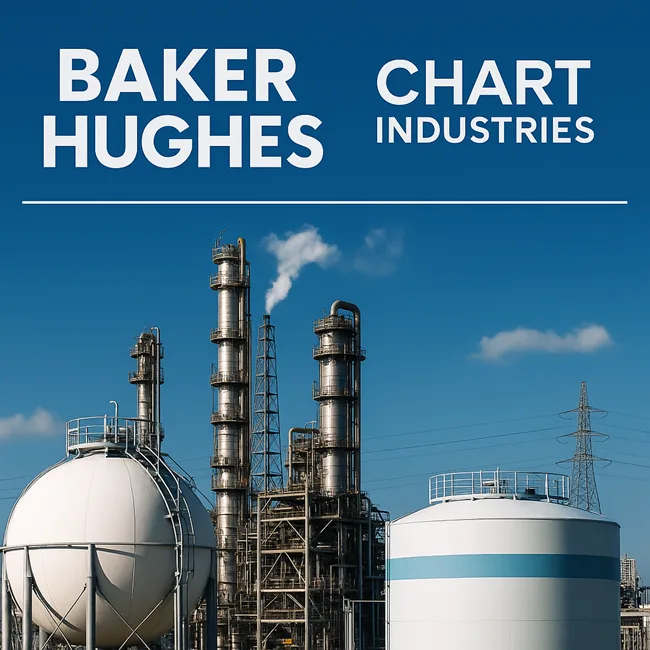
Baker Hughes Company (NASDAQ: BKR) is set to acquire Chart Industries, Inc. (NYSE: GTLS) in an all-cash transaction valued at $13.6 billion, in a move that could redefine the competitive dynamics of the energy and industrial technology markets. Announced on July 29, 2025, the agreement will see Baker Hughes purchase all outstanding shares of Chart Industries for $210 per share. Subject to regulatory and shareholder approvals, the deal is expected to close by mid-2026 and marks one of the largest industrial technology acquisitions of the decade.
The agreement represents a significant shift for Chart Industries, which terminated a previously announced merger with Flowserve Corporation (NYSE: FLS) earlier that same day. Chart’s board determined that the Baker Hughes proposal constituted a “Superior Chart Proposal” under the terms of its Flowserve merger agreement, setting up an immediate pivot toward integration with Baker Hughes.
Analysts believe the move accelerates Baker Hughes’ broader strategy to diversify its Industrial & Energy Technology (IET) segment and strengthen its presence in liquefied natural gas (LNG), hydrogen, carbon capture, and industrial gas markets.
How does the Chart Industries acquisition enhance Baker Hughes’ competitive positioning?
Baker Hughes executives have framed the acquisition as a way to create a more balanced and resilient energy and industrial technology company. Chart Industries’ engineering-led portfolio adds differentiated expertise in process technologies, heat transfer, air and gas handling, and digital monitoring solutions. These capabilities will complement Baker Hughes’ existing strengths in rotating equipment, flow control, and advanced digital technologies.
According to Baker Hughes Chairman and CEO Lorenzo Simonelli, the deal is designed to deliver end-to-end lifecycle solutions for customers in critical energy infrastructure and industrial applications. He said that combining Chart’s large installed base with Baker Hughes’ expansive global service footprint would enable deeper aftermarket penetration, leading to more stable recurring revenue.
Industry observers said the acquisition enhances Baker Hughes’ market position in LNG and hydrogen infrastructure, where Chart is already a recognized leader. The addition of Chart’s products and services is also expected to expand Baker Hughes’ exposure to durable industrial sectors such as metals and mining, industrial gas handling, and food and beverage processing.
What led Chart Industries to terminate its Flowserve agreement?
The Baker Hughes deal follows a dramatic day for Chart Industries, which had previously been pursuing a merger with Flowserve Corporation. In a separate statement issued July 29, Chart confirmed that its board, after consulting its financial and legal advisers, determined the Baker Hughes proposal offered superior financial value and strategic alignment compared to the Flowserve arrangement.
Chart Industries’ board highlighted that the Baker Hughes offer was all-cash, offered immediate shareholder value, and created a stronger long-term platform for advancing its clean energy and industrial technology portfolio. Institutional investors generally interpreted the move as an acknowledgment that Baker Hughes’ global scale and financial resources could better support Chart’s growth ambitions.
What financial impact and synergy potential does Baker Hughes anticipate?
Baker Hughes said it expects to realize $325 million in annualized cost synergies by the third year after closing. These savings are projected to come from manufacturing consolidation, supply chain efficiencies, and streamlined selling, general, administrative (SG&A) and research and development (R&D) costs.
The transaction is expected to be immediately accretive to Baker Hughes’ growth, margins, and cash flow, with double-digit earnings per share (EPS) accretion forecast for the first full year following completion. The company said Chart’s differentiated positioning in LNG, hydrogen, and carbon capture technologies will contribute to sustainable underlying growth beyond cyclical energy markets.
Baker Hughes has arranged fully committed bridge financing through Goldman Sachs Bank USA, Goldman Sachs Lending Partners LLC, and Morgan Stanley Senior Funding, Inc. It intends to refinance the bridge financing with permanent debt prior to closing. The company also pledged to maintain its A credit rating and said it plans to reduce net leverage from 2.25x at close to 1.0–1.5x within 24 months. Dividend payouts will continue during the integration period, with share buyback activity expected to resume once leverage targets are met.
What does the acquisition mean for the energy transition and decarbonization initiatives?
Baker Hughes has been vocal about its ambition to align more closely with the global energy transition, and Chart Industries’ portfolio directly supports this effort. Chart’s technologies in LNG, hydrogen, biogas, and carbon capture are expected to accelerate Baker Hughes’ ability to serve customers focused on lowering carbon emissions and improving industrial efficiency.
The combined company will have a broader range of offerings across the clean energy value chain, from liquefaction systems and hydrogen fueling infrastructure to carbon capture equipment. Analysts said this will enable Baker Hughes to compete more effectively with global industrial technology peers that are similarly seeking to expand their decarbonization portfolios.
Chart’s Uptime digital platform will also be integrated with Baker Hughes’ digital technology stack, creating opportunities to expand high-margin aftermarket services and predictive maintenance solutions. This alignment is expected to help customers extend asset lifecycles and reduce operational emissions, which could become a key selling point as sustainability requirements tighten.
How have investors and analysts responded to the transaction?
Both Baker Hughes’ and Chart Industries’ boards of directors have unanimously approved the deal, and Chart’s board has recommended that its shareholders vote in favor. Early indications from institutional investors suggest that the deal has been positively received, particularly because of the clear earnings accretion profile and the synergy targets outlined.
However, analysts have noted that integration risks remain. Merging two global manufacturing and service networks of this scale could prove complex, particularly as both companies operate in markets facing supply chain constraints and cost inflation. Additionally, regulatory approvals in multiple jurisdictions could create delays, although most market participants expect the deal to clear based on the complementary nature of the businesses.
From a competitive standpoint, the acquisition positions Baker Hughes as one of the most diversified players in the energy and industrial technology landscape. Analysts said that the deal gives Baker Hughes greater resilience against commodity price volatility, as it increases exposure to industrial end markets with more stable demand.
What are the next steps toward closing the deal?
The transaction remains subject to customary closing conditions, including the receipt of regulatory approvals and the approval of Chart Industries’ shareholders. The companies expect the deal to close by mid-2026, after which Chart’s operations will be fully integrated into Baker Hughes’ Industrial & Energy Technology segment.
Baker Hughes executives said they plan to prioritize maintaining operational continuity during the integration process while quickly capturing identified synergies. The company has also emphasized its commitment to delivering shareholder returns through disciplined capital allocation once leverage levels return to target.
If completed on schedule, the acquisition will significantly expand Baker Hughes’ global footprint, product capabilities, and recurring revenue base. It will also mark the end of an eventful period for Chart Industries, which saw its merger plans shift abruptly from Flowserve to Baker Hughes within a single day.
Discover more from Business-News-Today.com
Subscribe to get the latest posts sent to your email.