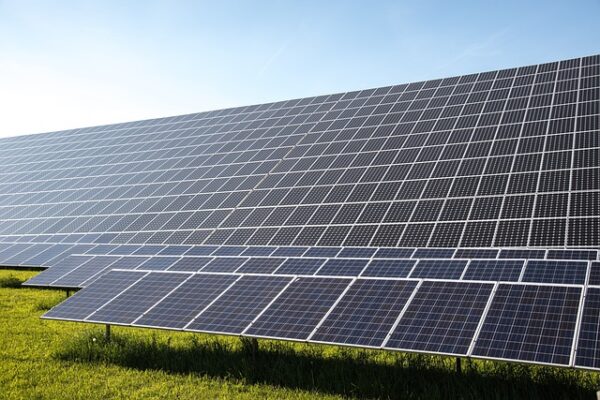





Adani Energy Solutions Limited (NSE: ADANIENSOL) has secured a transmission project carrying estimated capital expenditure of approximately ₹4,700 crore to strengthen electricity transfer between the Southern and Western regions and support renewable and pumped-storage development around Satara, Pune and the Mumbai Metropolitan Region. Adani Energy Solutions said the project was awarded through tariff-based competitive bidding and will be implemented through Satara Power Transmission Limited over 36 months. The award lifts AESL’s transmission order book to approximately ₹85,000 crore.
The project, formally titled the Network Expansion Scheme in Western Region to Cater to Pumped Storage Potential near Satara of up to 4,500 MW, will add 562 circuit kilometres of transmission lines and 9,000 MVA of transformation capacity. The scope includes a new 765/400 kV substation at Satara, a 765 kV double-circuit line between Kolhapur and Satara and expansion of the Kolhapur pooling station.
How significant is the ₹4,700 crore Satara project inside AESL’s ₹85,000 crore order book?
The latest project represents approximately 5.5% of AESL’s enlarged ₹85,000 crore transmission order book. That percentage appears modest until placed against the absolute scale of the company’s construction pipeline: ₹85,000 crore of transmission projects represents years of future capital deployment and execution across multiple states.
AESL ended Q1 FY27 with ₹71,779 crore of transmission projects under construction. It then won an approximately ₹8,500 crore Andhra Pradesh transmission project in July supporting proposed green hydrogen and green ammonia demand around Visakhapatnam, followed by the ₹4,700 crore Maharashtra project. The company’s latest stated ₹85,000 crore order book therefore reflects a substantial expansion in only a few weeks.
The sequence also illustrates why the current Indian transmission cycle is unusually large. Renewable-generation targets increasingly require transmission investment before the corresponding wind, solar and storage projects can deliver electricity reliably into major consumption centres.
For AESL, winning the work creates long-term regulated or contracted transmission earnings once projects become operational. The principal risk sits between award and commissioning, when substantial capital must be deployed before the completed asset begins producing its full expected cash flows.
Why does a 4,500 MW pumped-storage ecosystem need major new transmission infrastructure?
Pumped-storage projects act as large-scale electricity storage by moving water to an elevated reservoir when surplus electricity is available and releasing it through turbines when the system needs power. That capability becomes increasingly valuable as solar and wind generation expands because renewable production can be high when demand is low and unavailable during other periods.
Storage alone, however, does not solve the grid problem. Thousands of megawatts must also be transported between generation or storage zones and cities and industrial centres consuming the electricity.
AESL says the Satara project will facilitate up to 4.5 GW of pumped-storage potential and strengthen inter-regional transfer between the Southern and Western grids. It is also designed to help move renewable electricity generated in Karnataka toward Maharashtra demand centres.
The 9,000 MVA transformation addition is twice the 4,500 MW headline pumped-storage capacity in simple numerical terms, although MVA and MW are not directly equivalent measures. The larger transformation rating reflects the scale and network configuration required to manage transmission flows rather than implying twice as much energy output.
What does the Satara project add to Adani Energy Solutions’ physical transmission network?
The project will add 562 circuit kilometres of lines and 9,000 MVA of transformation capacity. AESL said this will expand its overall transmission network to approximately 29,739 circuit kilometres and transformation capacity to 143,425 MVA.
That means the latest project alone will account for approximately 1.9% of the enlarged circuit-kilometre network but about 6.3% of the resulting transformation capacity. The difference reflects the substation-heavy nature of the scheme rather than a very long linear transmission project.
A new Satara 765/400 kV substation will become a major node within that architecture. The accompanying Kolhapur-Satara double-circuit line and pooling-station upgrades allow electricity to move through the network rather than simply adding isolated transformation equipment.
For Maharashtra, this matters because large storage projects around Satara and surrounding regions will only become valuable to the wider grid if the state can evacuate and distribute their output at scale.
Can AESL fund an ₹85,000 crore pipeline while its quarterly capex accelerates?
AESL deployed ₹3,498 crore of capital expenditure during Q1 FY27, up 57% from ₹2,224 crore a year earlier. At the same time, all-time-high quarterly EBITDA reached ₹3,178 crore, while operational EBITDA increased 70% to ₹2,779 crore.
The relationship illustrates the financial model behind the order book. Transmission development requires heavy upfront investment, but operational assets subsequently produce relatively predictable cash flows under long-term regulatory or concession structures.
The pipeline nevertheless increases funding requirements materially. An ₹85,000 crore transmission order book cannot be financed from one quarter’s internal cash generation, requiring project debt, equity and other long-duration capital to be coordinated with construction schedules.
Credit quality consequently matters almost as much as order wins. AESL said ICRA reaffirmed an AA+/Stable long-term rating during Q1, helping the company retain access to institutional funding as capex accelerates.
Why did AESL shares strengthen again after the Maharashtra order announcement?
Adani Energy Solutions shares rose more than 2% on August 27, trading around ₹1,605-1,615 after the previous session’s project announcement. Shaleen Agrawal of Moneycontrol reported that Morgan Stanley reiterated an Overweight rating and said the latest win had taken AESL’s FY27 order awards past half of the brokerage’s full-year base-case assumption.
That brokerage interpretation is separate from AESL’s own project disclosure and should be treated as an external market view rather than company guidance. The company itself has confirmed the ₹85,000 crore transmission order book and 36-month Maharashtra execution timeline.
The shares had risen more than 100% over the preceding year by August 27 and remained below their ₹1,789 52-week high. That performance indicates that investors have already recognised much of the transmission and smart-metering growth narrative.
The next valuation driver may therefore be execution rather than another order headline. AESL now has an enormous contracted transmission pipeline, and the Satara win adds another ₹4,700 crore to the work required before those projects become operating assets.
Discover more from Business-News-Today.com
Subscribe to get the latest posts sent to your email.