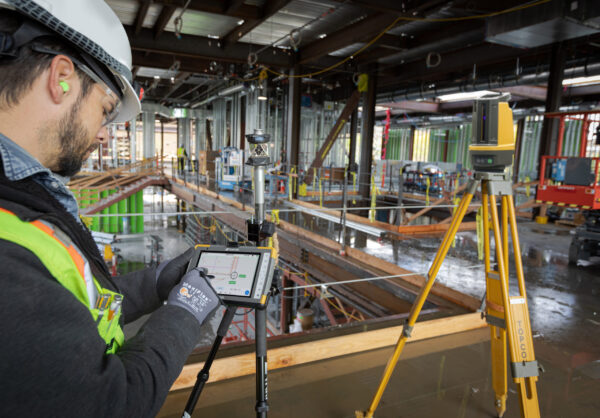





WhiteFiber, Inc. (NASDAQ: WYFI) has locked in a 10-year, $865 million colocation agreement with hyperscaler Nscale Global Holdings at its NC-1 data center campus in Madison, North Carolina. The deal, involving 40 megawatts of AI-grade compute capacity, marks the first major tenant commitment for WhiteFiber’s flagship facility and signals institutional validation for its retrofit-based, hyperscale-first infrastructure model.
The agreement positions Nscale as the anchor tenant for NC-1, and forms the commercial cornerstone for WhiteFiber’s planned expansion to over 200 megawatts across its development portfolio. The company has already invested $150 million in equity at NC-1 and is now in advanced talks with lenders to finalize a construction facility in early Q1 2026, supported by the deal’s cash flow visibility and long-term yield potential.
Why is WhiteFiber betting on retrofit AI data centers and does the Nscale deal validate that model?
WhiteFiber’s approach centers on high-density retrofits engineered specifically for generative AI workloads. The NC-1 site, designed to deliver Tier 3-equivalent reliability and ultra-high-density performance of up to 150 kilowatts per cabinet, is being marketed as a faster, more capital-efficient alternative to greenfield hyperscaler campuses.
By locking in Nscale—a sovereign-grade hyperscaler with a strong presence across Europe and North America—as the first tenant, WhiteFiber now has a commercial proof point that supports both its retrofit thesis and its AI-first go-to-market strategy.
The contract’s structure includes milestone-based installation payments and expense passthroughs, with initial service commencement scheduled for April and May 2026. Annual rate escalators of 3 percent further enhance revenue visibility over the 10-year term, creating a recurring revenue stream that aligns with infrastructure fund underwriting criteria.
Nscale will deploy the first 40 megawatts in two 20 MW phases and has secured priority rights for future capacity at the site. This could double over the next 24 months, particularly if customer momentum materializes as expected. The facility itself is backed by a 99 MW power agreement with Duke Energy, with plans to support up to 200 MW, subject to future infrastructure upgrades.
What are the financing implications of this anchor deal for WhiteFiber’s capital structure?
WhiteFiber’s announcement comes with strong signals of near-term capital markets activity. With $150 million in equity already deployed into NC-1, the company is now exploring a credit facility designed to unlock debt capital at favorable terms. Management has hinted at the use of an accordion structure to enable flexible drawdowns as new contracts are signed.
The Nscale deal is expected to serve as the anchor for this facility, with its predictable cash flows and investment-grade customer profile supporting a spread favorable to yield on cost. WhiteFiber also confirmed that it is evaluating credit enhancement structures tied to this contract, which could further improve financing terms—potentially allowing it to access institutional debt markets without significant dilution.
Execution on the financing front in early 2026 will be critical. With hyperscaler timelines tightly coupled to delivery schedules, any funding delay could cascade into delivery risk. However, the combination of contracted revenue, a high-quality anchor tenant, and an addressable market deeply constrained by power and land supply suggests WhiteFiber may be well positioned to secure terms competitive with more mature digital infrastructure peers.
How does this change the competitive landscape for AI-focused data center platforms?
The entry of WhiteFiber into the U.S. colocation market as a purpose-built AI infrastructure player is part of a larger shift within the sector. Hyperscaler demand is increasingly focused on sovereign-grade, high-density capacity capable of supporting training and inference workloads at scale.
Legacy platforms—while capitalized—face structural limitations around cooling, floor loading, and energy density. This creates an opening for new entrants like WhiteFiber and Nscale, whose greenfield or retrofitted facilities are being designed with transformer-to-GPU workloads in mind from day one.
Importantly, this deal also reinforces Nscale’s expanding North American presence. Known primarily for its European footprint and GW+ greenfield sites, Nscale’s partnership with WhiteFiber allows it to bring clients to U.S. soil without building out its own facilities. For enterprise and public sector customers bound by compliance or proximity requirements, this joint model could offer faster time to deploy with less capex burden.
On the competitive front, this puts pressure on incumbent players like Equinix, Digital Realty, and EdgeConneX to accelerate their AI capacity strategies or form similar development partnerships. It also raises the bar for emerging players seeking to position themselves as hyperscaler-ready in a market where power, not floor space, is the gating factor.
What execution risks should investors be watching as WhiteFiber scales NC-1?
While the Nscale agreement adds immediate credibility, WhiteFiber remains in the early innings of buildout and revenue realization. Billing on the first phase is not scheduled to begin until April 2026, with the second tranche a month later. This leaves a full calendar year of construction and commissioning risk ahead.
Institutional capital formation, permitting timelines, power availability from Duke Energy, and supply chain execution for ultra-high-density components will all be critical to delivering on time and budget. Management’s stated confidence in the site’s ability to scale to 200 MW must also be weighed against local utility constraints, transmission upgrades, and substation lead times.
Moreover, with retrofit models, the promise of speed and cost-efficiency must be balanced against physical limits of existing structures. Cooling retrofits for 150 kW per cabinet workloads are non-trivial, and any miss in delivery could impact future tenant conversion or delay follow-on commitments.
Still, WhiteFiber’s strategy of securing a long-term, investment-grade anchor tenant before drawing debt or marketing excess capacity places it ahead of speculative peers. This first mover advantage could be particularly valuable if macro tightening or rate volatility reintroduces financing friction across the sector in early 2026.
What signals does this deal send about investor appetite for AI infrastructure in 2026?
The announcement lands at a time when investor appetite for AI infrastructure assets—especially those with long-term contracts, high power density, and sovereign-grade compliance features—remains high. Recent capital flows into private hyperscaler platforms and sovereign AI clouds in Europe and the U.S. have shown strong institutional support for build-to-lease colocation models.
WhiteFiber appears to be aligning its development strategy with that investor appetite. The company has emphasized engineering specifications tailored to generative AI, including targeted power usage effectiveness (PUE) below 1.3, N+1 cooling, and support for GPU-intensive rack configurations.
If successfully executed, the NC-1 model could become a replicable template for expansion across WhiteFiber’s pipeline. Management has already confirmed that multiple sites are under evaluation for delivery in second-half 2026 and 2027.
For investors, the contract’s structure—especially its escalation clauses, pass-through mechanisms, and installation milestones—offers insight into how future AI infrastructure deals may be de-risked for underwriting. With Nscale now committed and delivery timelines set, WhiteFiber has effectively moved from speculative to contracted development status.
What the WhiteFiber–Nscale AI data center deal means for hyperscaler infrastructure in 2026
- WhiteFiber, Inc. signed a 10-year, $865 million colocation deal with Nscale Global Holdings for 40 MW of AI compute capacity at its NC-1 campus.
- The agreement serves as a commercial anchor for WhiteFiber’s planned 200 MW development pipeline, validating its AI-focused retrofit data center model.
- Construction risk remains a key focus, with service commencement scheduled for April and May 2026; institutional debt financing is expected to close in Q1 2026.
- Nscale gains priority access to future NC-1 capacity, strengthening its North American AI infrastructure presence without full asset ownership.
- The deal includes milestone-based payments, pass-through costs, and 3 percent annual escalators, de-risking long-term revenue for lenders and equity holders.
- WhiteFiber is actively exploring credit-enhancement structures to improve financing terms and support expansion across other U.S. sites.
- The partnership intensifies pressure on incumbent colocation players to accelerate AI-readiness or risk losing ground to hyperscaler-specialized platforms.
- If successful, NC-1 could serve as a blueprint for sovereign-grade AI infrastructure rollout across the U.S. and Europe.
Discover more from Business-News-Today.com
Subscribe to get the latest posts sent to your email.