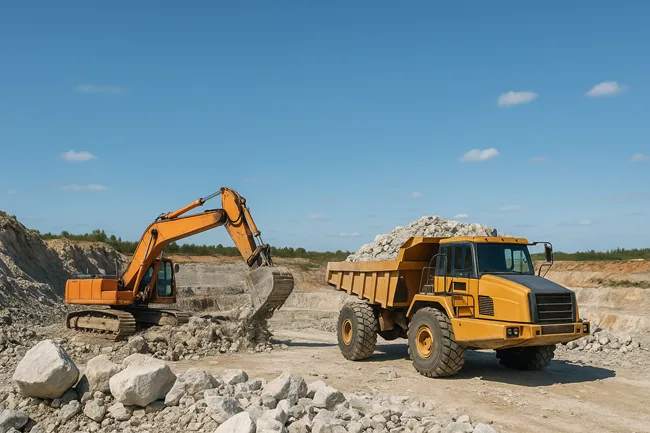




Valhalla Metals Inc. (TSXV: VMXX) has entered into a definitive agreement to acquire the Smucker copper-gold-silver-zinc project from Teck American Incorporated, a subsidiary of Teck Resources Limited, in a transaction that grants Teck a 35% equity stake in Valhalla and embeds long-term royalty and offtake rights across the combined asset base. The deal is immediately significant not because of the standalone value of Smucker, but because it materially strengthens the case for district-scale development in Alaska’s Ambler Mining District at a time when United States critical minerals policy is shifting toward domestic supply chain security.
Why does combining the Smucker Project with the Sun Project change the economic narrative for the Ambler Mining District?
The strategic logic of this transaction lies in consolidation rather than exploration. Valhalla Metals Inc. already controls the Sun Project, one of the more advanced volcanogenic massive sulfide deposits in the eastern Ambler Mining District, with defined NI 43-101 resources and recent drilling confirming continuity and expansion potential. By adding the Smucker Project at the western end of the same geological belt, the company is attempting to assemble a district-scale footprint that moves beyond isolated deposit economics.
This matters because the Ambler Mining District has long suffered from a structural problem rather than a geological one. The deposits are attractive, but the absence of infrastructure has historically limited their development potential. A single project has struggled to justify the capital intensity of road construction and logistics. A cluster of projects begins to shift that equation.
The Smucker Project adds historical resource potential, geological continuity, and exploration upside along strike and at depth, even though its resource estimate is not yet compliant with modern reporting standards. The combined land package now spans thousands of hectares across both eastern and western zones, effectively positioning Valhalla Metals Inc. as one of the more coherent landholders in the district rather than a fragmented participant.
How does Teck Resources Limited’s equity participation reshape the credibility and funding outlook?
Teck Resources Limited’s decision to take equity rather than exit the asset for cash is arguably the most important signal embedded in the transaction. The issuance of over 44 million shares, representing approximately 35% ownership, alongside royalty and offtake rights, creates a long-term alignment between a major mining company and a junior developer.
This is not a passive endorsement. It is a structured exposure to future upside, combined with mechanisms to secure downstream supply. For Valhalla Metals Inc., this changes the conversation in three ways. It enhances credibility with institutional investors who tend to discount early-stage projects without strategic backers. It improves access to technical expertise and operational insight that would otherwise be difficult for a junior company to replicate. It also creates a pathway for future financing discussions that can leverage Teck Resources Limited’s presence on the shareholder register.
At the same time, the structure introduces dilution and raises expectations. A 35% strategic shareholder is not a silent partner. It implies governance influence, performance expectations, and a need for disciplined capital allocation. The market will expect Valhalla Metals Inc. to convert this partnership into tangible progress rather than simply citing it as validation.
Why is the Ambler Access Project still the central variable behind the entire investment thesis?
Even after this acquisition, the core constraint in the Ambler Mining District remains unchanged. Infrastructure, specifically the proposed Ambler Access Project, continues to be the defining factor that determines whether these assets can transition from geological potential to economic reality.
The logic behind consolidating Sun and Smucker is directly tied to strengthening the economic justification for that infrastructure. A larger, more integrated resource base increases the likelihood that the road can be supported by long-term production volumes, thereby improving the financing case and policy narrative.
Recent federal developments suggest a more supportive stance toward domestic mining infrastructure, particularly in the context of critical minerals supply chains. However, support does not equate to certainty. The Ambler Access Project remains exposed to regulatory scrutiny, environmental opposition, legal challenges, and capital cost inflation.
For executives and investors, this creates a layered risk profile. Valhalla Metals Inc. is not simply executing an exploration strategy. It is positioning itself within a broader infrastructure-dependent development thesis. The success of that thesis depends on factors that extend well beyond the company’s direct control.
What does this transaction signal about the evolving United States critical minerals strategy?
The deal aligns closely with a broader shift in United States industrial policy toward securing domestic sources of critical minerals such as copper, zinc, and associated metals. The emphasis is increasingly on building integrated supply chains that reduce dependence on foreign processing and refining.
Teck Resources Limited’s involvement reinforces this narrative. The company’s reference to its Trail Operations in British Columbia highlights the importance of linking upstream mining assets with downstream processing infrastructure within North America. This is not just about extraction. It is about creating a full value chain that can support industrial, energy transition, and defense-related demand.
Valhalla Metals Inc.’s positioning within this framework gives it strategic relevance that exceeds its current size. The company is effectively attempting to align itself with policy priorities that could unlock funding support, permitting momentum, and long-term demand visibility.
However, policy alignment alone does not guarantee execution. The market has seen multiple examples where strong macro narratives failed to translate into project-level success. The difference here will depend on whether Valhalla Metals Inc. can demonstrate measurable progress in resource expansion, technical validation, and stakeholder engagement.
How are investors likely to interpret Valhalla Metals Inc.’s strategy and stock positioning after the deal?
Investor sentiment toward Valhalla Metals Inc. is likely to remain cautiously optimistic. The involvement of Teck Resources Limited provides a meaningful credibility boost, but the company still operates within the high-risk segment of the mining sector where valuation is driven by milestones rather than established cash flows.
Recent trading patterns reflect this dynamic. The stock has experienced significant volatility over the past year, indicating that the market is willing to price in optionality but not yet willing to assign full value to the underlying assets. The Smucker acquisition may help narrow that gap, but only if it is followed by clear execution milestones.
From a sentiment perspective, this transaction positions Valhalla Metals Inc. as a leveraged play on three converging themes. These include United States critical minerals policy, infrastructure development in Alaska, and the broader copper and zinc supply outlook. Each of these themes carries upside potential, but also introduces layers of uncertainty.
Institutional investors will likely focus on whether the company can transition from narrative-driven valuation to data-driven validation. This includes updated resource estimates at Smucker, continued drilling success at Sun, and tangible progress on the Ambler Access Project.
What execution risks and strategic challenges could still limit the upside of this consolidation strategy?
Despite the strategic logic, several risks could shape outcomes over the next 12 to 24 months. The most immediate is technical uncertainty at the Smucker Project, where the historical resource is not NI 43-101 compliant and requires validation through drilling and updated modeling.
Integration risk also remains. Combining assets within the same district is conceptually simple, but translating that into a coherent development plan will require disciplined coordination of exploration and capital allocation.
Financing is another constraint. Even with Teck Resources Limited as a strategic shareholder, advancing both projects will require additional capital, with dilution and funding terms likely to influence sentiment. Policy and macro factors add a final layer of uncertainty, particularly around permitting, environmental considerations, and commodity price dynamics.
What should executives and investors watch next to judge whether Valhalla Metals Inc. can convert consolidation into real economic value?
The next phase for Valhalla Metals Inc. will hinge on validation rather than narrative, starting with technical de-risking at the Smucker Project. Because the historical resource is not NI 43-101 compliant, follow-up drilling and updated modeling must convert legacy estimates into a credible modern resource. Until then, Smucker strengthens strategy more than economics.
Equally important will be whether the company can articulate a genuine district development pathway rather than a collection of assets. Investors will look for clarity on sequencing, capital intensity, and how Sun and Smucker integrate into a shared infrastructure framework.
Financing discipline will be closely scrutinized. Teck Resources Limited’s presence improves credibility, but capital raises still need to be tied to clear milestones. Repeated dilution without progress could quickly weaken sentiment. Policy durability remains the final variable. Supportive signals help, but long-cycle projects like Ambler will ultimately be judged on regulatory consistency, not headlines.
Key takeaways on what this development means for Valhalla Metals Inc., its competitors, and the industry
- Valhalla Metals Inc. has shifted from a single-asset exploration story to a district-scale consolidation strategy with stronger strategic relevance.
- Teck Resources Limited’s 35% equity stake provides credibility, technical alignment, and potential downstream integration advantages.
- The transaction strengthens the economic argument for the Ambler Access Project but does not reduce dependence on its approval and execution.
- Investor sentiment is likely to improve, but valuation upside will depend on technical validation and measurable progress rather than narrative alone.
- The deal reflects a broader industry trend toward clustering assets to justify infrastructure in critical minerals regions.
- Competitors in Alaska and similar jurisdictions may face pressure to demonstrate scale and strategic partnerships to remain relevant.
- United States critical minerals policy continues to influence capital flows, but execution at the project level remains the decisive factor.
Discover more from Business-News-Today.com
Subscribe to get the latest posts sent to your email.