
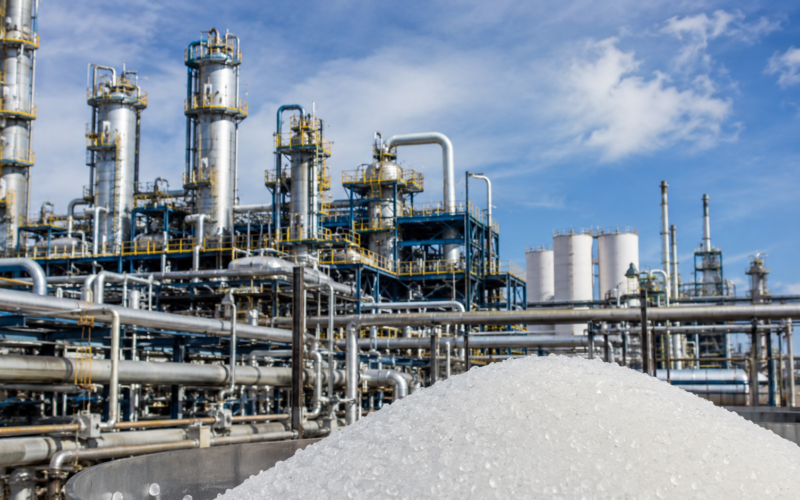
Formosa Plastics Corporation, U.S.A. completed its merger with Formosa Industries Corporation on August 1, 2026, eliminating a separate corporate entity that had owned and marketed polyethylene production within the group’s Point Comfort, Texas, petrochemical complex. Formosa Industries Corporation merged into Formosa Plastics Corporation, U.S.A., which remains the surviving legal entity and has assumed the former subsidiary’s rights, contracts, obligations and business activities. The company said product offerings, commercial contacts and day-to-day operations would continue without interruption. The central strategic question is therefore not whether the merger changes manufacturing capacity, but whether a simpler corporate structure can reduce administrative friction and improve coordination across Formosa’s integrated United States operations.
The transaction is best understood as an internal legal consolidation rather than a conventional acquisition. No purchase price, outside buyer, disposal proceeds or change of ultimate control was disclosed. Formosa Industries Corporation was already part of the wider Formosa Plastics organisation and produced high-density polyethylene and linear low-density polyethylene resins at Point Comfort.
That distinction matters. The merger does not add a new plant, customer base or production technology to Formosa Plastics Corporation, U.S.A. Instead, it brings an existing polyethylene business directly inside the principal United States operating company, removing a separate legal boundary between closely connected industrial activities.
Formosa Plastics Corporation, U.S.A. said the restructuring was designed to simplify its corporate structure and improve administrative efficiency. Executive Vice President Jay Su indicated that the merged organisation would retain its focus on customer service and long-term commercial relationships, effectively presenting the transaction as a structural change behind the scenes rather than a market-facing repositioning.
What exactly changes after Formosa Industries Corporation merges into the surviving United States entity?
The most immediate change is legal identity. Formosa Industries Corporation no longer continues as a separate corporation following the August 1 effective date. Its rights, obligations, contracts and business activities have transferred to Formosa Plastics Corporation, U.S.A. under the merger structure.
For customers and suppliers, this may require administrative updates even though commercial activity remains substantially unchanged. Contracts, purchase documentation, vendor files, tax records, insurance certificates, licences, banking instructions and customs documentation may need to reflect the surviving company’s legal name.
Formosa Plastics Corporation, U.S.A. has advised customers, suppliers, licensors and other business partners requiring updated documentation to contact their normal company representative. That indicates the transition is expected to be managed through established commercial relationships rather than through a broad renegotiation of contracts.
The company has expressly stated that existing business relationships, product offerings, customer contacts and routine operations will continue. This reduces the likelihood of material disruption, although a merger involving an active industrial supplier still requires careful migration of legal, compliance and commercial records.
The success of the transaction will therefore be measured less by a visible operational launch and more by the absence of problems. Accurate invoicing, uninterrupted deliveries, valid permits, updated trade documentation and consistent customer service will be the practical evidence that the consolidation has been completed effectively.
Why does the merger matter for Formosa’s polyethylene operations at Point Comfort, Texas?
Formosa Industries Corporation has been associated with the production and sale of Formolene polyethylene resins manufactured at the Point Comfort complex. Its portfolio has included high-density polyethylene and linear low-density polyethylene grades produced using a flexible UNIPOL manufacturing plant.
These materials serve a broad range of industrial applications. High-density polyethylene can be used in blow moulding, injection moulding, pipe, containers and other durable products, while linear low-density polyethylene is commonly used in films, packaging and specialised extrusion applications.
Formosa Plastics Corporation, U.S.A. already operates a large, vertically integrated petrochemical platform at Point Comfort. The nearly 2,500-acre complex contains approximately 20 production units across five business divisions and produces olefins, polyethylene, polypropylene, polyvinyl chloride, chlor-alkali products and other petrochemical intermediates.
Bringing Formosa Industries Corporation directly into that operating company creates a more unified legal structure around assets that were already closely linked at the production level. Polyethylene manufacturing depends on feedstock availability, utilities, logistics, maintenance, technical services and shared infrastructure across the Point Comfort site.
A separate subsidiary can be useful when a company wants to ring-fence investment, financing, risk or ownership. However, once operations become deeply integrated, the same structure may create duplicated administrative work without delivering an equivalent commercial benefit.

The merger suggests Formosa now sees greater value in organisational simplicity. A single legal entity can potentially align polyethylene production more closely with feedstock planning, plant maintenance, logistics, procurement, customer contracting and corporate support functions.
There is no disclosed evidence that production capacity will change because of the merger itself. The economic opportunity lies in coordination rather than additional output. Any meaningful benefits are likely to emerge through reduced duplication, faster internal decision-making and clearer accountability.
How could the corporate consolidation improve administrative efficiency without disrupting customers?
Large industrial companies often maintain multiple legal entities for historical, tax, financing, regulatory or investment reasons. Over time, however, those structures can become expensive to administer.
Separate companies may require their own contracts, governance records, compliance processes, accounting arrangements, insurance schedules, tax filings and internal approvals. Even when two entities share the same headquarters, personnel and production complex, employees may still need to determine which legal company owns an asset, signs a contract or carries a particular obligation.
By absorbing Formosa Industries Corporation, Formosa Plastics Corporation, U.S.A. can potentially reduce those points of duplication. Procurement agreements may become easier to administer, customer documentation can be standardised, internal reporting lines may become clearer and shared-service functions may no longer need to maintain parallel entity records.
The merger could also simplify negotiations with logistics companies, licensors, contractors and industrial customers that purchase multiple Formosa products. A customer buying polyethylene alongside other resins or chemicals may benefit from dealing with one principal United States counterparty rather than different legal entities inside the same industrial group.
Those advantages should not be overstated. Corporate mergers do not automatically reduce costs or improve execution. Savings depend on whether systems, contracts, tax processes, data records and responsibilities are genuinely consolidated rather than merely renamed.
There is also a transition burden. Legal names must be updated across enterprise software, customer portals, customs records, environmental documentation, procurement platforms and vendor databases. Errors during this stage could delay payments or create confusion over contractual responsibility even if manufacturing continues normally.
The company’s reassurance that customer contacts and everyday operations will remain unchanged is therefore commercially important. It allows Formosa to simplify the legal structure while preserving the relationships and operating routines that customers already understand.
Does the internal merger signal a broader restructuring of Formosa Plastics Corporation, U.S.A.?
The announcement does not establish that Formosa is planning a wider restructuring, asset sale or change in ownership. It should not be interpreted as evidence of a divestment or external takeover.
Formosa Plastics Corporation, U.S.A. remains the surviving entity, with headquarters in Livingston, New Jersey, and manufacturing operations centred on Point Comfort, Texas, and Baton Rouge, Louisiana. The company says it employs more than 3,000 people and generates annual revenue exceeding $5 billion across its integrated United States operations.
Its portfolio includes polyethylene, polypropylene, suspension polyvinyl chloride, specialty polyvinyl chloride, caustic soda, ethylene dichloride, hydrochloric acid and other petrochemical products. That breadth gives the company an operating model in which feedstocks, utilities and logistics can be shared across several product chains.
The Formosa Industries merger reinforces that integrated model. Rather than maintaining polyethylene production under a distinct corporate vehicle, Formosa is concentrating the business inside the company that already manages the wider United States petrochemical platform.
This may improve the ability to allocate resources across products when market conditions change. Petrochemical producers regularly adjust plant operating rates, maintenance schedules, feedstock use and product mix in response to margins, customer demand and export opportunities.
A simplified legal structure does not remove those commercial pressures, but it can reduce internal barriers to responding. Decisions involving polyethylene may now fit more directly within the broader planning framework for the Point Comfort site.
The timing also follows recent investment in the complex. In September 2025, Formosa Plastics Corporation, U.S.A. announced the commissioning of a horizontal polypropylene reactor with annual capacity of 550 million pounds at Point Comfort. The project expanded the site’s ability to produce homopolymer, random copolymer and impact copolymer grades.
The polypropylene investment and polyethylene entity consolidation are different developments, but together they demonstrate that Point Comfort remains central to Formosa’s United States manufacturing strategy. One expands physical production capability, while the other reorganises the corporate structure supporting the site.
What does the transaction reveal about Formosa’s strategy in a difficult petrochemical market?
The global petrochemical industry continues to face pressure from excess capacity, uneven industrial demand, energy-cost differences and intense competition among producers in North America, Asia and the Middle East.
Formosa Plastics Group reported 2025 revenue of NT$1.9279 trillion, down 8.3% from 2024, while pre-tax profit fell 37.4% to NT$15.2 billion. The group attributed recent industry pressure to weak demand and oversupply that compressed petrochemical pricing and profitability.
Against that backdrop, internal simplification can be strategically useful. When market conditions make large price increases or rapid volume growth difficult, companies often focus more heavily on costs, asset utilisation, operating discipline and working-capital efficiency.
The merger does not solve industry oversupply or guarantee improved margins. Polyethylene economics will continue to depend on feedstock costs, plant reliability, domestic demand, export competitiveness and the balance between global production capacity and consumption.
However, reducing unnecessary corporate complexity is a controllable action. Management cannot determine global resin prices, but it can decide how many legal entities, reporting processes and administrative layers are needed to operate an integrated production site.
That makes the merger modest in scale but rational in intent. It is unlikely to transform Formosa’s competitive position by itself, yet it may improve organisational efficiency at a time when petrochemical producers have limited tolerance for avoidable costs.
The strategic test will be whether the consolidation produces measurable operational benefits. Faster contracting, lower administrative expense, improved data visibility and simpler customer interactions would indicate that the merger has delivered more than a legal name change.
What are the main integration requirements after the merger’s August 1 completion?
The company has already completed the legal merger, but operational integration may continue after the effective date.
One priority will be transferring or updating contracts. The company said all rights and obligations of Formosa Industries Corporation had passed to Formosa Plastics Corporation, U.S.A. in accordance with applicable law. Even where contracts transfer automatically, counterparties may still require formal notices, revised certificates or updated vendor records.
Another requirement involves regulatory and trade compliance. A polyethylene producer exporting material to customers outside the United States may use certificates of origin, customs classifications and other documentation bearing the legal name of the manufacturer or exporter. Those records must be updated accurately.
Environmental permits, transportation arrangements, rail documentation, product stewardship records and insurance policies may also contain entity-specific details. The merger does not necessarily change the underlying permissions or obligations, but the surviving legal entity must ensure records remain consistent.
Technology integration is equally important. Customer relationship management systems, enterprise resource planning platforms, invoicing applications, procurement tools and compliance databases must recognise the new entity structure.
Employee communication will also influence execution. Staff handling sales, finance, logistics, procurement and legal matters need a clear understanding of when to use the surviving company’s name and how to respond to customer questions.
Formosa’s decision to retain existing customer contacts should help preserve continuity. Customers do not need to build relationships with an entirely new commercial team, while employees can guide counterparties through documentation changes.
Could customers or suppliers face any material change in their relationship with Formosa?
Based on the company’s announcement, customers should not expect changes to products, routine contacts or service arrangements solely because of the merger.
Formosa Plastics Corporation, U.S.A. has committed to continuing existing business relationships and day-to-day activities without interruption. It has also assumed the former entity’s contractual rights and obligations.
The main changes are likely to appear on documents rather than production lines. Customers may receive invoices, certificates, order acknowledgements or contractual notices carrying the Formosa Plastics Corporation, U.S.A. name instead of Formosa Industries Corporation.
Suppliers could face similar updates to purchase orders, payment instructions, insurance requirements or vendor-system registrations. These processes are routine in corporate mergers, but they require careful verification because changes involving banking or payment information can create fraud risks.
Counterparties should therefore rely on established Formosa contacts when validating revised documents. The company has specifically directed organisations needing updated corporate information to contact their normal representative.
From a customer perspective, the best outcome is uneventful continuity. Polyethylene buyers value consistent resin specifications, reliable deliveries and technical support more than the legal structure behind the producer.
Formosa’s challenge is to capture administrative benefits internally without forcing customers to absorb unnecessary complexity. The company’s communication suggests that preserving that balance is a core objective of the merger.
What will show whether the Formosa Industries merger creates lasting operating value?
The first proof point will be continuity. Formosa must complete the transition without disrupting polyethylene production, shipments, invoicing or customer service.
The second will be administrative simplification. The merger should eventually reduce duplicated legal, accounting, compliance and information-technology processes. Because Formosa has not disclosed a cost-saving target, outside observers may not receive a precise financial measure of these benefits.
The third will be improved coordination across the Point Comfort complex. Polyethylene production should become more directly integrated with the site’s feedstock, utilities, maintenance and logistics planning.
The fourth will be customer experience. Buyers and suppliers should find it easier, not harder, to conduct business with the surviving company.
The merger’s significance should therefore be judged proportionately. It is not a capacity expansion, a change of control or a major portfolio acquisition. It is a corporate simplification involving an established polyethylene operation within a much larger integrated petrochemical platform.
That makes the deal less dramatic than an external merger, but potentially more practical. In a margin-sensitive industry, eliminating structural duplication can protect competitiveness even when it does not produce an immediate revenue increase.
Formosa Plastics Corporation, U.S.A. has completed the legal step. The remaining test is whether the company can translate that simpler structure into lower administrative friction, clearer accountability and more coordinated operation of its United States resin business.
Key takeaways from the Formosa Plastics Corporation, U.S.A. and Formosa Industries merger
- Formosa Plastics Corporation, U.S.A. completed its merger with Formosa Industries Corporation on August 1, 2026.
- Formosa Plastics Corporation, U.S.A. is the surviving legal entity.
- Formosa Industries Corporation’s contracts, obligations, rights and business activities have transferred to the surviving company.
- The deal is an internal corporate consolidation rather than an external acquisition.
- No transaction value, change of ownership or disposal proceeds were announced.
- Formosa Industries Corporation’s polyethylene operations were already linked to the Point Comfort petrochemical complex.
- Customers are expected to retain their existing products, contacts and service arrangements.
- Suppliers and commercial partners may need to update contracts, invoices and corporate documentation.
- The merger could reduce duplicated administration and improve coordination across Formosa’s integrated United States operations.
- The most important proof point will be whether the company completes the transition without disrupting production, deliveries or customer service.
Discover more from Business-News-Today.com
Subscribe to get the latest posts sent to your email.