
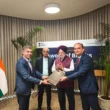


Zhejiang Wenda Pharmaceutical Technology Co., Ltd. (Wenda Pharma) has received Breakthrough Therapy Designation from the China National Medical Products Administration for NHWD-870 HCI, its novel oral BET inhibitor for advanced thoracic midline NUT carcinoma in patients who have failed prior chemotherapy. The designation is based on Phase II clinical data showing an objective response rate of 45.00 percent in 20 evaluable patients with advanced thoracic NUT carcinoma and median overall survival of 9.33 months in both the thoracic subgroup and the full evaluable study population. For a rare, aggressive cancer with no globally approved targeted therapy, the regulatory signal matters because it moves NHWD-870 closer to the center of an underserved precision oncology niche. The bigger question now is whether Wenda Pharma can convert a fast-track designation into clinical adoption, diagnostic awareness, and a commercially viable rare cancer franchise.
Why does China’s breakthrough therapy designation for NHWD-870 matter in rare NUT carcinoma treatment?
The immediate significance of the designation is not simply that NHWD-870 may move through China’s regulatory process faster. It is that Wenda Pharma is trying to build a targeted treatment path in a disease where the clinical system still struggles with detection, diagnosis, and standardisation. NUT carcinoma is a rare poorly differentiated carcinoma associated with NUTM1 gene rearrangement, and published medical literature continues to describe it as aggressive, underdiagnosed, and difficult to treat with conventional approaches.
That creates a very different commercial and clinical challenge from a broad oncology indication. A drug for advanced NUT carcinoma cannot rely only on physician familiarity, routine screening, or established treatment algorithms. The market has to be built almost alongside the medicine. Hospitals need awareness. Pathologists need to test for NUTM1 rearrangements. Oncologists need confidence that a BET inhibitor belongs earlier in the discussion once chemotherapy has failed. The science may open the door, but diagnosis decides how many patients can actually walk through it.
Wenda Pharma’s Phase II data gives the company a stronger regulatory argument because the reported 45.00 percent objective response rate in the advanced thoracic subgroup is notable in a setting where treatment options remain thin. The median overall survival figure of 9.33 months also stands against the poor natural history described in the company’s release, which cites median survival of around 6.5 months for NUT carcinoma. However, the hard part begins after designation. Rare cancer studies are often small by necessity, and regulators, clinicians, and payers will still look closely at durability of response, safety, biomarker definition, and whether benefit is consistent outside highly selected trial sites.

How could NHWD-870 reshape the clinical pathway for patients with advanced thoracic NUT carcinoma?
NHWD-870 is positioned as an oral BET inhibitor, which gives it two important strategic characteristics. First, it targets a biology-driven cancer mechanism rather than treating NUT carcinoma as just another poorly differentiated malignancy. Second, its oral route could make treatment logistics less complex than infusion-heavy oncology regimens, assuming future data continue to support safety, tolerability, and real-world adherence.
The central clinical problem in NUT carcinoma is that many patients are diagnosed late, often after the disease has already become aggressive and difficult to control. The company’s release says the disease commonly occurs in the lungs, head, and neck regions, has a median age of onset of 23.6 years, and is frequently misdiagnosed or missed because of non-specific clinical presentation and limited awareness. That is a grim combination. A rare cancer that hides in plain sight is hard enough; one that progresses rapidly is even less forgiving.
If NHWD-870 advances toward approval, its impact may depend as much on diagnostic ecosystem development as on the drug label itself. A targeted therapy usually forces the system to ask a practical question: who should be tested, when should testing occur, and which hospitals can identify eligible patients quickly enough? In that sense, NHWD-870 could help make NUTM1 testing more visible in China’s oncology practice, particularly in thoracic tumors that do not behave like typical lung cancers.
The risk is that clinical benefit remains trapped inside a narrow referral network. Rare cancers often concentrate expertise in specialist centers, while many patients first present at local or regional hospitals. If physicians do not suspect NUT carcinoma early, the treatment window narrows. Wenda Pharma’s regulatory progress may therefore become a test of whether Chinese oncology infrastructure can pair drug innovation with earlier molecular diagnosis.
What does Wenda Pharma’s rare cancer strategy reveal about China’s precision oncology ambitions?
Wenda Pharma’s NHWD-870 program fits a broader pattern in China’s biopharmaceutical sector, where domestic companies are increasingly targeting difficult oncology niches rather than only competing in crowded mainstream categories. The company says it focuses on oncology, immunology, and neurodegenerative diseases, with candidates across Phase I, Phase II, and Phase III development. Its pipeline also includes WD-890, a TYK2 inhibitor for moderate-to-severe plaque psoriasis, and WD-910, a neurodegenerative disease candidate that has completed Phase I clinical testing in Australia and is expected to enter Phase II clinical trials in China.
For Wenda Pharma, the strategic value of NHWD-870 is broader than one rare indication. A successful program would validate the company’s ability to move a small-molecule platform through Chinese regulatory acceleration in a high-need disease. That matters because biotech credibility is built not only on mechanism, but on clinical execution. Rare oncology can be a powerful proving ground when the disease biology is clear, the unmet need is undeniable, and the treatment effect is visible enough to attract regulatory attention.
China’s drug development ecosystem has been moving from fast-follow competition toward more differentiated innovation, but the transition is uneven. Domestic regulatory tools such as Breakthrough Therapy Designation are designed to prioritise therapies with meaningful potential in serious diseases. If NHWD-870 progresses, it could reinforce the view that China’s innovation pipeline is becoming more comfortable with rare cancers, orphan-like opportunities, and biomarker-defined development.
The counterpoint is that rare cancer success is rarely scalable in a simple way. NUT carcinoma is not a mass-market opportunity. The commercial upside depends on pricing, diagnostic penetration, clinical guideline placement, hospital access, and whether the drug’s mechanism can expand into other NUTM1-rearranged or BET-sensitive malignancies. Wenda Pharma’s management has framed NHWD-870 as opening possibilities beyond NUT carcinoma, but that broader thesis will require separate evidence, not just optimism.
Why is the BET inhibitor class still a difficult but closely watched area in oncology?
BET inhibition has long attracted oncology interest because bromodomain and extra-terminal proteins influence transcriptional regulation in cancer. In NUT carcinoma, the biology is especially relevant because many cases involve NUTM1 fusion events connected to epigenetic dysregulation. That makes BET inhibition scientifically logical, but the drug class has not had an easy path toward broad oncology success.
Recent clinical guidance and reviews indicate that BET inhibitor monotherapy in NUT carcinoma has shown activity, but efficacy across agents has generally been modest and remains an area of ongoing investigation rather than established standard treatment. One 2025 guideline review noted that no BET inhibitors were then approved by the United States Food and Drug Administration, the European Medicines Agency, or China’s National Medical Products Administration, and it discussed future directions including selective BET inhibitors, combinations, PROTAC technologies, and basket trials for NUTM1 fusion cancers.
That context makes Wenda Pharma’s reported data important, but it also argues against overstatement. A 45.00 percent response rate in a small thoracic subgroup is encouraging, particularly in a disease with limited options, but investors, clinicians, and regulators will want to know how long responses last and how the safety profile holds up over longer treatment exposure. The release says preliminary safety data showed that NHWD-870 was generally well tolerated, yet future submissions will need to provide more granular adverse event data.
The class-level challenge is familiar in targeted oncology. A mechanism can be compelling in theory, but clinical value depends on selectivity, tolerability, dose intensity, resistance patterns, and patient selection. If NHWD-870 can balance efficacy and tolerability in a fragile patient population, it may strengthen confidence in highly selective BET inhibition. If results narrow in larger or more diverse populations, the program may still help define where BET inhibitors belong, but expectations would need to be recalibrated.
What execution risks could decide whether NHWD-870 becomes a real treatment option?
The first execution risk is regulatory translation. Breakthrough Therapy Designation can accelerate communication and review, but it does not guarantee approval. Wenda Pharma still needs to satisfy the National Medical Products Administration on efficacy, safety, manufacturing quality, and clinical relevance. The small size of rare cancer studies can support accelerated pathways, but it also leaves less room for ambiguity.
The second risk is clinical adoption. Even if NHWD-870 reaches the market, oncologists must know when to use it and which patients qualify. That requires better awareness of NUT carcinoma, broader access to molecular testing, and referral pathways for advanced thoracic cases. The company’s release is right to emphasize the clinical gap, but closing that gap requires more than a drug approval. It requires education, diagnostics, and evidence that persuades physicians to change practice.
The third risk is commercial sustainability. Rare cancer drugs can face pricing and access challenges, especially when patient numbers are limited and evidence packages are necessarily smaller. In China, national reimbursement dynamics, hospital procurement, and clinical guideline inclusion can materially affect uptake. Wenda Pharma may need to show not only that NHWD-870 works, but that earlier molecular identification and targeted treatment create enough health system value to support access.
The fourth risk is competitive and scientific evolution. BET inhibition is not the only possible strategy for NUT carcinoma or other NUTM1-rearranged tumors. Combination regimens, next-generation epigenetic drugs, immunotherapy approaches, and targeted degradation technologies could reshape the treatment landscape. NHWD-870’s near-term advantage is regulatory momentum. Its longer-term durability will depend on whether its clinical profile remains differentiated as the field develops.
What is the broader industry view on Wenda Pharma’s NHWD-870 designation?
The most balanced interpretation is that Wenda Pharma has secured an important regulatory milestone in a rare cancer where even incremental progress is meaningful. The company’s founder, Nenghui Wang, said the designation reflected China’s growing capabilities in rare cancer drug development and suggested that NHWD-870 may also support exploration of treatments for other rare malignancies. Professor Yin Mingzhu of the Affiliated Three Gorges Hospital of Chongqing University also framed the designation as a potentially important step in changing the NUT carcinoma treatment landscape.
For Business News Today readers, the story is less about one designation and more about what it signals. China’s biotech sector is not only chasing large oncology categories; it is also moving into narrower, biologically defined diseases where global treatment gaps remain substantial. That shift matters because rare cancer programs can build scientific credibility, regulatory experience, and international partnering optionality, even when the addressable patient pool is small.
The designation also raises a useful strategic question for the broader oncology industry: will the next wave of China-origin precision cancer drugs be measured by blockbuster sales, or by the ability to solve high-need niches faster than larger multinational companies can prioritise them? NHWD-870 may not be a volume story. It is a capability story. If Wenda Pharma can bring the drug through approval and into real clinical use, the company will have shown that a focused Chinese biotech can compete in a complex rare cancer arena where speed, biology, and diagnosis all matter.
Key takeaways on Wenda Pharma, NHWD-870, and the rare cancer treatment opportunity
- Wenda Pharma’s NHWD-870 has received China National Medical Products Administration Breakthrough Therapy Designation for advanced thoracic NUT carcinoma after prior chemotherapy, giving the company an accelerated regulatory opening in a rare oncology indication.
- The Phase II data disclosed by the company showed a 45.00 percent objective response rate in 20 evaluable advanced thoracic NUT carcinoma patients, making the clinical signal meaningful in a disease with very limited targeted treatment options.
- The median overall survival figure of 9.33 months will draw attention because NUT carcinoma is widely associated with rapid progression and poor prognosis, although durability and larger confirmatory evidence remain critical.
- The commercial opportunity is likely narrow, but the strategic value could be high if NHWD-870 validates Wenda Pharma’s small-molecule oncology platform and strengthens its credibility in rare cancer drug development.
- The program’s success will depend heavily on molecular diagnosis, especially because NUT carcinoma is often misdiagnosed or detected late due to non-specific clinical presentation.
- BET inhibition remains scientifically attractive in NUT carcinoma, but the broader drug class still faces questions around durability, tolerability, and optimal combinations.
- China’s regulatory support for NHWD-870 highlights the growing role of domestic biotech companies in precision oncology niches that global drugmakers may not prioritise quickly.
- Wenda Pharma’s next challenge is not only approval, but also clinician adoption, hospital access, diagnostic education, and reimbursement positioning.
- The company’s broader pipeline in oncology, immunology, and neurodegenerative disease suggests that NHWD-870 may become a credibility anchor rather than a standalone rare cancer asset.
- For the rare cancer field, the designation is a reminder that small patient populations can still drive strategically important innovation when biology, unmet need, and regulatory urgency align.
Discover more from Business-News-Today.com
Subscribe to get the latest posts sent to your email.