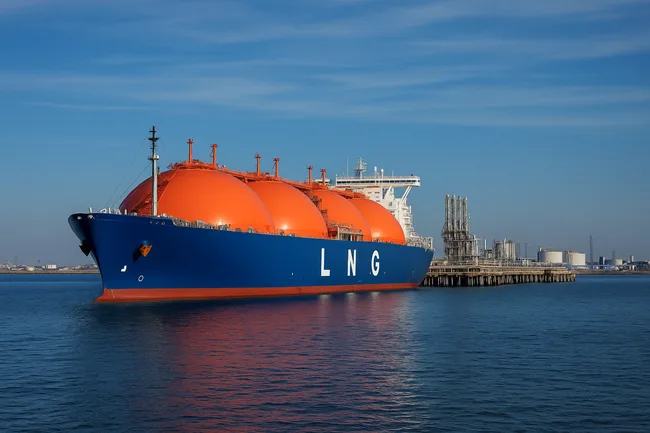




Vikran Engineering Limited (NSE: VIKRAN; BSE: 544496) has accepted a ₹3,517.98 crore turnkey engineering, procurement and construction order from wholly owned subsidiary NOPL Solar Projects Private Limited for a 969 MW AC solar portfolio across Maharashtra. The 12-month contract covers engineering, procurement, solar modules, inverters, construction, testing and commissioning at multiple locations. It replaces an earlier 600 MW contract worth ₹2,035.26 crore awarded by Onix Renewable Limited after Vikran Engineering Limited acquired full ownership of the project developer. Vikran Engineering Limited shares closed at ₹76.23 on June 30, rising about 8.5% across the first two trading sessions after the disclosure while remaining well below their 52-week high. The project could transform the company’s renewable-energy exposure, but the intra-group structure means investors should not interpret the entire headline value as conventional third-party revenue flowing directly into consolidated earnings.
Why is Vikran Engineering’s ₹3,518 crore solar order different from a normal third-party EPC win?
The most important detail is the identity of the customer. NOPL Solar Projects Private Limited is not an independent utility, renewable developer or external infrastructure client. It is a wholly owned subsidiary of Vikran Engineering Limited following the acquisition completed in May 2026.
This means the contract moves engineering and construction responsibility from one company within the Vikran Engineering Limited group to another. Vikran Engineering Limited will perform the EPC work, while NOPL Solar Projects Private Limited remains the developer and eventual owner of the 969 MW solar portfolio.
The arrangement can still be commercially significant because real equipment must be procured, sites must be developed and generating assets must be built. However, the accounting treatment is fundamentally different from an external order. Indian consolidation principles generally require intra-group income, expenses, receivables, payables and unrealised profits to be eliminated when the parent and subsidiary are presented as one economic group.
Vikran Engineering Limited may recognise EPC activity in its standalone accounts, depending on the precise accounting treatment and project milestones. At the consolidated level, however, the group cannot create external economic revenue simply by one controlled entity invoicing another controlled entity. The construction expenditure is more likely to become part of the project asset, while the group’s external revenue opportunity emerges through future electricity sales and other third-party cash flows after commissioning.
The analytical distinction is crucial because the ₹3,517.98 crore order value is roughly 1.8 times Vikran Engineering Limited’s current market capitalisation. That comparison naturally attracts retail attention, but it does not mean the company has suddenly added external revenue equal to nearly twice its equity value. The project is better understood as a large internal capital programme that could create a long-life operating asset if financing, construction and power sales are successfully delivered.
Does the 969 MW NOPL project transform Vikran Engineering from contractor into renewable asset owner?
Vikran Engineering Limited previously held 49% of NOPL Solar Projects Private Limited before acquiring the remaining 51% for ₹5.10 crore in May 2026. The transaction gave Vikran Engineering Limited full control of a project company associated with a 969 MW grid-connected solar portfolio under Component C of the Pradhan Mantri Kisan Urja Suraksha evam Utthaan Mahabhiyan scheme in Maharashtra.
This marks a strategic shift from conventional EPC contracting toward an integrated developer-owner model. A normal EPC contractor earns revenue by designing and constructing an asset for someone else. An owner-developer must arrange land, permits, grid connectivity, project finance, construction and long-term operations while carrying the economic risks of the asset.
The potential reward is greater because Vikran Engineering Limited is no longer restricted to a one-time construction margin. If the project reaches commercial operation, the group can participate in long-term electricity revenue and potentially create an infrastructure asset with a value based on contracted cash flows.
The corresponding risks also become much larger. The group must finance project equity, manage debt obligations and absorb delays that would previously have fallen primarily on an external developer. Any gap between expected generation, contracted tariff and actual operating performance will remain within the consolidated group rather than ending when an EPC customer accepts the completed plant.
NOPL Solar Projects Private Limited had a paid-up capital of only ₹1 lakh when incorporated in May 2024. That does not indicate the eventual capitalisation of the project, but it demonstrates the distance between the special-purpose vehicle’s original corporate scale and the investment required to deliver 969 MW. The project will need a much larger combination of equity, debt, supplier credit and milestone financing before the targeted capacity can become operational.
Vikran Engineering Limited is therefore attempting something more consequential than winning a large construction order. It is using its EPC capability to build a renewable ownership platform. The upside is recurring infrastructure cash flow. The downside is that development, financing and operating risks now sit much closer to the parent company’s shareholders.
How should investors interpret the revised order book after the Onix Renewable contract was cancelled?
The latest contract replaces an earlier work order from Onix Renewable Limited covering 600 MW and carrying a stated value of ₹2,035.26 crore. Vikran Engineering Limited disclosed that approximately ₹388.67 crore of work had been tentatively executed under the former arrangement and that around ₹1,893.26 crore of remaining order value had been cancelled.
Those disclosed figures do not reconcile cleanly with the original ₹2,035.26 crore contract value. Adding the tentatively executed amount to the stated cancelled balance produces a figure above the original contract. The difference may reflect revised scope, taxes, adjustments or a disclosure inconsistency, but the filing does not provide a bridge explaining it.
Investors should therefore avoid calculating a simplistic net order-book increase by subtracting the cancelled contract from the new ₹3,517.98 crore figure. The revised arrangement covers a larger 969 MW portfolio and includes modules and inverters, but part of the contract replaces work already associated with the same underlying development.
Vikran Engineering Limited reported an order book of ₹5,206 crore at March 31, 2026, including ₹2,825.1 crore from solar projects. By May 22, the disclosed order book had risen to approximately ₹5,737 crore, with solar accounting for 49%. The presentation also referred to additional NOPL Solar Projects Private Limited EPC work of approximately ₹1,400 crore.
The new contract may materially increase the standalone execution pipeline, but the market still needs a formal order-book reconciliation. That bridge should explain how much of the ₹3,517.98 crore represents genuinely additional project scope, how much replaces the cancelled Onix Renewable Limited balance and how intra-group work is treated in reported consolidated order-book figures.
Until that clarification arrives, the most defensible conclusion is that project scale has increased from 600 MW to 969 MW and contractual responsibility has moved directly inside the Vikran Engineering Limited group. It is less defensible to treat the full ₹3,517.98 crore as entirely new external business.
Why does Maharashtra’s feeder-level solarisation programme matter to the project economics?
The NOPL Solar Projects Private Limited portfolio is connected to Component C of the Pradhan Mantri Kisan Urja Suraksha evam Utthaan Mahabhiyan scheme, which includes the solarisation of grid-connected agricultural pumps and agricultural feeders. Maharashtra has used feeder-level solar development to move daytime renewable generation closer to rural electricity demand.
This differs from building one concentrated utility-scale solar park. Feeder solarisation typically involves multiple projects positioned near substations serving agricultural consumers. Electricity can be generated closer to the load, potentially reducing transmission and distribution losses while improving the availability of daytime power for irrigation.
The model can create a dependable offtake framework when backed by long-term procurement arrangements. It can also improve social and political support because the electricity is connected to a visible rural need rather than being developed solely for merchant-market trading.
However, decentralisation multiplies execution interfaces. A 969 MW portfolio spread across numerous sites may require separate land parcels, access roads, local approvals, evacuation arrangements, contractor teams and substation connections. The total capacity is large, but the construction challenge resembles coordinating many smaller projects rather than completing one uniform solar park.
That structure creates a different risk profile. Problems at one site may not stop the entire portfolio, which provides diversification. At the same time, dozens of smaller delays involving land, local permissions or grid readiness can accumulate and prevent the portfolio from meeting its overall commissioning target.
The value proposition therefore depends on Vikran Engineering Limited’s ability to industrialise distributed execution. Standardised engineering, bulk equipment procurement and disciplined site management will be essential if the group is to capture scale benefits across geographically dispersed assets.
Can Vikran Engineering deliver 969 MW across Maharashtra within the 12-month deadline?
The stated execution period is aggressive. The project requires approximately 969 MW of modules, inverters and supporting equipment to be procured, transported, installed, tested and connected across multiple locations within one year.
Module supply represents one of the largest procurement commitments. Vikran Engineering Limited will need to secure equipment that satisfies project specifications, scheme requirements and financing conditions while protecting itself from price changes. Falling module prices can reduce project cost, but poorly timed procurement can also create inventory losses or supplier disputes.
Grid readiness may be more difficult than equipment procurement. Solar plants cannot generate commercial revenue until substations, transformers, protection systems and evacuation lines are available. A completed array sitting beside an incomplete interconnection is technically impressive but financially unemployed.
Maharashtra’s monsoon can also compress the construction window. Civil works, foundation activity, road access and electrical installation can slow when weather conditions deteriorate. The 12-month schedule leaves limited room for sequential delays across land, procurement, construction and commissioning.
The company’s asset-light operating model may help it mobilise contractors without investing heavily in owned construction equipment. Its network of more than 3,500 vendors can support procurement across multiple locations. The trade-off is dependence on external suppliers and subcontractors whose performance must be coordinated through strong contractual and quality controls.
The portfolio’s distributed nature may allow partial commissioning. Some locations could begin generating electricity while delayed sites continue through construction. This could improve cash-flow timing, provided power-purchase and financing arrangements permit phased commercial operation.
The market should judge execution through commissioned megawatts rather than only expenditure or equipment deliveries. A project can consume substantial working capital and still fail to create cash flow when grid connections or regulatory milestones remain incomplete.
What does the solar project imply for Vikran Engineering’s working capital and balance sheet?
Vikran Engineering Limited entered FY27 with rapidly expanding operations but already carried a sizeable working-capital position. FY26 revenue from operations increased 36.4% to ₹1,249.3 crore, while EBITDA rose 9.3% to ₹175.1 crore. Profit after tax reached ₹91.7 crore, up 17.8%.
The growth was accompanied by margin compression. The annual EBITDA margin declined from 17.5% to 14%, while the profit-after-tax margin fell from 8.5% to 7.3%. Project-related expenses increased sharply as the business scaled into larger solar contracts.
Trade receivables stood at approximately ₹1,013.1 crore at March 31, while contract assets reached ₹863.9 crore. Together, those two categories were about ₹1,877 crore, roughly 1.5 times FY26 revenue. This does not automatically indicate poor asset quality because EPC accounting can produce substantial unbilled revenue and milestone receivables, but it shows that cash conversion is already central to the investment case.
The group also reported short-term borrowings of ₹246.4 crore and long-term borrowings of ₹45.8 crore. Cash and cash equivalents stood at ₹33.3 crore, while other bank balances were approximately ₹186.5 crore.
A 969 MW internally owned development could intensify these requirements. The group may need to pay module suppliers, inverter manufacturers and contractors before receiving project-finance disbursements or electricity revenue. Delays in debt drawdowns or commissioning could therefore create a funding mismatch.
The ₹3,517.98 crore contract includes goods and services tax, meaning the underlying project value before tax is lower than the headline amount. Even after adjusting for tax, the required capital programme remains multiple times larger than Vikran Engineering Limited’s FY26 revenue.
The balance-sheet question is not whether the company has enough reported orders. It is whether Vikran Engineering Limited can fund those orders without excessive borrowing, equity dilution or supplier stress. Financing closure and cash-flow disclosure are likely to matter more than another large headline contract.
How could the project reshape Vikran Engineering’s revenue mix and competitive position?
Solar had already become Vikran Engineering Limited’s largest order-book vertical by March 2026, accounting for 54.2% of its ₹5,206 crore pipeline. Power transmission and distribution contributed 32.8%, water infrastructure represented 12.2% and railways accounted for less than 1%.
The NOPL Solar Projects Private Limited development increases that strategic concentration. Successful delivery could establish Vikran Engineering Limited as a credible contractor and owner-developer capable of handling close to one gigawatt of distributed solar capacity.
That reference would be valuable when bidding for future feeder-solarisation, utility-scale renewable and hybrid-energy opportunities. Customers and lenders place considerable weight on completed projects because execution history helps reduce perceived schedule and technology risk.
The project could also strengthen procurement economics. Purchasing modules, inverters, structures, cables and transformers across 969 MW may provide better negotiating leverage than smaller standalone contracts. Standardised designs can reduce engineering costs and allow equipment to be deployed across sites more efficiently.
Concentration creates exposure to solar-specific risks. Module prices, import rules, domestic sourcing conditions, tariff regulation and state utility payment cycles can affect a larger portion of the business. Vikran Engineering Limited’s earlier diversification across transmission, water and rail infrastructure provided some protection against weakness in a single market.
The company must also demonstrate that ownership does not undermine its asset-light model. EPC contracting typically allows capital to be recycled after project completion. Holding renewable assets can produce recurring revenue, but it also locks capital into long-duration infrastructure. The strategic model becomes attractive only when long-term project returns exceed the company’s financing cost and the opportunity cost of using that capital elsewhere.
Why did VIKRAN shares rally after the order despite the intra-group revenue question?
Vikran Engineering Limited shares closed at ₹74.44 on June 29, gaining 5.98% in the first session after the weekend announcement. The stock advanced another 2.41% to ₹76.23 on June 30, producing an approximately 8.5% gain from the pre-announcement close of ₹70.24.
The reaction reflects the psychological power of the headline numbers. A ₹3,517.98 crore order attached to a company with a market capitalisation near ₹1,966 crore naturally suggests a major change in business scale. The 969 MW capacity also places the project in a different category from the smaller contracts that typically dominate micro-cap and small-cap infrastructure coverage.
The stock was up approximately 7.1% over one week and 7.4% over one month at the June 30 close. However, it remained about 35.6% below its 52-week high of ₹118.40 and roughly 21% below the ₹97 initial public offering price.
That broader performance indicates that investors still carry concerns beyond project wins. Vikran Engineering Limited must demonstrate margin stability, working-capital discipline and predictable conversion of its order book. The move into renewable ownership adds potential long-term value but introduces new financing and project-development risks.
Institutional ownership trends also indicate measured sentiment. Foreign institutional ownership declined from 2.38% in September 2025 to 1.10% in March 2026, while domestic institutional ownership fell from 12.64% to 6.82%. The proportion held by other investors increased over the same period.
The post-announcement rally is therefore better interpreted as renewed optimism rather than full validation of the strategy. Sustaining the re-rating will require financing milestones, physical construction progress and evidence that the project improves consolidated cash generation rather than only expanding standalone reported activity.
What milestones will determine whether the 969 MW project creates lasting shareholder value?
The first milestone is a clear reconciliation of the revised project value and order book. Vikran Engineering Limited should explain how the cancelled Onix Renewable Limited contract, previously executed work and new NOPL Solar Projects Private Limited order flow through standalone and consolidated reporting.
The second milestone is project financing. Investors need visibility on debt commitments, interest costs, required equity contributions and whether financing is available at the special-purpose vehicle level without placing disproportionate pressure on the parent company.
The third milestone is site readiness. Land possession, substation availability, grid connectivity and local permissions will determine whether the 12-month schedule is achievable. Module orders mean little when sites are not prepared to receive them.
The fourth milestone is procurement discipline. Vikran Engineering Limited must lock in modules, inverters and balance-of-system equipment without accepting supply-chain terms that weaken project returns or increase working-capital strain.
The fifth milestone is phased commissioning. Evidence that individual project clusters are reaching commercial operation would reduce execution uncertainty and begin converting capital expenditure into external electricity revenue.
The sixth milestone is margin and cash-flow transparency. Investors should track whether solar expansion preserves EBITDA margins and whether trade receivables and contract assets grow more slowly than revenue.
The final milestone is operating performance after commissioning. Generation levels, plant availability, payment collection and debt servicing will decide whether Vikran Engineering Limited has created a valuable renewable platform or merely assumed a much larger capital burden.
Key takeaways on what the Vikran Engineering solar order means for the company and investors
- Vikran Engineering Limited has accepted a ₹3,517.98 crore turnkey contract covering a 969 MW AC solar portfolio across Maharashtra.
- The customer is wholly owned NOPL Solar Projects Private Limited, making the order an intra-group related-party transaction rather than a conventional external EPC award.
- Consolidation rules generally require intra-group revenue, expenses and unrealised profits to be eliminated from group financial statements.
- The contract replaces an earlier 600 MW arrangement with Onix Renewable Limited and expands the underlying project scope to 969 MW.
- Disclosed values for executed and cancelled portions of the former order do not reconcile cleanly, increasing the need for a formal order-book bridge.
- Full ownership of NOPL Solar Projects Private Limited moves Vikran Engineering Limited from pure contracting toward renewable asset development and ownership.
- The 12-month deadline is aggressive because the portfolio spans multiple sites and requires land, modules, inverters, substations and grid connections.
- Trade receivables and contract assets already exceeded FY26 revenue, making project financing and cash conversion central risks.
- VIKRAN shares gained about 8.5% across the first two post-announcement sessions but remained well below the 52-week high and initial public offering price.
- Sustainable shareholder value will depend on financing closure, phased commissioning, consolidated external revenue and disciplined balance-sheet management.
Share this:
Discover more from Business-News-Today.com
Subscribe to get the latest posts sent to your email.