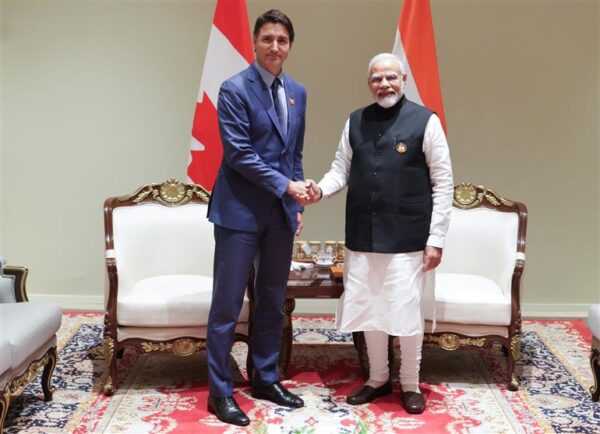
President Donald Trump’s abrupt departure from the 2025 G7 summit in Kananaskis, Alberta, sent shockwaves through the diplomatic establishment on June 16, with allies scrambling to respond to a fast-unfolding conflict in the Middle East. Trump’s early exit, announced by White House press secretary Karoline Leavitt, came hours after the U.S. president issued a warning to civilians in Tehran and just as world leaders were crafting a joint de-escalation statement aimed at calming tensions between Israel and Iran.
Leavitt posted on X that “President Trump had a great day at the G7, even signing a major trade deal with the United Kingdom and Prime Minister Keir Starmer. Much was accomplished, but because of what’s going on in the Middle East, President Trump will be leaving tonight after dinner with Heads of State.”
The U.S. president’s decision to leave early not only canceled bilateral meetings with Ukrainian President Volodymyr Zelenskyy and Mexican President Claudia Sheinbaum but also removed him from the summit’s closing press conference and final communiqué deliberations. Leaders and analysts alike saw the move as symbolizing a growing U.S. tilt toward unilateralism in a moment of mounting global uncertainty.
Why did President Trump leave the G7 summit early amid mounting Israel‑Iran tensions?
The White House emphasized that Trump’s decision was driven by pressing national security concerns. Israeli airstrikes on Iran—targeting state media and suspected nuclear sites—had rapidly escalated over the preceding 72 hours, prompting Trump to post a direct warning: “everyone should immediately evacuate Tehran.”
According to diplomatic sources and U.S. officials, Trump is expected to convene an emergency meeting of the National Security Council upon his return to Washington. His early departure is also intended to send a signal to adversaries and allies alike that the United States is prioritizing deterrence and strategic response over summit decorum.
Trump’s departure unfolded even as the president signed a bilateral trade framework with the United Kingdom, a key deliverable for the summit. However, the escalation in Tehran quickly overtook economic diplomacy as the dominant narrative of the gathering.
What geopolitical dynamics contributed to the summit being dominated by the Israel‑Iran conflict?
While G7 summits often wrestle with a range of global challenges—from economic instability to climate change—this year’s gathering was consumed by the spiraling Israel–Iran conflict. Israeli Prime Minister Benjamin Netanyahu publicly defended his country’s military strikes in interviews, describing Iran as a shared enemy of both Israel and the United States. “We’re not just fighting our enemy. We’re fighting your enemy,” he said, referring to anti-American slogans often used by Iranian officials.
European leaders, including France’s Emmanuel Macron and Germany’s Friedrich Merz, pressed for a joint statement urging de-escalation and market stability, particularly around energy. But Trump refused to sign, reportedly arguing that he had already expressed his views publicly and saw no value in committing to diplomatic language that did not reflect his hardline stance.
That decision revived memories of Trump’s earlier refusal to endorse multilateral frameworks, including the 2017 Paris Climate Agreement. In both cases, the U.S. position diverged sharply from European consensus, undercutting the bloc’s ability to present a united front.
How does this departure reflect longstanding divisions in U.S. foreign policy toward Middle East crises?
Trump’s behavior at the summit follows a familiar pattern established during his first term and reaffirmed since his 2024 re-election. Back then, he withdrew from the Iran nuclear deal and instituted a “maximum pressure” campaign to constrain Tehran’s regional influence. Today’s departure from the G7 reflects continuity in that approach—eschewing diplomatic consensus in favor of direct confrontation.
Before Israel launched its latest air campaign, Trump had publicly advised restraint, warning that a military strike could derail ongoing negotiations. However, once the strikes began, his tone shifted markedly. He praised Israel’s actions as “excellent” and suggested they might pressure Iran into making a new deal. This rhetorical pivot mirrored his earlier strategy: project strength, then push for negotiation from a position of dominance.
His stance on military involvement remains opaque. When asked by reporters whether the U.S. would become directly involved in the conflict, Trump replied, “I don’t want to talk about that.”
What reactions did summit leaders and allied nations express regarding Trump’s exit and stance?
While some leaders, including host Prime Minister Mark Carney of Canada, expressed understanding for Trump’s scheduling decision, others viewed the move as disruptive. French President Emmanuel Macron told reporters that Trump’s exit could open diplomatic space for de-escalation efforts, suggesting that consensus might be easier to reach in his absence.
Privately, however, several European diplomats voiced concern over the optics of the president abandoning a summit mid-crisis. Officials from Germany and Italy noted that the U.S. absence in critical discussions about Ukraine and coordinated energy policy limited the G7’s ability to issue a robust final communiqué.
British Prime Minister Keir Starmer, fresh from finalizing a new trade pact with Trump, remained guarded in his public comments. But sources close to 10 Downing Street indicated disappointment over the canceled press conference and loss of momentum on broader economic issues.
How did the early exit reshape the summit’s agenda and outcome?
Trump’s early departure led to the cancellation of multiple side meetings and reallocated summit resources toward urgent Middle East monitoring. Discussions around Ukraine, artificial intelligence, global debt, and supply chain resilience were condensed, and in some cases deferred entirely. The cancellation of the meeting with Ukrainian President Volodymyr Zelenskyy drew particular attention, as the G7 has been a key backer of Ukraine since the start of the Russia conflict.
The absence of a unified statement on Israel and Iran exposed fissures within the G7. Even though other leaders continued negotiations over the draft communiqué, Trump’s non-participation significantly weakened the collective signal it might have sent to Tehran.
What are the implications for U.S. relations with G7 allies and global security coordination?
The G7 traditionally serves as a platform for aligning policies among the world’s largest liberal democracies. Trump’s refusal to endorse the group’s de-escalation statement—alongside his sudden departure—raises questions about the future of U.S. engagement in this format.
Analysts suggest that while Trump’s base may view the move as decisive leadership, allies increasingly worry about the unpredictability of U.S. foreign policy. One senior EU diplomat, speaking anonymously, described the president’s behavior as “high-risk diplomacy that sidelines alliances when they’re needed most.”
Discussions are already underway in some European capitals about building more resilient coalitions that can act with or without U.S. involvement. Some voices within NATO and the European Union are advocating for “coalitions of the willing” that could offer alternatives to U.S.-dominated crisis frameworks.
What public and diplomatic sentiment is emerging in response to Trump’s early exit from the G7?
Public reactions have mirrored institutional divides. Trump supporters praised his boldness on social media, with hashtags like #LeadershipMatters and #PeaceThroughStrength trending on X. Critics accused him of abandoning global responsibilities, reigniting debates about American exceptionalism and international order.
Diplomatic reactions remained more measured but pointed. A spokesperson for Germany’s Foreign Ministry stated that “multilateralism works best when all major powers stay at the table.” French and Canadian diplomats reiterated the need for joint action in the face of geopolitical crises—especially when energy markets, nuclear nonproliferation, and regional peace are at stake.
What are the historical parallels and lessons for future G7 summit strategies?
This is not the first time a U.S. president has departed from G7 norms. In 2018, Trump left the Charlevoix summit early and later disavowed the joint communiqué over trade disputes. His stance on NATO contributions, climate policy, and sanctions has long tested G7 unity.
Today’s Israel–Iran crisis may become the latest example of how major powers approach global governance during high-stakes emergencies. For G7 members, the episode may prompt institutional introspection—should the group formalize crisis protocols, enforce participation norms, or create emergency diplomatic corridors that operate independently of any single member?
Those questions will likely surface again before the next summit. Until then, Trump’s early exit stands as a clear reminder that in an age of multipolar tension, even summits of allies are fragile ecosystems—vulnerable not just to adversaries, but to their own internal divergence.
Discover more from Business-News-Today.com
Subscribe to get the latest posts sent to your email.