


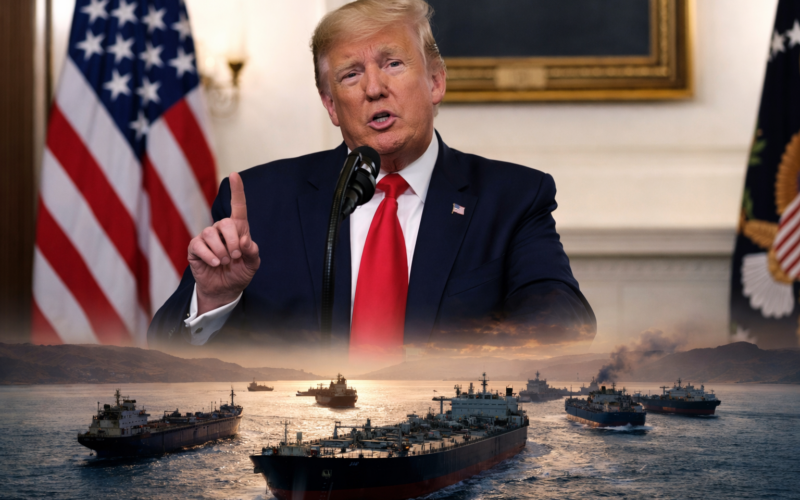
United States President Donald Trump extended a deadline threatening Iran with military strikes on its energy infrastructure for the second time in a single week on 26 March 2026, pushing the new cutoff to Monday, 6 April 2026, at 8 p.m. Eastern Time. Trump announced the extension on his Truth Social platform, stating the pause on striking Iranian energy plants had been granted at the request of the Iranian government and that ongoing negotiations were proceeding very well despite what he characterised as erroneous media reporting to the contrary.
The original ultimatum was issued on 22 March 2026, when Trump posted that if Iran did not fully open the Strait of Hormuz without threat within 48 hours, the United States would strike and obliterate Iranian power plants. Trump extended that deadline by five days on 23 March 2026, citing what he described as productive conversations. The second extension on 26 March 2026 came approximately ten minutes after United States financial markets closed following their worst single-day session of the war, with the S&P 500 falling 1.7 percent and Brent crude oil rising 4.8 percent to settle at $101.89 per barrel, more than 40 percent above pre-war levels of approximately $65.
During a 90-minute Cabinet meeting at the White House on 26 March 2026, Trump told reporters that Iran was allowing some oil tankers through the Strait of Hormuz as a sign of good faith. Trump said approximately ten Pakistan-flagged oil tankers had been permitted by Iran to transit the waterway over the preceding days, a development he said confirmed the United States was engaging with the right counterparts. Trump stated he gave Iran a 10-day extension rather than the seven Iran requested because of that gesture, saying Iran had apologised for something they said and sent two additional tankers beyond the initial eight.
What is the United States 15-point peace framework that Pakistan transmitted to Iran and what does it propose?
White House Special Envoy to the Middle East Steve Witkoff confirmed at the Cabinet meeting that the United States had presented Iran with a 15-point framework intended to serve as the basis for a peace agreement. Witkoff said the proposal had been circulated through the government of Pakistan, acting as the mediator, and had resulted in strong and positive messaging and talks. The full text of the proposal has not been released publicly. Reporting from multiple outlets and a list published by Israel’s Channel 12, citing a Western source, indicated the proposal includes a 30-day ceasefire, the dismantling of Iran’s nuclear facilities at Natanz, Isfahan, and Fordow, a permanent Iranian commitment to never develop nuclear weapons, the cessation of uranium enrichment on Iranian soil, an end to Iran’s support for armed proxy groups, a guarantee that the Strait of Hormuz will remain open to international shipping, and limits on Iran’s ballistic missile programme. In return, the proposal is reported to offer comprehensive sanctions relief. The White House cautioned reporters that elements of the sourced reporting were not entirely factual.
How Pakistan, Turkey, and Egypt are facilitating indirect United States-Iran dialogue to end the Middle East war
Pakistan’s Foreign Minister Ishaq Dar publicly confirmed on social media that indirect talks between the United States and Iran were taking place through messages relayed by Pakistan, and said Iran was deliberating on the proposal. Turkey and Egypt were also extending support to the initiative, Dar said. Pakistan Prime Minister Shehbaz Sharif separately indicated that Islamabad stood ready and honoured to host conclusive peace talks, subject to agreement by both parties. An unnamed official in Islamabad told NPR that Pakistan’s interior minister held a secret meeting with the Iranian ambassador in Pakistan on 26 March 2026. Neither the United States nor Iran mentioned Israel by name in the mediation framework.
Why Iran rejected the United States peace proposal and what counter-conditions Tehran presented through intermediaries
Iran’s formal response to the United States proposal, transmitted through intermediaries and reported by Tasnim News Agency on 26 March 2026, stated that the proposal required Iran to relinquish its ability to defend itself in exchange for what Tehran characterised as a vague plan to lift sanctions, and that it lacked the minimum requirements for a viable agreement. Iranian Foreign Minister Abbas Araghchi acknowledged that messages had been exchanged through mediators but stated this did not constitute negotiations. A senior Iranian official told Reuters there was still no arrangement for negotiations and that no plan for talks appeared realistic at that stage, though the official acknowledged Turkey and Pakistan were working to establish common ground and reduce differences between the two sides.
Iran’s conditions for any agreement, as summarised by the Iranian Embassy statement on social media, required an end to United States and Israeli military aggression, concrete guarantees preventing the recurrence of war, comprehensive cessation of hostilities across all fronts including against Iran-aligned groups such as Lebanon’s Hezbollah, recognition of Iranian sovereignty over the Strait of Hormuz, and payment of war reparations. A United States official, characterising the Iranian conditions in background comments, described them as ridiculous and unrealistic. Trump told reporters at the Cabinet meeting he was not desperate to make a deal and that he did not care. Witkoff said Iran was looking for an off-ramp but warned that it should not miscalculate again.
How the killing of Islamic Revolutionary Guard Corps Navy commander Alireza Tangsiri in Bandar Abbas affects the Strait of Hormuz blockade
The same day Trump announced the extension, Israel’s Defense Minister Israel Katz announced that the commander of the Islamic Revolutionary Guard Corps Navy, Commodore Alireza Tangsiri, had been killed in a precise and lethal Israeli airstrike in the Iranian port city of Bandar Abbas. Alongside Tangsiri, the Israeli Defense Forces confirmed the death of Behnam Rezaei, head of the naval intelligence directorate of Iran’s Islamic Revolutionary Guard Corps. United States Central Command confirmed Tangsiri’s death and stated that the killing made the region safer and that strikes on the Iranian navy would continue. Central Command noted the United States military had by that point struck more than 10,000 targets in Iran and destroyed approximately 92 percent of the Iranian navy’s largest ships.
Tangsiri had commanded the Islamic Revolutionary Guard Corps Navy since August 2018 and was identified by Israeli and American officials as the central figure behind the Strait of Hormuz blockade, which Iran imposed following the outbreak of the United States-Israel military campaign on 28 February 2026. The Israeli Defense Forces said Tangsiri had been present in Bandar Abbas in the weeks leading to his death, personally directing Iran’s interdiction of commercial shipping and updating which vessels were permitted to transit the waterway. Israeli Prime Minister Benjamin Netanyahu confirmed the operation, describing Tangsiri as having blood on his hands and being the person who led the closure of the Strait of Hormuz. Iran did not immediately confirm or deny the reports.
How military operations across the Middle East escalated on the same day Trump extended the Iran deadline
Despite the diplomatic overtures and Trump’s deadline extension, active military operations across the Middle East continued on 26 March 2026. Israel launched strikes targeting Iranian infrastructure in the city of Isfahan in central Iran and elsewhere in the country. Iran fired two rounds of missiles at central Israel, causing destruction and injuries. Iran also launched drone and missile strikes against United States military bases in Kuwait and Saudi Arabia. The United Arab Emirates defence ministry said its air defences engaged 15 ballistic missiles and 11 drones, and authorities in Abu Dhabi confirmed that two people were killed by debris from an intercepted missile. Iran issued a broad warning through its semi-official Fars News Agency that hotels and civilian facilities across the Middle East used to house United States military personnel could be considered legitimate defensive targets.
Why Iran’s formalised toll system on the Strait of Hormuz is driving global oil prices and disrupting energy supply chains
Iran’s state-affiliated media reported that Iran’s Parliament was preparing to formalise a fee system for ships seeking to pass through the Strait of Hormuz. Lloyd’s List Intelligence, the maritime analytics firm, characterised the arrangement as a de facto toll booth regime and said at least two vessels had paid in yuan, China’s currency. Gulf Cooperation Council Secretary-General Jasem Mohamed al-Budaiwi described Iran as charging for safe passage. Iran had earlier written to the United Nations International Maritime Organization on 22 March 2026, stating that the Strait of Hormuz was open to non-hostile vessels while closed to ships of Iran’s enemies and their allies. The letter was received by the International Maritime Organization on Tuesday, 25 March 2026.
The Strait of Hormuz is the world’s most consequential oil chokepoint, through which approximately 20 percent of the world’s crude oil and liquefied natural gas passed before the conflict disrupted shipping. The waterway is approximately 33 kilometres wide at its narrowest navigable point and connects the Persian Gulf to the Gulf of Oman. Saudi Arabia, the United Arab Emirates, Kuwait, Iraq, and Iran itself depend on the strait for the majority of their oil export revenues. The blockade’s impact extended well beyond the Middle East, with the Organisation for Economic Cooperation and Development cutting its European growth outlook in a March 2026 assessment while maintaining its global forecast at 2.9 percent for the year.
How NATO and Group of Seven allies have responded to United States pressure to help reopen the Strait of Hormuz
Secretary of State Marco Rubio departed for the Group of Seven Foreign Ministers’ meeting in Faro, France, on 26 March 2026, criticising the alliance for failing to support United States efforts to reopen the Strait of Hormuz. Rubio noted that European countries received far more of their fuel supply from the waterway than the United States and said it was in the interest of Group of Seven members to help. Trump told reporters during the Cabinet meeting that he was disappointed in the North Atlantic Treaty Organisation and described the Iranian situation as a test for the alliance. German President Frank-Walter Steinmeier had earlier that week described the military offensive against Iran as a dangerous mistake that violated international law, a characterisation Trump rejected, drawing a comparison to European statements that the war in Ukraine was not their conflict.
What domestic United States political dissent and Pentagon planning reveal about the next phase of the Iran war
United States Representative Nancy Mace of South Carolina, a Republican, told CBS News she had grave concerns about what she called the Washington war machine drawing the country into another prolonged conflict. Mace said she would oppose deploying ground forces into Iran and that the military had failed to provide an exit strategy in congressional briefings. The Pentagon was reported by Axios to be developing military options for a final blow against Iran that could include ground forces and a large-scale bombing campaign. The United States planned to send an additional 2,000 troops to the Middle East even as Trump extended the diplomatic window.
Trump also raised the possibility during the Cabinet meeting of the United States taking control of Iranian oil, comparing it to an arrangement Washington had made with Venezuela after what he characterised as toppling the government of Nicolas Maduro. Trump said it was an option before adding he would not elaborate further. Iran’s internet blackout, which had entered its 27th day by 26 March 2026 according to cybersecurity watchdog NetBlocks, left the country with connectivity at approximately 1 percent, with access confined to a state-approved whitelist.
Key takeaways: What Trump’s second Strait of Hormuz deadline extension means for United States-Iran diplomacy and global energy markets
- United States President Donald Trump extended the deadline for Iran to fully reopen the Strait of Hormuz for the second time in one week on 26 March 2026, setting the new cutoff at 6 April 2026 at 8 p.m. Eastern Time and citing an Iranian government request and ongoing indirect talks conducted through Pakistan as intermediary.
- White House Special Envoy Steve Witkoff confirmed the United States had transmitted a 15-point peace framework to Iran through the Pakistani government; Iran formally responded through intermediaries by rejecting the proposal as insufficient, presenting five counter-conditions including recognition of Iranian sovereignty over the Strait of Hormuz and payment of war reparations.
- Israel’s Defense Minister Israel Katz confirmed that Islamic Revolutionary Guard Corps Navy Commander Alireza Tangsiri, the principal figure behind the Strait of Hormuz blockade, was killed in an Israeli airstrike on the Iranian port city of Bandar Abbas on 26 March 2026; United States Central Command confirmed the death and stated strikes on the Iranian navy would continue.
- Iran’s Parliament moved toward formalising a toll system for ships seeking to transit the Strait of Hormuz, with Lloyd’s List Intelligence reporting at least two vessels had already paid fees in yuan; Brent crude oil rose above $101 per barrel on 26 March 2026, more than 40 percent above pre-war levels, while United States equity markets recorded their fifth consecutive week of losses.
- Secretary of State Marco Rubio criticised NATO and Group of Seven allies for declining to support United States efforts to reopen the Strait of Hormuz; Trump expressed disappointment in the North Atlantic Treaty Organisation, describing the Iran situation as a test for the alliance that member states were failing to meet.
Discover more from Business-News-Today.com
Subscribe to get the latest posts sent to your email.