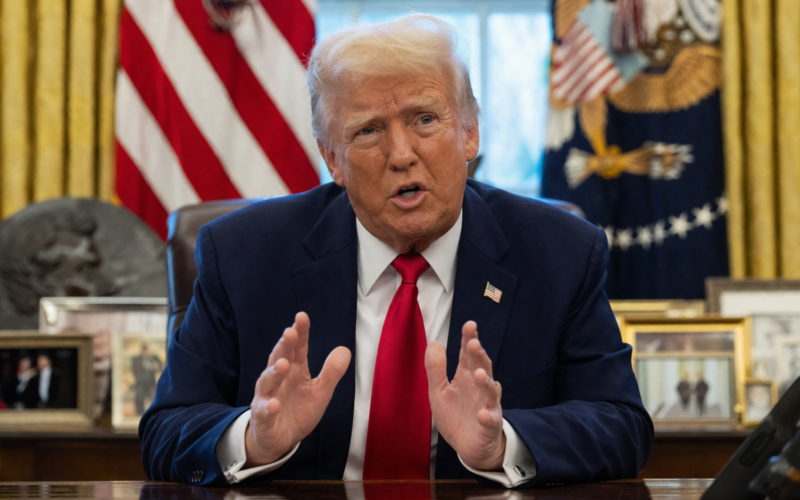
United States President Donald Trump cancelled a planned fresh military attack on Iran on August 1, 2026, after saying Middle Eastern governments had reached the outline of an agreement intended to reopen the Strait of Hormuz and prevent Iran from developing a nuclear weapon.
Donald Trump said the United States and Israel would hold back further strikes while negotiators attempted to finalise the proposed arrangement. The decision followed regional appeals for restraint as Gulf governments warned that another large attack could trigger Iranian retaliation against energy infrastructure, military installations and commercial shipping.
Iran had not publicly confirmed acceptance of a final agreement by the morning of August 2. Iranian Foreign Minister Abbas Araqchi instead warned regional counterparts that Iran would respond decisively to any new United States military action.
The announcement therefore represents a pause in escalation rather than a verified end to the five-month conflict. No signed ceasefire, complete text, implementation timetable or monitoring system had been publicly released.
The proposed framework centres on the full reopening of the Strait of Hormuz and restrictions intended to prevent an Iranian nuclear weapon. The parties must still resolve disputes involving sanctions, uranium enrichment, maritime control, verification and the status of continuing military operations across the region.
What did Donald Trump announce about the planned United States attack on Iran?
Donald Trump said the United States had prepared a major new military operation against Iran but would not proceed while regional governments attempted to complete an agreement.
The threatened attack had reportedly included Iranian energy-related infrastructure and other strategic targets. United States and Israeli officials had been considering action during the weekend after renewed attacks and threats around the Strait of Hormuz.
Donald Trump said Iran and several Middle Eastern governments had requested additional time to complete negotiations. Donald Trump presented the decision as an opportunity to avoid further destruction while securing United States objectives through diplomacy.
The proposed terms would require the complete reopening of the Strait of Hormuz and measures ensuring that Iran could not obtain a nuclear weapon. Donald Trump said Israel supported the decision to suspend the planned attack, although the Israeli government had not issued a detailed public statement explaining its position.
The military pause remains conditional. Donald Trump retained the option of resuming strikes if negotiations fail, Iran rejects the proposed terms or attacks continue against United States forces and regional partners.
The announcement therefore combines diplomacy with continued military pressure. The United States has not withdrawn forces, ended operational planning or accepted an unconditional ceasefire.
Why did Saudi Arabia and other Gulf governments urge Donald Trump to avoid new strikes?
Saudi Arabia and other Gulf governments face the most immediate physical and economic risks from a larger United States-Iran confrontation.
Saudi Crown Prince Mohammed bin Salman urged Donald Trump to avoid another major attack because Iran had threatened to retaliate against the energy infrastructure of countries supporting United States military operations.
Saudi Arabia, Kuwait, Qatar, Bahrain and the United Arab Emirates host major oil, gas, refining, export and military facilities. Strikes on those assets could disrupt production, damage ports and cause a sharp rise in global energy prices.
Iranian Foreign Minister Abbas Araqchi communicated Iran’s warnings during discussions with Saudi, Turkish and Pakistani officials. Iran’s message was that regional governments would not remain insulated if their territory, airspace or facilities supported attacks on Iran.
Gulf governments are attempting to protect their security relationships with the United States while avoiding becoming targets in an expanding war. They also need to preserve commercial relations, domestic stability and the flow of energy exports.
Saudi Arabia has taken a particularly active role because instability now affects both principal maritime routes used by the kingdom. The Strait of Hormuz threatens Gulf exports, while Houthi attacks have placed Red Sea and Bab el-Mandeb shipping under pressure.
The mediation effort reflects national interest rather than political alignment with Iran. Saudi Arabia wants to prevent Iranian escalation while ensuring that any agreement restores predictable maritime access and reduces threats to Saudi territory.
Has Iran accepted the proposed agreement to reopen the Strait of Hormuz?
Iran had not publicly announced final acceptance of the framework by the morning of August 2.
Donald Trump described an outline or set of parameters that regional governments believed could become an agreement. That description does not establish that Iran’s senior decision-making institutions have approved every term.
Iran has maintained that it possesses sovereign rights over waters along its coastline and has rejected proposals that would place the Strait of Hormuz under a jointly managed regional authority.
Iran previously rejected an Omani proposal for shared management of the waterway. Iranian officials argued that control arrangements must reflect Iran’s territorial position and strategic interests.
The Strait of Hormuz has remained the central point of conflict because it carries a substantial share of internationally traded oil and liquefied natural gas. Even limited disruption affects shipping insurance, tanker availability, freight rates and energy prices.
A durable agreement must define whether ships can travel without Iranian inspection, fees or restrictions. It must also establish how maritime security will be monitored and what happens if Iran or another actor attacks a commercial vessel.
Iran’s warning of decisive retaliation demonstrates that negotiations are continuing under military pressure. Tehran may view the cancellation of the planned attack as a temporary concession while demanding changes to sanctions or security arrangements.
Why is the Strait of Hormuz the central issue in the proposed United States-Iran deal?
The Strait of Hormuz connects the Persian Gulf with the Gulf of Oman and international shipping routes leading towards Asia, Europe and Africa.
Major oil and gas exporters including Saudi Arabia, Iran, Iraq, Kuwait, Qatar and the United Arab Emirates depend on the waterway. Alternative pipelines can move some energy exports, but they cannot fully replace the strait’s capacity.
The conflict has reduced confidence in the route through vessel attacks, threats, blockades and changing military controls. Shipping companies have faced higher insurance costs and uncertainty over whether crews and cargoes can transit safely.
Energy markets reflected that pressure during July. Brent crude prices rose sharply as traders assessed the possibility of further attacks on tankers, terminals, pipelines and power facilities.
The proposed agreement would need to deliver more than a political announcement. Commercial operators require verified navigation conditions, reliable communication and clear guarantees against mines, missiles, drones and vessel seizures.
A complete reopening would also reduce pressure on alternative routes around the Red Sea and Cape of Good Hope. That could lower freight costs and improve delivery times for oil, gas and manufactured goods.
The economic benefits give regional governments a strong incentive to support negotiations. However, implementation will remain fragile unless the agreement establishes consequences for violations and a trusted system for determining responsibility.
What nuclear restrictions could Iran face under the emerging peace framework?
Donald Trump said the proposed agreement must end the possibility that Iran could acquire a nuclear weapon.
The public outline did not specify whether Iran would be required to halt uranium enrichment completely, reduce enrichment levels, surrender enriched material or dismantle particular facilities.
Verification will be one of the most difficult issues. Any agreement would require inspectors to access nuclear locations, review records, monitor equipment and confirm that prohibited activities are not continuing at undeclared sites.
Iran has consistently maintained that its nuclear programme is intended for civilian purposes. The United States and Israel argue that Iran’s enrichment capacity, technical knowledge and restrictions on monitoring create an unacceptable weapons risk.
The parties must also address facilities damaged during the conflict. Inspectors need to determine what material remains, whether equipment was relocated and whether underground sites continue operating.
Iran is likely to demand sanctions relief in return for nuclear restrictions. The United States will want sanctions relief to occur gradually and remain reversible if Iran violates the agreement.
A broad political commitment without technical provisions would not resolve the dispute. Nuclear agreements depend on detailed definitions, inspection rights, reporting obligations and procedures for responding to suspected violations.
Does cancelling the planned attack create a formal ceasefire between the United States and Iran?
The cancellation of one planned operation does not by itself create a formal ceasefire.
A ceasefire normally requires all participating sides to stop specified military actions under defined conditions. The public announcement did not establish a complete start time, geographic scope, duration or enforcement mechanism.
United States forces remain deployed across the Middle East, and Iran retains missiles, drones and allied armed groups capable of striking regional targets. Israel also maintains its own military objectives and operational authority.
Attacks involving Iran-aligned forces, Israeli operations and maritime incidents could undermine the pause even if Washington and Tehran avoid direct strikes for a limited period.
A previous temporary ceasefire and memorandum of understanding failed to produce a lasting settlement. Renewed attacks, disagreements over the Strait of Hormuz and disputes over implementation returned the region to escalating military action.
That history increases the need for caution. Political announcements can reduce immediate risk, but they do not guarantee that every military unit, armed organisation or regional government will comply.
The present development should therefore be described as a conditional military pause connected to negotiations. Calling it a completed peace agreement would exceed the confirmed facts.
How could Israel influence whether the Iran military pause becomes a lasting agreement?
Donald Trump said Israel had joined the United States commitment to suspend the planned attack while negotiations continued.
Israel considers Iran’s nuclear and missile programmes major national security threats. Israeli leaders have argued that any settlement must prevent Iran from rebuilding capabilities damaged during military operations.
Israel may accept a pause when the agreement contains strict nuclear controls, limits on missile activity and protections against attacks by Iran-aligned organisations.
However, Israel could resume unilateral operations if it believes Iran is delaying negotiations, concealing nuclear activity or preparing attacks. That possibility creates uncertainty even when the United States prefers diplomacy.
The Israeli government had not publicly released a complete statement confirming its understanding of the proposed framework. Differences may therefore emerge over inspection standards, sanctions relief or the treatment of Iranian regional allies.
Donald Trump will need to keep Israel aligned while persuading Iran that negotiations can produce meaningful benefits. Excessive Israeli pressure could cause Iran to withdraw, while concessions viewed as too generous could weaken Israeli support.
The agreement’s durability will depend partly on whether Israel accepts a monitored settlement as more effective than continuing military strikes.
What could cause the proposed United States-Iran framework to collapse again?
The first danger is disagreement over the meaning of reopening the Strait of Hormuz. The United States expects unrestricted international navigation, while Iran continues asserting authority over parts of the route.
The second danger involves nuclear verification. Iran may resist inspections it regards as intrusive, while the United States and Israel may reject limits that leave significant enrichment capacity intact.
Sanctions relief creates another potential conflict. Iran will seek rapid economic benefits, while Washington may insist that restrictions remain until inspectors confirm compliance.
Regional attacks could also derail negotiations. A missile, drone or maritime strike attributed to Iran or an aligned organisation could create immediate pressure for United States retaliation.
Misidentification presents an additional risk. Several governments and armed groups possess missiles and drones, making rapid attribution difficult during a crisis.
Domestic politics may narrow each government’s flexibility. Donald Trump faces criticism from lawmakers over the cost and legality of the conflict, while Iranian leaders must avoid appearing to surrender after months of fighting and economic disruption.
The negotiations therefore require simultaneous progress on security, energy, sanctions and nuclear issues. Failure in one area could destroy confidence across the entire framework.
What would a successful Iran agreement mean for oil prices and regional security?
A credible agreement could reduce immediate fears of attacks on oilfields, refineries, pipelines, ports and tankers.
Lower military risk would allow insurers to reduce war-related premiums and encourage shipping companies to resume regular Gulf routes. Energy exporters could restore more predictable delivery schedules.
Oil prices could fall as markets remove part of the geopolitical risk premium created by the conflict. The scale of any decline would depend on how quickly shipping normalises and whether damaged infrastructure returns to operation.
Gulf governments would gain greater security for investment, tourism and industrial development. Saudi Arabia and the United Arab Emirates have economic programmes that depend on regional stability and reliable transport.
The United States would reduce pressure on military resources and avoid the risks associated with a broader campaign against Iranian energy infrastructure.
Iran could gain economic relief through increased trade and reduced isolation if the agreement includes sanctions changes. Those benefits would depend on sustained compliance and confidence among international businesses.
A failed agreement would produce the opposite effect. Renewed strikes after a highly publicised diplomatic pause could increase market volatility because governments and companies would conclude that negotiations no longer provide a reliable path to stability.
What are the key takeaways from Donald Trump cancelling the planned Iran attack?
- Donald Trump cancelled a planned fresh United States military attack on Iran on August 1, 2026, after saying Middle Eastern governments had reached an outline for an agreement aimed at preventing further escalation.
- The proposed framework would seek the complete reopening of the Strait of Hormuz and restrictions intended to ensure that Iran cannot develop a nuclear weapon, but no complete text or implementation timetable was released.
- Iran had not publicly confirmed final acceptance of the proposed agreement by the morning of August 2 and continued warning that any renewed United States attack would trigger decisive retaliation.
- Saudi Crown Prince Mohammed bin Salman and other regional leaders urged restraint because Iranian retaliation could target Gulf energy infrastructure, military facilities and commercial shipping routes.
- Donald Trump said Israel supported suspending the planned attack, although the Israeli government had not publicly explained the conditions under which it would continue observing the military pause.
- The announcement does not constitute a formal ceasefire because the parties have not published a defined start time, duration, geographic scope, monitoring mechanism or procedure for handling violations.
- Negotiators must still resolve major disputes involving uranium enrichment, nuclear inspections, sanctions relief, maritime control, shipping security and Iran’s role in managing the Strait of Hormuz.
- A successful agreement could lower oil and freight costs by restoring confidence in Gulf shipping, while another diplomatic collapse could trigger renewed strikes and greater instability across regional energy markets.
Discover more from Business-News-Today.com
Subscribe to get the latest posts sent to your email.