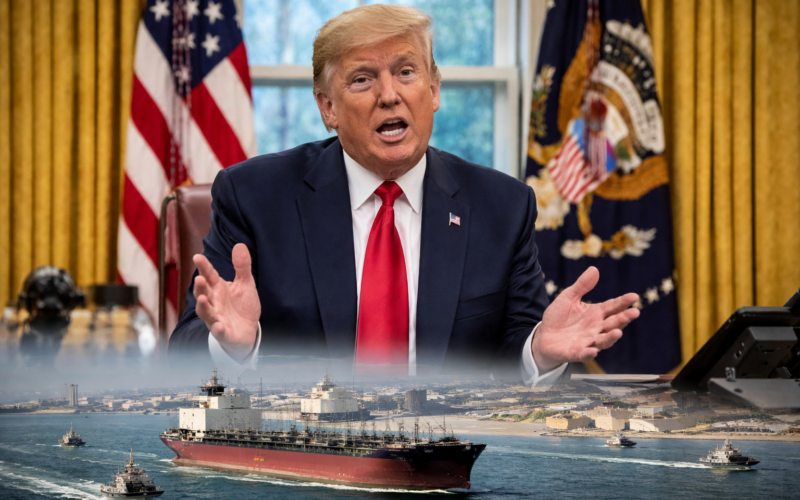
United States President Donald Trump announced on 21 April 2026 that he was extending the ceasefire with Iran indefinitely, hours before the two-week truce was set to expire, reversing his own stated position from earlier the same day and averting an immediate resumption of hostilities between the United States, Israel, and Iran. Trump posted on Truth Social that the extension was granted at the personal request of Pakistani Army Chief Field Marshal Asim Munir and Pakistani Prime Minister Shehbaz Sharif, and that the United States military had been directed to continue the naval blockade of Iranian ports while remaining ready and able to resume combat operations. The ceasefire would extend, Trump wrote, until such time as Iran’s leaders and representatives submitted a unified proposal to end the war and discussions were concluded, one way or the other, with no fixed end date specified.
Trump’s announcement came hours before the ceasefire was due to expire and directly contradicted his own public statements from earlier the same morning. In an interview with CNBC’s Squawk Box programme on 21 April 2026, Trump had said he did not want to extend the ceasefire, adding that the United States did not have that much time. Trump told CNBC separately that he expected to be bombing and that the United States military was raring to go. The about-face came after Iran declined to confirm it would send a delegation to Islamabad for a second round of direct peace talks, forcing the White House to call off Vice President JD Vance’s planned trip to Pakistan. A White House official confirmed that Vance would not be traveling to Pakistan on 21 April 2026 and that any further updates on in-person meetings would be announced by the White House.
Trump framed the extension in terms of Iran’s internal political situation, writing that the government of Iran was seriously fractured, an assessment he described as not unexpected. That framing reflected a United States reading of a significant divide within Iran’s leadership structure that had emerged as a defining feature of the ceasefire period. United States assessments described by CNN indicated that Iran’s civilian negotiating leadership, comprising parliament Speaker Mohammad Bagher Ghalibaf and Foreign Minister Abbas Araghchi, had favoured continued talks and a ceasefire extension to reach a deal, while Islamic Revolutionary Guard Corps commander General Ahmad Vahidi and his deputies had refused to offer concessions and opposed further negotiations as long as the United States naval blockade remained in place. The United States seizure of the Iranian-flagged cargo ship Touska on 19 April 2026 deepened that internal rift, with Islamic Revolutionary Guard Corps commanders accusing Iran’s civilian negotiators of weakness in their dealings with the Trump administration.
Why did the second round of United States-Iran peace talks in Islamabad fail to take place on 21 April 2026?
Iran’s state broadcaster Islamic Republic of Iran Broadcasting declared on the morning of 21 April 2026 that no Iranian diplomatic delegation of any description had traveled to Islamabad, directly contradicting earlier reports from Iranian sources that a delegation was expected that day. Iran’s Foreign Ministry spokesman Esmaeil Baghaei said there had been no final decision on whether to attend due to what he described as unacceptable actions by the United States, citing specifically the naval blockade of Iranian ports imposed on 13 April 2026 and the seizure of the Touska on 19 April 2026 as breaches of the ceasefire and of international law.
Iranian parliament Speaker Ghalibaf posted on the social media platform X on 20 April 2026 that Tehran did not accept negotiations under the shadow of threats and that over the previous two weeks Iran had prepared to reveal new cards on the battlefield. Iran’s Ambassador to Pakistan, Reza Amiri Moghadam, posted on 21 April 2026 that it was a universally acknowledged truth that a country with a large civilisation would not negotiate under threat and force. Pakistan’s Information Minister Attaullah Tarar posted on social media during the evening of 21 April 2026 that a formal response from the Iranian side regarding confirmation of a delegation to attend the Islamabad talks was still awaited and warned that a decision before the ceasefire’s expiry was critical.
The Touska seizure on 19 April 2026 was the proximate trigger for Iran’s refusal to confirm attendance. The guided-missile destroyer USS Spruance, part of the USS Abraham Lincoln Carrier Strike Group, had fired on the Iranian-flagged Touska in the northern Arabian Sea after a six-hour standoff, with Marines from the 31st Marine Expeditionary Unit subsequently rappelling onto the vessel and taking custody of it. The Touska is owned by Islamic Republic of Iran Shipping Lines and has been under United States Treasury Department sanctions since 2018. Iran’s ambassador to the United Nations wrote on 21 April 2026 to the United Nations demanding condemnation of the seizure as piracy and an act of aggression, and calling for the immediate and unconditional release of the vessel and its crew. Iran’s Islamic Revolutionary Guard Corps vowed retaliation.
What does the open-ended ceasefire extension mean for Iran’s nuclear standoff and the Strait of Hormuz dispute?
Trump’s decision to extend the ceasefire without a fixed deadline removed the primary time pressure that had been driving the diplomatic process since the first round of Islamabad talks collapsed on 12 April 2026. A senior United States adviser cited by Axios noted that an extension without an end date removed the ticking clock pressure on Iran and could allow Tehran to drag out talks, a concern that Trump’s own advisers had raised with him privately. The open-ended formulation contrasted with Trump’s earlier public posture of using deadline pressure as leverage. The United States naval blockade of Iranian ports remained in place as the primary economic pressure instrument in lieu of a deadline.
The two central unresolved issues between the United States and Iran remained unchanged. On the nuclear question, the United States had proposed a 20-year suspension of Iranian uranium enrichment during the first round of Islamabad talks, while Iran had countered with a three-to-five-year limit, a gap that the 21-hour negotiating session could not bridge. On the Strait of Hormuz, Iran’s Tasnim News Agency reported on 21 April 2026 that commercial vessel passage channels through the waterway had been declared closed until the complete lifting of the United States naval blockade, extending the effective closure of the waterway that carries approximately 20 percent of the world’s seaborne oil and gas in peacetime conditions.
United States Treasury Secretary Scott Bessent warned on 21 April 2026 that Kharg Island, Iran’s primary crude oil export terminal in the Persian Gulf, was days away from reaching full storage capacity as a result of the blockade. Bessent said that once storage was full, Iran’s fragile oil wells would be shut in, threatening long-term reservoir damage and reduced future production capacity. Bessent described the United States Treasury’s pressure campaign as Economic Fury, pledging to continue systematically degrading Tehran’s ability to generate, move, and repatriate funds, and warning that any person or vessel facilitating covert trade and finance for Iran risked exposure to United States sanctions.
Iran’s adviser to parliament Speaker Ghalibaf, Mahdi Mohammadi, posted on the social media platform X following Trump’s extension announcement that the ceasefire extension had no meaning, that the continuation of the blockade was no different from bombing and must be responded to militarily, and that the extension was buying time for a surprise strike. These statements represented the hardline position of the Islamic Revolutionary Guard Corps-aligned faction of Iran’s leadership, reinforcing the internal split that Trump himself cited as the justification for the extension.
What is the broader regional and diplomatic context surrounding the indefinite ceasefire extension?
Pakistan’s ceasefire diplomacy remained the central thread holding the United States-Iran negotiating process together. Following Trump’s announcement on 21 April 2026, Pakistani Prime Minister Shehbaz Sharif posted on the social media platform X to thank Trump for graciously accepting Pakistan’s request to extend the ceasefire and allow ongoing diplomatic efforts to take their course. Sharif expressed hope that both sides would continue to observe the ceasefire and be able to conclude a comprehensive peace deal during the second round of Islamabad talks. Pakistani Army Chief Field Marshal Asim Munir was named by Trump as one of the two individuals whose personal request had driven the extension decision, reflecting Pakistan’s singular position as the mediating party trusted by both Washington and Tehran.
Mossad Director David Barnea made a rare public disclosure on 21 April 2026 at a ceremony in Israel, revealing that a Mossad agent known only as agent M had been killed outside Israel in 2023 after playing a key role in laying the groundwork for the 2026 Iran war. Barnea said agent M’s operations combined creativity, cunning, and technology and had significantly influenced the success of the campaign against Iran. The disclosure offered a rare public acknowledgement of the years of covert intelligence preparation preceding the 28 February 2026 United States-Israeli strikes against Iran.
Lebanese Prime Minister Nawaf Salam stated on 21 April 2026 during a joint press conference with French President Emmanuel Macron in Paris that Lebanon’s government was not seeking a confrontation with Hezbollah but would not be intimidated by the Iran-backed militia, reflecting the continued complexity of the Lebanon dimension of the broader conflict. The 10-day Israel-Lebanon ceasefire that had come into effect on 16 April 2026 remained in place. The death toll from the 2026 Iran war stood at nearly 3,400 people killed in Iran since United States-Israeli strikes began on 28 February 2026, according to Iran’s forensics chief. More than 2,200 people have been killed in Lebanon, 32 in Gulf states, 23 in Israel, and 13 United States service members were killed in combat, with two further deaths from noncombat causes.
What Trump’s indefinite ceasefire extension on 21 April 2026 means for the Iran war, Strait of Hormuz, and second-round talks in Islamabad
- United States President Donald Trump extended the United States-Iran ceasefire indefinitely on 21 April 2026 at the request of Pakistani Army Chief Field Marshal Asim Munir and Pakistani Prime Minister Shehbaz Sharif, reversing his own stated refusal to extend the truce and citing Iran’s “seriously fractured” government as reason for giving Tehran more time to submit a unified peace proposal.
- The ceasefire extension came after the planned second round of United States-Iran peace talks in Islamabad collapsed before it started, with Iran’s state broadcaster Islamic Republic of Iran Broadcasting confirming no Iranian delegation had traveled to Pakistan and Vice President JD Vance’s trip being called off by the White House on the day it was scheduled to occur.
- The United States naval blockade of Iranian ports remains fully in force; United States Treasury Secretary Scott Bessent warned on 21 April 2026 that Kharg Island, Iran’s primary crude oil export terminal, was days away from reaching full storage capacity, threatening a shut-in of Iranian oil wells with long-term reservoir damage implications.
- Iran’s Tasnim News Agency declared the Strait of Hormuz commercial vessel passage channels closed until the United States naval blockade was completely lifted, continuing to deprive global energy markets of approximately 20 percent of seaborne oil and gas trade; Iran’s adviser to parliament Speaker Mohammad Bagher Ghalibaf dismissed the ceasefire extension as meaningless and warned it represented preparation for a surprise strike.
- United States intelligence assessments pointed to a deep split between Iran’s civilian negotiating leadership, which favoured continued talks, and Islamic Revolutionary Guard Corps commanders who opposed negotiations under blockade conditions, a fracture deepened by the seizure of the Iranian-flagged cargo ship Touska on 19 April 2026 and which Trump’s own Truth Social post implicitly acknowledged as the basis for the indefinite extension.
Discover more from Business-News-Today.com
Subscribe to get the latest posts sent to your email.