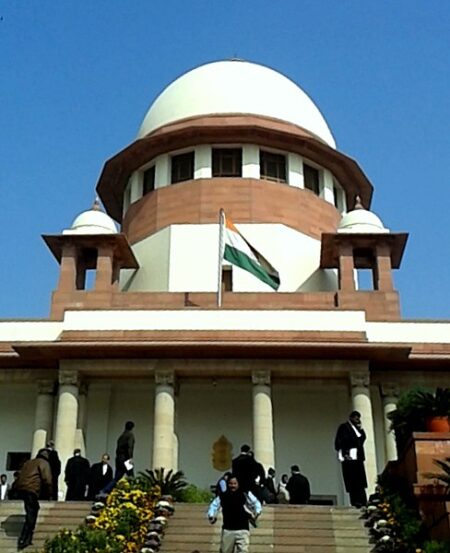

President Donald Trump’s administration has asked the United States Supreme Court to allow construction of a border wall near Big Bend National Park in West Texas, challenging a federal court injunction that halted the project amid environmental and legal objections. The Justice Department submitted its emergency request on October 21, 2026, after a federal judge concluded that the Department of Homeland Security had exceeded its statutory authority when attempting to waive legal protections for the planned construction. The dispute places federal immigration enforcement, congressional powers and the protection of a nationally significant landscape before the country’s highest court.
United States District Judge Kathleen Cardone issued the challenged ruling on October 2, finding that the waivers used to accelerate construction went beyond the powers granted under the applicable legislation. The Trump administration argues that Congress authorised broad waiver authority to facilitate border barriers and that the injunction interferes with its ability to protect the southern border. Opponents maintain that the waivers were unlawful and that construction could cause substantial environmental and cultural damage.
The Supreme Court’s consideration of the emergency application is not equivalent to a final judgment on the merits. The administration is seeking permission to resume work while the underlying legal dispute continues, and the justices’ response may focus on the standards for emergency relief rather than resolve every statutory question.
Why did the federal court block construction of the Big Bend border wall?
The legal dispute centres on waivers issued by the Department of Homeland Security to bypass requirements that would otherwise apply to the border barrier project. Federal law gives the department significant powers concerning border infrastructure, but the extent and conditions of that authority remain subject to judicial interpretation.
Judge Cardone concluded that the relevant waivers exceeded the powers granted to the officials who issued them. Her decision halted construction, creating the immediate legal obstacle that the Justice Department is attempting to remove through the Supreme Court.
The ruling should not be described as a general judicial prohibition on all border barriers. It concerns the legality of particular waivers and construction arrangements associated with the Big Bend region.
The distinction matters because executive agencies may possess broad authority while still being required to operate within the limits established by Congress. The administration and the challengers disagree over where those limits apply in this case.
What does the Trump administration argue in its Supreme Court appeal?
The Justice Department maintains that Congress authorised Homeland Security to waive legal requirements when necessary to expedite border barrier construction. The administration argues that the lower court’s interpretation restricts powers intended to allow rapid enforcement measures.
Homeland Security has described the area as a location of significant unlawful border entry, supporting its argument that additional barriers serve an important security purpose. However, the department’s assessment of security needs does not automatically resolve the legal question about its waiver authority.
The government is seeking emergency intervention rather than relying solely on the ordinary appellate process. Such requests are significant because they ask the Supreme Court to alter the practical effect of a lower-court order before all proceedings have concluded.
The justices will need to consider the government’s legal arguments and the consequences of permitting or preventing construction. An emergency ruling may still leave substantive questions for later judicial consideration.
Why are environmental groups opposing a wall near Big Bend National Park?
Big Bend is known for desert landscapes, mountains, the Rio Grande and habitats supporting wildlife on both sides of the international border. Environmental organisations argue that substantial barrier construction could fragment habitat, disturb ecosystems and alter access to sensitive areas.
The Center for Biological Diversity and other plaintiffs have challenged the project, citing environmental and cultural concerns. Local guides and groups concerned about a historic church are also involved in the broader dispute.
Border infrastructure can involve roads, access facilities, lighting and other supporting construction beyond the wall itself. Opponents argue that these associated activities may create environmental consequences requiring proper legal review.
The case is not simply a disagreement over the appearance of the landscape. It concerns whether the government can lawfully bypass procedures intended to assess and manage potential damage.
Why has the Big Bend border wall encountered opposition across political lines?
The landscape’s economic and cultural importance has created concerns extending beyond ordinary divisions over immigration policy. Residents, tourism businesses and conservation advocates have questioned the consequences of constructing barriers in a remote region closely associated with national park tourism.
Some opposition has come from people who otherwise support stronger border enforcement but question whether a wall is appropriate in this particular location. That distinction demonstrates why local infrastructure disputes cannot always be understood through national party positions alone.
The government maintains that security requirements justify the project. Opponents argue that the environmental and community consequences are substantial and that existing laws must be respected.
The eventual ruling may therefore influence both the immediate project and the legal framework governing other border construction decisions.
What happens next in the Big Bend Supreme Court dispute?
The Supreme Court can grant emergency relief, reject the administration’s request or take another procedural action consistent with its authority. Each possibility would have different consequences for the immediate construction timetable.
If the injunction remains in force, the government would continue facing restrictions while the litigation proceeds. If emergency relief is granted, construction could resume subject to the terms of the court’s order and other applicable requirements.
The next major development is the justices’ response, not an assumption that the border wall has already been approved. The administration has requested intervention, but the outcome remains pending.
What are the key takeaways from Trump’s Big Bend appeal?
The Trump administration asked the Supreme Court on October 21 to lift a federal injunction blocking border wall construction near Big Bend National Park. The dispute follows Judge Kathleen Cardone’s October 2 ruling that Homeland Security exceeded its legal authority in issuing waivers for the project.
The government argues that Congress provided broad powers to accelerate border construction, while opponents warn of environmental and cultural damage. The Supreme Court has not yet resolved the dispute, making the status of the injunction the central issue for the next stage.
What could this case mean for future US border construction?
The eventual judicial reasoning may influence how federal agencies interpret their powers to waive environmental and other statutory protections during border infrastructure projects. A ruling focused narrowly on emergency relief, however, may leave broader questions unsettled.
The case illustrates the recurring tension between urgent executive enforcement priorities and the legal safeguards enacted by Congress. Its immediate outcome will determine whether construction can restart while the underlying litigation continues.
Discover more from Business-News-Today.com
Subscribe to get the latest posts sent to your email.