



Santos Limited (ASX: STO), the Adelaide-headquartered Australian oil and gas producer with operations in Australia, Papua New Guinea and Alaska, reported record third-quarter production of 26.3 million barrels of oil equivalent and approximately US$1.07 billion in free cash flow from operations. The 22 October 2026 update showed sales revenue increasing to approximately US$2.01 billion, supported by higher production from the Barossa LNG and Pikka oil projects and stronger realised LNG prices. However, Santos narrowed its full-year production guidance to 99 million to 102 million barrels of oil equivalent, compared with the previous range of 99 million to 105 million, because of temporary production interruptions and reservoir management requirements at Pikka. The results confirm that the company’s major growth projects are contributing materially to cash generation, although the timing of reaching stable full-capacity production remains important.
How did Santos increase quarterly production to a record 26.3 million barrels of oil equivalent?
Santos produced 26.3 million barrels of oil equivalent during the September quarter, increasing approximately 14% from 23.1 million barrels in the preceding period. Production was also approximately 23% higher than in the corresponding quarter of 2025. The increase reflects the contribution from newly commissioned projects alongside production from established operations. It represents an important change following several years of substantial investment in the Barossa and Pikka developments.
Sales volumes reached approximately 26.4 million barrels of oil equivalent, increasing 11% sequentially. Quarterly sales revenue rose to approximately US$2.01 billion, compared with US$1.349 billion during the June quarter. The increase of roughly 49% in revenue exceeded the percentage growth in production, reflecting changes in sales mix and realised commodity prices. Higher LNG pricing was particularly important to the result.
Santos reported a realised LNG price of approximately US$16.22 per million British thermal units, compared with US$11.21 in the preceding quarter. The increase provided additional revenue from LNG cargoes delivered during the period. However, quarterly realised prices are influenced by contractual pricing mechanisms and the timing of cargoes, meaning they may not match movements in spot market benchmarks. Future earnings will depend on both production volumes and realised pricing under the company’s commercial arrangements.
The company has spent several years investing in additional production capacity intended to increase output and reduce reliance on older assets. Barossa and Pikka were central to that strategy because both were expected to contribute significantly after their respective construction and commissioning phases. The September quarter provides evidence that those investments are beginning to generate commercial production at scale. The next challenge is maintaining reliable output while controlling operating expenditure.
Why has Santos reduced the upper end of 2026 production guidance despite record output?
Santos now expects full-year production of 99 million to 102 million barrels of oil equivalent, compared with the previous range of 99 million to 105 million. The lower end of guidance remains unchanged, while the upper end has been reduced by three million barrels of oil equivalent. Sales volume guidance has also been narrowed to 102 million to 105 million barrels of oil equivalent from 102 million to 108 million previously. These revisions reflect reduced near-term production expectations rather than a change in the company’s underlying resource ownership.
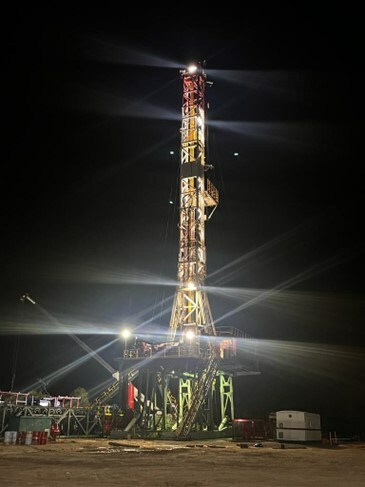
The principal cause is the development and commissioning sequence at Pikka in Alaska. A weather event interrupted commissioning of the seawater treatment plant, while a separate incident involving a third-party pipeline resulted in a temporary production suspension. Santos has also been managing reservoir pressure during the ramp-up. These factors affected the amount of oil available for sale during the quarter and the expected remaining production schedule.
Santos reported that Pikka had reached approximately 70,000 barrels per day on a gross basis. The company plans to temporarily limit output while water injection replenishes reservoir pressure before progressing toward the targeted plateau of approximately 80,000 barrels per day. This is a deliberate reservoir management decision, not an indication that the project has already achieved and sustained the full production target. The pace of returning to higher output will depend on the injection system and reservoir response.
The company’s first-half production was approximately 45.6 million barrels of oil equivalent. Adding September-quarter production produces approximately 71.9 million barrels for the first nine months. To finish within the revised full-year range, fourth-quarter production would need to reach approximately 27.1 million to 30.1 million barrels of oil equivalent. This arithmetic illustrates why continued contributions from Barossa and Pikka remain important to meeting guidance.
How is the Barossa LNG project improving Santos’ production and cash generation?
Barossa is a major offshore gas development supplying the Darwin LNG facility in Australia’s Northern Territory. The project has progressed through commissioning and production ramp-up, with the September quarter demonstrating a more substantial contribution to Santos’ LNG operations. Management reported that Barossa had reached steady-state production conditions during the period. Continued operating reliability will determine how consistently the project supports LNG cargo exports.
The development provides a long-term gas supply source for LNG customers in Asia. Its infrastructure includes offshore production facilities, subsea systems and a pipeline connection to Darwin LNG. The project required substantial capital before reaching commercial production, making its transition into cash generation financially significant. Sustained volumes can improve the economics of those investments by supporting utilisation of existing liquefaction and export infrastructure.
The company’s realised LNG price increased substantially during the quarter, supporting stronger sales revenue. However, the financial contribution from Barossa will depend on operating costs, contracted pricing and the schedule of cargo deliveries. LNG sales revenue is generally recognised when the relevant commercial conditions are satisfied, which can create differences between physical production and revenue timing. A single strong quarter therefore provides evidence of momentum without establishing the exact annual earnings contribution.
Santos has previously indicated that Barossa’s operating costs should be competitive once the project reaches its intended production level. Achieving that target will depend on sustained plant performance and the costs associated with offshore operations and Darwin LNG. Maintenance requirements, reservoir performance and the reliability of supporting infrastructure remain important. Future financial results will show whether higher LNG production is translating into improved unit economics.
What caused Santos’ operating free cash flow to reach approximately US$1.07 billion?
Santos reported approximately US$1.069 billion in free cash flow from operations during the September quarter. Its broader free cash flow measure, after additional specified growth-related expenditure, was approximately US$957 million. The difference between the two measures is important because the company continues investing in developments and other activities beyond its established operating asset base. Neither figure should automatically be described as statutory net profit.
The quarterly result represents a significant improvement from the approximately US$378 million in free cash flow from operations generated during the entire first half of 2026. During that earlier period, Barossa and Pikka were affected by commissioning costs, cargo timing and working capital movements. The stronger September result shows the benefit of production increases and receipts associated with the new projects. However, quarterly cash flow may also reflect the timing of payments and receipts that do not recur evenly across the year.
The company reported year-to-date free cash flow of approximately US$839 million under its broader measure. That figure is lower than the September-quarter contribution alone because earlier periods included substantial development and other cash outflows. It illustrates why financial performance must be considered across the complete reporting period rather than extrapolated from the latest quarter. Continued free cash generation during December would provide stronger evidence of a sustained improvement.
Santos has previously outlined an ambition to increase shareholder returns as capital expenditure associated with major growth projects declines. Higher operating cash flow may support debt reduction, dividends and further investment opportunities. Nevertheless, future capital allocation will also depend on commodity prices and the company’s balance-sheet objectives. Cash flow generated during one strong quarter does not establish that equivalent distributions will occur immediately.
Why is Santos increasing its interest in Papua LNG while Pikka and Barossa are ramping up?
Santos has executed a binding agreement to acquire an additional 3.3% participating interest in the Papua LNG project from TotalEnergies. The proposed acquisition would increase Santos’ interest to approximately 21% after the relevant Papua New Guinea state participation arrangements. Completion remains conditional on regulatory approvals and the project reaching its final investment decision. The additional ownership should therefore not be treated as already completed.
Papua LNG is a proposed major gas development intended to supply international LNG markets using dedicated new facilities and access to existing infrastructure. The project could provide Santos with additional long-term production and infrastructure-related income. However, development will require substantial capital investment and the satisfaction of remaining commercial and regulatory requirements. A targeted final investment decision during the fourth quarter of 2026 remains a future milestone.
Santos also entered agreements with other GLNG joint venture participants concerning the Greater Meridian coal seam gas project. Under those arrangements, Santos expects to acquire a 30% interest and assume operatorship, subject to completion. Management estimates that the development could add around one million barrels of oil equivalent annually to the group’s pro forma production and approximately 17 million barrels of oil equivalent in proved and probable reserves. Those benefits depend on completion and the relevant development assumptions.
The transactions demonstrate Santos’ intention to continue building its production portfolio while benefiting from the cash generated by existing assets. However, acquisitions and new projects can create funding requirements even during periods of strong commodity prices. Management must assess the returns available from additional interests against the cost of acquisition and future development expenditure. A disciplined approach will be particularly important while the company completes the ramp-up of its current major projects.
How does Santos’ Beetaloo exploration programme fit into its longer-term Australian gas strategy?
Santos has continued evaluating the Beetaloo Sub-basin in the Northern Territory as part of its longer-term gas development opportunities. The Jibera South 1 appraisal programme has provided additional geological and technical information about the Velkerri shale formations. Management reported that selected geological intervals performed better than its pre-drilling expectations, while others were broadly consistent with previous assumptions. These observations support further evaluation but do not establish commercial production.
The Beetaloo contains unconventional gas resources that may require extensive drilling, stimulation and supporting infrastructure before large-scale supply can be developed. Commercial viability depends on well productivity, drilling costs, environmental approvals, gas prices and access to markets. Positive appraisal results can reduce geological uncertainty, but full development decisions require substantially more information. The latest drilling observations should not be treated as an increase in producing reserves without an appropriate resource assessment.
The project provides a potential option to support future domestic gas supply and industrial demand. However, the timing and commercial scale remain uncertain, and the development pathway involves regulatory and community considerations. Santos’ near-term earnings will continue to depend principally on operating assets and the ramp-up of already sanctioned projects. The Beetaloo programme is better understood as a longer-term opportunity requiring further investment and testing.
What will determine whether Santos maintains record cash generation through the end of 2026?
Santos enters the final quarter with substantially higher production and an improved cash flow position, supported by Barossa and Pikka. The reduction in the upper end of guidance demonstrates that the ramp-up of a complex oil development can remain sensitive to operational requirements even after first production. Pikka must move toward its 80,000-barrel-per-day gross target while maintaining reservoir pressure and operational reliability. Barossa must also sustain LNG output and cargo deliveries.
Commodity prices will influence the financial outcome independently of production. Higher LNG prices supported September revenue, but contractual pricing and global energy market conditions can change. Stronger output at lower realised prices may not produce the same financial results. Cash generation should therefore be assessed using realised revenue, expenditure and working capital rather than production alone.
The next milestones include confirmation of Pikka’s revised ramp-up schedule, delivery against the narrowed full-year production range and progress toward the Papua LNG investment decision. Completion of the Greater Meridian transaction would provide another development within the production portfolio. The September result demonstrates that the company’s major investments are beginning to deliver substantial financial benefits. Sustaining those benefits while controlling costs and maintaining capital discipline will determine whether the stronger cash flow profile continues into 2027.
Key takeaways from Santos’ record third-quarter production and revised 2026 guidance
- Santos reported record production of 26.3 million barrels of oil equivalent.
- Quarterly output increased approximately 14% sequentially and 23% year on year.
- Sales revenue reached approximately US$2.01 billion.
- Realised LNG prices increased to US$16.22 per million British thermal units.
- Free cash flow from operations reached approximately US$1.069 billion.
- Broader quarterly free cash flow was approximately US$957 million.
- Full-year production guidance was narrowed to 99 million to 102 million barrels of oil equivalent.
- Pikka is undergoing a controlled ramp-up toward approximately 80,000 barrels per day on a gross basis.
- Santos has agreed to acquire an additional interest in Papua LNG, subject to conditions.
- Pikka reliability, LNG pricing and further project commitments will determine the next phase of cash generation.
Discover more from Business-News-Today.com
Subscribe to get the latest posts sent to your email.