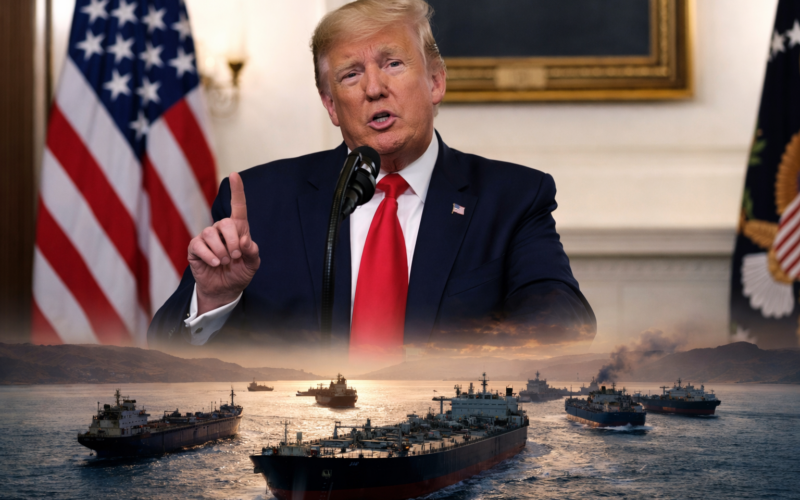
US President Donald Trump’s job approval has remained at 33%, matching the lowest level recorded by Reuters/Ipsos across either of his presidencies, as public support for the United States’ military campaign against Iran declined to 31% six months into the conflict.
The four-day poll completed on August 24 found support for military action against Iran falling from 37% in March and 34% earlier in August. The decline was partly driven by Republican respondents: 69% now support the war compared with 77% in March. The survey covered 1,215 US adults and carries a margin of error of about three percentage points.
The political problem for Trump extends beyond perceptions of foreign policy. Iran’s effective disruption of Gulf oil exports has contributed to US gasoline prices rising by more than a dollar per gallon from their pre-war level, linking a distant military conflict directly with household costs months before the November 3 congressional midterm elections.
Why is American support for the Iran war declining six months into the conflict?
The most striking figure in the latest survey may be the expectation that the conflict will not end quickly. About 83% of respondents said they believe the war will continue for an extended period, up from 80% earlier in August.
Prolonged conflicts often become politically more difficult when the original military objective does not translate into an obvious endpoint. Trump has argued that military action was necessary to prevent Iran from developing a nuclear weapon, but the confrontation has evolved into a mixture of military operations, sanctions, shipping disruption and economic pressure without a negotiated settlement.
The administration is now placing greater emphasis on economic coercion. Treasury Secretary Scott Bessent has threatened expanded secondary sanctions against countries continuing to do business with Iran, although the latest announcement stopped short of immediately penalising all such trading partners.
For voters, however, distinctions between military and economic strategy may matter less than measurable outcomes. If Iran continues constraining Gulf exports and gasoline remains expensive, Americans can experience the war through fuel bills even when battlefield activity itself has declined.
How politically damaging is a 33% approval rating for Donald Trump?
A single national poll does not predict an election result, and presidential approval is not identical to congressional voting intention. The importance lies in the persistence of the number: Trump has registered 33% approval in two consecutive Reuters/Ipsos surveys, making it the lowest measured level across his first and second administrations.
Midterm elections frequently become referendums on the sitting president even when that president is not on the ballot. Republicans are defending narrow congressional majorities on November 3, increasing the importance of whether dissatisfied voters blame Trump, Congress or external forces for the economic and geopolitical environment.
The poll also found independent voters preferring Democrats to Republicans by 33% to 19% when asked about a hypothetical congressional vote. That does not guarantee equivalent election-day behaviour, but independents can become decisive in closely contested districts where either party’s core supporters alone are insufficient.
Republicans still show considerably greater support for Trump’s Iran policy than the wider electorate. The warning sign is that even within his own party, support for military action has fallen eight percentage points since March.
Why do gasoline prices create a particularly difficult political connection to the war?
Energy prices are one of the most visible forms of inflation because motorists encounter them repeatedly and can compare changes easily.
Trump campaigned in 2024 on reducing inflation and avoiding prolonged foreign wars. Six months into the Iran conflict, gasoline is more than $1 per gallon above its pre-war level, creating an unusually clear contradiction that Democratic candidates can use without needing voters to follow the details of Middle Eastern diplomacy.
The administration can argue that Iran bears responsibility for restricting regional oil flows and that military action protects longer-term national security. Politically, however, presidents are often blamed for economic conditions even when they do not directly control global commodity prices.
That is why reopening the Strait of Hormuz and restoring predictable Gulf exports may eventually matter to Trump’s domestic political position almost as much as progress on Iran’s nuclear capabilities.
Could tougher sanctions improve Trump’s political position or make it worse?
The administration’s strategic calculation is that financial pressure can weaken Iran’s ability to sustain the confrontation without requiring another large expansion of military operations.
Secondary sanctions can be powerful because international banks, shippers and commodity buyers may withdraw from Iranian trade rather than risk access to the US financial system. Yet the same approach can create additional friction with countries buying Iranian goods and potentially restrict global oil supplies further.
If sanctions force Tehran towards negotiations, Trump could present the outcome as evidence that pressure succeeded. If they provoke broader disruption of Gulf energy flows, the policy could intensify the very gasoline-price problem weighing on public opinion.
The latest polling therefore gives the White House less political room for a strategy that produces only indefinite pressure. A 31% level of public support for military action and an 83% expectation of a prolonged conflict suggest many Americans no longer judge the war primarily through its opening rationale; they are increasingly evaluating whether it is ending and what it is costing them.
Discover more from Business-News-Today.com
Subscribe to get the latest posts sent to your email.