

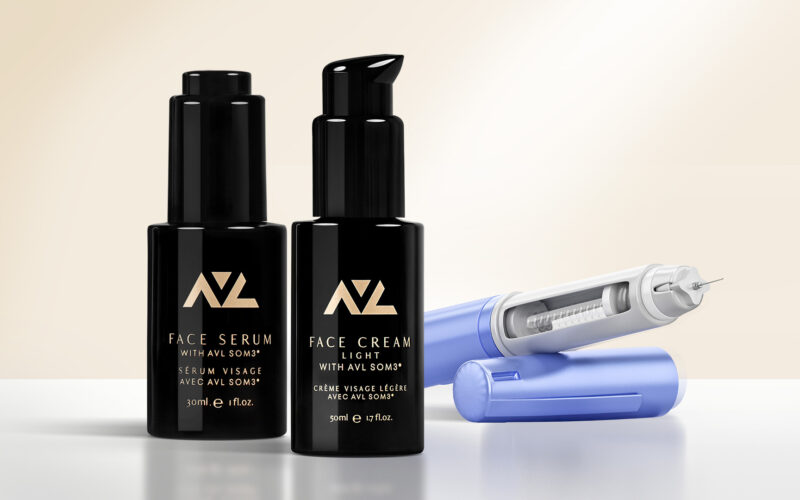
AV Laboratories has positioned its patented AVL SOM3 technology as a skincare platform for consumers undergoing GLP-1-driven weight loss and broader metabolic transformation. The company used the Aesthetic & Anti-Aging Medicine World Congress in Monaco to frame molecular nourishment as a topical support strategy for hydrated, resilient and younger-looking skin during periods of rapid physical change. The move places AV Laboratories inside one of the most commercially watched intersections in beauty, medical aesthetics and consumer wellness. The strategic relevance is clear: as GLP-1 medications reshape weight management, skincare brands are racing to understand whether post-weight-loss skin quality can become a durable product category rather than a passing beauty trend.
Why is AV Laboratories linking GLP-1 weight loss to a new skincare standard?
AV Laboratories is not simply selling into the traditional anti-ageing market. The company is trying to attach its brand to a more specific and faster-growing consumer concern: the visible skin changes that may follow rapid weight loss. That distinction matters because GLP-1 medications have shifted the weight-management conversation from lifestyle aspiration to medically assisted body transformation, creating a new group of consumers who may be healthier, slimmer and, awkwardly for the mirror, more conscious of skin firmness, facial volume, hydration and texture.
The company’s positioning rests on a practical insight. When weight loss happens quickly, skin may not visually adapt at the same speed as the body. Facial fullness can change, skin laxity can become more noticeable, and consumers may begin looking for interventions that feel more targeted than a generic moisturiser or anti-ageing serum. AV Laboratories is using that gap to argue that skincare should evolve from surface-level cosmetic maintenance toward what it calls 360-degree molecular nourishment.
This is commercially useful framing because the GLP-1 category has already moved beyond endocrinology clinics. It now sits across primary care, obesity medicine, aesthetics, wellness, retail pharmacy, luxury beauty and social media. That creates an unusual market structure in which a prescription-led medical trend spills directly into consumer skincare behaviour. For AV Laboratories, the opportunity is not to compete with GLP-1 medications, but to become part of the surrounding care routine that follows visible body transformation.
How does AVL SOM3 fit into the wider shift toward science-led skincare?
AVL SOM3 is being presented as the core technology behind AV Laboratories’ skincare strategy. The company describes the platform as a patented molecular nourishment system that includes all 20 amino acids and is intended to support visible skin qualities associated with collagen, elastin, hydration, barrier resilience and cellular energy. That language places AV Laboratories firmly in the science-led skincare lane, where brands increasingly compete on cellular biology narratives rather than simple claims around softness, glow or anti-wrinkle benefit.

The strategic logic is easy to see. Consumers who are already using GLP-1 medications are likely to be more comfortable with medicalised language around metabolism, body composition and long-term health. A skincare product built around molecular nourishment, amino acids and skin renewal may therefore speak to a consumer mindset that is already moving away from purely cosmetic promises. In plain English, if someone is thinking about metabolic health, they may also be more open to a skincare routine that sounds like it belongs in the same wellness ecosystem.
However, this is also where execution risk enters the picture. The skincare market is crowded with scientific language, and consumers are increasingly alert to exaggerated claims. AV Laboratories will need to ensure that its messaging remains disciplined, especially because GLP-1-related skin change is a sensitive topic that overlaps with medicine, body image and aesthetics. The strongest commercial path is likely to come from positioning AVL SOM3 as supportive skincare, not as a substitute for nutrition, medical care, dermatology or aesthetic procedures.
Why could GLP-1 users become a valuable consumer segment for beauty and aesthetics brands?
The GLP-1 user is becoming one of the most interesting new consumer profiles in beauty and wellness. This group is not defined only by age, income or gender. It is defined by transformation. People taking GLP-1 medications may experience meaningful weight loss, changing body proportions and new aesthetic needs within a compressed timeframe. That can make skincare, body care, hair care, supplements, nutrition coaching and in-clinic treatments part of the same post-weight-loss spending pattern.
For skincare companies, this creates a rare category-building opportunity. Traditional anti-ageing products often rely on slow, broad consumer adoption. GLP-1-linked skincare has a sharper trigger point: the consumer notices physical change and starts seeking support. That makes the category easier to explain, easier to search for and easier to package around a specific need. Search behaviour around terms such as GLP-1 skincare, Ozempic face, weight loss skin laxity and post-weight-loss skin support is likely to remain commercially attractive as more consumers connect body transformation with skin quality concerns.
The risk is that brands overreach. Not every visible change associated with weight loss can be addressed by topical skincare. Facial volume loss, significant laxity and body contour changes may require medical aesthetic interventions, nutrition, resistance training or time. The real opening for AV Laboratories is therefore not in promising reversal, but in owning the more credible idea of skin support during transformation. That is a smaller claim, but a stronger business proposition.
What does the Monaco aesthetics platform signal about AV Laboratories’ international strategy?
AV Laboratories’ presence at the Aesthetic & Anti-Aging Medicine World Congress in Monaco gives the company a more professional audience than a standard consumer beauty launch. The event attracts physicians, aesthetic practitioners, clinic leaders and industry participants, making it a useful platform for brands trying to earn credibility in the medical aesthetics ecosystem. By introducing its GLP-1-era skincare positioning there, AV Laboratories is aiming at the people who may influence patient conversations, not just at end consumers scrolling through beauty content.
That strategy matters because GLP-1-related aesthetic care is unlikely to develop as a purely retail category. Clinics, dermatologists, nutritionists, medspas and longevity practices may all play a role in guiding consumers after major weight loss. If AV Laboratories can become familiar to those intermediaries, it may have a stronger route to adoption than brands that rely only on direct-to-consumer marketing. In aesthetics, professional validation can still do what influencer noise often cannot: slow the room down and make people listen.
The international angle is also important. GLP-1 adoption is a global story, but access, prescribing behaviour, cultural attitudes toward weight loss and aesthetic spending differ by market. A brand that wants to own post-weight-loss skincare will need messaging flexible enough for the United States, Europe, the Middle East and Asia, where beauty routines and medical aesthetics adoption vary widely. Monaco gives AV Laboratories a global stage, but the next test will be whether the company can turn conference visibility into clinic partnerships, distribution and repeat consumer usage.
How could molecular nourishment compete with fillers, devices and post-weight-loss procedures?
AV Laboratories is entering a market where topical skincare will sit beside a much broader menu of aesthetic options. Consumers concerned about GLP-1-related facial volume loss or laxity may look at fillers, biostimulators, radiofrequency devices, ultrasound-based tightening, microneedling, body contouring and surgical procedures. That means AV Laboratories is not only competing with other skincare brands. It is competing for relevance within a much larger post-weight-loss care plan.
The smartest positioning for molecular nourishment is complementary rather than confrontational. Skincare can be used daily, has a lower barrier to entry than procedures and can fit into both preventive and maintenance routines. That makes it attractive for consumers who are not ready for injectables or devices, as well as for clinics that want to recommend an at-home layer alongside in-office treatment. For AV Laboratories, the commercial sweet spot is to make AVL SOM3 feel like the baseline skin-support layer in a GLP-1 transformation routine.
The challenge is evidence hierarchy. Procedures often produce more visible and measurable outcomes than topical products. Skincare brands therefore need clarity on what they can reasonably claim, what their products are designed to support and how visible benefits may vary. AV Laboratories’ focus on hydration, resilience, texture, firmness appearance and nourishment is safer than trying to claim procedural-level correction. In this category, credibility may prove more valuable than drama, although a little drama never hurt a headline.
What are the main risks as skincare brands move into the GLP-1 wellness economy?
The first risk is medical overextension. GLP-1 medications are prescription therapies used for metabolic conditions including obesity and type 2 diabetes, and the surrounding skincare conversation must avoid implying that topical products can address medical effects or replace clinical advice. Brands that blur that line may attract regulatory scrutiny, professional criticism or consumer backlash. AV Laboratories’ language around supporting the appearance of skin is therefore strategically important.
The second risk is category fatigue. Beauty markets move fast, and GLP-1 skincare could become cluttered quickly if too many brands rush in with similar claims. Once every serum is suddenly “Ozempic-era friendly,” the phrase loses value. AV Laboratories will need to differentiate through technology, formulation credibility, professional education and consistent messaging around molecular nourishment rather than relying solely on the GLP-1 hook.
The third risk is consumer sensitivity. Weight loss, ageing, skin laxity and facial appearance are deeply personal issues. Messaging that sounds opportunistic or fear-based could alienate the very consumers the company wants to reach. The more durable approach is to frame skincare as support through change rather than correction of a flaw. AV Laboratories appears to be leaning in that direction by emphasizing resilience, hydration and skin quality rather than panic around visible ageing.
What happens next if AV Laboratories succeeds in defining GLP-1 skincare?
If AV Laboratories succeeds, the company could help formalize a new premium skincare niche built around rapid weight-loss support. That would make GLP-1 skincare part of a broader care pathway, similar to how post-procedure skincare became a category around lasers, peels and injectables. The commercial upside would not be limited to one product line. It could extend into clinic protocols, bundled aesthetic packages, professional education, body care, recovery-focused skincare and longevity-oriented beauty routines.
For competitors, the signal is equally important. Beauty companies, aesthetics firms and wellness brands may need to treat GLP-1-related skin quality as a recurring consumer need rather than a temporary trend. That could push more investment into amino acids, peptides, barrier support, collagen-adjacent messaging, cellular energy narratives and products designed for the face, neck and body after weight loss. The category will likely reward brands that combine emotional intelligence with technical credibility.
For AV Laboratories, the next phase will be proof of adoption. Conference positioning is useful, but the market will ultimately look for professional uptake, consumer repeat purchase, clinical or observational support, and evidence that the GLP-1 audience sees skincare as part of its transformation journey. The company has chosen the right conversation to enter. Now it has to show that molecular nourishment can become more than a polished phrase in a very well-lit Monaco conference hall.
Key takeaways on how AV Laboratories’ GLP-1 skincare strategy could affect beauty, wellness and aesthetics
- AV Laboratories is positioning AVL SOM3 as a molecular nourishment platform for consumers experiencing visible skin changes during GLP-1-driven weight loss, giving the company a sharper market entry point than conventional anti-ageing skincare.
- The company’s strategy reflects a broader industry shift in which prescription-led metabolic health trends are spilling into beauty, wellness and medical aesthetics, creating new demand for post-weight-loss skin support.
- The GLP-1 skincare opportunity is commercially attractive because it is tied to a clear consumer trigger: rapid body transformation that may make skin hydration, firmness, texture and facial volume more visible concerns.
- AVL SOM3’s formulation narrative, built around amino acids, collagen-adjacent support, barrier resilience and skin renewal, fits the growing consumer preference for science-led skincare with a stronger biological explanation.
- AV Laboratories’ Monaco positioning suggests the company wants credibility with physicians, aesthetic professionals and clinic leaders, not just retail beauty consumers or social media audiences.
- The strongest commercial opportunity for AV Laboratories is likely to come from complementary use alongside nutrition, dermatology and aesthetic treatments rather than positioning topical skincare as a standalone answer to post-weight-loss changes.
- Execution risk remains high because the GLP-1 beauty category could become crowded quickly, especially as skincare brands, medspas, injectables companies and device makers chase the same consumer concern.
- The company will need disciplined claims, professional education and visible product differentiation to avoid being grouped with opportunistic GLP-1 beauty marketing.
- If successful, AV Laboratories could help define post-weight-loss skincare as a durable premium category linked to metabolic transformation, longevity beauty and integrated aesthetic care.
Discover more from Business-News-Today.com
Subscribe to get the latest posts sent to your email.