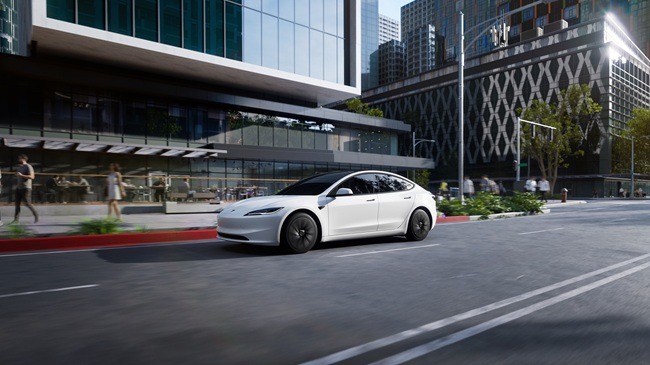
Tesla, Inc. (Nasdaq: TSLA) fell 7.5% to US$393.45 on July 2 despite delivering a record 480,126 vehicles during the second quarter of 2026. Deliveries increased almost 25% from a year earlier and exceeded the company-compiled analyst consensus by more than 74,000 vehicles, yet investors treated the result as confirmation of expectations already embedded in the stock. The market is now looking beyond vehicle volumes towards automotive margins, free cash flow and the cost of Tesla’s planned US$25 billion-plus investment in artificial intelligence, robotaxis and robotics. The next decisive catalyst is the company’s second-quarter financial report after the Nasdaq close on July 22.
Why did Tesla shares fall 7.5% when second-quarter deliveries beat forecasts so decisively?
Tesla delivered 480,126 vehicles during the three months ended June 30, compared with the company-compiled sell-side consensus of 406,024. The result exceeded the average estimate by approximately 18% and represented a 24.9% increase from the 384,122 vehicles delivered during the second quarter of 2025.
That would normally be expected to produce a strong positive market response. Instead, Tesla shares fell from US$425.30 to US$393.45, recording their largest one-day decline in roughly a year. Trading volume reached nearly 74 million shares, well above the stock’s recent daily average.
The first explanation is positioning. Tesla shares had risen approximately 12% during the first three sessions of the week as investors anticipated stronger deliveries. The stock climbed from US$379.71 on June 26 to US$425.30 on July 1, meaning a substantial positive surprise was already required to justify further immediate gains.
The second explanation is that deliveries do not reveal how much profit Tesla earned from each vehicle. Lower-priced Model 3 and Model Y versions, financing incentives and regional promotions can increase unit sales while placing pressure on average selling prices and margins. Investors must wait until July 22 to determine whether the delivery beat generated proportionate revenue and earnings growth.
The third explanation is valuation. Tesla’s approximately US$1.39 trillion market capitalisation already assumes that the company will become substantially more than an electric vehicle manufacturer. Strong car sales support the existing business, but they do not independently prove the economics of robotaxis, Cybercab, Full Self-Driving software or Optimus humanoid robots.
What does Tesla’s business include beyond electric vehicles, and why does that matter for TSLA?
Tesla’s largest revenue source remains the production and sale of electric vehicles, particularly the Model 3 and Model Y. The company also sells automotive software, regulatory credits, servicing, insurance and access to its Supercharger network.
The energy generation and storage division has become increasingly important. Tesla manufactures Megapack systems for utilities and commercial customers, Powerwall batteries for homes and solar energy products. Energy storage deployments reached 13.5 gigawatt-hours during the second quarter, up from 8.8 gigawatt-hours during the first quarter.
Tesla is also developing several artificial intelligence businesses that are central to its valuation. These include Full Self-Driving software, commercial robotaxi services, the purpose-built Cybercab, artificial intelligence computing infrastructure and the Optimus humanoid robot programme.
The company’s differentiation comes from controlling hardware, software, battery systems, vehicle manufacturing, charging infrastructure and customer data within one ecosystem. It can update vehicles remotely, collect driving data at scale and potentially distribute autonomous-driving software across an existing global fleet.
The difficulty is that these businesses are at very different stages of commercial maturity. Vehicle and battery sales produce substantial revenue, while robotaxis and humanoid robots remain early-stage ventures requiring significant capital. Tesla’s valuation therefore combines established manufacturing earnings with assumptions about businesses that may not contribute meaningful profit for several years.
What do the 480,126 deliveries reveal about demand, inventory and Tesla’s product mix?
Tesla produced 451,758 vehicles during the second quarter but delivered 480,126, meaning deliveries exceeded production by 28,368 units. This suggests that the company reduced some of the vehicle inventory accumulated during earlier periods.
Model 3 and Model Y accounted for 467,762 deliveries, or approximately 97.4% of the quarterly total. Tesla delivered only 12,364 vehicles across its other models, a category that includes remaining premium and specialist products.
The heavy dependence on Model 3 and Model Y remains both a strength and a weakness. High production scale can reduce unit costs and simplify manufacturing, but reliance on two core platforms creates vulnerability when competing products offer newer designs, lower prices or different vehicle formats.
Lower-priced versions of Model 3 and Model Y appear to have supported demand. Tesla has also used financing offers and regional incentives to strengthen affordability after the removal of federal electric vehicle purchase credits in the United States.
Inventory reduction is positive for working capital and pricing discipline if it reflects genuine customer demand. It is less encouraging if vehicles were cleared through aggressive discounts or financing subsidies. The July 22 results should reveal whether automotive revenue grew at the same pace as deliveries and whether gross profit per vehicle remained resilient.
What must Tesla’s July 22 earnings reveal about margins, pricing and free cash flow?
The second-quarter earnings report will be released after the Nasdaq market closes on Wednesday, July 22. Tesla management will hold its results webcast at 5:30 p.m. Eastern Time.
The most important figure will be automotive gross margin excluding regulatory credits. Tesla’s total automotive gross margin improved to 21.1% during the first quarter of 2026, compared with 16.2% a year earlier. Investors need to determine whether that recovery continued as deliveries accelerated.
Revenue per vehicle will provide another important signal. A large delivery increase accompanied by modest automotive revenue growth would suggest that lower-priced vehicles and incentives played a major role. Strong revenue and stable margins would indicate that manufacturing efficiencies absorbed much of the pricing pressure.
Free cash flow may become the most closely watched metric. Tesla produced US$1.44 billion of free cash flow during the first quarter, but that result was helped by capital expenditure arriving below expectations. Management has warned that free cash flow could become negative during the remainder of 2026 as spending accelerates.
Tesla expects 2026 capital expenditure to exceed US$25 billion, nearly three times the amount invested in 2025. The spending will support artificial intelligence computing, custom chips, battery manufacturing, Cybercab production, Tesla Semi capacity and Optimus development.
The market will also seek updated full-year delivery expectations. Tesla’s company-compiled analyst consensus previously projected approximately 1.65 million deliveries for 2026. After delivering 838,149 vehicles during the first half, the company would need roughly 817,000 during the second half to reach that estimate.
Can improving European and Chinese demand offset continued pressure in the United States?
Europe was an important contributor to Tesla’s second-quarter recovery. Higher fuel prices, electric vehicle incentives and corporate fleet electrification strengthened demand after a difficult period for the brand.
Tesla has also introduced more affordable versions of its vehicles and continued expanding Full Self-Driving availability in selected European markets. Broader regulatory acceptance of the software could strengthen vehicle demand and increase recurring software revenue.
China remains strategically essential because it is a major manufacturing base, consumer market and export hub for Tesla. Refreshed Model Y variants have supported demand, but competition remains intense across price categories.
BYD Company Limited and other Chinese manufacturers continue launching new electric and plug-in hybrid vehicles at aggressive prices. They also compete through faster product cycles, advanced in-car technology and extensive domestic distribution.
The United States presents a different challenge. The removal of federal purchase incentives has weakened affordability, while consumer preferences have shifted towards hybrids in some categories. Tesla does not offer hybrid vehicles, leaving it dependent on customers willing to move directly from internal combustion engines to fully electric models.
Higher gasoline prices can temporarily support electric vehicle demand, but they are not a dependable long-term growth strategy. Tesla must sustain demand through product quality, affordability, charging access and software capabilities rather than relying on volatile fuel markets.
Could Tesla Energy become a more reliable earnings engine than the vehicle business?
Tesla deployed 13.5 gigawatt-hours of energy storage products during the second quarter, up approximately 53% from the first quarter’s 8.8 gigawatt-hours. The result was slightly below the company-compiled analyst consensus of 13.8 gigawatt-hours but still represented a substantial sequential increase.
The energy division is benefiting from rising electricity demand, renewable power investment and grid instability. Utilities and data centre developers increasingly require batteries capable of storing surplus electricity and releasing it during periods of peak demand.
Tesla’s Megapack product is designed for utility-scale and commercial projects, while Powerwall serves homes and smaller energy systems. Growing production capacity could allow the division to become less dependent on the quarterly volatility of vehicle demand.
The segment also offers attractive margins. Tesla reported a 39.5% energy generation and storage gross margin during the first quarter, up from 28.8% a year earlier. Lower battery-material costs and improved manufacturing contributed to the increase.
However, quarterly margins can be affected by project mix, delivery timing and one-time cost benefits. Utility battery projects are large and can shift between reporting periods, creating volatility even as long-term demand remains favourable.
Energy storage is becoming a genuine second earnings engine, but it is not yet large enough to support Tesla’s valuation independently. Investors need continued deployment growth, sustainable margins and evidence that new manufacturing capacity can be filled without aggressive pricing.
How do robotaxis, Cybercab and Optimus affect Tesla’s US$1.39 trillion valuation?
Tesla’s market value cannot be explained by its current automotive earnings alone. At US$393.45, the shares trade at approximately 361 times trailing earnings, based on the latest available per-share profit data.
The valuation assumes that Tesla can convert artificial intelligence and autonomy into high-margin recurring revenue. A successful robotaxi network could generate revenue from vehicles repeatedly rather than only when they are sold.
Tesla has begun limited robotaxi operations in several United States cities using modified Model Y vehicles. The service remains geographically restricted and operates at a scale far below the level required to materially change group revenue.
Cybercab is intended to become Tesla’s purpose-built autonomous vehicle without conventional driver controls. Initial production is expected to begin during 2026, although manufacturing scale, regulatory approval, insurance and commercial deployment remain uncertain.
Optimus represents an even larger but more speculative opportunity. Tesla is preparing production lines for humanoid robots intended for factory, commercial and eventually household tasks. The potential market is vast, but reliable mass production and customer willingness to pay have not been demonstrated at scale.
The capital requirement creates an important tension. Tesla is funding several expensive technologies simultaneously while its established vehicle business faces increasing competition. The investment could produce multiple new revenue streams, but delayed commercialisation would leave shareholders carrying high spending without corresponding cash flow.
Is the Tesla share price already reflecting the Q2 delivery recovery and future AI success?
Tesla closed at US$393.45 on July 2, giving the company a market capitalisation of approximately US$1.39 trillion. The stock remains one of the world’s most valuable publicly traded companies despite producing lower earnings than many businesses with substantially smaller valuations.
The shares gained approximately 4.9% over the latest five completed trading sessions, even after the 7.5% delivery-day decline. The stock had risen rapidly during the first three sessions of the week before giving back most of those gains.
Tesla was approximately 7.1% lower than its June 2 close of US$423.74. The one-month decline indicates that the late-June rally did not fully reverse concerns surrounding valuation, capital expenditure and the timing of autonomous-driving revenue.
The stock’s 52-week range stands at approximately US$288.77 to US$498.83. The July 2 close was about 21% below the high but approximately 36% above the low.
Published analyst valuations remain unusually dispersed. Visible targets range from roughly US$115 to US$600, with a central estimate close to US$405. That range reflects radically different assumptions about whether Tesla should be valued primarily as an automaker, an energy company, an artificial intelligence platform or a robotics business.
At the current price, the market appears to recognise a recovery in vehicle demand while continuing to assign substantial value to businesses that are not yet mature. The July 22 earnings report must therefore satisfy investors on two fronts: near-term automotive profitability and long-term progress in autonomy and robotics.
Why are retail investors divided after Tesla delivered a record quarter but the stock fell?
Tesla remains one of the most actively discussed stocks among retail investors because it combines a highly visible consumer brand, volatile price action and exposure to electric vehicles, batteries, artificial intelligence and robotics.
Bullish investors view the delivery report as evidence that the automotive business is recovering after two years of declining annual volumes. They also point to inventory reduction, stronger European demand and rapid energy-storage growth.
More cautious investors argue that vehicle deliveries are no longer sufficient to support Tesla’s valuation. They want evidence that margins can remain strong while the company sells lower-priced vehicles and spends more than US$25 billion on future technologies.
The retail debate increasingly centres on whether the July 2 decline was a routine sell-the-news reaction or an indication that the market is demanding financial proof. The stock’s reversal from an intraday high above US$432 to a close below US$394 strengthened the second interpretation.
Execution risk remains unusually broad. Tesla must manage vehicle demand, manufacturing costs, battery supply, autonomous-driving safety, regulatory approval, artificial intelligence infrastructure, Cybercab production and Optimus development at the same time.
The Q2 delivery report reduced concerns about immediate vehicle demand. It did not resolve the larger question of whether Tesla can convert record deliveries and ambitious technology programmes into enough profit and cash flow to justify a valuation above US$1 trillion.
Key takeaways from the Tesla stock outlook before the July 22 earnings report
- Tesla delivered 480,126 vehicles during the second quarter, beating the company-compiled analyst consensus of 406,024 by more than 74,000 vehicles.
- TSLA shares nevertheless fell 7.5% to US$393.45 as investors took profits after a 12% three-session rally and shifted attention towards margins.
- Deliveries exceeded production by 28,368 vehicles, suggesting that Tesla reduced part of its accumulated inventory during the quarter.
- Energy storage deployments reached 13.5 gigawatt-hours, up from 8.8 gigawatt-hours during the first quarter but slightly below consensus.
- The July 22 results must reveal whether stronger volumes translated into higher automotive revenue, stable gross margins and manageable cash consumption.
- Tesla expects capital expenditure to exceed US$25 billion in 2026 as it invests in artificial intelligence, Cybercab, batteries, custom chips and Optimus.
- At a market capitalisation near US$1.39 trillion and a trailing earnings multiple above 350, the stock remains highly sensitive to robotaxi and robotics execution.
Discover more from Business-News-Today.com
Subscribe to get the latest posts sent to your email.