




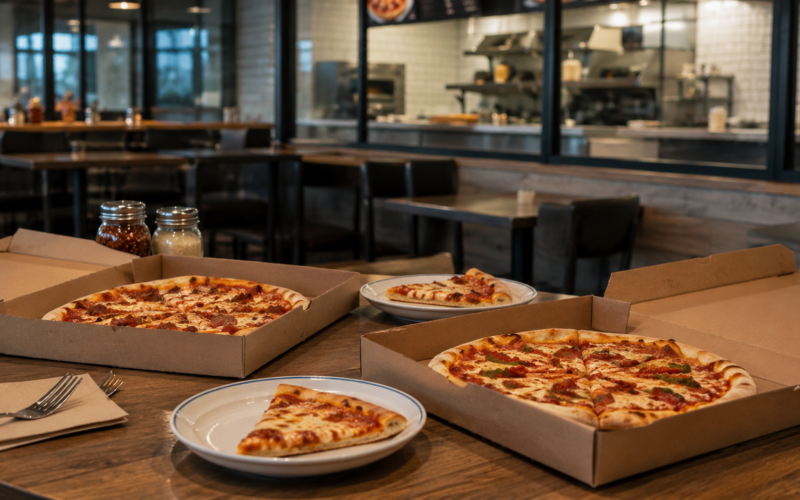
Yum! Brands, Inc. (NYSE: YUM) announced on June 16 definitive agreements to sell Pizza Hut for approximately $2.7 billion in aggregate, splitting the chain between private equity firm LongRange Capital, which will acquire the business outside mainland China for about $1.5 billion, and Yum China Holdings, Inc. (NYSE: YUMC), which will buy the mainland China operations for roughly $1.2 billion. Across both transactions, Yum! Brands expects to receive about $2.3 billion in net proceeds after taxes, closing adjustments, and fees, excluding a potential $75 million earn-out from LongRange Capital by 2030, and it will incur roughly $85 million in one-time separation costs in 2026. The sale completes a strategic review of Pizza Hut launched in November 2025 and ends nearly three decades of ownership of a brand that has posted around ten consecutive quarters of same-store sales declines. Alongside the announcement, the board authorized an incremental $4 billion share repurchase program, and Yum! Brands shares rose roughly 2.5 percent on the news while Yum China dipped slightly. The transaction matters because it reshapes Yum! Brands into a more focused company built around its growth engines, KFC and Taco Bell, while offloading a structurally challenged brand that had become a persistent drag on results.
Why is Yum Brands selling Pizza Hut for $2.7 billion after a decade of same-store sales declines?
The sale is a decision to stop fixing a structurally declining business. Pizza Hut has been the underperformer in Yum! Brands’ portfolio, with roughly ten straight quarters of same-store sales declines, and management concluded after a comprehensive review that selling the brand offered the strongest path to shareholder value rather than continuing to invest in a turnaround. Cutting a persistent loser is often more valuable than trying to save it.
The competitive context explains why Pizza Hut struggled. The chain was historically a delivery-focused, dine-in pizza giant that was outmaneuvered by Domino’s Pizza’s superior technology and logistics and by the rise of third-party delivery apps, losing market share for years and slipping behind on the digital and delivery capabilities that now define the category. Pizza Hut fell behind precisely where the pizza business was won.
The risk being shed is real and quantified. With more than 250 United States locations already slated for closure in 2026 and persistent sales declines weighing on Yum! Brands’ overall performance, the brand had become a drag, so removing it lifts the parent’s growth profile, though it also means surrendering any upside if Pizza Hut were eventually revived. Yum! Brands is trading turnaround optionality for focus and certainty.
How does shedding Pizza Hut sharpen Yum Brands around its KFC and Taco Bell growth engines?
The strategic logic is concentration on what works. By divesting Pizza Hut, Yum! Brands focuses management attention and capital on KFC, its largest global brand, and Taco Bell, its strongest United States growth story, both of which have delivered solid post-pandemic growth in contrast to Pizza Hut’s decline. Removing the weak brand lets the company allocate resources to its winners.
The competitive implication is a cleaner, higher-growth portfolio narrative. Chief Executive Officer Chris Turner framed the move as enabling a more focused company that leverages scale, technology, and talent, and a portfolio of two healthy, growing brands is easier for investors to value and for management to run than a three-brand mix dragged down by one chronic underperformer. Focus tends to command a premium in restaurant valuations.
The risk is increased concentration. With Pizza Hut gone, Yum! Brands becomes more dependent on KFC and Taco Bell, so any stumble at either brand would have a larger impact without a third leg to diversify, and Taco Bell’s growth in particular is heavily United States-centric. Greater focus brings greater exposure to the performance of fewer brands.
What does the $4 billion buyback and $2.3 billion in proceeds signal about Yum’s capital allocation?
The capital-return signal is emphatic. Authorizing an incremental $4 billion share repurchase program alongside roughly $2.3 billion in net proceeds tells investors that Yum! Brands intends to return significant capital while reinvesting in its remaining brands, a clear statement of confidence and a reward for shareholders who endured Pizza Hut’s drag. The buyback amplifies the per-share benefit of a more focused company.
The strategic context is that Yum! Brands operates an asset-light, franchise-heavy model that generates strong cash flow, and monetizing Pizza Hut converts a low-growth, capital-absorbing brand into deployable capital. Redirecting proceeds toward buybacks and investment in KFC and Taco Bell aligns capital with the highest-return opportunities. The move sharpens both the portfolio and the capital allocation.
The risk is that buybacks do not substitute for growth. Returning capital supports earnings per share, but the durability of Yum! Brands’ valuation depends on KFC and Taco Bell sustaining their momentum, and a large repurchase cannot offset a slowdown in the remaining brands. The buyback is a confidence signal, but the operating brands must deliver.
Why is Yum China buying Pizza Hut China while private equity takes the rest of the chain?
The split structure reflects the distinct economics of the China market. Pizza Hut in mainland China is a meaningfully different business from the rest of the chain, performing better as a casual-dining concept in that market, and Yum China Holdings, which already operates KFC and Pizza Hut in China under a separate company, is the natural owner able to integrate and optimize those operations. Selling China separately captures its specific value.
The competitive implication is consolidation and continued partnership. Yum China acquiring Pizza Hut China for about $1.2 billion deepens its control of its home-market portfolio, while Yum! Brands and Yum China agreed to maintain their partnership, including incentives tied to KFC China system-sales growth and continued Taco Bell expansion in the market. The two companies remain strategically aligned even as they separate Pizza Hut.
The risk differs by buyer. For Yum China, the deal adds a business in a competitive Chinese restaurant market that itself faces consumer-spending pressure, which is why Yum China shares dipped slightly, while for LongRange Capital, taking on the structurally challenged ex-China business is a turnaround bet with mixed private-equity precedent in restaurants. Each acquirer assumes a different version of execution risk.
What should investors weigh on Yum Brands as a more focused restaurant company after the divestiture?
For Yum! Brands, the path forward is demonstrating that a sharper, two-brand portfolio plus aggressive capital return drives stronger, more consistent growth than the prior structure. The company plans to detail the financial impact and update its 2026 outlook on its second-quarter call on July 30, which will clarify how the divestiture reshapes earnings and margins.
For the restaurant sector, the deal underscores how delivery economics and digital capability have reshaped competitive dynamics, with Pizza Hut’s decline illustrating the cost of falling behind on technology and logistics. The read-through is that scale alone does not protect legacy brands, and that portfolio pruning to focus on winners is a rational response to a tougher consumer and a more digital industry.
For investors, Yum! Brands becomes a cleaner, more focused company with strong cash generation and a large buyback, which the market rewarded modestly, but its prospects now rest more heavily on KFC and Taco Bell. The prudent stance is to weigh the benefits of focus, capital return, and removing a chronic underperformer against the increased concentration and the execution risk of separation, recognizing that the divestiture improves the narrative while raising the stakes on the two remaining brands delivering. This is general analysis rather than investment advice.
Key takeaways on what the Pizza Hut sale means for Yum Brands, Yum China, and restaurant investors
- Yum! Brands agreed to sell Pizza Hut for about $2.7 billion, split between LongRange Capital for the ex-China business and Yum China for the mainland China operations.
- Net proceeds of roughly $2.3 billion exclude a potential $75 million earn-out, with about $85 million in one-time separation costs in 2026.
- The sale ends ownership of a brand with around ten straight quarters of same-store sales declines that had dragged on results.
- Pizza Hut lost ground to Domino’s and third-party delivery apps, illustrating the cost of falling behind on technology and logistics.
- Divesting Pizza Hut sharpens Yum! Brands around its growth engines, KFC globally and Taco Bell in the United States.
- An incremental $4 billion buyback signals strong capital return alongside reinvestment in the remaining brands.
- The asset-light franchise model lets Yum! Brands convert a low-growth brand into deployable capital.
- Yum China is the natural owner of Pizza Hut China and deepens its home-market portfolio, though its shares dipped slightly.
- Greater focus increases concentration risk, leaving Yum! Brands more dependent on KFC and Taco Bell.
- The deal closes in the third quarter of 2026, with financial impact and outlook details due on the July 30 earnings call.
Discover more from Business-News-Today.com
Subscribe to get the latest posts sent to your email.