
🧬 Interested in pharma, biotech and medical device news? Visit PharmaDeviceNews.com →

Tata Motors Group Q2FY23 global wholesales up by 33% to 3.3 lakh units

Tata Motors Group Q2FY23 global wholesales up by 33% to 3.3 lakh units
Tata Motors Group Q2FY23 global wholesales up by 33% to 3.3 lakh units. Photo courtesy of Fairytalk/Wikimedia Commons

Tata Motors Group said that its global wholesales in the second quarter of the fiscal year 2023 (Q2FY23) were at 3,35,976 vehicles, including Jaguar Land Rover, which marks an increase of 33% compared to the same quarter of the fiscal year 2022.

The worldwide wholesales of all Tata Motors’ commercial vehicles and Tata Daewoo line in Q2FY23 stood at 1,03,226, which is an increase of 16% compared to the same quarter of the previous fiscal year.

Tata Motors Group Q2FY23 global wholesales up by 33% to 3.3 lakh units
Tata Motors Group Q2FY23 global wholesales up by 33% to 3.3 lakh units. Photo courtesy of Fairytalk/Wikimedia Commons

According to Tata Motors Group, the global wholesales of all passenger vehicles were at 2,32,750 in the reported quarter, which is 43% more than Q2FY22.

On the other hand, the global wholesales for Jaguar Land Rover for the reported quarter were 89,899, while Jaguar wholesales were 16,631 vehicles. Land Rover wholesales for the quarter stood at 73,268 vehicles.


Discover more from Business-News-Today.com

Subscribe to get the latest posts sent to your email.

Total
0
Shares
Related Posts
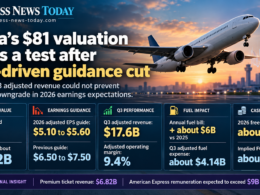
Business News Today infographic showing a passenger aircraft, Delta Air Lines’ $81 share valuation, reduced 2026 earnings guidance, $17.6 billion quarterly adjusted revenue, rising fuel costs and a 4.7% free cash-flow yield.
Read More

Delta Air Lines cuts earnings outlook despite record revenue. Is its stock pricing in a longer fuel crisis?

Delta Air Lines shares are trading near $81 after the carrier reduced its 2026 earnings outlook amid a $6 billion increase in expected annual fuel costs. Strong premium travel demand and loyalty revenue provide support, but weakening free cash flow raises questions about whether the airline's valuation adequately reflects its financial risks.