

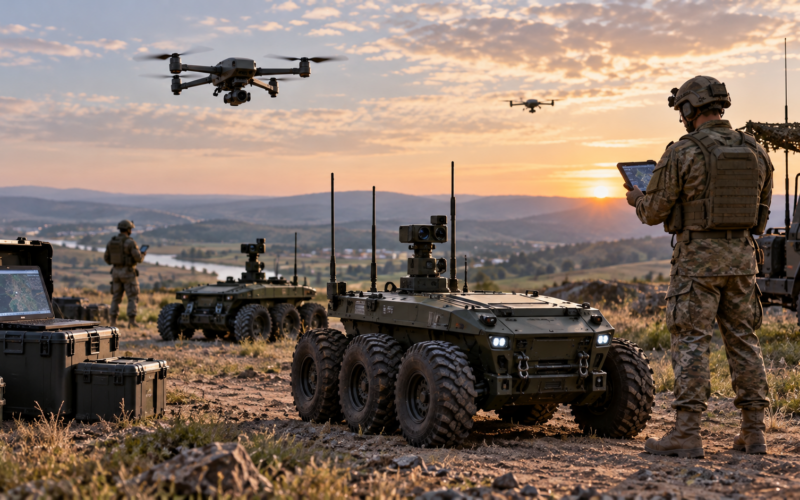
Swarmer, Inc. (NASDAQ: SWMR) has agreed to acquire Ukrainian unmanned ground vehicle manufacturer Ratel Robotics in a cash-and-stock transaction worth up to $224 million if all earnout milestones are achieved, creating a combined platform spanning autonomous aerial and ground systems. The acquisition would bring more than 300 Ratel employees into Swarmer, lifting the combined workforce to nearly 500 people.
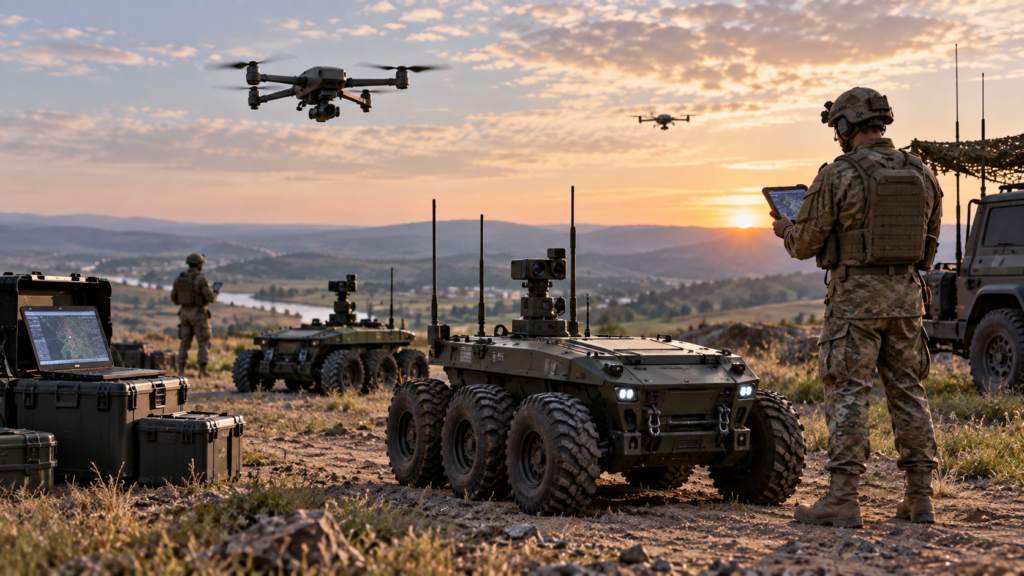
Ratel Robotics secured approximately $86 million of contracts during 2026 and is discussing additional opportunities with NATO countries under the Build With Ukraine initiative. Its unmanned ground vehicles are already used for logistics, casualty evacuation, reconnaissance, drone launching and demining, while the company is also developing unmanned aerial systems, mobile workshops and solar-powered support equipment.
Why does Ratel Robotics change Swarmer’s business model?
Swarmer has primarily positioned itself as an autonomy-software company rather than a conventional drone manufacturer. Its technology is designed to allow one operator to coordinate large numbers of autonomous systems while remaining hardware-agnostic.
Acquiring Ratel Robotics changes that profile. Swarmer would gain a portfolio of physical unmanned ground platforms that can be directly integrated with its autonomy stack, creating the possibility of coordinating ground vehicles, aerial drones and other autonomous assets through a common control layer.
That vertical integration could make Swarmer more commercially useful to defence customers seeking complete systems rather than separate software and hardware purchases. It could also create execution challenges because manufacturing vehicles requires different working capital, supply-chain and production capabilities from building software.
How significant is Ratel Robotics inside Ukraine’s unmanned ground vehicle market?
Ratel Robotics accounted for approximately 37% of the 11 billion Ukrainian hryvnia, or roughly $246.85 million, spent by Ukraine’s Ministry of Defense Procurement Agency on unmanned ground vehicle contracts between January 1 and April 18, 2026. Its products therefore have measurable procurement share rather than merely experimental battlefield exposure.
The company’s systems carry NATO stock numbers, while Ratel also holds AQAP 2110 certification covering quality assurance for design, development and production. Those credentials can matter if the combined business seeks to convert Ukrainian battlefield validation into procurement by NATO governments whose acquisition systems require standardisation and formal quality controls.
Ratel’s 2026 contract value also provides context for the purchase price. Maximum consideration of $224 million is about 2.6 times the $86 million of contracts disclosed for the year, although contracts are not equivalent to recognised annual revenue and the earnout structure means the full acquisition value is conditional.
Can the deal turn battlefield experience into a broader NATO defence business?
The strategic rationale depends on whether technology developed under Ukrainian combat conditions can be standardised and sold into larger allied procurement programmes. Swarmer says its software has supported more than 100,000 real-world combat missions in Ukraine since April 2024, while Ratel brings ground systems that have already been used for logistics, evacuation, engineering and strike-related roles.
Swarmer shares closed at $35.99 on September 10, up about 1.9% after gaining nearly 11% in the previous session. The two-day move indicates constructive short-term sentiment around the company, although the shares remain volatile and had fallen materially from earlier 2026 highs.
The acquisition also illustrates a broader consolidation trend inside Ukrainian defence technology. Hundreds of companies have developed specialised drones, ground vehicles, electronic systems and autonomy tools during the war, but international expansion requires capital, manufacturing scale and access to NATO procurement channels.
Swarmer is effectively betting that combining battlefield-proven hardware with vendor-agnostic autonomy software can create a larger defence platform rather than a collection of individual products. The commercial test will be whether the combined company converts Ukrainian operational credibility into repeatable procurement from governments outside Ukraine.
Discover more from Business-News-Today.com
Subscribe to get the latest posts sent to your email.