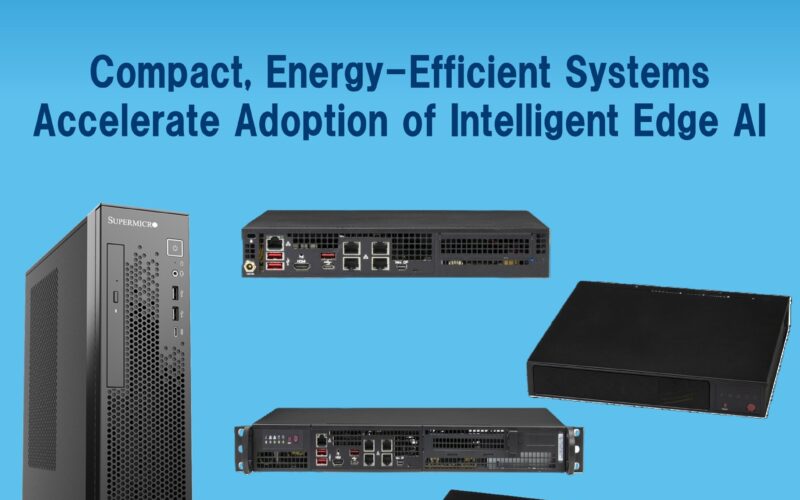
Super Micro Computer, Inc. (NASDAQ: SMCI) said on April 13 that it is launching a new family of compact edge AI systems powered by Advanced Micro Devices, Inc. EPYC 4005 series processors. The move pushes Super Micro Computer, Inc. further into distributed AI infrastructure, with the new systems targeting real-time inferencing and general-purpose workloads in retail, manufacturing, healthcare, and enterprise branch environments. For a company best known for high-density artificial intelligence server hardware, the announcement matters because it signals an attempt to widen the addressable market beyond hyperscale and core data center deployments. That strategic broadening comes while Super Micro Computer, Inc. shares continue to trade well below their 52-week high, making investors more likely to judge new product launches by revenue quality and execution potential rather than by headline AI enthusiasm alone.
Why is Super Micro Computer, Inc. pushing deeper into compact edge AI infrastructure now?
The obvious reading is that Super Micro Computer, Inc. is following enterprise demand wherever it becomes commercially useful, and right now that increasingly means moving compute closer to where data is actually produced. Plenty of artificial intelligence discussion still revolves around giant training clusters and data center expansion, but many of the real-world workloads that companies want to automate do not begin in a hyperscale facility. They begin in stores, branch offices, clinics, warehouses, factory floors, and distributed business locations where latency, physical footprint, power use, and installation simplicity matter more than raw rack density.
That is where this launch becomes strategically interesting. Super Micro Computer, Inc. is not just adding another box to its catalogue. It is trying to position itself for the next layer of enterprise AI adoption, where organizations want inferencing near cameras, point-of-sale systems, back-office operations, industrial control environments, and other on-site workflows. In other words, this is not the glamorous side of AI infrastructure. It is the side that may actually get budget approval faster because it can be tied to loss prevention, checkout automation, branch consolidation, workflow efficiency, or clinical and operational support.
The company’s messaging around retail, restaurants, healthcare, and enterprise environments shows that it is aiming at buyers who care about practical deployment economics. Those buyers are not shopping for spectacle. They are shopping for a compute appliance that can fit in awkward spaces, stay quiet enough, draw limited power, run securely, and still support accelerators when needed. That is a very different conversation from the one surrounding billion-dollar AI factory buildouts.
How do the new AMD EPYC 4005 systems change Supermicro’s product and market positioning?
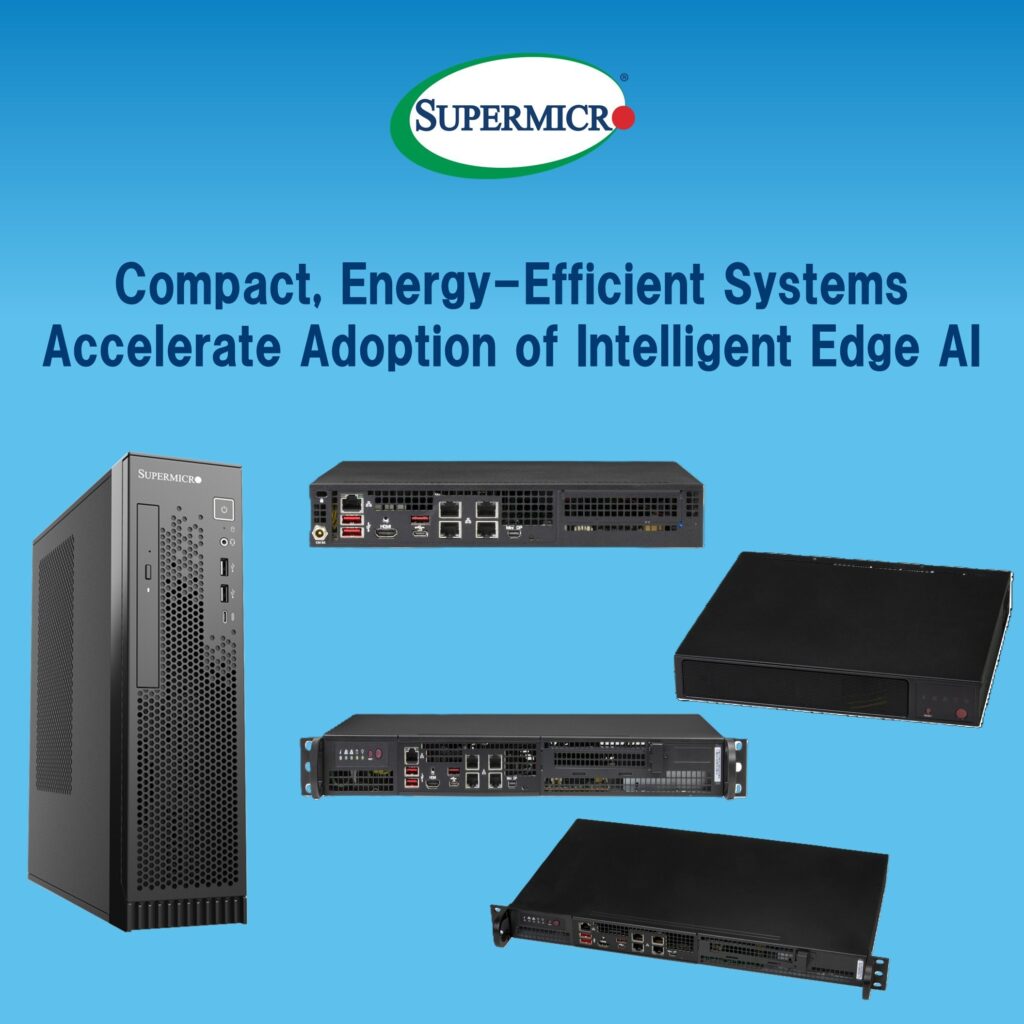
The new lineup spans a compact mini-1U box system, a short-depth 1U rackmount system, and a slim tower system. That matters less for brochure symmetry than for channel flexibility. Super Micro Computer, Inc. is effectively giving customers and solution integrators multiple pathways to deploy the same architectural logic across different physical environments. A cramped back room in a retail site does not need the same hardware shape as a branch office rack or a quieter on-premise deployment in a healthcare or enterprise setting.
The product design also reveals how Super Micro Computer, Inc. wants to compete. Rather than making the central argument about absolute peak performance, it is emphasizing usable performance in constrained environments. Support for optional graphics processing units, remote management, multiple Ethernet ports, DDR5 memory, PCIe Gen 5 expansion, and security features such as TPM 2.0 and AMD Secure Encrypted Virtualization gives the systems just enough enterprise seriousness to avoid looking like stripped-down edge gadgets.
That matters because edge AI buyers do not want toys. They want systems that inherit some of the reliability and manageability of data center infrastructure while being practical enough for distributed deployment. Super Micro Computer, Inc. is effectively trying to compress some of its server DNA into edge-friendly formats without losing the operational features that enterprise buyers expect.
Advanced Micro Devices, Inc. also benefits here. The EPYC 4005 series gives Super Micro Computer, Inc. a processor platform that supports the argument that edge deployments can still be secure, memory-rich, and expansion-capable without becoming power-hungry monsters. The lower thermal design power profile supports the broader economics story, and that is likely more important than any architecture buzzword when procurement teams are evaluating dozens or hundreds of distributed deployments.
What does this launch say about the next phase of enterprise AI spending beyond cloud and hyperscale?
It suggests that the artificial intelligence infrastructure conversation is beginning to fragment in a commercially healthy way. The first wave of excitement centered on training clusters, high-end graphics processors, and the race to build enough data center capacity. That phase is still very much alive, but the second wave is increasingly about where practical inference happens and who captures that spend.
Super Micro Computer, Inc. clearly wants to be present in both worlds. In the data center, the company has already built a strong reputation around accelerated compute systems. At the edge, the challenge is different. It must convince enterprises that distributed AI is not just feasible but supportable at scale. That means easier installation, lower power draw, better remote management, solid networking integration, and enough security control to satisfy corporate information technology and compliance teams.
This is also where the economics of edge inferencing start to matter. Sending every workload back to a central cloud or data center is not always efficient, especially for environments that need low-latency decisions, local video analytics, or on-site operational automation. If Super Micro Computer, Inc. can become one of the default hardware layers for those deployments, it gains exposure to a more diversified and potentially stickier slice of AI spend.
There is also a channel advantage lurking here. Systems like these can be sold not only to end customers but through integrators, managed service providers, and specialized vertical solution partners. That broadens distribution in ways that pure hyperscale exposure does not. The cloud gets the headlines, but the edge often gets the long tail of enterprise spending.
Can Super Micro Computer, Inc. convert edge AI momentum into a stronger investor narrative for SMCI stock?
That is where things get trickier. As of April 13, Super Micro Computer, Inc. shares were trading around $25, with a market capitalization near $15 billion and a 52-week range of about $19.48 to $62.36. The stock had rebounded sharply over the previous five trading days, rising from roughly $22.67 on April 7 to about $25.26 on April 10, but it remains far below last year’s peak. The market context matters because it means product launches alone will not repair sentiment. Investors want proof that the company can sustain growth, manage margins, and navigate competitive and compliance-related pressures while broadening its product scope.
That makes this announcement directionally positive but not thesis-changing by itself. It supports the case that Super Micro Computer, Inc. is not a one-note artificial intelligence infrastructure story tied only to giant server racks and large-model enthusiasm. It shows management is trying to meet enterprise customers across a fuller compute continuum, from core infrastructure to distributed inference.
Still, the company faces a familiar challenge: diversification only helps if it becomes material. Investors will eventually ask how much of this edge strategy converts into meaningful revenue, whether gross margins are better or worse than in its core server business, and whether the company can defend this territory against larger enterprise hardware rivals and more specialized edge vendors. Edge AI is a real opportunity, but it is also crowded and operationally demanding. The edge has no patience for deployment friction.
The sharper way to view the launch is this: Super Micro Computer, Inc. is trying to show that it understands where artificial intelligence infrastructure is going next. The market will now ask whether it can monetize that understanding at scale.
What are the biggest competitive and execution risks facing Supermicro’s edge AI expansion strategy?
The first risk is that enterprise edge demand grows more slowly than the market’s rhetoric suggests. Many companies say they want artificial intelligence at the edge, but scaling from pilot to fleet deployment is a different matter. Hardware standardization, application integration, lifecycle management, on-site support, and budget ownership can all slow adoption.
The second risk is competitive compression. Dell Technologies Inc., Hewlett Packard Enterprise Company, Cisco Systems, Inc., Lenovo Group Limited, and a range of industrial and specialized edge hardware suppliers all want a piece of enterprise distributed compute. Super Micro Computer, Inc. may be fast and flexible, but flexibility alone does not guarantee customer capture when bigger rivals have broader installed relationships and service networks.
The third risk is financial interpretation. Super Micro Computer, Inc. recently delivered very strong fiscal second-quarter sales growth, but gross margin remained under pressure. That means investors are already watching not just growth but the quality of growth. If edge systems become another business line that supports revenue expansion without demonstrating attractive profitability, the stock may not receive much credit.
And then there is the final reality check: edge AI is useful precisely because it is less theatrical. That is good for long-term commercial durability, but it also means these products will have to earn their way into the story through execution, not excitement. No investor is going to clap just because a server got smaller.
What are the key takeaways from Super Micro Computer, Inc.’s new edge AI systems for executives and investors?
- Super Micro Computer, Inc. is expanding from core AI server infrastructure into distributed edge inferencing, which broadens its commercial narrative.
- The launch targets practical enterprise workloads in retail, manufacturing, healthcare, and branch environments rather than hyperscale training demand.
- Product design suggests the company is prioritizing deployment flexibility, security, and manageability over pure performance theatrics.
- The use of Advanced Micro Devices, Inc. EPYC 4005 processors strengthens the efficiency and cost-of-ownership argument for edge rollouts.
- This move reflects a wider industry shift from centralized AI buildout toward localized inference and operational automation.
- Edge AI could offer Super Micro Computer, Inc. a more diversified revenue stream if adoption scales through enterprise and channel partners.
- Investors are unlikely to re-rate SMCI on announcements alone; they will want evidence of revenue contribution, margin profile, and execution discipline.
- Competition will be intense because incumbent enterprise hardware vendors and specialist edge suppliers are targeting the same spending pool.
- The launch supports the view that Super Micro Computer, Inc. wants to participate across the full AI infrastructure stack, not only in data center systems.
- The strategic signal is positive, but the financial payoff will depend on whether Super Micro Computer, Inc. can turn distributed compute demand into durable, profitable growth.
Discover more from Business-News-Today.com
Subscribe to get the latest posts sent to your email.