
Subsea 7 S.A. (Oslo Børs: SUBC) has secured a substantial offshore engineering, procurement, construction and installation contract from Aker BP ASA for the Lyra oil development in the Norwegian North Sea. Announced on 2 November 2026, the award is classified by Subsea7 as having a value between $150 million and $300 million and covers subsea pipelines and associated infrastructure connecting the field to the existing Gjøa production system through the NOVA development. The project is targeting first oil in 2028, approximately three years after discovery, providing an opportunity to demonstrate the commercial advantages of reusing established offshore infrastructure. For Subsea7, the award adds to a $13.6 billion backlog reported at the end of June, but its ultimate contribution will depend on project execution, vessel utilisation and financial performance as the company pursues a proposed merger with Italian offshore contractor Saipem.
What exactly has Subsea7 been contracted to deliver at Aker BP’s Lyra field?
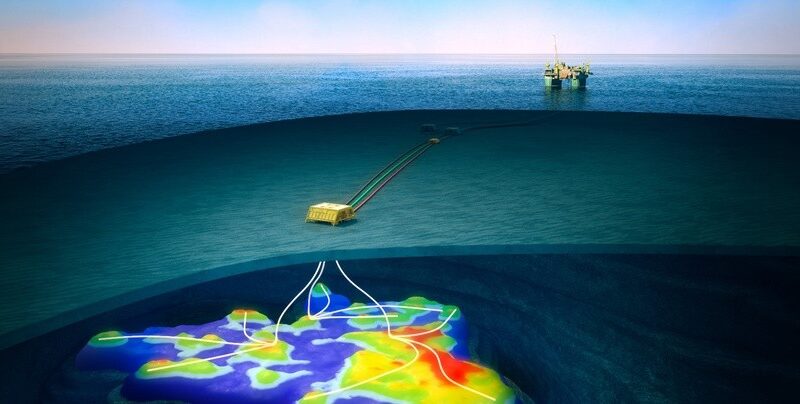
Subsea7’s contract covers engineering, procurement, construction and installation of production and gas-lift pipelines and related subsea infrastructure. The production pipeline will incorporate a pipe-in-pipe design, while installation activities will use vessels from the company’s offshore fleet.
The development is situated in the northern North Sea, approximately 44 kilometres from the Gjøa platform. Previously known as Kjøttkake, the discovery has been renamed Lyra as the project progresses towards development.
The contract establishes an important distinction between the offshore field operator and the infrastructure contractor. Aker BP is responsible for developing the field, while Subsea7 will deliver specified subsea engineering and installation activities under the contract.
Subsea7 has not disclosed an exact contract price. Its classification of the award as substantial places the consideration between $150 million and $300 million, but that range should not be treated as a midpoint valuation or as evidence that the company has secured the upper end of the band.
Project management and engineering work will begin at Subsea7’s Stavanger office, while pipeline fabrication will take place at its spool base in Vigra. Offshore execution is scheduled across 2026, 2027 and 2028, aligning the construction and installation programme with the operator’s planned production start.
The geographical concentration of engineering, fabrication and offshore work within Norway could support operational coordination. However, the project’s profitability will depend on the final contract terms, equipment procurement, vessel scheduling and successful installation.
Why is Lyra being developed through existing Gjøa and NOVA infrastructure?
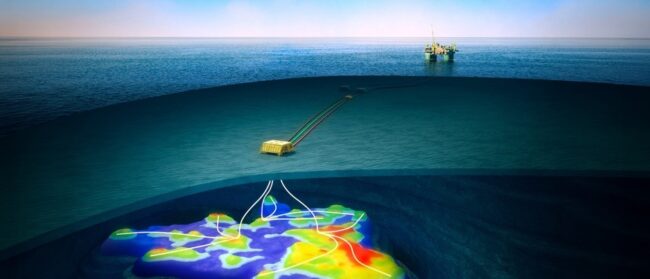
Aker BP plans to connect Lyra to the existing Gjøa platform through infrastructure associated with the NOVA field. This approach avoids developing an entirely independent offshore production facility for the new discovery.
Using established infrastructure can reduce the amount of new surface equipment, processing capacity and support systems required for a satellite field. It may also shorten the development schedule because important infrastructure already exists, subject to available capacity and technical compatibility.
The commercial benefit depends on the characteristics of the new field and the existing facilities. Pipeline requirements, pressure management, processing capacity and contractual access arrangements must all be compatible with the proposed development.
Lyra is targeting first oil during 2028, approximately three years after its discovery in 2025. Aker BP has described the project as a fast-track development intended to demonstrate how standardised engineering and existing infrastructure can accelerate the movement from discovery to production.
The operator has discussed a development reference case of approximately 37 million barrels, with management indicating that it sees potential beyond that estimate. This remains a company development assumption rather than a confirmed quantity of commercially produced oil.
Aker BP has also indicated an indicative development-cost framework of approximately $20 to $25 per barrel under its reference assumptions. These are project economics discussed by the operator, not contract margins or financial guidance for Subsea7.
The operator’s accelerated schedule creates a demanding execution environment for its suppliers. The infrastructure must be designed, fabricated, installed and connected within a relatively compressed period, making early procurement and coordination essential.
How did the December 2025 equipment commitment help accelerate the project?
Subsea7 disclosed that it had received a pre-commitment for critical long-lead equipment in December 2025. This permitted selected procurement arrangements to begin before the latest full engineering and installation contract was announced.
Long-lead components can influence offshore project schedules because specialised equipment may require significant manufacturing and delivery time. Securing those items early can reduce the risk that engineering or vessel availability is held back by later equipment procurement.
The arrangement also illustrates the importance of early contractor involvement. Aker BP and its suppliers can coordinate technical decisions and material orders before every stage of field development reaches conventional procurement milestones.
However, early equipment commitment does not remove all project risks. Detailed engineering, fabrication, installation weather windows and offshore system testing remain necessary before the infrastructure can support production.
The December commitment also means that the November contract is not the first evidence of Subsea7’s involvement in Lyra. It represents a broader formal award following earlier procurement activity, rather than a completely new engagement that began only when the announcement was issued.
The company’s responsibilities will now extend across the planned development timeline, with project teams in Stavanger and Vigra supporting the engineering and manufacturing stages.
What does the Aker BP Subsea Alliance contribute to Lyra’s development schedule?
Lyra is being developed through an alliance framework involving Aker BP, Subsea7 and OneSubsea. The arrangement is intended to bring together the operator and key subsea suppliers during project planning and execution.
Such collaboration can reduce the separation between technical design, procurement and installation decisions. Engineering requirements can be considered alongside equipment availability and construction methods rather than being developed entirely independently.
For a fast-track project, the opportunity is to identify design and procurement constraints early enough to avoid unnecessary redesign or delays. The use of standardised components may also improve consistency and reduce dependence on bespoke equipment.
Aker BP has indicated that Lyra makes extensive use of established equipment and design approaches. The operator’s strategy is to reduce development time through standardisation and integrated project execution, although the eventual outcome will depend on completing the work within the planned schedule.
For Subsea7, participation in the alliance provides opportunities for repeated collaboration across different developments. Existing relationships can support technical coordination, but they do not guarantee attractive pricing or successful delivery on every assignment.
The Lyra contract therefore serves as a practical test of the alliance’s ability to achieve accelerated development without compromising technical performance or construction economics.
How strong was Subsea7’s financial performance before the new Norway contract?
Subsea7 reported second-quarter 2026 revenue of approximately $1.927 billion, an increase of 10% from $1.756 billion in the corresponding previous-year period. Adjusted EBITDA increased 31% to $471 million, reflecting significant improvement in operating profitability.
The adjusted EBITDA margin reached approximately 24.4%, compared with 20.5% a year earlier. Net income increased to $254 million from $131 million, demonstrating that the company’s financial improvement extended beyond revenue growth.
For the first half of 2026, revenue totalled $3.717 billion, while adjusted EBITDA reached $856 million. The corresponding adjusted EBITDA margin was approximately 23%, up from 18% in the previous-year period.
The company attributed the stronger performance to operational delivery, fleet utilisation and improvements in project execution. During the second quarter, vessel utilisation in Subsea and Conventional operations reached approximately 85%, while its renewable energy activities recorded utilisation of 92%.
These figures are relevant because offshore construction vessels involve substantial operating and maintenance costs. Higher utilisation can improve the absorption of those costs when vessels are deployed on appropriately priced projects.
Subsea7 generated $570 million in operating cash flow during the quarter, including a favourable working capital movement. Its net cash position, including lease liabilities, stood at approximately $190 million at 30 June 2026.
The Lyra contract adds future workload to a business that was already reporting stronger operating margins and cash generation. However, the award’s individual profit contribution cannot be calculated from the disclosed contract band alone.
How does the Lyra award compare with Subsea7’s $13.6 billion order backlog?
Subsea7 reported a backlog of $13.645 billion at the end of June 2026, compared with $13.468 billion at the end of March. The backlog included approximately $3.9 billion expected to be executed during the remainder of 2026, $5.6 billion during 2027 and $4.1 billion in 2028 and later periods.
The Lyra award adds work across those time horizons, with engineering and offshore activities scheduled through 2028. Its value range of $150 million to $300 million represents approximately 1.1% to 2.2% of the company’s June backlog.
This calculation provides context for the contract’s financial scale, but does not establish the current backlog because substantial project activity and additional awards have occurred since the June reporting date.
During the second quarter, Subsea7 recorded order intake of approximately $2.1 billion, producing a book-to-bill ratio of 1.1 times. That ratio indicates that new orders exceeded revenue during the period, supporting the maintenance of its contracted workload.
The company’s full-year 2026 revenue guidance ranges from $7.4 billion to $7.8 billion. Management increased its adjusted EBITDA margin outlook to approximately 24%, from an earlier expectation of 23%.
Lyra supports continuing order replenishment, but its value is not large enough by itself to determine whether Subsea7 achieves its full-year financial targets. The result will depend predominantly on delivery across the much larger existing portfolio.
How could the proposed Saipem merger affect Subsea7’s future competitive position?
Subsea7 is pursuing a proposed merger with Saipem SpA that would combine two major offshore engineering and energy infrastructure contractors. The transaction remains subject to regulatory approvals and should not be treated as completed.
The companies previously obtained clearance to proceed under the relevant United States Hart-Scott-Rodino waiting-period requirements. However, the proposed combination has been subject to a more detailed European competition investigation, reflecting concerns about concentration in certain offshore services markets.
The European Commission’s merger review remained ongoing, with its procedural timetable affected by additional information requirements. Approval in one jurisdiction does not establish that other authorities will reach the same conclusion.
The proposed combination could create a larger fleet and technical resource base, potentially improving the ability to pursue complex international projects. However, it could also require integration expenditure, changes to commercial arrangements or regulatory remedies.
The Lyra award demonstrates that Subsea7 continues securing new work independently while the transaction remains under review. Its operational performance and existing backlog therefore retain importance regardless of whether the merger ultimately completes.
Any potential merger benefits should remain separate from the financial value of the confirmed Lyra contract. The award is an identifiable operating development, while the combination with Saipem remains a conditional corporate transaction.
What does Subsea7’s share-price performance suggest about offshore market expectations?
Subsea7 shares traded around NOK 320 on Oslo Børs on 2 November 2026, following a closing price of NOK 324.80 on 30 October. Published market data indicated that the stock remained substantially above its level a year earlier, reflecting a strong longer-term recovery in the company’s equity valuation.
The shares had traded within a 52-week range of approximately NOK 180 to NOK 358, placing the latest market price in the upper portion of that range. This indicates that investors were assigning greater value to the business than during the previous year’s weaker trading period.
The new contract provides additional evidence of demand for subsea engineering and installation work. However, the market response cannot be attributed exclusively to the Lyra award because energy prices, broader contractor sentiment and the proposed Saipem transaction are also relevant to the company’s valuation.
Subsea7’s stronger EBITDA margins and substantial backlog provide a financial foundation for its investment case. Whether the valuation can be sustained will depend on future contract profitability, cash generation and the deployment of its offshore fleet.
The company is scheduled to report third-quarter results on 19 November 2026. Those figures will offer an updated assessment of project performance and backlog before the full financial contribution of Lyra becomes visible.
What will determine whether Lyra becomes a successful fast-track offshore development?
The immediate milestones are completion of engineering work, fabrication of the pipelines and installation of subsea infrastructure. These activities must be coordinated with Aker BP’s broader development plan and the readiness of existing facilities that will receive production.
The planned 2028 first-oil date provides a measurable operational target, although the start of production ultimately depends on the completion of several interconnected technical activities.
For Subsea7, successful execution would demonstrate that its alliance-based delivery model can support accelerated offshore developments. The company could benefit from the use of existing engineering knowledge and manufacturing infrastructure, provided the work is completed at satisfactory margins.
The contract also reinforces Norway’s importance within Subsea7’s international offshore portfolio. Its Stavanger and Vigra operations will participate directly in delivering the project, supporting specialised engineering and fabrication activity.
Lyra adds a meaningful contract to an already substantial backlog and offers an opportunity to demonstrate efficient subsea development. The decisive measures will be delivery against the 2028 production timetable, controlled project costs and whether the company’s forthcoming results confirm that stronger utilisation continues translating into cash and operating earnings.
What should investors know about Subsea7’s Aker BP Lyra contract?
- Subsea7 secured the Lyra offshore development contract on 2 November 2026.
- The company classifies the award as substantial, with a disclosed value range of $150 million to $300 million.
- The scope covers production pipelines, gas-lift pipelines and related subsea infrastructure.
- Lyra will connect to the existing Gjøa production system through NOVA infrastructure.
- The project is targeting first oil in 2028, approximately three years after discovery.
- Engineering work will be based in Stavanger, with pipeline fabrication in Vigra.
- Subsea7 reported second-quarter adjusted EBITDA of $471 million, an increase of 31%.
- The company’s June backlog stood at approximately $13.6 billion.
- Its proposed merger with Saipem remains conditional on outstanding regulatory processes.
- Third-quarter results scheduled for 19 November will provide updated evidence of operational performance.
Discover more from Business-News-Today.com
Subscribe to get the latest posts sent to your email.