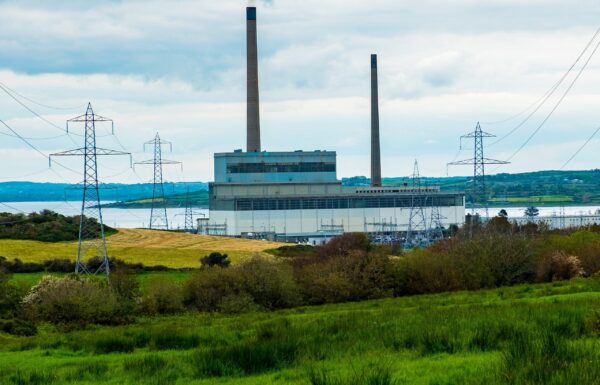
South Bow Corporation (TSX: SOBO; NYSE: SOBO) and Bridger Pipeline plan to jointly develop a proposed crude oil pipeline from Guernsey, Wyoming, to Cushing, Oklahoma, Reuters reported exclusively on June 30, citing an emailed statement from the companies. The early-stage proposal could become the third leg of a wider transportation system intended to move Western Canadian crude from Alberta into major United States storage and refining markets. South Bow Corporation and Bridger Pipeline have not disclosed the proposed pipeline’s capacity, capital cost, construction timetable or target date for a final investment decision. South Bow Corporation has separately secured 20-year binding transportation commitments supporting the proposed Prairie Connector project, which is being advanced toward a possible mid-2027 investment decision. If sanctioned alongside the other components, the Cushing route could improve the commercial value of the wider corridor, but it should currently be treated as a development proposal rather than a committed infrastructure project.
Why is the proposed Guernsey-to-Cushing pipeline strategically important to Prairie Connector?
Prairie Connector is intended to move crude oil from Hardisty, Alberta, through South Bow Corporation infrastructure to the Canada-United States border. The Canadian section would then connect with a separate Bridger Pipeline proposal running through Montana and Wyoming toward Guernsey. The newly disclosed Guernsey-to-Cushing concept could provide the downstream connection required to move those barrels from a regional gathering point into a major North American oil hub.
Guernsey has strategic value as a pipeline intersection, but it is not comparable with Cushing in terms of storage, trading depth or access to downstream refining corridors. A large volume of Canadian crude arriving at Guernsey would still require dependable onward transportation. Without that capacity, the wider system could simply relocate an oil bottleneck from the Canadian border to Wyoming.
The proposed third leg could address that weakness by connecting Prairie Connector-related volumes with Cushing’s extensive storage and pipeline network. Crude delivered to Cushing can potentially move toward refineries in the Midcontinent, the United States Gulf Coast and other demand centres through existing downstream systems.
That commercial logic is credible, but the project details remain limited. South Bow Corporation and Bridger Pipeline have confirmed their intention to pursue the route, not a sanctioned construction programme. The capacity of the proposed Cushing pipeline must eventually align with the volumes transported through the Canadian and border-to-Guernsey sections if the three-part corridor is to operate efficiently.
How confirmed is the South Bow and Bridger Guernsey-to-Cushing pipeline proposal?
The confirmed development is that South Bow Corporation and Bridger Pipeline intend to work jointly on a pipeline proposal between Guernsey and Cushing. The companies told Reuters that the project would follow a corridor acquired from another company and that engagement with landowners and communities along the proposed route would be an immediate priority.
The disclosure does not amount to a final investment decision. No major engineering, procurement or construction contract has been announced, and the companies have not disclosed financing, firm transportation commitments specifically linked to the Guernsey-to-Cushing leg or a regulatory application covering the complete route.
The distinction is important for investors because early pipeline development can continue for years without reaching construction. Developers must establish technical feasibility, negotiate land access, secure customers, obtain permits and determine whether expected transportation revenue justifies the required capital.
South Bow Corporation’s Prairie Connector project is further advanced. The company completed an open season and secured 20-year binding commitments for firm transportation from Hardisty to United States delivery points. Even Prairie Connector remains conditional, with South Bow Corporation identifying permits, execution planning, cost estimates, stakeholder engagement, financing and assurances over permit durability as necessary steps before sanction.
The Guernsey-to-Cushing route should therefore be viewed as a potentially important extension to an advancing but still proposed pipeline network. It is confirmed corporate intent, not confirmed construction.
How could direct Cushing access improve market options for Western Canadian crude producers?
Western Canadian producers depend on a limited number of major export systems to move crude into the United States or toward the Pacific coast. When oil production grows faster than pipeline capacity, transportation constraints can widen the discount applied to Western Canadian Select and other Canadian grades.
A new route into Cushing could increase competition between pipeline systems and provide producers with additional market access. Cushing offers storage, blending and connectivity to several downstream routes, potentially enabling shippers to reach a wider pool of refiners and crude traders.
This optionality could be particularly relevant for heavy oil producers. Complex refineries in the United States are capable of processing heavy Canadian crude, but those barrels need reliable transportation to reach the facilities that value their quality characteristics. Access to Cushing could create more routing flexibility than delivery to Guernsey alone.
Additional capacity would not permanently eliminate crude-price discounts. Differentials are also influenced by refinery maintenance, product quality, storage availability, seasonal demand and global oil-market conditions. A pipeline can reduce transportation-driven volatility, but it cannot remove every commercial factor affecting Canadian oil prices.
The project could also reinforce Canada’s dependence on the United States as its dominant crude customer. Prairie Connector may diversify routes and delivery points, but it would still direct incremental production south rather than opening a completely new geographic market. Trans Mountain provides a different form of diversification through Pacific access.
What do Prairie Connector’s binding commitments confirm about shipper demand?
South Bow Corporation announced in May that its open season had secured 20-year binding commitments for firm transportation service from Hardisty to United States delivery points. This confirms that producers or marketers were willing to make long-duration contractual commitments supporting the proposed corridor.
Binding transportation agreements are essential because pipelines require large upfront investment and recover capital over several decades. Long-term contracts reduce the developer’s dependence on uncertain spot volumes and provide lenders with greater confidence in future revenue.
The commitments materially improve Prairie Connector’s commercial credibility, but they do not automatically cover the proposed Guernsey-to-Cushing project on identical terms. South Bow Corporation has not publicly disclosed how the existing contracts allocate volumes across specific downstream routes or whether additional agreements will be required for the new third leg.
The proposed Prairie Connector Canadian section would include approximately 380 kilometres of new 36-inch pipeline and use about 150 kilometres of previously installed and preserved pipe, together with two existing pump stations. If sanctioned, it would connect at the border with Bridger Pipeline’s proposed downstream facilities.
South Bow Corporation has targeted a possible mid-2027 final investment decision. That decision remains dependent on final cost estimates, financing, permits and stakeholder engagement. Binding contracts significantly reduce demand risk, but they do not resolve construction, regulatory or balance-sheet risk.
Could an acquired corridor accelerate development without eliminating permitting challenges?
The companies told Reuters that the proposed Guernsey-to-Cushing pipeline would use a corridor acquired from another company. An established corridor could reduce the time and expense required to identify an entirely new route, particularly if previous developers completed surveys, engineering or land-access work.
Existing rights and earlier technical information may provide a useful starting point. They could also reduce disturbance by directing construction through an area previously considered for pipeline infrastructure rather than opening a completely new corridor.
However, an acquired corridor does not necessarily include every active permit or enforceable land right needed for construction. Easements may have expired, changed ownership or been negotiated for a different pipeline design. Environmental studies may require updates, especially if regulations, protected areas or route conditions have changed.
The proposed route would also cross several jurisdictions between Wyoming and Oklahoma. Depending on its final alignment, the project could require state permits, water-crossing approvals, landowner agreements, environmental reviews and consultations involving tribal or other affected communities.
South Bow Corporation and Bridger Pipeline have indicated that landowner and community engagement is their first priority. That approach is commercially sensible because unresolved local opposition can create delays even when broader federal policy supports pipeline construction.
The developers will need to demonstrate that consultation affects project design rather than functioning as a procedural exercise. Compensation, route changes, construction practices, emergency planning and local economic participation could influence the level of support.
Can South Bow fund Prairie Connector and a Cushing extension while reducing leverage?
South Bow Corporation reported $5.8 billion of total long-term debt and $4.7 billion of net debt at March 31, 2026. Its net debt-to-normalized EBITDA ratio stood at 4.7 times, placing capital discipline at the centre of the Prairie Connector investment case.
The company generated first-quarter revenue of $491 million, normalized EBITDA of $257 million and distributable cash flow of $168 million. The Keystone Pipeline System transported an average of 616,000 barrels per day and contributed $233 million of normalized EBITDA.
These contracted operating assets provide an established cash-flow base, but the proposed expansion could require substantial investment. South Bow Corporation must fund its Canadian pipeline work while coordinating with Bridger Pipeline on the United States sections and maintaining its existing infrastructure.
The cost of the full three-leg system has not been disclosed. The Guernsey-to-Cushing section could create an additional multibillion-dollar requirement depending on route length, pipeline diameter, pump stations, steel prices, construction labour and environmental mitigation.
Project-level financing could reduce the amount South Bow Corporation must fund directly. Long-term shipper contracts may support debt raised against the project, while joint ownership with Bridger Pipeline could divide capital exposure.
South Bow Corporation must also preserve its investment-grade credit profile and quarterly dividend. The company declared a US$0.50-per-share dividend payable in July, and dividend stability remains important to its investor base.
A well-structured project could create decades of contracted cash flow and support eventual deleveraging. A cost overrun or poorly financed expansion could produce the opposite outcome by increasing debt before material new revenue arrives.
How does the proposed route compare with Enbridge and Trans Mountain expansions?
South Bow Corporation is competing with existing pipeline operators that are also seeking to accommodate higher Western Canadian production. Enbridge Inc. can pursue incremental expansions across established corridors, while Trans Mountain Corporation is evaluating opportunities to increase capacity on the pipeline connecting Alberta with the British Columbia coast.
Brownfield expansions often carry lower execution risk because they use operating rights of way, existing pumping infrastructure and established customer relationships. They may also enter service earlier than an entirely new multi-state system.
Prairie Connector offers the possibility of a larger increase in capacity and a direct contractual route from Hardisty to United States delivery points. The addition of a Guernsey-to-Cushing leg could strengthen that proposition by connecting the system with a major destination rather than leaving shippers dependent on limited onward capacity.
Competition will influence the tolls producers are prepared to pay. If rival expansions create sufficient capacity before Prairie Connector enters service, South Bow Corporation could face pressure to offer lower transportation rates or more flexible terms.
The 20-year commitments provide protection against some of that uncertainty. However, final project returns will depend on whether the contracted tolls adequately compensate South Bow Corporation and its partners for construction costs, financing expenses and regulatory risk.
The winning infrastructure option may not be the pipeline with the largest headline capacity. Producers will compare reliability, completion probability, market access, toll structure and exposure to delays. The proposed Cushing link improves Prairie Connector’s strategic case, but only if the full corridor can be delivered on a coordinated timetable.
Why has South Bow stock weakened despite stronger Prairie Connector visibility?
South Bow Corporation’s New York-listed shares traded near $34.44 on July 2. The stock was approximately 3.8% below its June 24 close and around 5.3% lower than its June 1 level.
The shares remained within a 52-week range of approximately $25.02 to $38.45, leaving the stock about 10% below its annual high but substantially above its 52-week low. This indicates that investors continue to recognise the value of South Bow Corporation’s contracted pipeline assets while applying caution to the proposed growth programme.
The Guernsey-to-Cushing proposal does not provide enough financial information to become an immediate valuation catalyst. Investors do not yet know the capital requirement, ownership structure, expected toll revenue or development timetable.
The announcement can be interpreted in two different ways. It could indicate that South Bow Corporation and Bridger Pipeline are developing a commercially complete system capable of moving Canadian crude all the way to a major hub. It could also indicate that the original route to Guernsey required another costly project before the full value proposition became viable.
South Bow Corporation’s leverage increases the market’s sensitivity to that question. Investors may support growth backed by long-term contracts while remaining unwilling to reward an open-ended capital programme.
The recent share-price weakness should not be read as a definitive rejection of Prairie Connector. The stock remains influenced by interest rates, dividend expectations, crude-market sentiment, Keystone operations and the company’s ability to reduce debt.
A sustained re-rating is more likely to require a complete project budget, financing plan and evidence that management can develop Prairie Connector without weakening the balance sheet or existing shareholder distributions.
What regulatory and political risks could prevent the wider corridor from being sanctioned?
Prairie Connector has received a United States cross-border permit, removing one major obstacle that affected the former Keystone XL project. That permit improves the project’s political position but does not replace the full collection of federal, state and local approvals required for construction.
South Bow Corporation has specifically identified permit durability as a condition that must be addressed before a final investment decision. This reflects the history of cross-border pipeline policy, where approvals have changed following elections or court challenges.
A project designed to operate for several decades must be resilient across political cycles. The companies will require permits supported by robust environmental records, defensible legal processes and meaningful engagement with affected stakeholders.
The Guernsey-to-Cushing leg creates additional regulatory exposure because it would cross a much larger area of the United States. Its final route could affect agricultural land, waterways, habitats and communities across several states.
Indigenous and tribal engagement will also be important, particularly where routes or related facilities affect traditional lands, cultural resources or water systems. Failure to resolve these issues early could generate legal challenges or construction delays.
Political support can accelerate agency coordination, but it cannot guarantee successful execution. The commercial case must remain strong enough to survive changes in administration, regulatory standards and public sentiment.
What milestones should investors watch before treating the pipeline as a committed project?
The first milestone will be disclosure of the proposed Guernsey-to-Cushing pipeline’s route, capacity and ownership structure. Investors need to understand whether the project is designed to carry the full Prairie Connector volume and how capital responsibilities will be divided.
The second milestone will be a complete cost estimate for the wider system. South Bow Corporation has not provided a combined budget covering the Canadian section, Bridger Pipeline’s border-to-Guernsey route and the proposed Cushing extension.
The third milestone will be confirmation of transportation commitments specifically supporting the third leg. Existing Prairie Connector agreements strengthen the overall commercial case, but the market needs clarity on how those contracts support the downstream investment.
The fourth milestone will be regulatory filings and landowner engagement. Submission of formal applications would show that the proposal has progressed beyond preliminary corporate planning.
The fifth milestone will be financing. South Bow Corporation must demonstrate that it can fund its participation while maintaining credit quality, debt-reduction objectives and dividend capacity.
The sixth milestone will be the targeted mid-2027 final investment decision for Prairie Connector. A positive decision would confirm that the company considers the project commercially and financially executable after completing its remaining conditions.
The final milestone will be schedule alignment. The Canadian pipeline, Bridger Pipeline’s proposed border-to-Guernsey system and the proposed Guernsey-to-Cushing leg must become available on compatible timelines. A completed upstream section would create limited value if the downstream connection remained delayed or undersized.
Key takeaways on what the proposed South Bow and Bridger pipeline means for investors
- South Bow Corporation and Bridger Pipeline have confirmed plans to jointly develop a proposed crude pipeline from Guernsey to Cushing.
- The proposal was disclosed through an exclusive Reuters report based on an emailed company statement.
- The third leg has not received a final investment decision and has no disclosed capacity, cost or construction timetable.
- The proposed route could address Prairie Connector’s most important weakness by connecting Guernsey with a major storage and pipeline hub.
- South Bow Corporation has separately secured 20-year binding commitments supporting the proposed Prairie Connector project.
- Those commitments reduce demand risk but do not eliminate financing, permitting, construction or political uncertainty.
- The companies plan to use a corridor acquired from another party, which may support development but does not guarantee transferable permits or land rights.
- South Bow Corporation’s $4.7 billion net debt and 4.7-times leverage ratio make financing discipline critical.
- SOBO shares remain well above their 52-week low but have weakened as investors await clearer project economics.
- Investors should treat the Cushing pipeline as confirmed corporate intent but not as confirmed construction.
Discover more from Business-News-Today.com
Subscribe to get the latest posts sent to your email.