




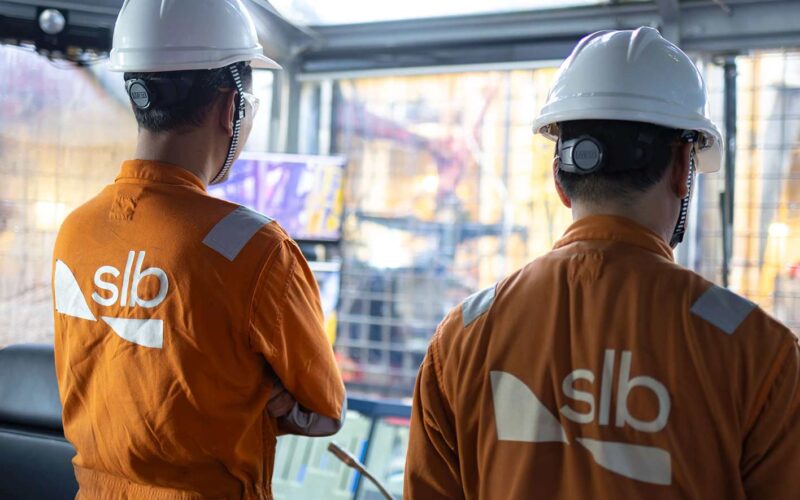
SLB (NYSE: SLB) has secured a contract from Brunei Shell Petroleum Company Sdn Bhd to restore production from shut-in wells across multiple mature offshore fields, extending the oilfield-services company’s exposure to a category of spending that does not require customers to discover or build entirely new developments. The contract combines subsurface evaluation, well selection, engineering, offshore intervention, project management, monitoring, metering and marine logistics under one execution model. Neither the contract value nor the number of wells, fields, expected production uplift or duration has been disclosed, preventing the award from being translated directly into backlog or incremental revenue. The strategic significance lies instead in what Brunei Shell Petroleum is buying: an integrated programme intended to extract additional production from wells and infrastructure that already exist.
The programme will be the first deployment of SLB’s integrated production-restoration solution for Brunei Shell Petroleum and will follow established Well, Reservoir and Facility Management practices. SLB said the objective is to identify appropriate shut-in wells, coordinate intervention planning and improve recovery while maintaining safe offshore operations.
Why are shut-in offshore wells commercially attractive targets?
Offshore developments require enormous upfront capital to install platforms, subsea systems, pipelines and processing facilities. When an individual well stops producing because of mechanical, reservoir or flow-assurance issues, some of that infrastructure can remain underutilised even though the wider field continues operating.
Restoring such a well can therefore produce different economics from drilling an entirely new offshore development. The operator may already have processing capacity, export infrastructure and operating personnel in place, reducing the incremental capital required to monetise additional barrels or gas. The precise economics depend on the cause of the shut-in and the intervention required, but mature-field restoration can offer faster-cycle production than greenfield development.
For SLB, the opportunity spans more services than a conventional well intervention because the company is integrating reservoir analysis, engineering, offshore execution and logistics. A successful programme could consequently create revenue across several service lines from the same customer requirement.

What makes the Brunei Shell Petroleum contract different from a normal intervention award?
SLB is not simply being asked to mobilise intervention equipment after Brunei Shell Petroleum identifies a damaged well. The contract begins further upstream in the decision process with subsurface evaluation and well-candidate selection, meaning SLB participates in determining where intervention capital should be deployed.
That changes the contractor relationship. Instead of receiving isolated work orders for predefined scopes, SLB becomes more deeply integrated into production optimisation across the mature asset base. Project management, monitoring and metering then provide a feedback loop through which restoration results can inform future candidate selection.
The model also gives the customer one coordinating party across disciplines that are often contracted separately. Integration can reduce interface risk and duplicated mobilisation, although commercial value still depends on whether restored production exceeds the cost of the interventions.
Why could mature-field recovery become a bigger oilfield-services market?
Many offshore provinces now contain infrastructure that has operated for decades. Operators therefore face a choice between allowing production to decline, investing in completely new developments or extending existing fields through infill drilling, subsea tie-backs, enhanced recovery and well restoration.
The third option can be particularly attractive when commodity prices remain supportive but shareholders continue demanding capital discipline. Extracting another barrel through existing infrastructure often requires less capital and shorter lead times than sanctioning a new stand-alone development.
SLB explicitly connected the Brunei award with a broader industry shift toward maximising recovery from mature assets. That positioning complements the company’s traditional exposure to exploration and new development because production-restoration spending can continue even when customers become more selective about frontier drilling.
How does this fit with SLB’s current earnings mix?
SLB’s second-quarter results already showed why production systems and integrated technologies are increasingly important to the company. Second-quarter 2026 revenue reached $8.97 billion, but underlying revenue excluding the acquired ChampionX businesses declined year on year, while Middle East disruption weighed on several traditional service categories.
A production-restoration contract does not by itself change that earnings profile, particularly because the value has not been disclosed. It does, however, fit SLB’s strategic move toward capturing a larger portion of customers’ production economics through integrated workflows rather than relying solely on drilling activity.
ChampionX also expanded SLB’s exposure to production optimisation and artificial-lift technologies, making mature-field recovery a more natural extension of the enlarged company’s portfolio. The commercial opportunity is potentially recurring because restored fields continue to require monitoring, optimisation and intervention as reservoirs mature.
Why is Brunei an attractive market for this model?
Brunei has a long-established offshore oil and gas sector, and Brunei Shell Petroleum is one of the country’s central upstream operators. Mature offshore infrastructure creates precisely the type of environment in which production-restoration economics can be attractive because pipelines, platforms and processing systems already exist.
That means incremental production can potentially be connected to functioning export and processing infrastructure rather than waiting for entirely new facilities. The scale of that opportunity cannot be determined from the current disclosure because SLB has not identified the fields or production potential.
The first deployment status is nevertheless important. If Brunei Shell Petroleum can demonstrate that integrated candidate selection and intervention produces better outcomes than conventional fragmented contracting, the programme could provide a reference for similar mature offshore portfolios elsewhere.
What remains unknown about SLB’s Brunei award?
Contract value is the largest missing financial variable. Without it, investors cannot assess how much revenue the programme could contribute or compare it directly with SLB’s quarterly revenue base. No contract duration or minimum work volume has been disclosed either.
Production uplift is equally important from the customer’s perspective. A restoration campaign becomes economically compelling when incremental output is sufficiently large and sustained to justify intervention costs, but neither party has disclosed a target in barrels of oil equivalent per day.
Those omissions mean the contract should not be exaggerated into a major earnings catalyst. Its relevance is strategic: it illustrates a service model through which SLB can monetise the enormous installed base of mature offshore infrastructure even when customers are not sanctioning new megaprojects.
What does SLB’s recent share performance suggest about investor sentiment?
SLB shares closed at $53.87 on August 21, rising 0.6% for the session. That represented a modest gain from the $53.21 close on August 18, when the Brunei contract was announced, and left the stock below its recent 52-week high of $58.82.
There is no basis for attributing that movement specifically to the Brunei award, particularly because contract economics were not disclosed and the company’s valuation is driven by global offshore activity, Middle East conditions, ChampionX integration and capital returns. The market signal is nevertheless reasonably constructive after a volatile period for oilfield-services names.
For SLB, the longer-term value of the contract is likely to be measured through replication rather than its undisclosed initial value. If the company can use integrated production restoration to convert more shut-in wells into producing assets across mature offshore basins, the addressable opportunity could extend well beyond Brunei Shell Petroleum.
Discover more from Business-News-Today.com
Subscribe to get the latest posts sent to your email.