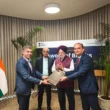


Siemens AG is moving to deepen its rail technology portfolio through Siemens Mobility’s agreement to acquire several key businesses of MERMEC Group, the Italian railway signaling, electrification, diagnostics and measurement technology company. The deal is aimed at expanding Siemens Mobility’s global position in rail diagnostics, asset intelligence and signaling, while increasing its industrial footprint in Italy. Siemens Mobility said the transaction is expected to close by the end of calendar year 2026, subject to customary conditions, and that financial terms were not disclosed. The strategic relevance is clear: Siemens Mobility is using the acquisition to strengthen its role in the increasingly digital, sensor-driven and data-heavy modernization of rail infrastructure.
Why is Siemens Mobility acquiring MERMEC’s rail technology businesses in Italy now?
Siemens Mobility’s move to acquire key MERMEC Group businesses is best read as a targeted infrastructure technology transaction rather than a simple rail sector bolt-on. Rail networks are under pressure to become safer, more available, more automated and more cost-efficient, especially as governments in Europe and other regions invest in rail as part of transport modernization and decarbonization strategies. In that environment, diagnostics and measurement technologies are no longer peripheral tools. They are becoming central to how rail operators inspect tracks, manage assets, predict failures and reduce service disruption.
MERMEC brings Siemens Mobility a portfolio that sits directly inside that shift. The businesses covered by the transaction include Italian wayside signaling, electrification, telecommunication, diagnostics, analytics and worldwide data infrastructure. Siemens Mobility is not acquiring all of MERMEC Group, but it is acquiring assets that strengthen the practical bridge between physical rail infrastructure and digital rail intelligence. That matters because rail technology spending is increasingly moving from hardware-only replacement cycles toward integrated systems that combine sensors, software, analytics, signaling and operational services.
The Italian angle is also important. Siemens Mobility already has a global rail footprint, but Italy remains a strategically valuable market because of its mainline infrastructure modernization needs and its engineering base. MERMEC’s strong presence in Italy’s mainline railway infrastructure gives Siemens Mobility a deeper local platform, while Siemens Mobility’s own strength in urban signaling gives the combined business a broader market proposition. The acquisition therefore gives Siemens Mobility both technology depth and market access, which is the nicer kind of M&A math, assuming integration behaves itself.

How does MERMEC strengthen Siemens Mobility’s diagnostics and asset intelligence platform?
The strongest industrial logic in the transaction sits in diagnostics. Siemens Mobility customers are expected to gain access to a wider service offering that combines Siemens Mobility’s asset intelligence and onboard and depot-based diagnostics with MERMEC’s diagnostic vehicles, measurement systems and inspection software. That creates the basis for a scalable diagnostics and analytics platform that can be sold through Siemens Mobility’s existing global customer network.
This is not just about selling more equipment. Rail diagnostics increasingly supports predictive maintenance, asset utilization planning and network reliability. Operators want fewer unplanned outages, better visibility over track conditions, and more efficient inspection regimes. Diagnostic vehicles equipped with advanced measurement systems can collect infrastructure data, while analytics platforms can convert that data into maintenance decisions. The more those systems become embedded in daily rail operations, the more strategic they become for suppliers.
For Siemens Mobility, the acquisition potentially improves recurring service relevance. Hardware-led projects can be cyclical and capital-intensive, but diagnostics and analytics can create longer relationships with rail customers. The strategic prize is a platform model in which Siemens Mobility supports not only new rail infrastructure but also the ongoing performance, inspection and optimization of existing networks. That is where MERMEC gives Siemens Mobility a stronger proposition, especially if Siemens Mobility can standardize and internationalize the acquired capabilities across its customer base.
What does the deal mean for Siemens Mobility’s signaling business and Italian rail modernization?
The acquisition also strengthens Siemens Mobility’s signaling business, particularly in Italy. MERMEC’s mainline railway infrastructure presence complements Siemens Mobility’s urban signaling expertise, giving the combined portfolio a wider reach across both city-based and intercity rail environments. That matters because rail modernization is rarely one neat software upgrade. It involves signaling, track infrastructure, electrification, telecommunications, safety systems, diagnostics and network-level coordination.
Italy’s national rail network modernization and digitalization plans create a natural demand backdrop for this kind of transaction. Siemens Mobility’s ability to combine its existing signaling expertise with MERMEC’s domestic market position could improve its competitiveness in future railway infrastructure tenders. The deal may also help Siemens Mobility offer more integrated packages to rail operators that want fewer vendors and more accountability across system performance.
The risk is that integration in rail infrastructure is never as smooth as a slide deck suggests. Signaling systems are safety-critical, customer procurement cycles are long, and national rail markets often carry local industrial and regulatory sensitivities. Siemens Mobility will need to preserve MERMEC’s customer relationships and engineering know-how while bringing the acquired businesses into a global operating model. That is doable, but it requires discipline. Rail operators tend not to reward vendors for being merely large. They reward vendors for reliability, certification competence and field execution.
Why could Matera become a strategic diagnostics hub for Siemens Mobility?
Siemens Mobility has indicated that the Ferrosud site in Matera will become an industrial hub for next-generation diagnostics. That detail deserves more attention than a standard transaction summary would give it. Industrial hubs are not just buildings. They can become centers for product development, systems integration, manufacturing specialization, testing, certification and regional employment.
For Southern Italy, the Matera site could become a meaningful industrial anchor if Siemens Mobility follows through with investment and integration. Vito Pertosa, President of Angelo Holding, said the transaction would help secure a future for MERMEC employees while allowing investment in other companies within his industrial holding and supporting business growth in Southern Italy. Reworded in strategic terms, the seller is framing the deal as succession planning, workforce continuity and regional industrial development rather than just portfolio monetization.
For Siemens Mobility, Matera offers a chance to build a diagnostics-focused industrial base that can serve both Italian and international markets. If the site becomes a genuine center for next-generation rail diagnostics, Siemens Mobility could use it to accelerate product development and cross-border deployment. If it becomes merely an absorbed manufacturing footprint, the strategic upside would be smaller. The difference will show up in future hiring, R&D allocation, product launches and export activity.
How financially meaningful is the MERMEC acquisition for Siemens AG and Siemens Mobility?
Siemens Mobility said the acquired businesses generated around €430 million in FY25 revenue and employ around 1,700 people serving customers in more than 70 countries. Siemens Mobility also expects the transaction to be accretive to Siemens AG’s revenue growth target, within Siemens Mobility’s target margin range by the second year after closing, and EPS pre-PPA accretive by year two post-closing. Those details suggest the transaction is designed to be financially digestible rather than transformational at the Siemens AG group level.
The undisclosed deal value leaves investors with an incomplete valuation picture. Reuters reported that sources estimated the transaction at about €1.2 billion, while an earlier report had indicated a possible valuation around €1 billion. Siemens Mobility has not officially disclosed the purchase price, so the clean financial read is that investors should focus less on the headline valuation and more on whether the acquired businesses can deliver cross-selling, margin retention and integration benefits.
The deal is likely more significant for Siemens Mobility’s strategic positioning than for Siemens AG’s near-term earnings profile. Siemens AG is a large industrial technology group, and MERMEC’s acquired businesses represent a focused addition rather than a balance-sheet-defining acquisition. However, the industrial logic could become meaningful if Siemens Mobility converts MERMEC’s diagnostic technologies into higher-margin services, broader software-linked offerings and stronger tender positioning in rail infrastructure modernization.
What does Siemens AG’s stock performance suggest about investor sentiment around the deal?
Siemens AG shares in Germany traded at €273.70 on 14 May 2026, up 2.59 percent on the day, based on Investing.com historical data, following a sequence of mixed daily movements earlier in May. The stock had recently traded close to its 52-week high, with FT market data showing Siemens AG closed at €266.80 on Wednesday, 3.25 percent below a 52-week high of €275.75 set on 12 February 2026. This suggests that Siemens AG entered the MERMEC announcement with relatively firm market positioning rather than distressed investor sentiment.
By 15 May 2026, German media market data showed Siemens AG shares moving lower to around €263.15, down 3.85 percent from the previous close, while still remaining well above the reported 52-week low of €198.00. That pullback appears more consistent with broader short-term market movement and post-earnings digestion than with a clear negative verdict on the MERMEC acquisition itself. Siemens AG also announced a new €6 billion share buyback program alongside second-quarter results, which gives investors another capital allocation signal to process beyond the rail transaction.
The sentiment layer is therefore nuanced. The MERMEC acquisition supports Siemens Mobility’s long-term growth and portfolio quality, but it is unlikely to single-handedly reprice Siemens AG shares. Investors will probably judge the deal through three lenses: whether Siemens Mobility can extract synergies without margin dilution, whether rail diagnostics becomes a stronger recurring revenue engine, and whether Siemens AG continues balancing targeted M&A with shareholder returns. The acquisition looks strategically coherent, but the market will still ask the boring but essential question: does it make money after integration costs and management distraction?
Could Siemens Mobility’s MERMEC deal reshape competition in rail diagnostics and signaling?
The acquisition could raise the competitive bar in rail diagnostics because Siemens Mobility is combining an already substantial global rail platform with a specialized Italian diagnostics and measurement technology base. Competitors in rail infrastructure, signaling and inspection systems will need to respond not necessarily with matching acquisitions, but with stronger integrated offerings. Rail operators increasingly want systems that reduce operational risk, improve safety and support data-driven maintenance. Vendors that can combine equipment, data capture, software analytics and service delivery will have an advantage.
The deal also signals that rail technology competition is moving deeper into asset intelligence. Traditional rail signaling remains important, but the next phase of differentiation may sit in how well vendors can monitor infrastructure health, interpret network data and help operators prioritize maintenance spending. That creates pressure on companies focused only on hardware or project delivery. It also creates opportunities for suppliers that can package diagnostics into long-term service models.
For Siemens Mobility, the larger challenge will be avoiding portfolio fragmentation. Acquiring strong assets is the first step. Turning them into a unified global platform is the harder one. Siemens Mobility will need to align product roadmaps, software architectures, sales channels, certifications and service models. If Siemens Mobility gets that right, MERMEC could become a meaningful accelerator for its rail diagnostics strategy. If not, the deal risks becoming another geographically valuable but operationally complex industrial acquisition.
What are the main execution risks Siemens Mobility must manage after the MERMEC acquisition?
The first execution risk is integration without talent leakage. MERMEC’s value sits heavily in engineering expertise, customer relationships and specialized rail technology capabilities. Siemens Mobility has said MERMEC employees, sites and industrial capabilities will become part of its global innovation ecosystem. That is encouraging, but the practical test will be whether employees see opportunity, autonomy and investment after closing.
The second risk is customer continuity. MERMEC serves customers in more than 70 countries, and Siemens Mobility will need to reassure those customers that service quality, project delivery and technology support will not be disrupted. In infrastructure markets, customer trust is built slowly and can be lost quickly. Siemens Mobility’s global scale helps, but scale alone does not guarantee smooth project execution.
The third risk is realizing synergies without overstretching the acquired businesses. Siemens Mobility expects meaningful synergies, particularly from cross-selling and integrated portfolio expansion. Cross-selling can be powerful when customer needs are aligned, but it can also become a management slogan if product integration is weak. The strongest outcome would be a clear global diagnostics offering with repeatable deployment. The weaker outcome would be a loose bundle of legacy systems wearing a larger corporate badge.
Key takeaways on what Siemens Mobility’s MERMEC acquisition means for rail technology
- Siemens Mobility is using the MERMEC acquisition to strengthen its position in rail diagnostics, signaling and asset intelligence rather than simply adding geographic scale.
- The transaction gives Siemens Mobility deeper access to Italy’s mainline rail infrastructure market while complementing its existing strength in urban signaling.
- MERMEC’s diagnostic vehicles, measurement systems and inspection software could help Siemens Mobility build a more scalable global rail analytics platform.
- The acquired businesses generated around €430 million in FY25 revenue, making the deal financially meaningful for Siemens Mobility but not transformative for Siemens AG as a whole.
- The undisclosed purchase price leaves valuation discipline partly unclear, although external reporting has placed the estimated deal value around the €1 billion to €1.2 billion range.
- The Ferrosud site in Matera could become a strategic diagnostics hub if Siemens Mobility turns it into a genuine center for technology development and industrial specialization.
- The main execution risks are employee retention, customer continuity, software integration and whether cross-selling synergies translate into measurable margin contribution.
- Siemens AG’s broader investor sentiment remains shaped by earnings, capital allocation and the new buyback program as much as by the MERMEC acquisition.
- The deal reflects a wider rail industry shift from conventional infrastructure supply toward predictive maintenance, inspection analytics and data-led asset management.
- For competitors, the acquisition raises the pressure to offer integrated rail technology platforms rather than standalone signaling, inspection or maintenance tools.
Discover more from Business-News-Today.com
Subscribe to get the latest posts sent to your email.