
Siemens Energy India Limited (NSE: ENRIN; BSE: 544390) has moved sharply higher after reporting one of its strongest quarters since becoming a separately listed company, with June-quarter revenue rising 39.3% year on year and profit after tax climbing 67.8%. The company supplies equipment and services across power transmission and power generation, including transformers, gas-insulated switchgear, grid-stability systems, gas and steam turbines and related industrial energy technologies. ENRIN shares closed 12.2% higher at ₹3,648.80 on August 7 and were trading around ₹3,710.60 at 9:30 a.m. IST on August 10. The central question for investors is whether a ₹19,331 crore order backlog and expanding margins can continue growing fast enough to support a market valuation already approaching ₹1.32 lakh crore.
What does Siemens Energy India actually do after the Siemens demerger?
Siemens Energy India became separately listed on the National Stock Exchange of India and BSE Limited in June 2025 after the energy business was demerged from Siemens Limited. That distinction matters because ENRIN is now the listed vehicle for a portfolio focused specifically on India’s power infrastructure and generation opportunity rather than the broader industrial automation activities associated with Siemens Limited.
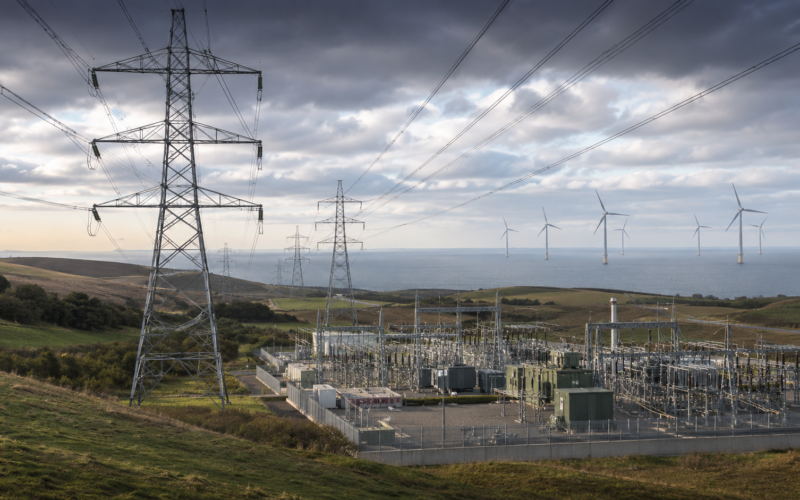
The business is split principally between Power Transmission and Power Generation. Power Transmission supplies technologies such as transformers, gas-insulated substations and grid-stability equipment required to move electricity across increasingly complex networks. Power Generation covers equipment and services including gas turbines, steam turbines, generators and industrial energy systems.
That exposure puts Siemens Energy India close to several major capital-spending themes occurring simultaneously. Renewable generation requires additional transmission infrastructure and grid balancing. Industrial customers are investing in reliable power and decarbonisation. Data centres require large amounts of dependable electricity and high-quality grid connections. Utilities are also strengthening networks as electricity demand rises.
The latest quarter shows that these themes are already reaching the income statement rather than remaining purely long-term narratives.
Why did ENRIN shares jump after the Q3 FY2026 results?
Siemens Energy India reported revenue from operations of ₹2,486 crore for the quarter ended June 30, 2026, up 39.3% from ₹1,785 crore a year earlier. Profit from operations increased 73.6% to ₹545 crore, while profit after tax rose 67.8% to ₹441 crore.
The operating margin was particularly important. Profit from operations reached 21.9% of revenue compared with 17.6% in the corresponding quarter, an expansion of 430 basis points.
Management attributed the improvement primarily to stronger operating leverage, higher export contributions and disciplined execution of the order book. Those factors matter because investors are not simply paying for revenue growth. At ENRIN’s current valuation, continued earnings growth depends on a meaningful portion of incremental revenue converting into profit.
Nine-month numbers reinforce the trend. Revenue for the first nine months of FY2026 reached ₹6,791 crore, up 31.1%, while profit from operations increased 49.2% to ₹1,437 crore. Nine-month profit after tax rose 52.2% to ₹1,128 crore.
The shares reacted strongly when the market reopened after the results. ENRIN closed at ₹3,648.80 on August 7, up 12.2% from ₹3,252.20 in the previous session. At approximately ₹3,710.60 on the morning of August 10, the stock was another 1.7% above Friday’s close.
Using that August 10 snapshot, ENRIN was approximately 14% above its August 3 close and around 5.2% above its July 10 level. The shares remained about 6.5% below the 52-week high of ₹3,968 and substantially above the 52-week low of ₹2,115.
The recent rally therefore reflects more than a recovery from depressed levels. Siemens Energy India is trading relatively close to its highest price of the past year, meaning future gains increasingly require additional operating evidence rather than simple sentiment normalisation.
How powerful is Siemens Energy India’s ₹19,331 crore order backlog?
The order backlog reached ₹19,331 crore at the end of the June quarter, up 16.4% from ₹16,601 crore a year earlier.
That provides considerable revenue visibility. Siemens Energy India generated approximately ₹9,436 crore of revenue over the latest trailing 12-month period based on reported results. The current backlog is therefore equivalent to roughly 2.05 times trailing annual revenue.
The comparison should not be interpreted as two years of guaranteed revenue. Contract schedules differ, orders can be executed over multiple periods, and backlog is not equivalent to profit or cash flow. It does, however, show that the company’s growth is supported by a substantial volume of already secured business.
The composition of the backlog is even more revealing.
Power Transmission backlog increased 27.6% over the first nine-month comparison to approximately ₹13,490 crore. Power Generation backlog, by contrast, declined 3.2% to about ₹5,840 crore.
Power Transmission therefore accounts for almost 70% of the current backlog and essentially all of the year-on-year backlog expansion.
That concentration fits the wider investment cycle. Recent orders highlighted by Siemens Energy India include 420 kilovolt gas-insulated switchgear and substations connected with large solar developments, grid-strengthening projects, STATCOM equipment for grid stability and additional high-voltage infrastructure.
The company has also highlighted data-centre-related work, including commissioning a 220 kilovolt gas-insulated substation for a data centre in Maharashtra.
The constructive scenario is that India’s transmission investment cycle remains strong enough for order intake to keep replenishing revenue as existing projects are executed. The main evidence investors need is not simply another record backlog number. It is continued growth in Power Transmission revenue while margins remain around current levels.
Can Siemens Energy India sustain margins above 20%?
This may be the most important operating question after the latest results.
Nine-month profit from operations increased from 18.6% of revenue to 21.2%. Even after excluding foreign-exchange and commodity gains and one-time effects, the company’s presentation showed the underlying operational margin improving from 17.1% to 19.6%.
That suggests the improvement is not entirely dependent on accounting or market-related effects.
Power Transmission generated ₹3,789 crore of nine-month revenue, up 33.9%, while its profit-from-operations margin increased from 19.7% to 20.8%. Power Generation revenue increased 27.5% to ₹3,001 crore, while its margin improved from 17.2% to 21.7%.
The second margin driver is exports. Export revenue represented 28.4% of nine-month sales compared with 21.4% a year earlier. Siemens Energy India has been supplying equipment and services internationally, including transformers and gas-insulated switchgear.
Management specifically identified higher export contribution as one factor behind improved profitability.
That creates an important test for subsequent quarters. If export participation and operating leverage remain strong while domestic grid investment continues expanding, margins around 20% could prove more sustainable than historical comparisons imply.
The more cautious scenario is that some of the current mix is unusually favourable. Export orders, product mix, project timing and commodity movements can all influence quarterly profitability. Investors therefore need several quarters of evidence before treating a 21% operating margin as an automatic long-term baseline.
Is Siemens Energy India expensive after the post-results rally?
This is where the investment case becomes more demanding.
Siemens Energy India has 356.1 million shares outstanding. At approximately ₹3,710.60 per share, that implies an equity market value of roughly ₹1.32 lakh crore.
A mechanical trailing-12-month earnings calculation produces earnings per share of approximately ₹41.79. That combines FY2025 EPS of ₹30.89 with ₹31.70 generated during the first nine months of FY2026, less the ₹20.80 generated during the comparable nine months of FY2025.
At the August 10 morning price, ENRIN therefore trades at roughly 89 times trailing earnings.
That is a premium valuation even for a company generating strong earnings growth. The multiple tells investors something important about the market’s assumptions: Siemens Energy India is not being valued primarily on what it earned last year. The share price reflects expectations that revenue, margins and profits can continue compounding rapidly as India’s power infrastructure cycle expands.
The balance sheet provides some support. In the latest detailed balance sheet available at March 31, Siemens Energy India reported ₹272 crore of cash and cash equivalents plus approximately ₹3,023 crore of other bank balances. The balance sheet did not show conventional borrowings, although lease liabilities were present.
That financial position reduces funding risk and gives the company flexibility to support working capital and investment as the order book expands. It does not, however, remove valuation risk.
Published broker research illustrates the same tension. Motilal Oswal Financial Services maintained a positive recommendation after the results with a target price of ₹4,100, while Nuvama Institutional Equities had previously initiated coverage with a ₹4,200 target.
From the August 10 morning price, those targets represent approximately 10.5% and 13.2% potential upside respectively. The strong post-results rally has therefore already closed part of the distance to some bullish published valuations.
For ENRIN to sustain a premium multiple, the market will likely need continuing evidence of 20%-plus earnings growth rather than simply a strong order book.
Siemens Energy India stock key takeaways after the Q3 FY2026 surge
- Siemens Energy India reported Q3 FY2026 revenue of ₹2,486 crore, up 39.3% year on year, while profit after tax increased 67.8% to ₹441 crore.
- ENRIN shares jumped 12.2% on August 7 and were trading around ₹3,710.60 on the morning of August 10, approximately 6.5% below their 52-week high.
- The ₹19,331 crore order backlog is equivalent to roughly 2.05 times trailing 12-month revenue, providing substantial future execution visibility.
- Power Transmission is driving backlog growth, with segment backlog increasing 27.6% while Power Generation backlog declined 3.2%.
- Nine-month operating profitability improved materially, supported by operating leverage, stronger execution and a higher contribution from exports.
- At roughly ₹1.32 lakh crore of market capitalisation and around 89 times mechanically calculated trailing earnings, ENRIN already prices in a significant amount of future growth.
- The next evidence investors need is sustained Power Transmission execution, margins around current levels and continued order replenishment as FY2026 moves toward its September year-end.
What would strengthen or weaken the Siemens Energy India investment case?
Siemens Energy India’s latest results provide substantial evidence that the company’s underlying opportunity is translating into financial performance. Revenue is growing above 30% on a nine-month basis, operating profit is growing faster than sales, the backlog has reached ₹19,331 crore and Power Transmission demand remains particularly strong.
The company also enters this growth phase with a relatively strong balance sheet and increasing export participation. Those characteristics make the current earnings momentum more substantive than a simple one-quarter surprise.
What remains unresolved is valuation.
At close to 89 times trailing earnings, investors are already paying for several years of strong execution. That does not mean the valuation must automatically decline, particularly if earnings continue compounding rapidly. It does mean the tolerance for weaker order growth, margin normalisation or slower project execution is lower than it would be at a more modest multiple.
The investment case would strengthen if Power Transmission backlog continues expanding, FY2026 revenue growth remains strong into the September quarter, operating margins stay near or above 20% and export participation remains elevated. Continued growth in data-centre, renewable-grid and industrial-power orders would provide additional evidence that Siemens Energy India can benefit from multiple demand drivers rather than one isolated capital-spending cycle.
The thesis would weaken if transmission order growth slows materially, backlog conversion becomes slower than expected or margins fall back sharply as product and export mix normalises.
Siemens Energy India has already demonstrated that the Indian power-capex opportunity is capable of producing rapid revenue and earnings growth. After the 12% share-price jump, however, the next question is harder. ENRIN now needs to demonstrate that today’s unusually strong growth rates can last long enough to justify the premium valuation investors are already assigning to the business.
Discover more from Business-News-Today.com
Subscribe to get the latest posts sent to your email.