





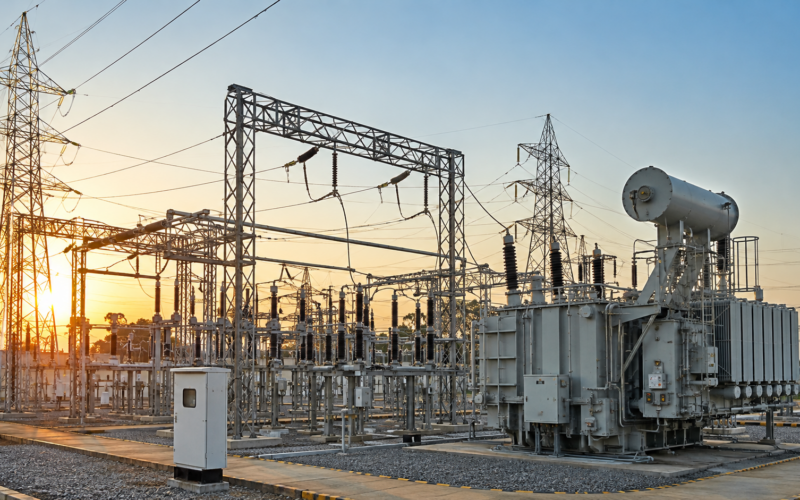
Siemens Energy India Limited (NSE: ENRIN) shares surged 12.19% to ₹3,648.80 on August 7 after the power equipment manufacturer reported a 67.8% increase in third quarter fiscal 2026 net profit and another expansion in its already substantial order backlog. Revenue from operations rose 39.3% to ₹2,485.6 crore, while net profit reached ₹440.9 crore and operating margins expanded sharply. The order backlog increased 16.4% year on year to ₹19,331 crore, giving the company significant revenue visibility across power transmission and generation projects. The tougher question after the rally is valuation, with Siemens Energy India now worth about ₹1.30 lakh crore and trading at a premium that assumes several more years of strong execution.
The August 7 move was accompanied by unusually heavy activity, with approximately eight million shares traded across the session as ENRIN moved as high as ₹3,735. The stock now sits only around 8% below its 52-week high of ₹3,968, making the next phase of the investment case less about discovering the power infrastructure growth story and more about whether earnings can grow quickly enough to support the valuation already attached to it.
What does Siemens Energy India currently do across power generation and transmission?
Siemens Energy India operates as a focused energy technology company following the demerger of the energy business from Siemens Limited. Its shares began trading independently in June 2025, creating a listed pure-play exposure to equipment and services used across India’s power generation and transmission system.
The business is divided primarily between Power Transmission and Power Generation. Transmission products and solutions include transformers, high-voltage switchgear, grid technologies, substations and equipment that helps move electricity reliably across increasingly complex networks. Generation activities include steam turbines, gas turbines, generators, industrial power systems and long-term maintenance and service work.
This positioning places Siemens Energy India inside several large infrastructure trends simultaneously. India needs more generating capacity as electricity consumption rises, while renewable energy requires significant expansion of transmission networks to move power from new solar and wind regions to demand centres. Data centres, manufacturing investments, electrification and industrial expansion add another layer of electricity demand.
The company also participates in export opportunities through its manufacturing base. Recent investments are intended to increase transformer and switchgear capacity at Kalwa and Chhatrapati Sambhajinagar, supporting both Indian customers and international demand.
Unlike a utility, Siemens Energy India does not depend mainly on selling electricity. Its economics are tied to winning, manufacturing, executing and servicing large technology orders. That means the quality of the order book, project margins and delivery schedules matter as much as the absolute level of power demand.

Why did Siemens Energy India profit rise 68% while revenue increased 39%?
Revenue from operations reached ₹2,485.6 crore during the quarter ended June 30, compared with approximately ₹1,784.6 crore in the corresponding period. Profit after tax increased from ₹262.7 crore to ₹440.9 crore.
The earnings increase substantially exceeded revenue growth because profitability improved as well. Operating EBIT rose to around ₹545 crore, while the EBIT margin expanded by approximately 430 basis points to 21.9%. EBITDA reached roughly ₹586 crore, representing a margin close to 23.6%.
This operating leverage is important because power equipment projects can generate very different margins depending on product mix, manufacturing utilisation, commodity costs and the stage at which revenue is recognised. Higher utilisation of factories can allow additional revenue to flow through at stronger incremental margins once fixed manufacturing expenses are covered.
A favourable mix of orders also appears to have contributed. Transmission demand remains strong, while execution across higher-value projects supported profitability during the quarter. Lower input pressure in selected categories and operating efficiencies provided additional support.
The result should not automatically be treated as a new permanent margin level. Copper, electrical steel and other specialised materials represent important costs in transformers, switchgear and generation equipment. Commodity inflation, foreign-exchange movements or changes in project mix can move margins between quarters.
The stronger result nevertheless changes the earnings base from which investors are assessing ENRIN. A company delivering revenue growth near 40% and profit growth approaching 70% can sustain a premium valuation for longer than one producing modest growth, but only if order conversion and margins remain consistently strong.
How valuable is Siemens Energy India’s ₹19,331 crore order backlog?
The order backlog increased 16.4% year on year to ₹19,331 crore at June 30. That figure is almost twice the company’s latest annual revenue base and provides considerable visibility into work that can potentially be executed across future quarters.
Backlog is particularly valuable in power equipment because projects can extend over multiple years. Customers may place orders for transformers, grid systems or generation equipment long before final delivery, allowing manufacturers to plan factory utilisation and supply-chain requirements with greater visibility than many shorter-cycle industrial businesses.
The quality of the backlog matters more than the headline number alone. Large infrastructure contracts can contain milestone payments, penalties, engineering complexity and exposure to commodity prices. Earnings depend on completing those projects within the cost and timing assumptions used when the orders were accepted.
Backlog growth also needs to be supported by new order intake. If revenue expands rapidly while incoming orders slow, the order book can eventually decline even when near-term results remain strong. Investors therefore need to watch both execution and replenishment.
India’s transmission requirements provide a favourable backdrop. Increasing renewable generation requires new substations, high-capacity transformers, transmission corridors, grid stabilisation technologies and equipment capable of managing more variable power flows.
Siemens Energy India has also participated in equipment linked to semiconductor manufacturing, industrial electrification and international power infrastructure. These end markets broaden the opportunity beyond conventional utility capital expenditure, although the company remains highly exposed to the overall investment cycle in electricity infrastructure.
Can India’s grid and data centre expansion sustain ENRIN growth for several years?
Electricity infrastructure is undergoing a substantial capital cycle. Renewable generation is being built in areas that often sit far from major cities and industrial centres, increasing the requirement for new transmission capacity. At the same time, existing networks must become more resilient and capable of managing two-way and variable electricity flows.
Data centres create another source of demand. Artificial intelligence computing, cloud infrastructure and digital services require large quantities of reliable power, frequently concentrated in specific locations. These facilities need grid connections, transformers, switchgear and backup or dedicated generation infrastructure.
Manufacturing investment adds to the opportunity. Semiconductor facilities, metals plants, chemicals, transport infrastructure and other energy-intensive industries require highly reliable electricity systems and often invest in captive or specialised power equipment.
Siemens Energy India therefore operates at the intersection of several structural spending themes. The company does not need every power project to use the same technology. Growth can come from generation equipment, transmission systems, grid stabilisation, industrial power solutions and long-term servicing.
The risk is that infrastructure cycles can be uneven. Large orders may be delayed by permitting, customer financing, land acquisition or changes in project schedules. Government and utility capital expenditure can also fluctuate between periods.
A sustained growth case therefore requires more than an attractive industry forecast. Siemens Energy India must continue converting market demand into orders while maintaining delivery discipline and avoiding an excessive build-up of working capital.
Does Siemens Energy India’s balance sheet give it room to fund manufacturing expansion?
Siemens Energy India entered its current expansion phase with a strong balance sheet and minimal conventional financial debt. At March 31, the company was in a substantial net cash position, providing flexibility to fund manufacturing capacity and working capital without relying heavily on external borrowing.
The company has outlined capital investment of approximately ₹740 crore to increase transformer and switchgear manufacturing capacity at Kalwa and Chhatrapati Sambhajinagar. These investments are designed to address growing domestic and export demand.
Capacity expansion matters because an order book can only become revenue if manufacturing facilities can deliver the equipment. Long lead times for transformers and grid technology have become a constraint across global energy markets, making available production capacity strategically valuable.
New factories and production lines also introduce execution risk. Capital must be spent before all of the resulting revenue is recognised, while new equipment, employees and supply chains need to ramp efficiently. Returns weaken if demand slows before utilisation reaches expected levels.
The company’s financial position gives it more room than a leveraged industrial business to absorb this investment cycle. However, investors should still judge the expansion on returns rather than simply applauding higher capital expenditure.
The strongest evidence would be sustained order growth combined with higher production capacity, strong cash conversion and stable margins. If working capital rises much faster than revenue or new capacity remains underused, the economic benefit of the investment programme would become less compelling.
Is the ENRIN valuation already pricing in years of power infrastructure growth?
Siemens Energy India Limited (NSE: ENRIN) closed at ₹3,648.80 on August 7, up ₹396.60 or 12.19% during the session. The shares traded between ₹3,426.40 and ₹3,735, with approximately eight million shares changing hands.
ENRIN gained roughly 13% over the latest week and around 8% over one month. The stock now trades approximately 8% below its 52-week high of ₹3,968 and about 73% above the 52-week low of ₹2,115.
At the August 7 close, Siemens Energy India carried a market capitalisation near ₹1.30 lakh crore. The stock was valued at roughly 87 times trailing earnings, placing it at a substantial premium to many conventional industrial and power-sector companies.
That premium reflects several factors. Siemens Energy India has a clean pure-play structure, high-return technology businesses, a strong balance sheet and direct exposure to an infrastructure cycle that may last for years. Its order backlog also provides greater revenue visibility than a company relying mainly on short-cycle demand.
The valuation nevertheless leaves limited tolerance for execution disappointment. An earnings multiple approaching 90 requires rapid compounding or a substantial expansion in future profitability to become less demanding over time.
Post-result brokerage sentiment has remained constructive. Motilal Oswal retained a positive view following the quarter, with a target price around ₹4,100. That target sits approximately 12% above the August 7 close, meaning even optimistic published valuations offer considerably less upside than the stock has already delivered from its 52-week low.
Retail attention is likely to focus on whether the ₹4,000 level can be breached. The more important fundamental question is whether revenue, orders and profits can grow fast enough over several years to compress the current valuation through earnings rather than requiring another expansion of the multiple.
What evidence would strengthen or weaken the Siemens Energy India investment case?
The strongest evidence would be continued order backlog growth alongside quarterly revenue expansion above the broader industrial sector. Maintaining EBIT margins near the current level would further strengthen the case because it would show that growth is translating efficiently into earnings.
Execution of the ₹740 crore manufacturing expansion is another measurable milestone. Increased transformer and switchgear capacity could allow Siemens Energy India to capture additional orders at a time when power equipment lead times remain stretched globally.
Order intake from data centres, renewable transmission, industrial customers and exports would also reduce dependence on any single part of India’s power investment cycle.
The thesis would weaken if order growth slows materially while the company accelerates capital expenditure. Margin normalisation would not automatically undermine the business, but a sharp decline would matter because the current valuation assumes strong profitability.
Commodity inflation represents another relevant risk. Copper and specialised electrical steel are important inputs for transformers and other grid equipment, and significant increases may pressure margins if project pricing cannot adjust quickly enough.
Siemens Energy India’s financial year ends on September 30. The next broad financial proof point will therefore be the fiscal 2026 annual results following the September quarter, although the company had not announced the formal results date as of August 9.
The August result has established that Siemens Energy India is converting India’s power investment cycle into substantial earnings growth. What remains unresolved is whether this rate of growth can persist long enough to justify an equity valuation approaching ₹1.30 lakh crore.
Key takeaways for investors watching Siemens Energy India after the August 7 rally
- Siemens Energy India Limited (NSE: ENRIN) closed 12.19% higher at ₹3,648.80 on August 7 following strong June-quarter results.
- Revenue from operations increased 39.3% to ₹2,485.6 crore, while profit after tax rose 67.8% to ₹440.9 crore.
- Operating EBIT margin expanded approximately 430 basis points to 21.9%, showing that profitability grew faster than revenue.
- The order backlog increased 16.4% to ₹19,331 crore, providing substantial visibility across power transmission and generation projects.
- Siemens Energy India is investing approximately ₹740 crore to expand transformer and switchgear manufacturing capacity for domestic and export demand.
- ENRIN now trades only about 8% below its 52-week high and at roughly 87 times trailing earnings, making valuation the principal counterweight to strong operating momentum.
- The fiscal 2026 annual results following the September quarter will be the next major test of order growth, margins and execution.
Discover more from Business-News-Today.com
Subscribe to get the latest posts sent to your email.

