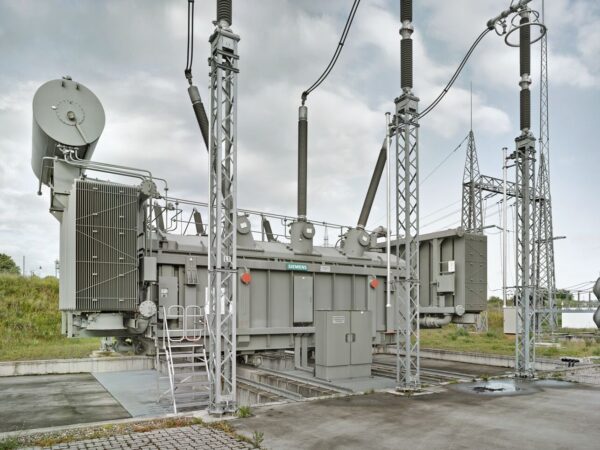


Sempra (NYSE: SRE), the San Diego-based energy infrastructure group that owns regulated utilities in California and Texas alongside a liquefied natural gas export platform, is facing a fresh activist push to break up its portfolio. According to a Reuters report, the Houston-based hedge fund Voss Capital has written to investors urging Sempra to spin off Oncor Electric Delivery, its Texas electricity transmission and distribution business, arguing the separation could create one of the fastest-growing standalone utilities in the United States. Voss Capital, which holds roughly two million Sempra shares, contends that an independent Oncor could command a valuation of as much as 78 billion dollars by the end of 2028, a figure that would rival or exceed the market value the public market currently assigns to the entire combined group. The proposal lands while Sempra trades in the lower half of its 52-week range and after a year in which management has already moved to simplify the business through asset sales. For executives and institutional investors, the question is no longer whether Sempra’s conglomerate structure obscures value, but whether an activist can force the company to act on it faster than its own multi-year plan intends.
Why is Voss Capital pushing Sempra to spin off its Texas utility Oncor right now?
The timing reflects a structural argument rather than an opportunistic one. Voss Capital’s core thesis, as set out in its letter to investors, is that Sempra bundles three fundamentally different businesses under one ticker: the California regulated utilities San Diego Gas and Electric and Southern California Gas, an 80.25 percent stake in the Texas grid operator Oncor, and the LNG-focused Sempra Infrastructure platform. Each carries a distinct risk profile, growth rate, and investor base, and the firm argues that holding them together forces the market to apply a conglomerate discount that penalizes the highest-quality asset.
The activist case is sharpened by where electricity demand is heading. Texas is absorbing a wave of load growth from data centers, manufacturing reshoring, and population gains, and Oncor sits directly in the path of that demand as the state’s largest transmission and distribution utility. Voss Capital’s letter argues that Sempra’s roughly 80 percent ownership of Oncor alone could eventually be worth more than the combined company’s present market capitalization, which implies the rest of the portfolio is being valued at close to nothing or worse. That is the kind of gap activists are built to exploit, because it can be closed through structure rather than operational turnaround.
There is also a second-order consideration that strengthens the campaign. Sempra has spent the past year signalling its own appetite for simplification, including an agreement reached in September 2025 to sell an equity interest in Sempra Infrastructure Partners to KKR, with the Canada Pension Plan Investment Board participating as a co-investor. An activist arriving after management has already conceded the simplification logic is pushing on a door that is at least partly open, which raises the probability that the campaign gains traction with other holders.

How much value could a standalone Oncor unlock for Sempra shareholders by 2028?
The headline number in the Voss Capital letter, a potential Oncor valuation of up to 78 billion dollars by the end of 2028, is best read as a directional claim rather than a precise target. It rests on three assumptions that each carry execution risk: sustained Texas load growth, continued regulatory approval of Oncor’s large capital expenditure pipeline, and the market rewarding a pure-play Texas grid operator with a premium multiple unencumbered by California or LNG risk.
The fundamentals partly support the direction of travel. Oncor built or upgraded nearly 3,100 circuit miles of transmission and distribution lines in Texas during the most recent reporting year, grew its premise count by more than 65,000, and lifted electricity volumes by 6.2 percent. Those are the metrics that drive rate base expansion, and rate base growth is the single most important input into a regulated utility’s earnings trajectory. A standalone Oncor would let investors underwrite that growth directly rather than through a holding company whose reported earnings blend in slower or riskier segments.
The skeptical view is that valuation arithmetic on paper rarely survives contact with capital markets intact. A spin-off would distribute Sempra’s stake to shareholders, but the minority interest structure, the 80.25 percent ownership, and Oncor’s own regulatory ring-fencing in Texas complicate any clean separation. Sempra also carries meaningful leverage at the parent level, and a break-up would force a renegotiation of how debt, dividends, and the corporate cost base are allocated across the resulting entities. The upside case is real, but it is contingent on financial engineering that regulators and rating agencies will scrutinize closely.
What does the Oncor proposal mean for Sempra’s California wildfire and LNG risk profile?
The most analytically interesting part of the Voss Capital argument is what it implies about the assets Oncor would leave behind. The activist explicitly highlights Oncor’s lower exposure to the wildfire liabilities that have weighed on California utilities, and that contrast cuts both ways. Separating the cleaner Texas asset would concentrate the perceived risk of the California utilities and the LNG platform into a smaller residual company, potentially widening rather than narrowing the discount on what remains.
For the LNG business, the read-through is more nuanced. Sempra Infrastructure carries development risk tied to large projects such as Port Arthur LNG, where capital commitments and contingency payments run into the billions. Pairing that volatility with a stable, fast-growing Texas grid has historically given Sempra a smoother consolidated earnings profile and supported its investment-grade balance sheet. Removing Oncor would strip out that ballast, which is precisely why management may resist a full separation even if it accepts the underlying value argument.
The wildfire framing also matters for how the campaign plays politically. California regulators and policymakers have a direct interest in the financial health of San Diego Gas and Electric and Southern California Gas, and any restructuring that appears to weaken the parent’s support for those utilities would attract regulatory attention. An activist can model the upside of a Texas spin-off cleanly, but the company must weigh the downside of leaving its California obligations inside a structurally weaker vehicle.
How are Sempra shares positioned near the lower end of their 52-week range?
Sempra shares trade around 90 dollars, roughly 10 percent below the 52-week high of 101.04 dollars and well above the 52-week low of 73.06 dollars, giving the company a market capitalization near 60 billion dollars on about 654 million shares outstanding. The stock slipped on the day the activist report surfaced, a muted reaction that suggests the market views a full Oncor separation as far from imminent rather than as a near-term catalyst.
The price context is central to the activist’s logic. With the shares closer to the middle of their range and trailing a year in which analysts at firms including Morgan Stanley and Truist trimmed price targets, Voss Capital can credibly argue the market is not paying Sempra for the quality of its Texas asset. The counterpoint is that utilities have de-rated broadly as interest rate expectations shifted, and some of Sempra’s underperformance reflects sector dynamics rather than a structure that only a break-up can fix.
For income-focused holders, the practical question is dividend continuity. Sempra carries a forward yield near 2.8 percent and a high payout ratio, and any separation would force a decision on how dividends are split between a growth-oriented Texas entity and the residual company. That uncertainty tends to cap how aggressively long-only utility investors will back an activist before the company responds.
What execution and regulatory hurdles stand between Sempra and an Oncor separation?
The path from proposal to completed spin-off is long and heavily gated. Oncor operates under a Texas regulatory framework that has historically required strict ring-fencing and limits on how much cash the parent can extract, and any change of control or capital structure at Oncor would require regulatory clearance. That alone makes a separation a multi-quarter process at best, even if the board embraced the idea tomorrow.
Capital structure is the second constraint. A spin-off would require Sempra to apportion parent-level debt, with debt-to-equity already elevated, and to satisfy rating agencies that both resulting entities remain investment grade. Texas regulation generally allows timely recovery of capital expenditure, which supports Oncor’s standalone credit case, but the residual company’s profile would be the harder sell.
Finally, there is the board itself. Sempra’s directors were re-elected with broad support at the most recent annual meeting, which signals that the activist is not yet operating from a position of governance leverage. Voss Capital’s two-million-share position is modest relative to the company’s size, so the campaign’s success will depend on persuading larger institutional holders that the value gap is wide enough to justify the disruption of a break-up. That is a slower game than a single letter, and management retains the option of pursuing incremental simplification on its own timetable to defuse the pressure.
Key takeaways on what the Voss Capital campaign means for Sempra, its peers, and the utility sector
- Voss Capital’s call to spin off Oncor reframes Sempra’s main investment debate from operational performance to conglomerate structure, and that is harder for management to dismiss than a typical activist demand.
- The claim that an independent Oncor could be worth up to 78 billion dollars by 2028 is directional, but it usefully exposes how little credit the market gives the rest of Sempra’s portfolio.
- Oncor’s Texas footprint positions it squarely in front of data center, manufacturing, and population-driven load growth, making it the asset most leveraged to structural electricity demand.
- Separating Oncor would concentrate California wildfire risk and LNG development risk into a smaller residual company, which could widen rather than close the discount on what remains.
- Management has already conceded the simplification logic through the KKR and CPPIB transaction in Sempra Infrastructure, which strengthens the activist’s hand even with a small stake.
- The muted share reaction signals the market sees a full break-up as a slow-burn possibility, not an imminent catalyst.
- Texas regulatory ring-fencing, parent-level leverage, and rating agency requirements make any separation a multi-quarter, heavily gated process.
- Strong board re-election support means Voss Capital lacks governance leverage and must win over large institutions to force action.
- The campaign is a leading indicator of broader activist and private capital appetite for pure-play US grid exposure tied to AI and electrification demand.
- Sempra’s most likely near-term response is accelerated incremental simplification rather than a wholesale Oncor spin-off, designed to relieve pressure without ceding control of its earnings ballast.
Discover more from Business-News-Today.com
Subscribe to get the latest posts sent to your email.