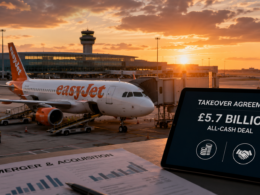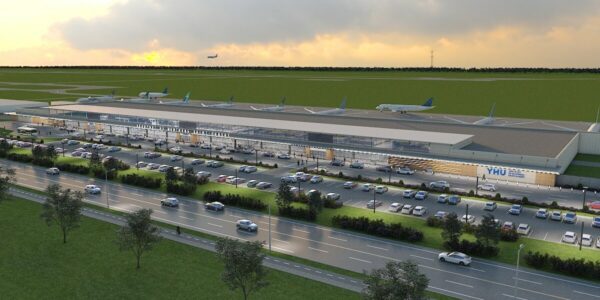

Satair, an Airbus company, has completed its acquisition of Unical Aviation Inc. and its subsidiary ecube, giving Airbus SE (EPA: AIR) a larger platform in used serviceable material, aircraft disassembly, storage, transition services, and aftermarket distribution. The transaction expands Satair’s role beyond parts supply into a more integrated aircraft lifecycle services model at a time when airlines, lessors, and maintenance providers are under pressure to improve material availability. Airbus SE, listed on Euronext Paris under the ticker AIR, is using the deal to strengthen its services exposure while aircraft delivery constraints and supply chain tightness continue to shape the aerospace market. The move matters because aftermarket control is becoming a strategic lever in commercial aviation, not merely a support function sitting behind new aircraft sales.
Why does Satair’s acquisition of Unical Aviation and ecube matter for Airbus aftermarket strategy?
Satair’s acquisition of Unical Aviation and ecube matters because it brings together three parts of the aviation aftermarket that are often fragmented: used aircraft parts distribution, aircraft storage and disassembly, and lifecycle transition services. For airlines and maintenance, repair, and overhaul operators, that combination can reduce the number of counterparties needed to source parts, manage retired assets, and recover value from aircraft nearing the end of their operating lives.
The strategic logic is clear. Airbus SE already has enormous influence over the front end of the aircraft lifecycle through aircraft design, production, delivery, fleet support, and customer services. By expanding Satair’s used serviceable material capabilities, Airbus SE is adding more weight at the back end of the lifecycle, where retired aircraft, surplus inventory, and harvested parts increasingly influence operating economics.
The deal also strengthens Satair’s position at a time when the aviation industry is still dealing with engine availability issues, delayed deliveries, and maintenance bottlenecks. When new aircraft supply is constrained, older fleets stay in service longer. That makes reliable access to certified used serviceable material more important for operators trying to keep aircraft flying without waiting for scarce new parts. Not glamorous, maybe, but in aviation the most profitable sentence is often, “the part is available.”
How does the Unical Aviation and ecube acquisition change Satair’s used serviceable material platform?
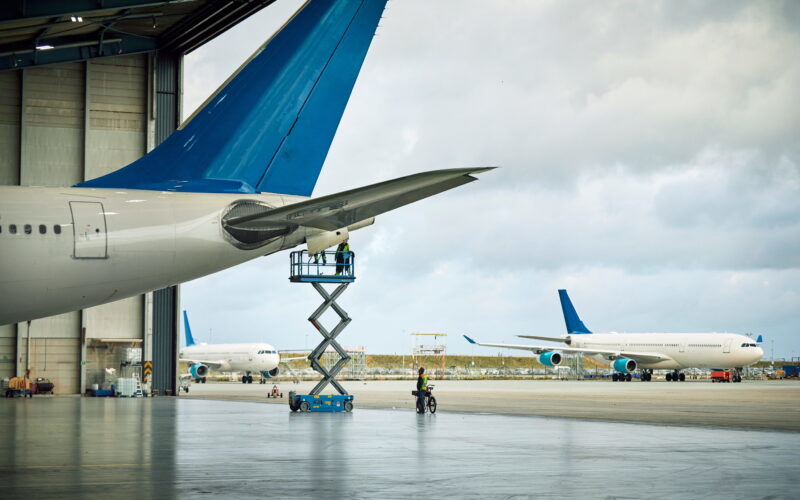
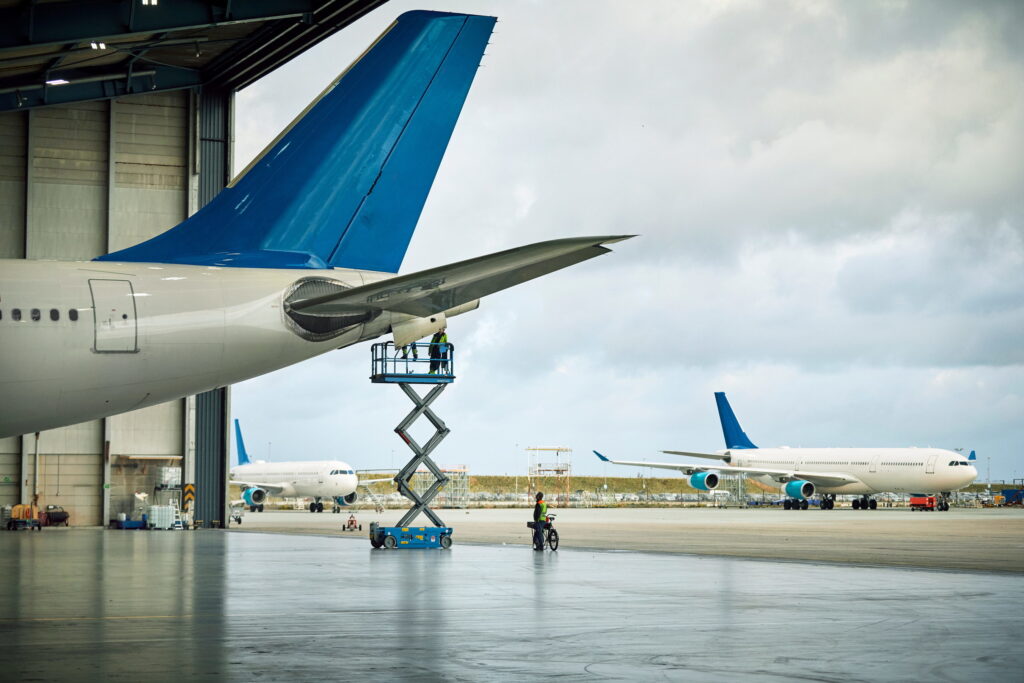
The acquisition gives Satair access to Unical Aviation’s inventory and distribution network, while ecube adds aircraft storage, disassembly, and transition services. That combination deepens Satair’s ability to manage material flow from parked or retired aircraft into the parts distribution ecosystem. It also complements VAS Aero Services, the used serviceable material and end-of-life support business that Satair acquired in 2022.
The result is a broader industrial chain inside Satair. Aircraft can be stored, assessed, disassembled, harvested for components, routed through technical management, and distributed globally through a larger aftermarket network. That is a more integrated model than simple parts resale, and it places Satair closer to the economics of circular aviation assets.
This is also a scale story. The original acquisition announcement said Unical Aviation and ecube brought seven operational sites and offices across North America, Spain, and the United Kingdom, with combined 2024 revenue of $298 million and 413 employees. For Satair, that gives the acquisition enough industrial substance to matter operationally, rather than being a small capability tuck-in. The integration challenge will be ensuring that the combined network actually behaves like one platform rather than a collection of acquired assets with overlapping systems, customer interfaces, and inventory processes.
Why is used serviceable material becoming more important for airlines and maintenance providers?
Used serviceable material is becoming more important because airlines are trying to balance fleet reliability, cost control, sustainability commitments, and supply chain uncertainty. A certified used component can often provide a faster and more cost-effective solution than waiting for a new part, particularly in a market where aircraft production and engine supply have remained under strain.
The economics are especially relevant for mature aircraft platforms. Airlines operating older aircraft need dependable access to components without overpaying for scarce inventory. Lessors need better solutions for aircraft transitions, storage periods, and end-of-life value recovery. Maintenance providers need predictable parts access to avoid aircraft-on-ground situations that can quickly become expensive and reputationally painful.
The sustainability angle is also increasingly material, though it should not be overstated. Reusing certified aircraft components supports circular economy objectives by extending the useful life of high-value aerospace materials. For Airbus SE, positioning Satair as a stronger player in this space allows the group to link aftermarket services with resource efficiency, customer cost reduction, and lifecycle management. That is strategically useful, provided the execution remains grounded in reliability, certification discipline, and inventory transparency.
What does the deal signal about Airbus SE’s broader services and lifecycle ambitions?
The Satair transaction signals that Airbus SE is continuing to treat services as a strategic extension of its aircraft business. While aircraft manufacturing drives headline attention, lifecycle services can create recurring customer relationships and support revenue streams that are less directly tied to new aircraft delivery timing.
That matters because Airbus SE continues to navigate a complex commercial aircraft environment. Demand for aircraft remains strong, but production rates, supplier capacity, engines, and delivery schedules still influence investor expectations. A stronger aftermarket and lifecycle business does not remove those manufacturing constraints, but it can broaden the earnings mix and deepen customer stickiness across the fleet lifecycle.
The deal also puts Airbus SE into a more competitive posture against independent parts distributors, teardown specialists, MRO networks, and lessor-linked lifecycle service providers. The advantage for Satair is the Airbus connection, existing customer relationships, and global material services footprint. The challenge is that the used parts market rewards speed, pricing discipline, technical trust, and inventory accuracy. Being part of a large aerospace group helps, but it does not automatically solve the gritty day-to-day work of matching the right part to the right customer at the right time.
How could the integration of Unical Aviation, ecube, and VAS Aero Services affect customers?
For customers, the central promise is a simpler route to aircraft lifecycle support. Satair is effectively trying to offer a more connected chain from storage and disassembly to used serviceable material supply and technical repair management. If the integration works, airlines and MRO companies could benefit from improved parts visibility, wider inventory access, and fewer handoffs across the aircraft lifecycle.
The leadership structure is also important. Sharon Green, chief executive officer of Unical Aviation, is also taking on the role of chief executive officer of VAS Aero Services. That creates a clearer leadership bridge across Satair’s used serviceable material businesses and may reduce the risk of integration drift between Unical Aviation, ecube, VAS Aero Services, and Satair’s wider organization.
Still, execution risk is real. The businesses being integrated have different operational footprints, systems, customer relationships, and commercial cultures. Satair will need to coordinate inventory management, pricing models, quality systems, logistics workflows, and customer-facing processes. In the aftermarket, integration failure is not abstract. It shows up as delayed parts, mismatched expectations, duplicated costs, and frustrated maintenance planners who have no time for corporate synergy poems.
What are the market and investor sentiment implications for Airbus SE?
For Airbus SE investors, the Satair acquisition is unlikely to be a single-day share price catalyst because the group’s valuation remains driven primarily by aircraft deliveries, order book quality, production rates, margins, cash flow, and supply chain execution. However, the transaction has strategic relevance because it supports a higher-value services ecosystem around Airbus aircraft and multi-fleet customers.
Airbus SE shares recently traded around the mid-€170s, below the 52-week high above €221 but still above the 52-week low near €154. The share price context suggests that investors are balancing strong long-term aerospace demand against delivery risks, production constraints, and broader market expectations. The Satair transaction fits that backdrop as a services-strengthening move rather than a transformational equity story.
The more important investor question is whether Airbus SE can convert aftermarket scale into margin resilience. Services businesses can support steadier revenue because aircraft fleets require parts, repair support, and lifecycle management regardless of new aircraft delivery cycles. If Satair can integrate Unical Aviation, ecube, and VAS Aero Services effectively, Airbus SE could gain a stronger position in a market where operators increasingly value availability as much as catalogue depth.
What competitive pressure could Satair create in the aircraft lifecycle solutions market?
Satair’s enlarged platform could put pressure on independent used serviceable material suppliers and specialist aircraft teardown operators by combining industrial footprint with Airbus-backed customer access. The acquisition gives Satair more inventory depth, more disassembly capability, and a wider geographic presence across North America and Europe. That combination could help Satair compete more effectively for airline, lessor, and MRO demand.
The competitive impact may be strongest where customers want integrated solutions rather than separate vendors for storage, disassembly, technical management, and parts procurement. Lessors, in particular, may see value in working with a partner that can manage transitions and asset recovery while also distributing harvested material into a global network.
However, Satair will still face competition from agile specialists that may be faster in certain niches. The used serviceable material market is relationship-heavy and execution-heavy. Customers care about certification, traceability, pricing, lead times, and confidence that the promised part is actually available. Satair’s scale can help, but only if scale improves responsiveness rather than adding process weight.
What happens next as Satair integrates Unical Aviation and ecube into its global operations?
The next phase is integration. Satair has said the combined operations will begin a coordinated process across Satair, Unical Aviation, ecube, and VAS Aero Services. That process will likely determine whether the acquisition becomes a true end-to-end aircraft lifecycle platform or remains a larger but loosely connected aftermarket portfolio.
The key operational test will be customer experience. Airlines and MRO providers will not judge the transaction by corporate structure. They will judge it by whether material availability improves, whether aircraft lifecycle services become easier to procure, and whether Satair can reduce complexity in a market already full of operational friction.
The second test will be value capture. Satair needs to convert added footprint and inventory access into commercial advantage without losing the entrepreneurial responsiveness that often makes specialist USM providers effective. If Satair can manage that balance, the Unical Aviation and ecube acquisition could become a meaningful building block in Airbus SE’s broader services strategy. If not, the risk is familiar: a strong strategic concept slowed down by integration complexity.
Key takeaways on how Satair’s Unical Aviation and ecube acquisition could reshape Airbus aftermarket services
- Satair’s acquisition of Unical Aviation and ecube gives Airbus SE a stronger position in used serviceable material, aircraft storage, disassembly, and lifecycle transition services.
- The deal strengthens Satair’s ability to offer a more integrated aircraft lifecycle model, from parked aircraft and teardown to technical management and global parts distribution.
- Unical Aviation and ecube add seven operational sites across North America, Spain, and the United Kingdom, making the deal operationally meaningful rather than purely strategic on paper.
- The acquisition complements VAS Aero Services, which Satair acquired in 2022, and creates a broader used serviceable material platform under Airbus ownership.
- Airlines and maintenance providers may benefit if the combined business improves parts availability, inventory visibility, and lifecycle service coordination.
- The deal is strategically aligned with tight aerospace supply chains, where older aircraft staying in service longer increases demand for certified used components.
- Investor sentiment around Airbus SE will remain driven mainly by aircraft deliveries, production rates, margins, and cash flow, but Satair adds a services-led resilience angle.
- The biggest execution risk is integration across systems, cultures, inventory processes, and customer interfaces.
- Satair could create stronger competitive pressure on independent used serviceable material suppliers and teardown specialists if it converts scale into speed and reliability.
- The acquisition shows that the aircraft aftermarket is becoming a strategic battleground where lifecycle control, not just aircraft production, shapes long-term customer economics.
Discover more from Business-News-Today.com
Subscribe to get the latest posts sent to your email.