



Santos Limited (ASX: STO) has entered 2026 with a significant inflection point in its growth strategy, announcing the successful loading of its first liquefied natural gas cargo from the Barossa project while confirming that the Pikka Phase 1 oil development in Alaska is nearing mechanical completion. The company reported approximately 25 percent year-on-year production growth expected by 2027, backed by strong operational performance, tight capital discipline, and continued momentum in its carbon capture and storage initiatives.
Santos Limited delivered free cash flow of approximately 380 million dollars in the fourth quarter, bringing its full-year 2025 free cash flow to around 1.8 billion dollars. This performance was achieved despite weaker commodity prices and commissioning delays at Barossa, highlighting the company’s ability to maintain margin discipline across its portfolio.
From a strategic execution perspective, Santos Limited is transitioning from capital-intensive project development to cash-generating scale operations across its upstream LNG and oil assets. This transition is expected to reshape both the company’s production mix and shareholder returns over the next 24 months.
How Santos Limited is converting Barossa into a post-2025 growth engine despite commissioning delays
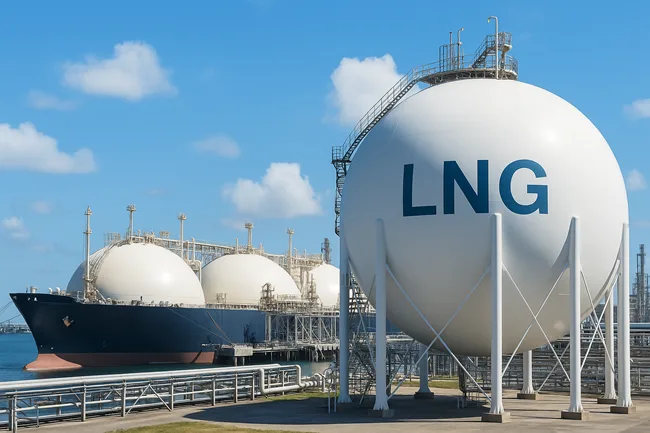
The Barossa development has reached a critical operational milestone with the loading of its first LNG cargo at the Darwin LNG facility. Santos Limited confirmed that the BW Opal floating production storage and offloading vessel is now exporting approximately 450 million standard cubic feet of gas per day, equivalent to around 75 percent of design capacity. LNG production began after completion of the Darwin LNG life extension project, including cooldown of the LNG train and storage systems.
While Barossa was initially expected to ramp faster, a two-month delay emerged in the fourth quarter due to connection failures in the FPSO’s utilities and firewater mains pipework systems. Santos Limited responded by launching a full inspection and reinforcement campaign across similar connections. Management has framed the delay as a strategic decision to prioritise long-term operational reliability over speed. Testing on all six production wells is now complete, with each well demonstrating average deliverability of 300 million standard cubic feet per day. Three of the wells have been flowed and cleaned up through the FPSO, confirming strong well performance.
Importantly, the first Barossa cargo is bound for the Sakai terminal in Japan under a delivered ex-ship agreement, reinforcing the commercial readiness of the asset. This milestone supports the company’s narrative of long-term LNG monetisation through Asian demand centers and Brent-linked contracts.
Why Pikka Phase 1 is critical to Santos Limited’s shift toward oil diversification and Alaskan footprint
While Barossa adds gas-linked revenue and stabilises LNG offtake commitments, the Pikka Phase 1 oil project in Alaska offers Santos Limited a diversification vector into liquids and a strategic North American footprint. As of the end of 2025, Pikka was 98 percent complete and progressing through final commissioning. First oil is expected late in the first quarter of 2026, with ramp-up to plateau levels of 80,000 barrels of oil per day anticipated by mid-year.
The company drilled and completed 24 development wells during 2025, with the 23rd well delivering peak productivity of 8,000 barrels of oil per day. Notably, the 24th well was drilled as a combination well targeting two reservoir sections, which Santos Limited highlighted as an example of drilling innovation that will inform future developments. The project has absorbed a 200 million dollar capital expenditure increase (Santos share), attributed to North Slope inflation, logistics costs, and tariffs on imported modules. However, this increase was offset by lower spend elsewhere in the portfolio, keeping overall 2025 capital expenditure at the lower end of original guidance.
Once fully online, Pikka and Barossa combined are projected to lift Santos Limited’s production by approximately 25 to 30 percent by 2027 compared to 2024 levels, providing the company with its most material production uplift since its merger with Oil Search.
What fourth quarter financial results reveal about Santos Limited’s resilience under pricing pressure
The company’s production for the fourth quarter stood at 22.3 million barrels of oil equivalent, up 5 percent from the third quarter. Sales volumes increased 15 percent to 24.8 million barrels of oil equivalent. Quarterly revenue exceeded 1.2 billion dollars, driven primarily by higher LNG and condensate sales volumes. However, average realised prices declined across LNG, crude, and domestic gas due to broader market softness. Realised LNG prices dropped from 11.05 dollars per mmBtu in the third quarter to 10.33 dollars in the fourth quarter.
Full-year revenue declined 8 percent to 4.9 billion dollars, reflecting weaker pricing dynamics. Still, Santos Limited’s free cash flow generation remained robust due to tight cost control and improved operating efficiency. Full-year unit production costs were held below 7 dollars per barrel of oil equivalent, excluding Bayu-Undan, remaining within guidance.
Operationally, improvements in the Cooper Basin and Western Australia helped lift base business performance. The Cooper Basin returned to pre-flood output levels, with 91 wells brought back online and 104 wells drilled during the year despite weather-related disruptions. Western Australia saw a 19 percent quarter-on-quarter increase in domestic gas production following successful shutdown completions and compressor upgrades.
How Santos Limited is positioning for 2026 with capital flexibility, CCS momentum, and LNG portfolio resilience
Santos Limited has provided 2026 guidance that suggests a transition toward higher output and balanced investment discipline. Production is expected to rise to between 101 and 111 million barrels of oil equivalent, while capital expenditure is forecast between 1.95 and 2.15 billion dollars. Of this, approximately 300 million dollars will be allocated to major growth projects such as Papua LNG and the Moomba Central Optimisation initiative, both pending board and joint venture approvals.
The Moomba Carbon Capture and Storage Phase 1 project continues to operate to plan, having stored over 1.5 million tonnes of CO2e since inception. In the fourth quarter alone, the project received more than 900,000 Australian Carbon Credit Units from the Clean Energy Regulator, representing a significant monetisation opportunity in Australia’s compliance market. The company is advancing concept development for Moomba Phase 2, while also continuing regulatory engagement on the Reindeer CCS project and Timor-Leste frameworks for the proposed Bayu-Undan CCS initiative.
Santos Limited also completed key balance sheet actions during the quarter, including a 1 billion dollar senior unsecured bond issuance maturing in 2035 and the final repayment of the PNG LNG project finance facility. These moves strengthen liquidity ahead of execution-heavy years in 2026 and 2027.
What capital markets, equity holders, and energy analysts should watch in the next two quarters
The key investor watchpoints for 2026 will revolve around three themes. First, the operational reliability and output velocity at Barossa and Pikka. Any further slippage in commissioning or production ramp-up could introduce market scepticism. Second, the progress toward final investment decision on Papua LNG, where Santos Limited holds an equity stake alongside TotalEnergies and ExxonMobil. And third, the monetisation of carbon offsets from Moomba and their potential to augment EBITDA or support regulatory goodwill in future upstream approvals.
Market sentiment entering 2026 appears cautiously constructive. Santos Limited’s share price performance has been stable in a period of commodity volatility, supported by its improving free cash flow yield and low-cost operating model. With all-in free cash flow breakevens targeted between 45 and 50 dollars per barrel, the company remains positioned to deliver returns even under downside pricing scenarios.
The risk factors remain real, particularly around inflation, supply chain constraints, and regulatory timelines for Papua LNG and CCS infrastructure. However, the combination of cash-generative base assets, LNG optionality, and expanding energy transition capabilities offers Santos Limited a degree of balance that few of its regional peers currently demonstrate.
What the Barossa LNG loading and Pikka ramp-up mean for Santos Limited’s strategic direction
Santos Limited has now moved beyond the investment-heavy buildout of Barossa and Pikka and into the critical execution window where production, uptime, and cash flow must meet expectations. The loading of the first LNG cargo from Barossa and the anticipated first oil from Pikka in early 2026 symbolise a shift toward scale monetisation.
The company’s portfolio now spans long-life LNG with firm offtake, a reaccelerated liquids base via Alaska, and first-mover CCS infrastructure in Australia. This multi-pronged growth path allows Santos Limited to position not just as a regional oil and gas player but as a lower-carbon, LNG-led producer with transitional energy optionality. Success in the coming quarters will depend less on exploration or new project announcements and more on execution, emissions performance, and return discipline.
Santos Limited’s fourth-quarter 2025 results provide clear signals that it has the operational base and capital strategy to navigate commodity volatility, macro inflation, and investor demand for cleaner energy pathways. The challenge now is to turn those signals into sustained shareholder value.
Key takeaways: What Santos’ Q4 2025 report signals for its post-2026 growth, capital discipline, and investor positioning
- First LNG cargo from Barossa has been sold and is being loaded at Darwin LNG, marking a milestone for project monetisation.
- Pikka Phase 1 is 98% complete, targeting first oil in Q1 2026, with 30% production growth expected by 2027 when combined with Barossa.
- Free cash flow of ~$1.8 billion in 2025 reflects resilience despite commodity price softness, with Q4 alone delivering $380 million.
- Full-year revenue declined 8% YoY to $4.9 billion, but unit costs remained below $7/boe, showing cost control across the base business.
- Santos maintained disciplined capex execution, keeping 2025 investment at the low end of guidance despite Pikka cost increases.
- Moomba CCS stored over 1.5 Mt CO₂ and secured 907,872 ACCUs in Q4, reinforcing Santos’ carbon credentials.
- Santos raised a $1 billion 10-year bond and closed the PNG LNG finance facility, boosting liquidity and de-risking its balance sheet.
- LNG price averaged $10.33/mmBtu in Q4, down QoQ, but Brent-linked pricing remains stable, aided by Asian contract structures.
- Execution risks remain for Barossa FPSO reliability and Pikka ramp-up integration, but upside exists if both deliver on time.
- Investor focus is expected to shift toward reliability, capital returns, and regulatory tailwinds in CCS and low-carbon fuels.
Discover more from Business-News-Today.com
Subscribe to get the latest posts sent to your email.