


Santos Limited (ASX: STO | ADR: SSLZY) has reported first quarter 2026 production of 22.5 million barrels of oil equivalent, up 3 per cent on the same period a year earlier, as the Barossa gas project delivered its first LNG cargoes and the Pikka phase 1 oil project in Alaska approached first sales. Sales revenue of approximately $1.27 billion rose 3 per cent on the prior quarter, while free cash flow from operations held steady at around $383 million. Full year 2026 guidance remains unchanged, signalling that management sees both major project ramp-ups as on track to deliver within the stated $45 to $50 per barrel all-in free cash flow breakeven range. Santos shares were recently trading near A$7.41 to A$7.57, well above the 52-week low of A$5.54 reached in April 2025 but below the 52-week high of A$8.19 recorded in March 2026.
How is the Pikka phase 1 oil project in Alaska progressing toward first production and plateau output in 2026?
The Pikka phase 1 project reaching mechanical completion is not a minor administrative milestone. It represents the culmination of several billion dollars of capital deployment in a geographically remote, operationally complex environment on Alaska’s North Slope, and it draws a direct line to Santos’ capacity to grow production and free cash flow materially through the second half of 2026. Twenty-seven development wells have been drilled to date, with 20 stimulated and flowed back in line with pre-drill expectations, a performance metric that speaks to the reservoir quality of the Nanushuk formation rather than simply to engineering execution.
The commissioning sequence now underway follows a logical dependency chain. Fuel gas introduction to the plant enables electrification, which is a prerequisite for running the facility continuously. Dynamic commissioning continues through the point of oil initiation, after which the first tank and facility fill activities will absorb initial production before any sales volumes flow into the pipeline network. Once stable operations are confirmed, the Seawater Treatment Plant will come online to provide the reservoir pressure support needed to sustain output during the ramp-up phase. Plateau production of 80,000 barrels of oil per day gross is now targeted for early in the third quarter of 2026. First sales revenue is expected approximately two months after first oil, meaning the financial contribution to the second quarter earnings report will be minimal, but the third quarter should mark a materially different Santos in terms of liquids-weighted production.
The competitive read-through matters. Santos holds a 51 per cent working interest in Pikka, with bp as the operating partner for the Nanushuk formation. The project has been years in development, and its commercial success or failure will shape Santos’ credibility with institutional investors who have been patient through an extended capital expenditure cycle. Any slippage beyond early third quarter plateau would pressure free cash flow guidance and likely weigh on the stock, which has already recovered significantly from its April 2025 lows.

What does the Quokka-1 appraisal well result mean for Santos’ Alaska development runway beyond Pikka phase 1?
The Quokka-1 appraisal well result is the kind of news that changes medium-term capital allocation optionality without immediately changing near-term earnings. Drilled to a total depth of approximately 4,787 feet within the Nanushuk formation, the well encountered around 143 feet of net oil pay with average porosity of 19 per cent. Following a single-stage stimulation, the well achieved a flow rate of 2,190 barrels of oil per day. The proximity of Quokka to the Mitquq-1 discovery well drilled in 2020, at roughly 10 kilometres, and the correlation of reservoir sands between the two wells, provides geological confidence that Quokka is a coherent accumulation rather than an isolated anomaly.
The oil quality dimension adds a commercial layer beyond raw volume. Santos characterises the Quokka fluid as high-quality, light-gravity oil that supports a pricing premium relative to Pikka oil, which is already a high-value product in Asian markets. That premium, if sustained in a formal commercial context, would improve project economics relative to Pikka phase 1 and provide Santos with a stronger internal rate of return case for a potential Quokka development. Santos reported 2C contingent resources of 177 mmboe for the Quokka unit at the full-year 2025 results, and the appraisal results will feed into the full-year 2026 contingent resource assessment, meaning any formal resource upgrade is still some months away.
Development planning has commenced and key permitting activities are underway, but there is a long lead time between an appraisal success and a final investment decision in Alaska’s regulatory environment. The potential for a two-drill-site development with production capacity comparable to Pikka phase 1 is now a credible planning scenario, not a speculative aspiration, and that distinction is significant for any investor assessing Santos’ long-term asset quality.
Is the Barossa LNG project on track to reach full production rates after commissioning setbacks in early 2026?
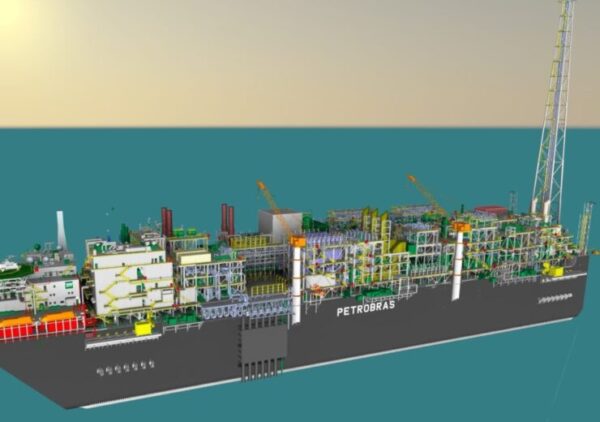
Barossa has been the most scrutinised asset in the Santos portfolio for several quarters, and the first quarter 2026 update provides a mixed but ultimately reassuring picture. The Barossa floating production, storage and offloading facility is expected to commence ramping up production within days of this report’s release, following replacement of dry gas compressor seals during a recent shutdown. Flushing and cleaning of heat exchanger trains is completing, and LNG production is expected to commence a few days after the FPSO returns online. Three LNG cargoes were loaded in the quarter, including two delivered ex-ship to Santos portfolio customers, confirming that the export chain is functional even as the FPSO goes through its final commissioning phases.
The compressor seal replacement is a meaningful engineering event. Dry gas seals on centrifugal compressors are precision components operating in demanding conditions, and a failure or degradation requiring replacement during commissioning points to the sensitivity of LNG processing equipment to manufacturing tolerances and operating environment. The critical question for investors is whether the seal replacement is a one-time commissioning issue now resolved, or an early indicator of broader mechanical risk in the Darwin LNG processing train. Santos has characterised it as the former, and the fact that individual well deliverability of approximately 300 million standard cubic feet per day has been confirmed across all six Barossa wells supports the upstream case. The bottleneck has been the processing facility, not the reservoir.
Santos purchased four LNG cargoes from the market during the quarter to support commissioning activities and partially mitigate production delays, with third-party purchase costs rising to $205 million from $79 million in the prior quarter. This was a pragmatic commercial decision that protected Santos’ contractual positions with Asian customers but added short-term cost. As Barossa ramps to capacity, this external purchasing requirement will diminish, releasing margin that is currently being absorbed in the third-party line.
What is the strategic significance of the Moomba Central Optimisation project and the South Australian government gas deal?
The final investment decision on the Moomba Central Optimisation project represents a $350 million commitment over three years targeting more than $600 million in capital and operating cost savings over the life of the Central Fields, with an expected internal rate of return above 15 per cent. The mechanics of the project involve consolidating compression from seven separate facilities into a single, remotely operated, electrically driven hub with all-weather access. The operational benefits are clear. Flood events during the quarter restricted access and rig movements in the Cooper Basin, directly impacting production. A centralised, electrically driven, all-weather hub reduces the operational fragility that characterised the existing dispersed infrastructure model. The project is also expected to deliver annual Scope 1 emissions reductions of approximately 40 kilotonnes of carbon dioxide equivalent, a non-trivial contribution to Santos’ decarbonisation commitments.
The accompanying 10-year, 200 petajoule conditional gas sales agreement with the South Australian government, structured with a pre-payment that supports the Moomba Central Optimisation investment, is more than a regulatory goodwill exercise. It provides Santos with a government-backed demand anchor for Cooper Basin production through 2030 to 2040, reducing volume risk during a period when east coast domestic gas pricing has been under political pressure. The Moomba Central Optimisation project unit cost target of up to $3 per barrel of oil equivalent reduction is also significant in the context of Santos’ full-year guidance of $6.95 to $7.45 per boe in unit production costs. Delivered at scale, this project could structurally reposition Cooper Basin economics for a decade.
How is Santos managing market and financial risk through hedging and capital allocation discipline?
Santos executed 17.2 million barrels of Brent zero-cost collars during the first quarter covering April to December 2026, with a weighted average floor price of US$67.10 per barrel and a ceiling of US$98.59 per barrel. Given that the company’s all-in free cash flow breakeven sits at $45 to $50 per barrel, the floor price provides comfortable headroom above the breakeven threshold across the hedged volume. The ceiling structure, however, means Santos participates only partially in any price rally above US$98.59 per barrel, which is a reasonable trade-off for a company managing two major project ramp-ups simultaneously and preferring cashflow certainty over optionality.
The foreign exchange hedging position is equally disciplined. Santos has locked in A$1,458 million for the remainder of 2026 at a weighted average rate of 0.6432 and A$1,585 million for 2027 at 0.6586. An Australian dollar that weakens against the US dollar benefits Santos’ reported earnings, since hydrocarbon revenues are US dollar-denominated while a significant portion of costs are in Australian dollars. The current hedge rates suggest Santos has locked in relatively favourable conditions for both years, providing visibility on the AUD/USD translation effect. Capital expenditure for the quarter came in at $441 million, down 29 per cent on the prior quarter’s $619 million, reflecting the substantial completion of Barossa construction. The capex trajectory will continue to normalise as the major project cycle concludes, freeing cash for distributions or debt reduction.
What does Santos’ market and stock position signal about investor confidence in the Q1 2026 result?
Santos shares were recently trading in a range of A$7.41 to A$7.57, against a 52-week high of A$8.19 recorded on 20 March 2026 and a 52-week low of A$5.54 struck on 22 April 2025. The stock has more than recovered from its April 2025 lows, a period that predated the Barossa first cargoes and coincided with broader energy sector weakness. Multiple analysts including UBS and Ord Minnett maintained buy ratings on Santos through April 2026, with the average 12-month price target sitting at approximately A$8.52. The current trading level, at a modest discount to that consensus target, suggests the market has priced in a reasonable Pikka and Barossa execution scenario but not a flawless one. Any slippage in Pikka plateau timing or fresh Barossa mechanical issues would likely close that gap rapidly. Conversely, a clean ramp-up through the second and third quarters that validates the breakeven guidance would be a catalyst for the stock to retest or exceed its 52-week high.
The production guidance of 101 to 111 mmboe for the full year implies that first quarter output of 22.5 mmboe needs to be sustained and grown materially across the remaining three quarters, which depends entirely on the Pikka and Barossa contributions arriving on schedule. Santos is, in effect, a production inflection story for 2026, and the Q1 report sets the stage without yet delivering the payoff.
What are the key takeaways from the Santos Q1 2026 earnings and project update for investors and energy sector analysts?
- Santos delivered Q1 2026 production of 22.5 mmboe, up 3 per cent year on year, with sales revenue of approximately $1.27 billion and free cash flow from operations of approximately $383 million, all consistent with maintaining full-year guidance.
- Pikka phase 1 in Alaska has reached mechanical completion. Plateau production of 80,000 barrels per day gross is targeted for early third quarter 2026, with first sales revenue expected approximately two months after first oil.
- The Barossa FPSO is expected to resume ramping up production imminently following dry gas compressor seal replacement, with LNG production to follow within days. Commissioning setbacks have been addressed but the asset carries residual execution risk.
- The Quokka-1 appraisal well confirmed 143 feet of net oil pay in the Nanushuk formation, a flow rate of 2,190 barrels of oil per day, and light-gravity oil quality that commands a premium to Pikka. The Quokka unit carries 177 mmboe in 2C contingent resources.
- The Moomba Central Optimisation final investment decision commits $350 million over three years targeting $600 million in total cost savings, up to $3 per boe unit cost reductions, and annual Scope 1 emissions reductions of approximately 40 kilotonnes.
- A 10-year, 200 petajoule conditional gas sales agreement with the South Australian government provides a government-backed revenue anchor for Cooper Basin production from 2030 to 2040.
- Santos hedged 17.2 million barrels of Brent at a floor of US$67.10 per barrel and a ceiling of US$98.59 per barrel through December 2026, providing free cash flow protection well above the $45 to $50 per barrel breakeven.
- Capital expenditure fell 29 per cent quarter on quarter to $441 million, signalling the end of the major project construction cycle and a normalising capex trajectory.
- PNG LNG maintained plant reliability above 98 per cent, delivering an annualised run rate of 8.6 million tonnes per annum, while GLNG achieved 5.8 million tonnes per annum and the Roma field set a record daily production of 226 terajoules.
- The Full Federal Court’s decision on the Narrabri Gas Project native title appeal, expected in coming months, remains a material regulatory risk for Santos’ New South Wales gas development ambitions.
Discover more from Business-News-Today.com
Subscribe to get the latest posts sent to your email.