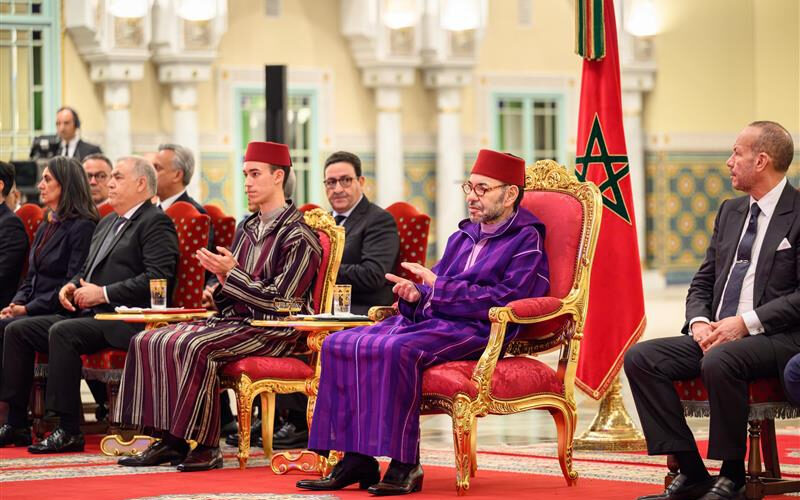
Safran Group has launched a €280 million aircraft landing gear production plant in Nouaceur, Morocco, marking one of its largest industrial commitments in North Africa and positioning the country as a core node in global aerospace manufacturing. The facility, dedicated to Airbus A320 family landing systems, expands Safran Group’s operational depth in Morocco while supporting the commercial aircraft production ramp-up underway across the single-aisle market. The move carries implications for cost structure, supply chain resilience, workforce strategy, and Europe’s broader aerospace industrial geography.
Why Safran Group is expanding landing gear manufacturing in Morocco at this point in the aircraft cycle
Safran Group’s decision to anchor a large landing gear production plant in Morocco reflects a convergence of timing, cost pressure, and capacity urgency across the aerospace sector. Single-aisle aircraft demand remains structurally elevated, driven by airline fleet renewal, fuel efficiency mandates, and route density growth in emerging markets. Airbus continues to target higher monthly A320 family output, placing sustained pressure on tier-one suppliers to deliver at scale without introducing bottlenecks.
Landing gear systems sit at the intersection of mechanical complexity, safety certification, and production cadence. They are neither easily commoditised nor quickly scalable. By expanding capacity in Morocco, Safran Group is effectively de-risking production throughput while lowering marginal costs and increasing geographic redundancy relative to legacy European manufacturing hubs.
The timing also reflects lessons learned from pandemic-era supply disruptions. Aerospace executives now prioritise operational resilience over just-in-time optimisation. Morocco offers a rare combination of proximity to European final assembly lines, political continuity, workforce scalability, and improving industrial depth.
How Morocco’s aerospace ecosystem has matured into a credible platform for complex systems manufacturing
Morocco’s aerospace sector has evolved well beyond basic aerostructures and wiring harnesses. Over the past two decades, the country has systematically built capabilities across precision machining, high-tolerance assembly, testing, certification support, and maintenance functions. The Midparc integrated aeronautics and space platform has been central to this progression, allowing tier-one and tier-two suppliers to co-locate, shorten logistics loops, and share trained labour pools.
The Safran Group landing gear plant extends this maturation into one of the most demanding segments of aircraft manufacturing. Landing systems require mastery over metallurgy, fatigue testing, hydraulic integration, and regulatory traceability. Establishing these competencies locally signals confidence not only in cost competitiveness, but also in quality governance and long-term workforce development.
From a policy perspective, Morocco has positioned aerospace as a strategic export industry, aligning industrial zones, vocational training, and energy infrastructure around it. This alignment is now producing tangible results as global manufacturers entrust increasingly mission-critical components to Moroccan facilities.
What the Airbus A320 production ramp-up means for Safran Group’s industrial footprint decisions
The Airbus A320 family remains the economic backbone of global commercial aviation. Production stability in this segment directly determines cash flow predictability for suppliers like Safran Group. By dedicating the Moroccan plant to A320 landing systems, Safran Group is aligning capital deployment with its highest-volume, longest-run product exposure.
This alignment reduces execution risk. Rather than chasing speculative next-generation programs, the company is reinforcing a platform that will remain in production well into the next decade. It also allows Safran Group to optimise industrial learning curves, amortise tooling investments more efficiently, and support certification continuity across high output volumes.
Importantly, this approach prepares Safran Group for future aircraft generations without overcommitting today. The Moroccan facility is designed to support advanced machining and testing capabilities that can be adapted as landing gear architectures evolve, preserving optionality.
Why decarbonised energy matters strategically for aerospace manufacturing economics
Safran Group has indicated that the Moroccan landing gear plant will operate on fully decarbonised energy. While sustainability language is often treated as reputational, in aerospace manufacturing it is increasingly an economic variable. European regulatory pressure, airline procurement requirements, and investor scrutiny are pushing carbon accounting deeper into supplier selection and contract evaluation.
By anchoring production in a jurisdiction that can deliver renewable energy at scale, Safran Group is insulating itself against future cost inflation linked to carbon pricing and compliance. This also strengthens its negotiating position with airframers and airline customers seeking to reduce scope-three emissions exposure.
Over time, energy-efficient manufacturing may prove as decisive as labour cost in determining where complex aerospace systems are produced. Morocco’s renewable energy ambitions give it an edge that many traditional industrial regions lack.
How this investment reshapes Europe–North Africa aerospace supply chain dynamics
The Moroccan landing gear plant represents more than incremental capacity. It reflects a structural redistribution of aerospace manufacturing within Europe’s extended neighbourhood. Rather than offshoring to distant low-cost regions, companies like Safran Group are building near-shore industrial depth that preserves logistical proximity while achieving cost and scale benefits.
This model challenges the traditional concentration of high-value aerospace manufacturing in Western Europe. While design authority and final integration will remain anchored in France and other core markets, an increasing share of production execution is shifting southward.
For European suppliers and labour markets, this creates competitive pressure to move up the value chain toward advanced engineering, digital manufacturing oversight, and systems integration. For Morocco, it accelerates industrial upgrading and embeds the country more deeply into global aerospace value chains.
What execution and workforce risks Safran Group must manage in scaling Moroccan operations
Despite its strategic logic, the expansion carries execution risk. Scaling a 500-person workforce in a highly specialised domain requires sustained investment in training, quality control, and managerial depth. Aerospace manufacturing tolerates little variance, and any quality lapse carries reputational and financial consequences.
Safran Group must also manage coordination across its growing Moroccan footprint, which already includes engine assembly, maintenance operations, and component manufacturing. Complexity increases as facilities multiply, and integration discipline becomes critical.
Another risk lies in talent competition. As more aerospace players expand in Morocco, wage inflation and retention challenges could emerge. Safran Group’s long presence in the country gives it an advantage, but continued investment in skills pipelines will be essential.
How investors are likely to interpret Safran Group’s Morocco expansion strategy
From an investor perspective, the €280 million landing gear plant is best read as a margin defence and risk mitigation move rather than a growth gamble. Safran Group is deploying capital into capacity that supports contracted demand, stabilises delivery schedules, and lowers unit costs over time.
Institutional sentiment toward aerospace suppliers has increasingly favoured companies that demonstrate disciplined capital allocation aligned with production realities. This investment fits that profile. It signals management confidence in sustained single-aisle demand while acknowledging the operational lessons of recent supply chain disruptions.
The market is unlikely to react to this announcement in isolation, but within a broader narrative of Safran Group strengthening its industrial backbone, the move reinforces long-term earnings durability.
What this signals about the future geography of aerospace manufacturing
Safran Group’s Moroccan landing gear plant reinforces a clear directional trend. Aerospace manufacturing is becoming more geographically distributed, but not indiscriminately globalised. Proximity, political stability, skills development, and energy economics now matter as much as headline labour costs.
Morocco’s rise as an aerospace manufacturing hub suggests that future industrial competition will be fought less between continents and more between regional ecosystems. Countries that can align infrastructure, talent, and policy around high-precision manufacturing will attract the next wave of aerospace investment.
For Safran Group, embedding itself deeply in such ecosystems is not optional. It is a prerequisite for remaining a reliable partner to airframers operating at ever-higher production tempos.
Key takeaways: What Safran Group’s Morocco landing gear investment means for executives and investors
- Safran Group’s €280 million landing gear plant strengthens capacity for Airbus A320 production while reducing supply chain bottlenecks
- Morocco has crossed a threshold from low-cost manufacturing to complex aerospace systems production
- The investment supports margin resilience through lower operating costs and renewable energy sourcing
- Aerospace supply chains are shifting toward near-shore, politically stable manufacturing ecosystems
- Safran Group is prioritising execution certainty over speculative platform expansion
- Workforce development and quality governance remain the key operational risks
- European aerospace manufacturing is gradually moving up the value chain as production decentralises
- Investors are likely to view the move as disciplined capital allocation aligned with demand visibility
- Morocco’s role in global aerospace manufacturing is becoming structurally embedded, not cyclical
Discover more from Business-News-Today.com
Subscribe to get the latest posts sent to your email.