





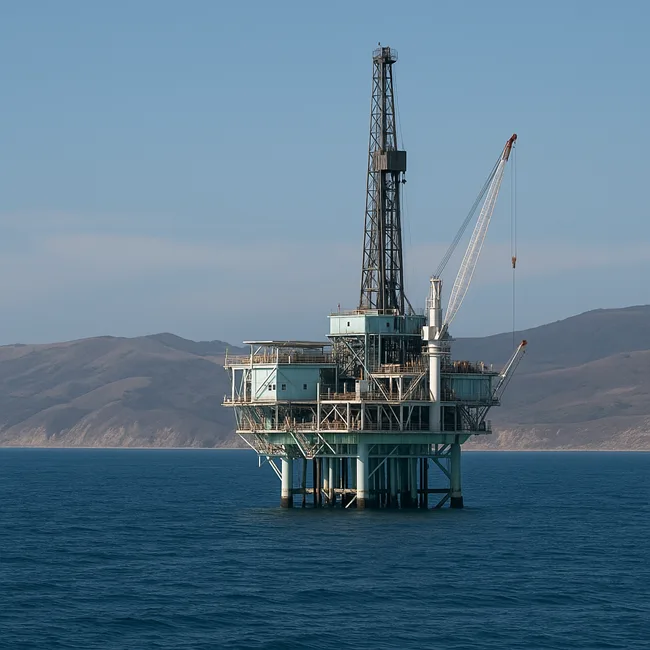
Sable Offshore Corp (NYSE: SOC) witnessed a steep after-hours stock decline on Monday, shedding over 12 percent in market value following reports that California Governor Gavin Newsom is preparing new legislation to increase scrutiny and regulatory control over inactive offshore oil pipelines. The move, aimed at reinforcing California’s coastal safety framework, could significantly delay or derail Sable Offshore’s already contentious plans to restart production off the Santa Barbara coastline.
The proposed legislative changes—centered around stricter testing requirements and conditional approvals—come as Newsom attempts to thread the political needle between energy reliability and environmental protection. For Sable Offshore, whose operations are deeply tied to the legacy of the 2015 Refugio oil spill, the timing could not be more precarious.
Why is Sable Offshore facing renewed regulatory pressure from California lawmakers in 2025?
Governor Newsom’s push for tighter oversight follows a wave of public and legal resistance to renewed offshore drilling in California waters. His proposal reportedly seeks to formalize rules that would require companies like Sable Offshore to conduct comprehensive integrity testing and obtain updated permits before restarting any pipeline infrastructure that has been dormant or minimally maintained.
Sable’s primary infrastructure—centered on the Santa Ynez Unit, including platforms Hondo, Harmony, and Heritage—is supported by the Las Flores Canyon processing facility and an onshore pipeline network that remains under legal and regulatory lock. These assets have not operated since the 2015 spill caused by a pipeline rupture near Refugio State Beach, which leaked over 140,000 gallons of crude oil into the Pacific Ocean. The incident resulted in major environmental damage and led to an aggressive statewide tightening of coastal regulations.
Although Sable Offshore argues that its restart plan involves routine maintenance, California’s Coastal Commission, environmental advocacy groups, and the state judiciary disagree. In early 2025, the company was hit with an $18.2 million fine for unauthorized work on its Las Flores pipelines—deemed “development” under the California Coastal Act. The Coastal Commission maintained that the firm failed to obtain the required coastal development permits and endangered local ecosystems.
A series of court orders, including restraining orders and preliminary injunctions, have since halted the company’s attempts to resume oil flow, arguing that Sable violated state law by commencing repairs without the proper environmental assessments and procedural approvals.
How is the market reacting to the potential regulatory shift and what does it mean for Sable’s future?
Following the news of Newsom’s proposed legislative reforms, investor sentiment around Sable Offshore Corp turned sharply negative. The company’s stock (NYSE: SOC) fell over 12 percent in after-hours trading, erasing recent technical gains built on speculative momentum and bullish institutional coverage.
Earlier in the quarter, the stock had been buoyed by a series of Relative Strength Rating (RSR) upgrades. SOC’s RS score had climbed to 82—placing it among the top-performing 18 percent of U.S.-listed equities in terms of price momentum. Several technical traders speculated that Sable was preparing for a breakout above the $30–$32 range, driven by expectations of legal resolution and pipeline restart clarity.
However, the latest developments have prompted a quick recalibration. The stock’s earnings remain deeply negative, and with zero revenue generation reported year-to-date, investors are growing concerned about Sable’s cash runway, debt burden, and exposure to ongoing legal liabilities.
What is the broader policy context behind California’s oil permitting dual-track?
The proposed legislation is part of a broader energy compromise framework being explored by the Newsom administration. In a politically delicate strategy, the governor is pursuing a dual-track approach: easing the path for onshore oil well permitting under strict emission and abandonment conditions, while increasing environmental guardrails for offshore production.
Under this model, onshore producers would be allowed to pursue new drilling activity only if they commit to plugging and abandoning older, high-emission wells—particularly in areas near schools and residential zones. Meanwhile, offshore operators would face heightened scrutiny to align with the state’s long-term climate goals and public safety priorities.
This approach is seen by some as a way to stabilize California’s in-state fuel supply amid refinery closures and price volatility while reinforcing the environmental red lines drawn after the 2015 spill. However, coastal lawmakers and advocacy groups remain critical, arguing that any increase in oil permitting contradicts the state’s decarbonization goals.
For companies like Sable Offshore, this asymmetry is a serious challenge. Onshore players may benefit from fast-tracked permits and structured abandonment models. In contrast, offshore operations require time-consuming environmental reviews, stricter legal standards, and a fundamentally higher political burden.
How are institutional investors and analysts positioning around Sable Offshore stock?
Institutional sentiment toward Sable Offshore Corp remains speculative and bifurcated. Analysts from TD Cowen and Benchmark maintain “Buy” ratings, with long-term price targets ranging from $40 to $47—implying potential upside of nearly 80 percent from current levels, should legal and regulatory conditions stabilize.
However, such projections are largely contingent on the company’s ability to restart operations. Sable’s financials paint a more cautious picture. The company holds a market capitalization of roughly $2.3 billion, but remains revenue-free as of Q3 2025. It reported trailing twelve-month net losses of over $500 million, underscoring its reliance on external capital and legal victories for any path to profitability.
In terms of market activity, SOC’s volatility is among the highest in the energy segment. Weekly price swings have averaged between 10 and 14 percent over the past three months, fueled by frequent court updates, environmental rulings, and political developments. While some hedge funds have added to positions on weakness, others are reportedly taking profits after the recent RS-driven run-up.
Retail participation in SOC has also spiked, with trading volumes in late August and early September exceeding 5 million shares per session—well above the stock’s six-month average. The current pullback may be viewed by contrarians as a tactical entry point, though few are expecting a sustained recovery until permitting clarity emerges.
What are the possible scenarios ahead for Sable Offshore and investors?
Looking ahead, several scenarios could shape Sable Offshore’s trajectory through the rest of 2025 and into early 2026. If Governor Newsom’s offshore testing legislation passes swiftly and is enforced retroactively, Sable may be forced to halt all current repair activities and reapply for multiple permits—setting the project back by 12 to 24 months.
Alternatively, a negotiated compromise between the state and the company—perhaps involving joint third-party inspections, community oversight boards, or revised safety protocols—could allow limited restart operations while addressing public safety concerns.
Another open question is whether the Trump administration’s Interior Department, which oversees federal waters and leases, will step in to mediate or accelerate offshore permitting at the federal level. Sable’s Santa Ynez Unit straddles both state and federal jurisdiction, adding another layer of complexity to the regulatory landscape.
For now, analysts say the most likely outcome is continued delay. With litigation still active and community opposition unrelenting, it is unlikely that full operations will resume before mid-2026 without a political shift or court intervention.
Investor takeaway: is Sable Offshore still a buy, sell, or hold after Newsom’s pipeline crackdown?
From a stock strategy perspective, Sable Offshore Corp remains a high-risk, high-reward energy equity. The latest after-hours price decline highlights just how sensitive SOC is to California’s regulatory mood. While long-term prospects tied to its offshore assets remain compelling on paper, the near-term path is fraught with uncertainty.
Traders with short-term horizons may opt to exit positions until clearer signals emerge from Sacramento. Long-term investors betting on regulatory reversal or settlement breakthroughs may choose to hold, albeit cautiously, while those with high risk tolerance could view current levels as a speculative entry point.
But the overarching message from Monday’s price action is clear: California’s political climate, not just oil reserves, will decide Sable Offshore’s fate.
Discover more from Business-News-Today.com
Subscribe to get the latest posts sent to your email.

