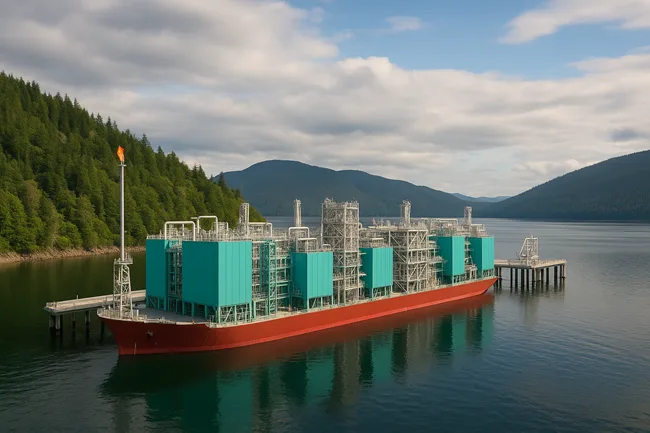
Rockhopper Exploration plc (AIM: RKH) is preparing an equity capital raise after Sea Lion operator Navitas Petroleum exercised an option to acquire the OSX-1 floating production, storage and offloading vessel for approximately US$125 million. The second vessel is intended to support development of the Central Development Area and could add about 125,000 barrels per day of gross production-processing capacity.
Rockhopper owns 35% of Sea Lion, with Navitas holding 65%. A simple pro-rata share of the US$125 million vessel purchase would therefore be approximately US$43.75 million for Rockhopper before upgrade expenditure or other pre-FID development costs. Navitas is initially funding the acquisition while Rockhopper arranges its share of capital.
The proposed equity financing has not yet been priced and Rockhopper has not disclosed its final size. The funding requirement is broader than simply 35% of the vessel purchase because the company also needs resources for pre-FID activity associated with the next stage of Sea Lion.
How much production capacity could the second FPSO add for Rockhopper?
The proposed 125,000 barrels-per-day gross capacity translates to approximately 43,750 barrels per day attributable to Rockhopper’s 35% interest on a simple working-interest basis.
That is a capacity figure rather than production guidance. Actual output will depend on wells, reservoir performance, facility utilisation, uptime and the final development plan.
The Central Development Area is expected to be developed in stages, with around 20 wells contemplated for the first portion and another 18 for the second. A final investment decision is targeted for the first half of 2028, with first production from the Central development targeted around the end of 2030.
This second phase therefore sits several years behind the initial Sea Lion development already moving toward first oil.
Does the expansion change the timeline for initial Sea Lion production?
No. The Northern Development remains on a separate path, with first oil targeted for the first quarter of 2028. The Aoka Mizu FPSO for that phase is progressing toward shipyard conversion work, while development drilling is planned to begin during 2027.
The second FPSO should therefore be viewed as an expansion of the field-development concept rather than a prerequisite for the first production milestone.
That separation matters financially. If the Northern phase begins generating cash before the Central phase reaches full development expenditure, future cash flows could potentially help support later investment.
However, Rockhopper must still fund its near-term share of pre-FID activities years before the second FPSO produces revenue.
Why is Rockhopper raising equity if Sea Lion’s value is increasing?
Greater project value does not eliminate the need for cash. Oil-field development requires significant expenditure before production, and a minority partner must fund its share regardless of how attractive the project looks on a discounted cash-flow model.
Rockhopper currently cites a post-tax NPV10 of approximately US$2.2 billion for its Sea Lion interest. Navitas’ updated reserves work indicated a substantial increase in the value of its own interest under revised long-term oil-price assumptions, and Rockhopper expects its forthcoming update to show a broadly comparable directional improvement.
A simple 39% uplift to US$2.2 billion would produce roughly US$3.1 billion, but Rockhopper has not yet published that as its updated NPV. The company’s own forthcoming reserve and valuation update should therefore be used rather than treating a proportional calculation as official project value.
The irony is common in development-stage resources: a project can become more valuable at exactly the point when shareholders are asked to provide more capital.
How should existing shareholders think about dilution?
The size and price of the fundraising will determine the dilution. Without those figures, calculating a percentage would be premature.
The purpose of the capital is nevertheless unusually tangible. Rockhopper is not raising money merely to fund corporate overhead; the financing supports a 35% interest in infrastructure intended to materially expand a discovered oil field.
That can make dilution economically productive if the incremental capacity ultimately generates value greater than the ownership surrendered through new shares.
The risk is timing. Investors may provide capital in 2026 for a development stage whose production target sits around 2030, leaving several years of engineering, FID and execution risk in between.
What is the strategic logic behind acquiring the vessel now?
FPSOs are specialised assets with long procurement, conversion and integration timelines. Securing a suitable hull years ahead of production can reduce schedule risk compared with waiting until after FID to begin vessel procurement.
The US$125 million purchase price covers the acquisition of OSX-1, not the entire cost required to convert it into a Sea Lion production facility.
That means the vessel purchase is an early commitment to a much larger development programme.
For Rockhopper, the transaction simultaneously increases confidence that the Central Development Area is moving forward and creates a near-term financing obligation. The market now has to value those two effects together: a larger potential Sea Lion production platform and dilution arriving years before the extra barrels.
Discover more from Business-News-Today.com
Subscribe to get the latest posts sent to your email.