



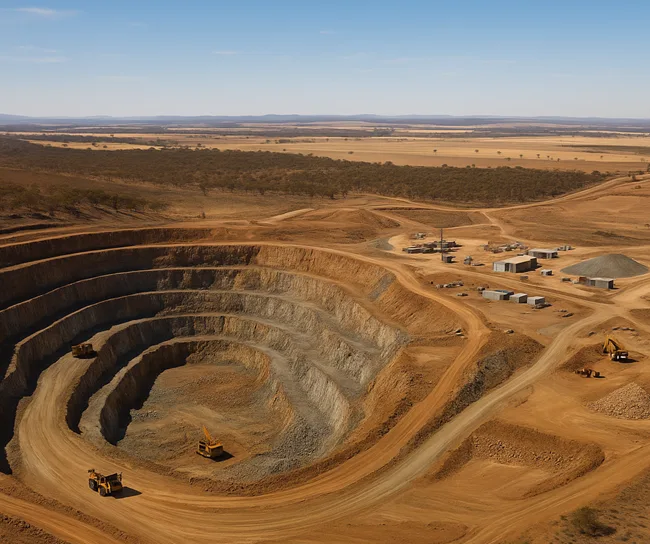
Rio Tinto plc delivered a robust operational performance in the third quarter of 2025, strengthening its copper and bauxite position while achieving a critical milestone at its flagship Simandou iron ore project in Guinea. The miner revised its full-year bauxite guidance upward to between 59 and 61 million tonnes, a shift from its earlier range of 57 to 59 million tonnes. This revision came on the back of operational excellence and consistently high utilisation rates at its Australian operations, particularly at the Amrun site, which continues to perform above nameplate capacity.
The copper segment also performed strongly, with consolidated output reaching 204,000 tonnes. This reflected a 10 percent year-on-year increase, primarily driven by Oyu Tolgoi’s underground ramp-up, which offset planned maintenance shutdowns at Kennecott. The performance kept Rio Tinto tracking toward the higher end of its 780 to 850 thousand tonne full-year copper production guidance.
Chief Executive Simon Trott opened the report with a reflection on safety following the death of a worker at the SimFer site, reinforcing the company’s commitment to embedding a safety-first culture even as it accelerates production and project milestones.
How is Rio Tinto balancing performance delivery with year-end production targets?
Across its diversified commodity portfolio, Rio Tinto stated it remains on course to meet its 2025 production guidance, with bauxite now revised higher and other key segments reaffirmed. However, the company noted that Pilbara iron ore shipments are likely to come in at the lower end of the guided 323 to 338 million tonne range. This expectation reflects ongoing challenges recovering from four tropical cyclones earlier in the year. Although around half of the cyclone-induced shortfall is expected to be recovered, the miner acknowledged the tightly balanced system has limited ability to absorb further disruptions.
Despite these constraints, Pilbara iron ore operations recorded 84.3 million tonnes of shipments on a 100 percent basis during Q3, marking the second-highest third-quarter shipment volume since 2019. The Gudai-Darri mine played a significant role in this performance, achieving its highest-ever quarterly run rate of 51 million tonnes per annum. The company also emphasized the transition in its product strategy, with SP10 shipments reduced as planned, now representing just 9 percent of total Pilbara shipments compared to 29 percent in the second quarter.
Meanwhile, Oyu Tolgoi’s contribution continued to strengthen Rio Tinto’s copper performance. The mine delivered 89,000 tonnes of metal in concentrate during Q3, supported by rising underground head grades and improved recovery rates. Despite a planned concentrator shutdown in September, the mine remains on track to deliver over 50 percent year-on-year growth in copper output by the end of 2025.
What does the Simandou first ore milestone mean for Rio Tinto’s global iron ore strategy?
The third quarter marked a significant turning point in Rio Tinto’s African growth strategy as the company began loading first ore at the SimFer mine in Guinea’s Simandou region in October. This development initiates the commissioning phase of one of the world’s most anticipated high-grade iron ore projects. With 1.5 million tonnes of stockpiled ore accumulated at the mine gate, Rio Tinto expects first shipments to commence by November.
The Simandou project, in partnership with Chinalco and other Chinese state-owned enterprises, includes co-developed rail and port infrastructure, with Rio Tinto’s share pegged at 27 million tonnes annually. The project will scale up over a 30-month commissioning period and is expected to reshape Rio Tinto’s iron ore footprint by providing greater geographic diversity and exposure to premium-grade ores outside Australia. The SimFer rail spur is now operational, and construction at the SimFer port is running ahead of schedule. Fabrication of the transhipment vessels is underway in China, and the entire system is being progressively commissioned.
This strategic pivot comes at a time when the Pilbara system is nearing capacity, and approvals for new brownfield mines remain closely tied to heritage and environmental clearances.
How are aluminium, alumina, and lithium segments aligning with decarbonization themes?
Rio Tinto’s Aluminium and Lithium division continued to provide stable earnings support while aligning with global energy transition trends. Primary aluminium production reached 857,000 tonnes in Q3, up 6 percent year-on-year. This growth was underpinned by operational improvements at Kitimat, ramp-up to full production at New Zealand Aluminium Smelters, and ongoing stability across Canadian assets.
Alumina production reached 1.888 million tonnes, up 7 percent compared to Q3 2024. Performance was particularly strong at Yarwun and Alumar, though partially offset by scheduled maintenance at Vaudreuil.
Bauxite remained a highlight with 16.4 million tonnes produced during Q3—a new quarterly record—driven by strong performances at Weipa and Amrun. The segment’s momentum was a key factor in Rio Tinto’s decision to raise full-year bauxite guidance.
In the lithium division, the company reported lithium carbonate equivalent output of 13,000 tonnes, up 3 percent quarter-on-quarter. Lithium hydroxide production rose as seasonal restocking in China aligned with stronger demand from electric vehicle manufacturers. Although the Mt Cattlin operation in Western Australia remains on care and maintenance, Rio Tinto completed the final shipment of stockpiled spodumene product in July.
Construction activities are accelerating at major lithium projects. At Rincon in Argentina, Rio Tinto secured its Environmental and Social Impact Assessment in August, clearing the path for construction to proceed. The 60,000 tonne per annum battery-grade lithium carbonate plant remains on track for 2028 commissioning. Work is also progressing at Fenix, Sal de Vida, and the Nemaska project in Canada, where integrated hydroxide production is expected to begin in 2028.
How are shifting commodity prices and global economic trends expected to shape Rio Tinto’s Q4 2025 earnings outlook?
Commodity markets remained generally supportive during Q3. Copper averaged 444 cents per pound, up 10 cents from the previous quarter. A weaker U.S. dollar, ongoing supply disruptions, and tightness in the concentrate market all contributed to the positive price momentum. Spot treatment and refining charges remained negative, highlighting an ongoing squeeze in smelting margins.
Iron ore prices climbed 12 percent during the quarter, finishing at $104 per dry metric tonne. Demand from Chinese mills, supported by strong hot metal production and elevated blast furnace utilisation, kept sentiment firm. Finished steel exports from China rose 9 percent year-on-year between January and September.
Aluminium prices also benefitted from a supportive macro backdrop, with the quarterly average rising 7 percent. Declining imports into the United States and Europe drove premiums higher, although Japanese demand remained soft.
Battery-grade lithium carbonate prices rose 16 percent quarter-on-quarter to $9,380 per tonne, reflecting a 27 percent year-on-year increase in global electric vehicle sales. This helped to sustain strong offtake conditions across Rio Tinto’s lithium customer base.
What are investors watching as Rio Tinto heads into Q4 and FY25 close?
Institutional sentiment remains cautiously optimistic heading into the final quarter of 2025. Investors are closely monitoring Simandou’s ramp-up milestones, the delivery pace of lithium capex, and the continuation of underground ramp-up at Oyu Tolgoi. Analysts are increasingly viewing copper and lithium as key long-term growth drivers, especially given Rio Tinto’s exposure to clean energy and electrification themes.
The successful commissioning of Simandou and the Rincon lithium expansion are expected to significantly alter the company’s geographic and revenue diversification profile. Analysts anticipate that stronger operational discipline, paired with high-grade output and commodity tailwinds, could support future capital returns, even amid iron ore guidance constraints.
Rio Tinto’s ability to manage cost inflation while delivering on multi-continent growth projects will remain a central investor concern. Unit cost guidance for 2025 remains unchanged, with Pilbara iron ore cash costs between $23.00 and $24.50 per wet metric tonne and copper C1 unit costs lowered to a range of 110–130 cents per pound.
Discover more from Business-News-Today.com
Subscribe to get the latest posts sent to your email.