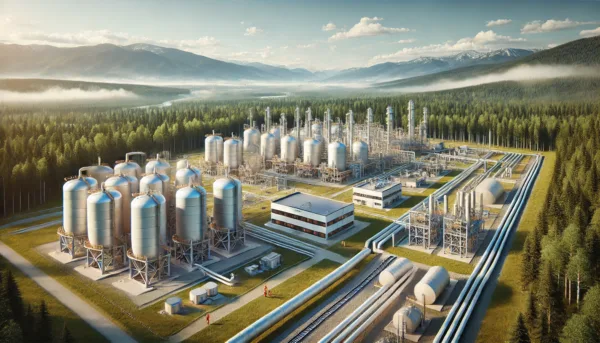


Can Oklo’s electrochemical fuel model finally deliver the circular nuclear economy that PUREX never could?
As Oklo Inc. moves ahead with plans to build a $1.68 billion fuel recycling facility in Tennessee, the American nuclear energy sector finds itself revisiting an old debate through a new lens. That debate centers on whether spent nuclear fuel should be discarded as waste—or transformed into a strategic clean energy asset. Oklo’s answer to that question lies in pyroprocessing, a next-generation recycling technology that it claims is safer, more scalable, and more economically viable than any reprocessing method the U.S. has previously tried.
At the center of that historical comparison is PUREX—Plutonium–Uranium Extraction—a now-defunct aqueous method that promised a closed fuel cycle but ultimately fell short due to political, proliferation, and cost-related concerns. Oklo’s fuel model, by contrast, revives and commercializes an alternative approach first demonstrated decades ago under the Integral Fast Reactor (IFR) program at Argonne National Laboratory. Through electrochemical separation in molten salt baths, Oklo aims to recover actinides from spent fuel without isolating pure plutonium, a move that dramatically improves proliferation resistance while enabling fast reactor reuse.
In doing so, Oklo is not just building a recycling facility—it is laying the groundwork for what could become the first commercially viable circular nuclear economy in the United States. But how different is pyroprocessing from PUREX, and why do many in the advanced nuclear community believe this time will be different?

Why the PUREX model failed to deliver a sustainable fuel cycle in the U.S.
PUREX was first developed in the 1950s as part of the U.S. Atomic Energy Commission’s early nuclear fuel programs. It involved dissolving spent nuclear fuel rods in nitric acid and using solvent extraction techniques to separate uranium and plutonium for reuse. While technically effective, the process created a major proliferation risk by isolating reactor-grade plutonium—raising alarms during the Cold War era about the potential misuse of reprocessed material. In 1977, U.S. President Jimmy Carter issued an executive order effectively banning commercial reprocessing using PUREX, citing national security concerns.
Even when the policy was partially reversed in the following decades, economic challenges remained. The construction of the MOX Fuel Fabrication Facility at Savannah River Site, which used PUREX-derived plutonium, was plagued by massive cost overruns and delays. The project was eventually cancelled, marking a high-profile failure of PUREX-based infrastructure in the U.S.
Beyond proliferation and cost, PUREX also faced criticism for generating large volumes of liquid radioactive waste, complicating long-term disposal and environmental permitting. As a result, while countries like France, the United Kingdom, and Japan continued PUREX-based reprocessing for civil reactors, the United States completely withdrew from the practice—opting instead for once-through fuel cycles and long-term interim storage.
That status quo has left the U.S. with over 94,000 metric tons of spent nuclear fuel, stored at more than 75 commercial reactor sites across the country. Oklo’s proposal to re-engage with fuel recycling is therefore not just a technical pivot—it’s a fundamental rethinking of the national nuclear strategy.
How Oklo’s pyroprocessing method addresses safety, cost, and proliferation concerns
Oklo’s proposed recycling facility in Oak Ridge will utilize electrochemical pyroprocessing, also known as electrorefining. This process is conducted in high-temperature molten salt and separates usable actinides—such as uranium, neptunium, and plutonium—from fission products by applying electric current.
Crucially, the separated plutonium remains mixed with other transuranics in a metallic alloy, rather than being isolated in pure form. This built-in proliferation resistance makes pyroprocessing far more secure than PUREX, which produced streams of nearly pure plutonium that could be diverted for weapons.
In terms of environmental impact, pyroprocessing generates significantly less secondary waste than aqueous reprocessing methods. It avoids using large quantities of organic solvents, and the resulting waste streams are compact, solidified, and easier to manage. These factors make regulatory approval more plausible and long-term waste disposal less costly.
From an economic standpoint, Oklo’s pyroprocessing model supports co-location of fuel production and reactor deployment, reducing the need for complex logistics or transportation of radioactive materials. The recovered fuel—expected to exceed 90% of the remaining energy content in spent rods—can then be fabricated into metal fuel assemblies for Oklo’s own fast-spectrum Aurora reactors.
The resulting model is fully vertically integrated: the company designs the reactors, manufactures the fuel, and operates the powerhouses. This positions Oklo as a rare example of a nuclear energy developer with end-to-end control of its supply chain, enabling both operational efficiency and strategic resilience.
Why pyroprocessing is reviving the Integral Fast Reactor vision in commercial form
Oklo’s technology strategy is deeply rooted in the legacy of the Integral Fast Reactor (IFR), an ambitious 1990s program led by Argonne National Laboratory. The IFR aimed to pair fast reactors with pyroprocessing-based fuel recycling, creating a self-sustaining system where spent fuel was reused repeatedly—minimizing waste and extracting maximum energy.
Though the IFR program was ultimately shelved due to shifting political winds and budget constraints, its technical foundations remain highly respected in the nuclear science community. Oklo’s model brings those concepts into the commercial era, with refinements tailored for real-world economics, private investment, and new regulatory pathways.
This continuity explains why many experts believe Oklo’s model can succeed where PUREX failed. Rather than attempting to retrofit outdated chemical processes into a marketable format, Oklo is reviving a scientifically robust, inherently safer recycling method that was never given a proper industrial trial.
Moreover, today’s energy and geopolitical context has shifted. With supply chain security back in focus, and global competitors like Russia and China expanding their fast reactor fleets, the idea of reprocessing U.S. spent fuel domestically is once again gaining political and institutional traction.
How Oklo’s fuel center could shift U.S. nuclear fuel policy and deployment models
Oklo’s Tennessee facility is currently undergoing pre-application engagement with the U.S. Nuclear Regulatory Commission (NRC). The company has submitted a licensing project plan and completed a pre-application readiness assessment for its combined license application, setting the stage for formal regulatory review.
At full scale, the facility will serve as the first commercial site in the U.S. to recycle used nuclear fuel into new feedstock for advanced fast reactors. Oklo is also working with the Tennessee Valley Authority (TVA) to explore the possibility of processing TVA’s legacy spent fuel and delivering power from Aurora units into the regional grid.
If successful, this would mark the first time a U.S. utility collaborates with a private company on nuclear fuel recycling—a precedent that could spur broader public-private partnerships and reinvigorate domestic fuel cycle infrastructure.
By transforming spent fuel from a liability into a resource, Oklo is effectively building a new foundation for nuclear energy expansion in the U.S.—one that is circular, decentralized, and highly adaptable.
What challenges remain before Oklo’s circular fuel model can scale?
Despite strong momentum, Oklo’s model still faces several hurdles. The most immediate is regulatory approval. The NRC has never licensed a commercial-scale pyroprocessing facility, and the absence of precedent may require new rulemaking or special review procedures. Oklo must demonstrate that its process meets rigorous safeguards, security, and environmental protection standards.
In parallel, the company must ensure that its reactor fleet—particularly the Aurora fast reactor—can scale quickly enough to justify ongoing fuel recycling at industrial volume. Without sufficient demand for metallic fuel, the economics of the recycling operation could falter.
There are also public perception challenges. Nuclear reprocessing, regardless of method, still evokes concern among some environmental groups and community stakeholders. Oklo will need to invest in transparency, education, and stakeholder engagement to overcome legacy stigma from PUREX-era programs.
Nevertheless, many in the advanced nuclear sector see Oklo’s approach as a credible solution to both the HALEU supply chain bottleneck and the growing problem of interim spent fuel storage.
Could Oklo’s pyroprocessing plant be the catalyst for a new U.S. fuel cycle era?
If Oklo can bring its Oak Ridge recycling facility online in the early 2030s as planned, it could become the anchor project for a decentralized network of regional recycling hubs, each tied to a growing fleet of fast reactors.
Such a system would mark the return of closed fuel cycle thinking to U.S. nuclear policy—but with modern safeguards, commercial economics, and integration-ready design. More importantly, it would finally give the U.S. a competitive domestic option for managing its vast inventory of spent nuclear material.
Oklo’s bet is not just technological—it’s strategic. By building fuel sovereignty into the DNA of its business model, the company is aligning itself with long-term energy security priorities. And by avoiding the errors of the PUREX past, Oklo may finally unlock the circular future that nuclear energy has long promised but never delivered.
Discover more from Business-News-Today.com
Subscribe to get the latest posts sent to your email.